Choosing a spirit based on ABV alone is a costly mistake; the “smoothest” or “most flavorful” bottle isn’t always what you think.
- Alcohol is a chemical vehicle for flavor, with higher ABVs carrying more oil-based aromatic compounds that water can’t hold.
- “Burn” is a manageable anesthetic effect, not a flaw. Controlling it with water unlocks flavors that lower-proof spirits can’t deliver.
Recommendation: Calculate the “cost per unit of alcohol” and learn to dilute with quality water to find the true value and your perfect tasting strength.
You stand before a shelf of whiskies, rums, or gins. Two bottles catch your eye. One is a familiar brand at a standard 40% Alcohol by Volume (ABV). The other, a “craft” or “cask strength” expression, boasts a 46% or even 58% ABV but comes with a 30% higher price tag. Which one offers better value? The common wisdom suggests higher proof means more flavor, but also more alcoholic “burn.” Others will simply say to “add a few drops of water to open it up.” While not wrong, these adages barely scratch the surface of a fascinating chemical reality.
The difference between 40% and 46% ABV is not just a number; it’s a fundamental shift in the spirit’s physics and chemistry. This 6% gap dictates which aromas are present, how they are perceived, and the very texture, or mouthfeel, of the liquid. The key to making an informed choice lies not in the ABV itself, but in understanding what I call “molecular economics”—the science of how alcohol functions as a delivery vehicle for flavor and how you can manipulate it to get the most value from every bottle.
Forget the simple idea that lower proof is “smoother” and higher proof is “harsher.” The truth is more complex and far more rewarding. By understanding the interplay between alcohol, water, and aromatic compounds, you can learn to deconstruct a spirit’s potential and customize it to your exact preference. This is the real secret of the connoisseur: not just choosing a bottle, but mastering it.
This guide will demystify the science behind ABV. We’ll explore why alcohol strength is crucial for carrying flavor, how to calculate the real value of a high-proof bottle, and the techniques to properly dilute a spirit to unlock its hidden complexities without compromising its integrity. Prepare to change the way you look at the numbers on the label forever.
Summary: Understanding the Impact of Alcohol Strength
- Why Higher ABV Spirits Carry More Non-Water Soluble Aromas?
- How to Calculate Standard Drinks in a Cask Strength Pour?
- Cask Strength or Diluted: Which Offers Better Value for Money?
- The “Smoothness” Myth: Why Low ABV Spirits Can Burn More Than Strong Ones
- How to Dilute 60% ABV Spirit Down to 40% for Home Bottling?
- How to Add Water Without Creating “Soapy” Flavors in the Bottle?
- How Does Alcohol Strength Break Down Lignin into Soluble Tannins?
- How to Overcome “Nose Burn” to Smell the Hidden Aromas?
Why Higher ABV Spirits Carry More Non-Water Soluble Aromas?
At its core, a spirit is a solution of ethanol, water, and hundreds of aromatic compounds. These compounds, such as esters (fruity notes) and phenols (smoky notes), are the building blocks of flavor and aroma. They can be broadly categorized as either water-soluble (hydrophilic) or oil-soluble (hydrophobic). While water is an excellent solvent for many things, it struggles to hold onto these crucial, oil-like flavor molecules. Ethanol, however, excels at it. A higher concentration of ethanol means a greater capacity to carry this precious aromatic payload.
Think of ethanol as a fleet of microscopic cargo ships. The more ships you have (higher ABV), the more flavor cargo (hydrophobic compounds) you can transport from the cask to your glass. When a spirit is diluted from cask strength (e.g., 60% ABV) down to a standard 40% ABV, the concentration of water increases dramatically. This forces many of those oil-based compounds out of the solution, causing them to either float to the top or bind together, effectively muting their aromatic expression. This is why a higher-proof spirit often smells and tastes richer and more complex—it is literally holding onto more of its original flavor molecules.
A key example is the compound guaiacol, which provides smoky and spicy notes. Scientific research from Swedish chemists shows that its presence at the surface of the liquid, where aromas are released, is optimized at strengths around 45% ABV and higher. Below this, it tends to sink into the body of the liquid, hiding its aroma from your nose. This demonstrates that a higher ABV isn’t just about intensity; it’s a prerequisite for the chemical presentation of certain flavors.
How to Calculate Standard Drinks in a Cask Strength Pour?
Enjoying high-proof spirits comes with a responsibility to understand consumption levels. A “standard drink” is a public health measure, but its definition varies globally. For example, international standards show that a single unit can be 14g of pure alcohol in the US, 10g in Australia, or just 8g in the UK. Because cask strength spirits contain significantly more alcohol per milliliter, a visually identical pour can be equivalent to two or even three standard drinks.
Calculating your intake is a simple but crucial piece of mathematics. The formula is straightforward: multiply the volume of your pour (in ml) by the spirit’s ABV percentage, then divide by 1000 to get the volume of pure alcohol in ml. For instance, a typical 1.5-ounce (44ml) pour of a 40% ABV whisky contains 17.6ml of pure alcohol. That same 44ml pour of a 60% ABV cask strength whisky contains 26.4ml of pure alcohol—a 50% increase. Ignoring this difference is the easiest way to accidentally over-consume.
Visualizing this difference is key to building responsible habits. The image below shows how the volume of a pour must decrease as the ABV increases to maintain the same quantity of pure alcohol.
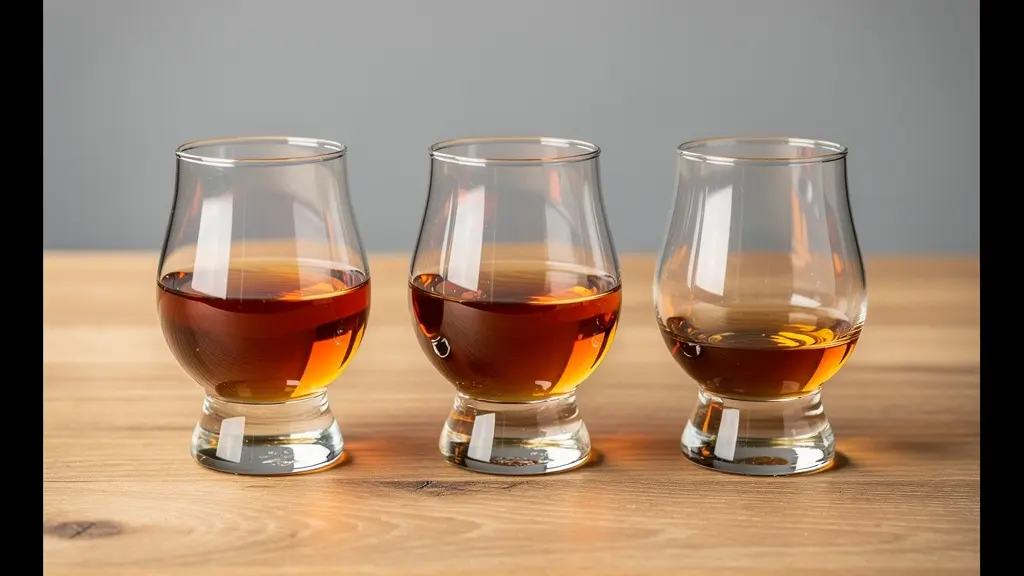
As you can see, a “standard” pour of a high-proof spirit is physically much smaller. Adjusting your serving size is not about depriving yourself; it’s about respecting the concentration of the spirit and ensuring a safe, enjoyable tasting experience where you can appreciate its nuances without being overwhelmed.
Your Action Plan for Calculating Alcohol Units
- Measure your pour volume in milliliters. A standard bar pour is often 1.5 ounces, which is approximately 44ml.
- Note the exact ABV percentage on the bottle, which can range from 50-65% for cask strength expressions.
- Apply the formula: (Volume in ml × ABV%) / 10 = Units of alcohol (UK standard). This gives you a quick reference point.
- Compare to a standard serving for context: A 1.5oz pour at 40% ABV contains 0.6oz of pure alcohol, while the same pour at 60% ABV contains 0.9oz of pure alcohol, a significant difference.
- Adjust your serving size down for higher-proof spirits to maintain a consistent and responsible level of alcohol consumption per drink.
Cask Strength or Diluted: Which Offers Better Value for Money?
The initial sticker shock of a cask strength bottle can be misleading. While the upfront cost is higher, the concept of “molecular economics” reveals a different story. You aren’t just buying a 700ml bottle of whisky; you are buying a certain amount of alcohol and, more importantly, the concentrated flavor locked within it. The real metric for value is the cost per unit of alcohol, or even better, the cost per customizable drinking experience.
A cask strength bottle is, in essence, a concentrate. By purchasing it, you gain the ability to dilute it to any strength you prefer. A 700ml bottle at 60% ABV contains 420ml of pure alcohol. If you were to dilute that entire bottle down to 40% ABV, you would end up with 1050ml of whisky. Suddenly, that expensive bottle is equivalent to one and a half standard bottles. When you do the math, the cost per 40% ABV equivalent milliliter is often significantly lower for the cask strength version.
This financial benefit is secondary to the main advantage: flexibility. As Bunnahabhain Distillery notes in their guide, “Cask strength whisky is bottled directly from cask, without dilution, retaining the high alcohol content gained through distillation, with an ABV typically ranging from 50-65%.” This gives the drinker ultimate control. You can sip it neat, add a little water to bring it to 50%, or add more to bring it to 45%. Each level of dilution will reveal a different facet of the spirit’s character. A standard 40% bottle offers only one experience.
The following table, based on information from guides like those provided by distilleries such as Bunnahabhain, breaks down the value proposition clearly.
| Aspect | Cask Strength (60% ABV) | Standard Bottling (40% ABV) |
|---|---|---|
| Typical Volume | 700ml bottle | 700ml fixed |
| Potential Diluted Volume | ~1050ml at 40% ABV | 700ml fixed |
| Flexibility | Multiple strength options | Single fixed strength |
| Price Premium | 20-40% higher | Base price |
| Cost per 40% ABV ml | Often lower when diluted | Fixed rate |
The “Smoothness” Myth: Why Low ABV Spirits Can Burn More Than Strong Ones
One of the most pervasive myths in the world of spirits is that “smoothness” is directly proportional to a lower ABV. We’ve all heard someone describe a spirit as “harsh” and attribute it solely to high alcohol content. However, the sensation of alcoholic burn is more complex than that. It’s tied to the concept of an anesthetic threshold—the point at which the ethanol’s numbing effect on your palate becomes so overwhelming that it masks flavor and is perceived as pure, aggressive heat.
Ironically, this sensation can sometimes be more pronounced in spirits at the lower end of the spectrum. Why? Because a 40% ABV spirit has enough alcohol to trigger the pain receptors (the TRPV1 receptor, the same one that detects chili heat) but not always enough of a concentration to produce a rapid, powerful anesthetic effect that numbs them. A very high-proof spirit, like one at 60% ABV, can deliver such a potent dose of ethanol that it almost instantly numbs the palate. The initial “hit” is intense, but the lingering, irritating burn can be less severe than that of a poorly made 40% spirit where the alcohol sensation just simmers unpleasantly.
A fascinating study from Sweden illustrates this phenomenon perfectly. In what is known as the “blink test,” a subject’s involuntary eye-blinking is measured when tasting spirits of different proofs. As documented by the Scotch Malt Whisky Society, the ‘blink test’ demonstrates that high-proof alcohol can force an involuntary blink. This indicates the brain is so focused on fending off the high concentration of alcohol that it can’t process flavor. The goal, therefore, is not to seek the lowest possible ABV but to find the “sweet spot” through dilution—a point where the alcohol is present enough to carry flavor but below the anesthetic threshold where it just becomes a distraction.
How to Dilute 60% ABV Spirit Down to 40% for Home Bottling?
Diluting a cask strength spirit is an art, but it’s governed by science. Whether you’re adjusting a single glass or preparing a larger batch for home bottling, the process requires precision to avoid ruining the delicate balance of flavors. The most common mistake is adding water to the spirit. To ensure a gentle and homogenous mixture, you must always add the high-proof spirit to the water. This prevents the spirit from being “shocked,” a rapid change that can cause certain compounds to fall out of solution permanently.
The second critical element is the water itself. Using tap water is a cardinal sin, as its mineral content (calcium, magnesium) and additives (chlorine) will react with the spirit’s compounds, creating off-flavors, cloudiness, or even a “soapy” texture. The ideal choice is low-mineral, neutral-pH water, such as distilled, deionized, or a soft spring water. Temperature also matters; always use room temperature water to avoid shocking the spirit.
Calculating the precise ratio is the final step. For an accurate large-batch dilution, online dilution calculators are invaluable as they account for volume contraction—a curious phenomenon where mixing alcohol and water results in a final volume slightly less than the sum of the two parts. As a simple rule of thumb for a single glass, whisky expert Benedikt Lüning suggests, “Pour whisky at cask strength (57%) to the widest part of the glass (4 cl), dilute with 1.7 cl water (3½ teaspoons), result: 5.7 cl at drinking strength (40%).”
Ultimately, the key is gradual addition. Add a little spirit to your pre-measured water, stir gently, and let it rest. For large batches, a resting period of 24-48 hours in a sealed glass container is recommended to allow the molecules to fully integrate before you make your final assessment.
How to Add Water Without Creating “Soapy” Flavors in the Bottle?
The creation of “soapy” or metallic off-flavors during dilution is almost always a result of a chemical reaction between the spirit’s congeners and impurities in the water. The quality of your water is not a suggestion; it is a requirement for preserving the integrity of a fine spirit. The goal is to use water that is as chemically inert as possible, acting as a neutral spacer between ethanol molecules rather than an active ingredient.
The primary culprit is high mineral content, measured in Total Dissolved Solids (TDS). Hard water, rich in calcium and magnesium ions, can bind with long-chain fatty acids present in the spirit (especially in non-chill-filtered whiskies), forming a precipitate that tastes soapy and creates a hazy appearance. For optimal results, you should use water with a TDS below 50 parts per million (ppm). The pH is also crucial; water that is too acidic or too alkaline can alter the spirit’s flavor profile, so aim for a neutral range of 6.8 to 7.2.
Another major issue is chlorine or chloramine, common disinfectants in municipal tap water. These chemicals react with the phenols in a spirit to create chlorophenols, which have a very low flavor threshold and impart a distinctly unpleasant medicinal or plastic-like taste. This is why simply filtering tap water is often not enough; you need water that is fundamentally pure, like distilled water or a trusted, low-mineral spring water. Some dedicated enthusiasts even use specific regional waters, such as those from Uisge Source, which are bottled from springs in Scotland’s whisky regions to match the local water profile.
Your Water Quality Audit Plan for Perfect Dilution
- Analyze your source: Identify the TDS (Total Dissolved Solids) of your water. Aim for a reading below 50 ppm. High-TDS “hard water” is your enemy.
- Check for additives: Never use tap water directly. It often contains chlorine or chloramine, which react with phenols to create plastic-like off-flavors.
- Select the right type: Your best options are, in order: distilled water (most neutral), deionized water, or a very soft, low-mineral spring water.
- Control the tools: Use a clean glass pipette or dropper for adding water. Avoid metal or plastic implements that could impart their own taste.
- Final verification: Before diluting a prized spirit, test your water. Add a few drops to a small, neutral sample of the spirit and let it sit. Check for cloudiness (louching) or any change in aroma after a few minutes.
How Does Alcohol Strength Break Down Lignin into Soluble Tannins?
The magic of barrel aging is a process of extraction, and alcohol is the master key. The wooden cask is not an inert container; it’s a reservoir of complex organic polymers, primarily cellulose, hemicellulose, and lignin. While water can extract some sugars from the wood, it is the ethanol that does the heavy lifting, particularly when it comes to breaking down lignin—the polymer responsible for many of the classic vanilla, spice, and smoky notes in aged spirits.
This process, known as ethanolysis, is most efficient at a specific alcohol concentration. As chemical analysis reveals that spirits entering the barrel at “entry proof”—typically between 53% and 63% ABV—show peak lignin breakdown efficiency. At this strength, the ethanol is aggressive enough to dissolve the lignin and its derivatives, like vanillin (vanilla flavor) and syringaldehyde (smoky, woody notes), and hold them in the solution. If the proof is too low, the extraction is inefficient. If it’s too high, it can sometimes extract more aggressive, bitter tannins faster than the desirable aromatic compounds.
As SevenFifty Daily explains in an article on spirits aging, “The lignin is broken down and transformed… into compounds producing the flavor notes of clove and smoke, as well as the particularly distinctive spicy note we associate with rye whisky, from 4-ethyl guaiacol.” The strength of the spirit directly influences which of these compounds are extracted most effectively, shaping the final character of the spirit over years of maturation. Therefore, the high ABV of a spirit isn’t just for preservation; it’s an active agent in the creation of flavor itself.
Case Study: The Science of Vanillin Extraction
During the toasting and charring of a barrel, the lignin in the oak wood is thermally degraded. This process creates a wealth of flavor precursors. As detailed in whisky science, this heat treatment transforms lignin into aromatic aldehydes like vanillin. Vanillin is incredibly potent and is detectable by the human palate at extremely low concentrations. The ethanol in the spirit acts as the solvent, pulling this vanillin from the wood’s structure and into the liquid. A higher proof spirit can become saturated with a greater concentration of these compounds, leading to the rich, deep vanilla and caramel notes characteristic of well-aged bourbon or whisky.
Key Takeaways
- Alcohol is a chemical vehicle for flavor; higher ABV levels are necessary to carry oil-based aromatic compounds that create complexity.
- “Smoothness” is a myth. The sensation of “burn” is an anesthetic effect that can be managed with water to unlock flavors, not a simple flaw of high proof.
- True value lies in “cost per unit of alcohol” and customization. Cask strength spirits often provide more volume and flexibility for your money when properly diluted.
How to Overcome “Nose Burn” to Smell the Hidden Aromas?
The intense “nose burn” from a high-proof spirit is the first barrier to appreciating its complexity. This is the anesthetic effect in action, overwhelming your olfactory receptors before you can detect the delicate aromas. The common mistake is to shove your nose deep into the glass and inhale sharply. This is the equivalent of staring directly into a bright light. The correct approach is to be gentle and strategic, allowing the aromas to come to you without the aggressive ethanol vapor.
Professional tasters use a specific technique to bypass this burn. Instead of sealing your lips, part them slightly and breathe in gently through both your mouth and nose simultaneously. This “open-mouth” nosing technique draws in air along with the alcohol vapors, diluting them before they hit your sensitive olfactory bulb. It dramatically reduces the heat and allows the heavier, more complex aromatic compounds to register. Start with the glass at chest level and slowly bring it up, finding the distance where you can detect the aromas without the burn.
Adding water is the next step, but it must be done with intention. Add a single drop of room temperature water, swirl the glass gently, and wait 30 seconds. This gives the water time to integrate and for a new wave of aromas to be released. Repeat this process, nosing between each addition. You are not just watering it down; you are methodically lowering the ABV to find different “layers” of the spirit. As The Scotch Malt Whisky Society wisely puts it, “At natural cask strength, the spirit is not quite the smooth roller it becomes with dilution – finding your equilibrium takes practice but is quite rewarding.”
Professional Nosing Techniques for High-Proof Spirits
- Start with your lips parted slightly. Inhale gently through both your mouth and nose at the same time to dissipate the ethanol “heat” and allow the core aromas to emerge.
- Hold the glass at chest level and slowly bring it towards you, never putting it directly under your nose. Find the “sweet spot” where aroma is present without the burn.
- Use a gentle waving motion with your hand over the top of the glass to waft the aromas upward gradually instead of inhaling directly from the rim.
- Take breaks between nosing attempts for 15-20 seconds to allow your olfactory receptors to reset and prevent sensory fatigue.
- Sip the spirit neat first to establish a baseline. Then, begin adding single drops of room temperature water, waiting 30 seconds between additions to taste the evolution.
By moving beyond the simple numbers on a label and embracing the underlying science, you can transform your role from a simple consumer to an active participant in the tasting experience. The choice between 40% and 46% ABV is no longer a question of “which is better,” but “what potential does this bottle hold?” Now that you have the tools to calculate its true value, control its intensity, and unlock its hidden flavors, the next step is to put this knowledge into practice with your next purchase.