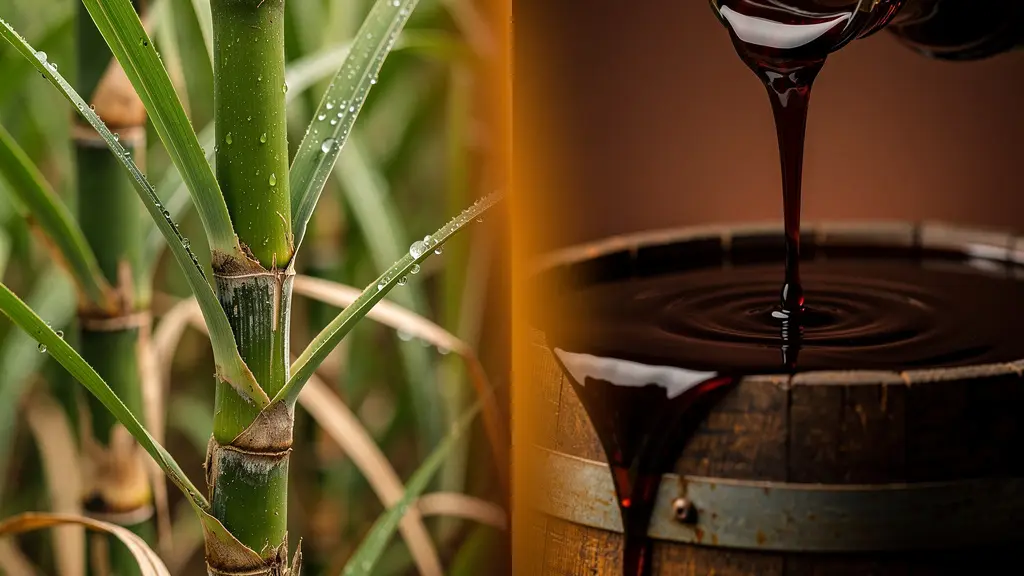
The common belief that rum is either from ‘fresh juice’ or ‘molasses’ misses the point entirely; the real distinction is agricultural.
- Rhum Agricole is a terroir-driven spirit whose flavour is a direct reflection of the soil, cane varietal, and the critical hours post-harvest.
- Molasses rum, made from a stabilized by-product, has a profile shaped more by distillation and aging than by its agricultural origin.
Recommendation: Approach Rhum Agricole not as just another rum, but as you would a fine wine—by exploring its sense of place, varietal, and the producer’s philosophy.
For the uninitiated, the first encounter with a Rhum Agricole can be a revelatory shock. Instead of the familiar vanilla, caramel, and baking spice notes of mainstream molasses rums, the nose is met with a pungent, vibrant blast of fresh-cut grass, green olives, and an almost savoury funk. This isn’t a flaw; it’s the spirit’s defining characteristic, its declaration of origin. Many explorers venturing beyond big-name brands are told the difference is simple: agricole comes from fresh sugarcane juice, while industrial rum comes from molasses. While true, this is a profound oversimplification.
This explanation is akin to saying wine is just fermented grape juice. It ignores the very soul of the product. The true essence of cane spirits, particularly the agricole style, is not merely its base ingredient but its entire agricultural fingerprint. It is a story of soil, climate, and the specific variety of cane grown. It’s a narrative shaped by the frantic race against time to capture the plant’s vitality before it succumbs to bacterial decay. To truly understand the chasm between these two worlds is to move from an industrial mindset to an agricultural one.
This guide will deconstruct that agricultural journey. We will explore why these rums possess such a distinct vegetal character, how the production process is a frantic race against the clock, and what strict regulations guarantee its purity. By treating sugarcane with the same reverence vintners have for grapes, we will uncover the deep connection between the land and the liquid in your glass, providing you with the knowledge to select a bottle that truly speaks to your palate.
Summary: Decoding the Agricultural Soul of Cane Spirits
- Why Do Cane Juice Rums Smell Like Fresh Grass and Olives?
- How to Process Sugarcane Within 24 Hours to Avoid Bacterial Spoilage?
- Caipirinha or Mojito: Which Cocktail Demands Fresh Cane Spirit?
- The “Added Sugar” Trap: How to Spot Dosed Rums on the Shelf
- How Does Blue Cane Differ from Red Cane in the Final Distillate?
- Why Volcanic Soil Produces Rums with Higher Mineral Content?
- Why Does the Martinique AOC Label Guarantee Quality Over Quantity?
- How to Select a White Agricole Rum That Isn’t Too Vegetal for You?
Why Do Cane Juice Rums Smell Like Fresh Grass and Olives?
That signature “green” aroma of Rhum Agricole is not an acquired taste, but a chemical signature of its freshness. Unlike molasses—a stable, cooked-down sugar by-product—fresh sugarcane juice is a living, volatile substance. When pressed, it releases a complex array of aromatic compounds, or esters, directly from the plant’s cellular structure. These are the same compounds you smell when mowing a lawn or snapping a fresh green bean. The fermentation of this raw, unprocessed juice preserves these highly vegetal and herbaceous notes, translating them directly into the final distillate.
This process captures the raw essence of the plant itself. Think of it as the difference between a sun-dried tomato and a fresh tomato right off the vine. One is concentrated and sweet; the other is bright, acidic, and bursting with vegetal life. The grassy, sometimes briny or olive-like notes are the spirit’s direct connection to the earth and the plant from which it was born. Molasses rum, having been twice-cooked, has long since lost these delicate, fresh plant aromatics, leaving a cleaner slate upon which distillation and barrel aging will later impart flavours of vanilla, caramel, and spice.
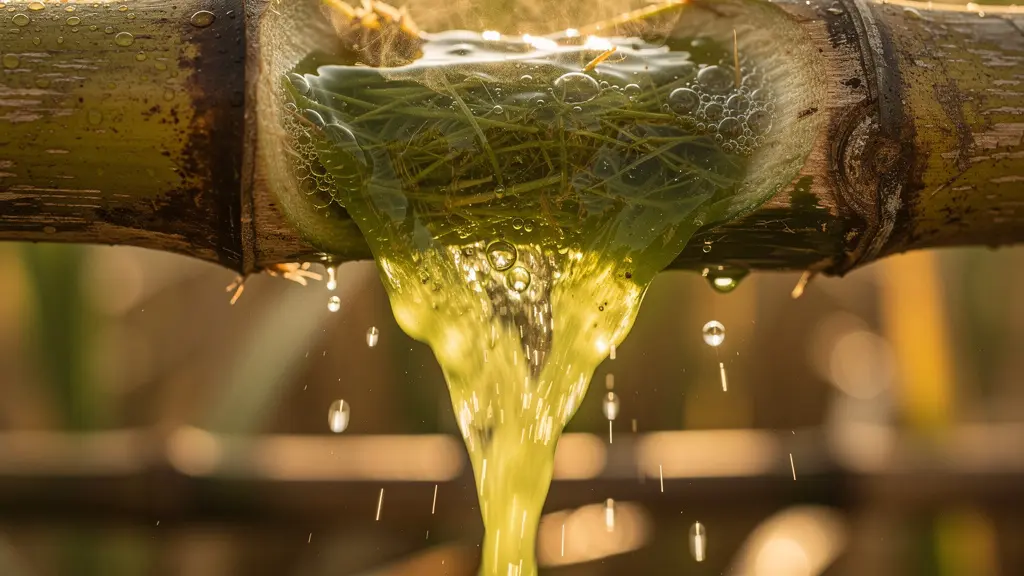
The visual of juice being pressed from the fibrous cane stalk is a perfect illustration of this principle. The process is a direct extraction of the plant’s lifeblood, carrying with it all the natural, raw, and untamed flavours that define the agricole style. It’s an unadulterated expression, a world away from the more processed nature of its molasses-based cousins, and it’s a style gaining significant traction as drinkers seek more authentic spirits.
How to Process Sugarcane Within 24 Hours to Avoid Bacterial Spoilage?
The vibrant, vegetal profile of Rhum Agricole is only possible because of what producers call “the race against spoilage.” Once sugarcane is cut, the clock starts ticking. The raw juice is rich in sugars and nutrients, making it an ideal breeding ground for wild yeasts and bacteria that can introduce undesirable, sour, or off-flavours. If left for too long, the juice begins to spoil, leading to a flawed distillate. This is why distilleries are strategically located amidst the cane fields, a necessity to minimize the time between harvest and pressing.
To preserve the cane’s integrity, the entire process must be executed with logistical precision. It is a globally accepted standard in high-quality agricole production that fresh cane juice must be fermented within 24 hours of the cane being cut. This tight window ensures that only the desired yeast strains influence the fermentation, allowing the distiller to capture the pure, unadulterated profile of the cane juice. This stands in stark contrast to molasses, which is a shelf-stable syrup that can be stored for months and transported around the world before being diluted and fermented, severing its connection to a specific time and place of harvest.
Action Plan: The Golden 24-Hour Window
- Harvest Timing: Cut sugarcane only during its peak maturity, typically between February and June in the Caribbean, when sugar concentration is highest.
- Immediate Transport: Move the cut canes from the field to the distillery immediately, often within just two to three hours.
- Rapid Pressing: Press the canes to extract the fresh juice (known as “vesou”) within one hour of their arrival at the distillery.
- Controlled Fermentation: Initiate the fermentation process with specific, proprietary yeast strains within the 24-hour maximum window.
- Efficient Distillation: Complete the fermentation, which typically lasts 24-72 hours, and move the resulting cane “wine” to the still without delay.
This rigorous, time-sensitive process is fundamental to the quality and character of agricole. It’s an agricultural act first and an industrial one second, ensuring the spirit in the bottle is a true snapshot of the cane’s vitality on the day it was harvested.
Caipirinha or Mojito: Which Cocktail Demands Fresh Cane Spirit?
While Rhum Agricole can be enjoyed in a variety of cocktails, its most iconic and essential use is in the Ti’ Punch. This is less a cocktail and more a ritual, a pure expression that puts the spirit front and center. As the experts at Minute Bartender note, it is the soul of Martinique in a glass. This is where the choice of a fresh cane spirit is not just an option, but a requirement. A Ti’ Punch made with a molasses rum would simply be a different, less vibrant drink, lacking the grassy, peppery backbone that defines the experience.
Ti’ Punch: Combining just three ingredients (white rhum agricole, a little sweet in the form of sugar or cane syrup, and lime) with a joie de vivre, it’s an essential taste of the island of Martinique.
– Minute Bartender, Rhum Agricole: The Pure Expression of Sugarcane
But what about other classic cane cocktails? The Caipirinha, Brazil’s national drink, is traditionally made with Cachaça, which is also a fresh cane juice spirit and thus a close cousin to agricole. Using an agricole blanc in a Caipirinha is a natural fit, as it enhances the cocktail’s bright, vegetal character. A Mojito, on the other hand, is traditionally built on a light, clean Cuban-style molasses rum. While substituting an agricole can add an interesting herbaceous layer, it fundamentally changes the drink’s profile, moving it away from its refreshing, mint-and-lime-forward roots into something more complex and earthy.
The following table, based on an analysis from Minute Bartender, helps clarify how a fresh cane spirit impacts these classic cocktails.
| Cocktail | Traditional Spirit | Agricole Alternative | Flavor Impact |
|---|---|---|---|
| Caipirinha | Cachaça (cane juice) | Rhum Agricole Blanc | Showcases vegetal notes |
| Mojito | Light molasses rum | Rhum Agricole (optional) | Adds herbaceous complexity |
| Ti’ Punch | None | Rhum Agricole (required) | Spirit-forward essential |
| Daiquiri | White rum | Agricole variation | Earthier, more complex |
Ultimately, the choice depends on intent. If the goal is to showcase the spirit itself, agricole is a superb and often necessary choice. If the goal is to create a more neutral canvas for other ingredients, a molasses rum is often the classic and more appropriate base.
The “Added Sugar” Trap: How to Spot Dosed Rums on the Shelf
One of the most significant dividers between authentic Rhum Agricole and many commercial molasses rums is the practice of “dosing”—the addition of sugar or sweetening agents after distillation. This is often done to mask harshness, create a perception of smoothness, or cater to a palate accustomed to sweeter profiles. While not inherently “bad,” it fundamentally alters the spirit’s character and conceals its true quality. For a spirit like Rhum Agricole, which is defined by its raw, unadulterated expression of cane, dosing is anathema.
The most reliable way to avoid the added sugar trap is to look for spirits governed by strict geographical indications. The prime example is the Martinique AOC (Appellation d’Origine Contrôlée). The AOC is a legal framework that enforces uncompromising production standards, and chief among them is a complete ban on post-distillation additives in its aged rums. According to the official regulations, AOC Martinique regulations forbid any sugar addition, with zero grams allowed. This forces producers to achieve quality and smoothness through superior raw materials and skillful distillation, not by covering up flaws with sugar. This constraint ensures that the rum’s taste is an honest reflection of the cane and the barrel, nothing more.
Outside of protected appellations, spotting a dosed rum can be more challenging. Look for terms like “Solera” (often associated with dosing), overly sweet tasting notes of vanilla or caramel that seem disconnected from the age statement, or an unusually thick, syrupy mouthfeel. Independent hydrometer tests from online rum communities can also be a valuable resource. However, choosing a rum with a protected designation of origin like the Martinique AOC remains the most straightforward guarantee of purity.
How Does Blue Cane Differ from Red Cane in the Final Distillate?
Continuing the analogy of rum as “wine of the cane,” the specific sugarcane varietal used is as crucial as the grape varietal in winemaking. Just as a Cabernet Sauvignon grape yields a different wine than a Pinot Noir, different cane varieties produce distinctly different distillates. Producers of high-quality Rhum Agricole are increasingly focusing on varietal expression, isolating specific types of cane to craft rums with unique aromatic and flavor profiles. The two most celebrated in Martinique are Red Cane (Canne Rouge) and Blue Cane (Canne Bleue).
Blue Cane, or ‘Canne Bleue,’ is particularly prized for its aromatic intensity. It is not visually blue but has a deep violet-hued rind covered in a waxy white film that gives it a bluish appearance. As noted by industry observers, it is renowned for its unique profile.
Canne Bleue (Blue Cane) is celebrated for its more floral, peppery, and complex aromatic profile, famously championed by Rhum Clément.
– Industry observation, Rum Geography Guide to Martinique
Red Cane, by contrast, tends to yield a juice that results in a slightly softer, fruitier, and rounder distillate. It’s often considered more approachable, with less of the aggressive peppery spice of its blue counterpart. This focus on specific varietals is pushing the boundaries of what’s possible in rum production, moving it firmly into the world of fine, terroir-driven spirits.
Case Study: The Varietal-Specific Frontier at Braud & Quennesson
The Braud & Quennesson distillery (producing Rhum A1710) in Martinique exemplifies this new frontier. They treat cane varieties with the same meticulous attention that a fine wine estate gives to its grapes. They specifically use cane types that thrive in their wet soil, including reed cane, red cane, and blue cane, often vinifying and distilling them separately to understand and showcase their unique characteristics. This approach highlights a profound shift in rum production, emphasizing agriculture and varietal purity over industrial volume.
By paying attention to the cane varietal listed on the bottle, consumers can begin to predict the style of rum inside, choosing a floral and complex Blue Cane bottling or a softer, fruitier Red Cane expression based on their preference.
Why Volcanic Soil Produces Rums with Higher Mineral Content?
The concept of terroir—the idea that a spirit’s character is inextricably linked to the land where its raw materials are grown—is nowhere more evident than in rums from volcanic islands. The soil is the foundation of flavor, and volcanic soil is not just dirt; it’s a complex matrix of minerals and nutrients that directly influences the sugarcane’s composition. This, in turn, is translated into the final distillate as a distinct sense of minerality—a flavour often described as flinty, saline, or chalky.
Volcanic soils are geologically young, porous, and well-draining, which forces the sugarcane’s roots to dig deep for water. More importantly, they are rich in specific elements that contribute to the plant’s health and flavor profile. Analysis of these soils shows that volcanic soils are particularly high in iron, potassium, and magnesium. These minerals are absorbed by the cane and become part of the juice. During fermentation and distillation, these trace elements can interact with other compounds to create the complex, non-fruit flavors that connoisseurs describe as minerality. This provides a savory, earthy backbone that balances the rum’s natural fruitiness and vegetal notes.
This phenomenon is not unique to one island but is a hallmark of many great volcanic terroirs. As noted by the official institute for Madeira, another volcanic island famous for its unique spirits:
The sugarcane used in Madeira rum is grown in rich volcanic soil that is peculiar to the island. This soil, together with Madeira’s diverse microclimates, lends to the rum’s unique minerality and complexity.
– IVBAM (Madeira Wine, Embroidery and Handicrafts Institute), Beverage Trade Network
A prime example from Martinique is Rhum J.M, whose distillery is nestled at the foot of the active Mount Pelée volcano. Their rums are celebrated for an intense, signature minerality that is a direct reflection of this unique and powerful terroir. Tasting a rum from volcanic soil is tasting a piece of the island’s geology.
Why Does the Martinique AOC Label Guarantee Quality Over Quantity?
The Martinique AOC (Appellation d’Origine Contrôlée) is more than just a sticker on a bottle; it’s a legally binding production manual that prioritizes aromatic complexity over industrial efficiency. Established in 1996, it’s the only such appellation for rum in the world, and its rules are designed to ensure that every bottle of Rhum Agricole from Martinique is an authentic expression of its origin. This guarantee of quality over quantity is enforced through a series of strict constraints that govern everything from the cane field to the bottling line.
One of the most critical rules concerns distillation. Industrial spirits are often distilled to a very high proof (over 95% ABV) to create a neutral, clean spirit, which is then diluted with water. The AOC forbids this. Instead, AOC regulations limit distillation to 65° to 75° maximum ABV. By distilling to a lower proof, producers retain more of the original aromatic compounds—the esters, congeners, and volatile acids—from the fermented cane juice. This results in a much more flavorful and character-rich spirit right off the still. It’s a less efficient method that yields less total alcohol, but it preserves the all-important agricultural fingerprint of the rum.
The AOC’s rigorous standards extend far beyond distillation proof. The framework is a holistic system designed to protect the rum’s unique identity. Key requirements include:
- Only approved sugarcane varieties grown in 23 designated municipalities may be used.
- Distillation must occur in traditional Creole column stills of a specific design.
- The final rum must contain a minimum level of volatile compounds (225g/hectolitre of pure alcohol), ensuring aromatic intensity.
- White rum (Blanc) must rest for a minimum of three months in stainless steel tanks before release to allow the flavours to integrate.
- Absolutely no sugar, artificial coloring, or other additives are permitted in aged rums (Rhum Vieux).
These rules collectively ensure that when you purchase a bottle of AOC Martinique rum, you are getting a product made with an unwavering commitment to quality, transparency, and the expression of its unique terroir.
Key Takeaways
- The “grassy” aroma of Rhum Agricole is a direct result of fermenting fresh, raw sugarcane juice, preserving its natural plant esters.
- A strict 24-hour window from harvest to fermentation is crucial to prevent spoilage and maintain the purity of the cane’s flavour.
- Rhum Agricole’s character is defined by its terroir, with volcanic soils imparting a distinct minerality and cane varietals like ‘Canne Bleue’ offering unique aromatic profiles.
How to Select a White Agricole Rum That Isn’t Too Vegetal for You?
For a newcomer accustomed to the sweetness of molasses rums, the intense vegetal character of some Rhum Agricoles can be challenging. However, the world of white (blanc) agricole is not monolithic. Just as with wine, different producers and terroirs yield vastly different styles, ranging from intensely grassy and mineral-driven to softer, fruitier, and more approachable. The key to finding the right one for you is understanding the general flavour profile of the major distilleries.
Your journey into white agricole should be a gradual exploration of this intensity spectrum. Rather than jumping into the deep end with the most pungent and complex expressions, it can be wise to start with a producer known for a more refined and rounded style. Brands like Clément and Depaz are often recommended for beginners, as their rums tend to balance the classic grassy notes with more fruit-forward and floral characteristics, making for a smoother transition.
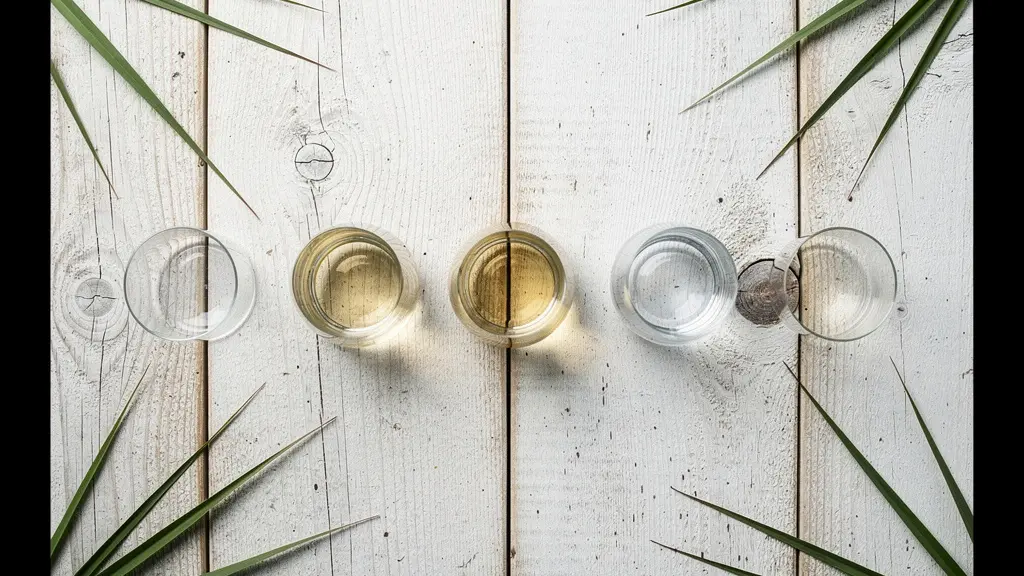
To aid in this selection process, this guide provides a general overview of the vegetal intensity found across some of Martinique’s most prominent distilleries. This is a starting point for your exploration, allowing you to choose a distillery whose style aligns with your current palate, whether you’re seeking a gentle introduction or a full-throttle terroir experience.
| Distillery | Vegetal Intensity | Flavor Profile | Best For |
|---|---|---|---|
| Rhum J.M | Very High | Intense mineral, grassy | Connoisseurs |
| Neisson | High | Complex, vegetal | Experienced drinkers |
| Clément | Medium | Refined, approachable | Newcomers |
| Depaz | Medium-Low | Rounder, fruitier | Beginners |
By using this guide, you can navigate the shelves with more confidence. Start with a “Medium” or “Medium-Low” intensity rum for sipping or for cocktails like a Daiquiri. As your palate adjusts and begins to appreciate the unique character of agricole, you can then venture towards the more intense and complex expressions from distilleries like Neisson or Rhum J.M, fully embracing the powerful varietal expression that makes this spirit so compelling.
Begin your exploration today by seeking out a bottle from a distillery known for an approachable style, and taste for yourself the remarkable difference an agricultural fingerprint makes.