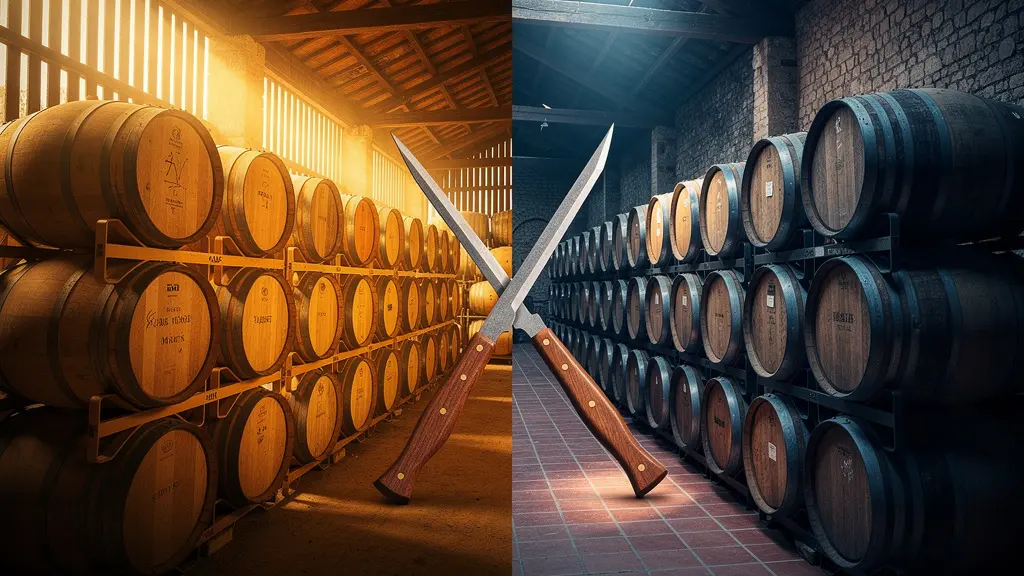
A cask’s true value for an investor is dictated by its wood chemistry and history, not just its origin or previous contents.
- The concentration of specific compounds like vanillin and lactones, determined by oak species and prior use, directly impacts flavor development and speed.
- A cask’s lifecycle (first-fill, refill, or rejuvenated) is the primary driver of its ability to impart flavor and filter impurities, affecting long-term maturation strategy.
Recommendation: Evaluate a cask by analyzing its potential for additive (flavoring) and subtractive (filtering) maturation, rather than relying on generalized tasting notes.
For a spirits investor or collector, the choice of a cask is a significant financial decision. The market is often simplified into broad strokes: American oak for sweetness, European oak for spice, Sherry casks for richness. While these generalities hold a kernel of truth, they are dangerously incomplete for anyone looking to understand the real asset they are acquiring. Relying on them is like judging a company’s stock based solely on its logo. The true potential, the risk, and the long-term value of a cask are not written on the label; they are embedded deep within the wood’s cellular structure.
The conversation must shift from simple tasting notes to the underlying science. What are the specific chemical compounds at play? How does a cask’s previous life—its “fill history”—impact its remaining potential? Understanding these mechanics is the key to differentiating a cask that will appreciate in value from one that is already on the decline. This is not about being a connoisseur; it’s about being an informed investor. This guide will move beyond the palate and into the cooperage, dissecting the wood chemistry that truly defines a spirit’s journey and a cask’s ultimate worth.
To navigate this complex topic, we will explore the fundamental chemical and physical processes that govern spirit maturation. This article breaks down the science behind wood’s influence, from the specific molecules that create iconic flavors to the structural changes that filter and refine the spirit over time.
Summary: A Cask Investor’s Guide to the Science of Wood Maturation
- Why American White Oak Gives More Vanilla than European Varietals?
- How Sherry Seasoning Works: The Process Behind the ‘Sherry Bomb’ Style
- First-Fill vs Refill Cask: Which is Better for Long-Term Maturation?
- The ‘Sawdust Effect’: How to Identify a Spirit Ruined by Bad Wood
- How to Re-Char an Exhausted Cask to Extend Its Lifespan by 10 Years?
- Why Does Virgin Oak Impart Coconut Flavors Faster Than Ex-Bourbon Wood?
- How Activated Carbon in Charred Wood Removes Sulfurs from the Spirit?
- Why Does Heavy Barrel Char Filter Impurities Better Than Light Toast?
Why American White Oak Gives More Vanilla than European Varietals?
The characteristic vanilla note in many whiskies is not an additive; it is a direct result of wood chemistry. The primary source is the thermal breakdown of lignin, a complex polymer in the oak’s cell walls. During the toasting and charring of a cask, lignin degrades to form various aromatic compounds, most notably vanillin—the very same molecule found in vanilla beans. American white oak (Quercus alba) is naturally higher in lignin concentration than its European counterparts like Quercus robur, giving it a head start in producing these sweet, creamy flavors.
Beyond vanillin, another key differentiator is the presence of oak lactones. As the Pour and Sip Editorial Team notes in the Pour and Sip Digest, “American oak has higher proportions of vanillin and the ‘whisky lactone’. The ‘whisky lactone’ is actually called beta-methyl-gamma-octalactone, which is responsible for coconut flavours”. This specific lactone is significantly more prominent in American oak. This is why spirits aged in new American oak often develop pronounced notes of coconut, vanilla, and sweet spice, a profile driven by a distinct and quantifiable chemical composition.
From a cooperage perspective, the interaction is a triad of compounds. Lignin’s breakdown provides the sweet vanilla tones. Tannins, more prevalent in European oak, contribute structure and astringency. And lactones, especially in American oak, add the characteristic coconut and woody aromas. It is the balance and concentration of these three compound groups that define the fundamental character a cask will impart. An investor should see these not as flavors, but as chemical markers of the wood’s origin and potential.
How Sherry Seasoning Works: The Process Behind the ‘Sherry Bomb’ Style
The term “Sherry Cask” evokes images of old bodegas and casks that have held prized sherries for decades. For an investor, it’s critical to understand that the modern reality is an industrial process known as “seasoning.” Today, the vast majority of “sherry casks” used for whisky have not held sherry destined for bottling. Instead, they are specifically constructed, typically from European oak, and then filled with a young, often lower-quality sherry for the sole purpose of seasoning the wood.
This process is not a matter of weeks, but a deliberate period of aging. Modern sherry cask seasoning typically takes between 12 and 24 months, during which the wine soaks into the staves, altering the wood’s chemical makeup. It extracts some of the harsher wood tannins and, in turn, leaves behind its own character—the winey, dried fruit, and nutty notes. After this period, the sherry used for seasoning is often considered a byproduct, sometimes distilled into brandy or even discarded. The real prize is the seasoned wood itself.
The distinction between historic “transport casks” and modern seasoned casks is stark and has significant cost implications. The following table, based on extensive research, clarifies the differences an investor must understand before paying the premium for a “sherry cask.”
| Aspect | Traditional Transport Casks | Modern Seasoned Casks |
|---|---|---|
| Sherry Quality | Mature, ready for bottling | Young wine, not for drinking |
| Duration | Few weeks/months | 6 months to 2.5 years |
| Post-Use | Sherry was sold | Distilled to brandy or vinegar |
| Cost | Cheap (transport byproduct) | 10x bourbon barrel price (~$1500) |
This table clearly shows that a modern sherry cask is an expensive, purpose-built tool for flavoring, not a happy accident of logistics. As documented in a comprehensive analysis by leading industry observers, the price reflects a deliberate manufacturing process. For an investor, this means you are paying for a specific flavor treatment, and the quality of that seasoning process directly impacts the value of your asset.
First-Fill vs Refill Cask: Which is Better for Long-Term Maturation?
The term “first-fill” signifies a cask being used for the first time to mature a spirit like Scotch or Irish whiskey, typically after its initial use for bourbon or sherry. A “refill” cask is any subsequent use. This distinction is perhaps the single most important factor in determining a cask’s activity level and its suitability for a given maturation strategy. The wood’s contribution is not infinite; it is a resource that depletes with each use. Considering that the oak cask and maturation contribute roughly 60-70% to the final flavour, the activity level of that cask is paramount.
A first-fill cask is highly active. It is rich in available sugars, vanillins, tannins, and lactones, ready to be imparted to the spirit. This results in rapid maturation, with deep color and intense flavors developing in a relatively short period. However, this high activity is a double-edged sword. For very long-term aging (20+ years), a first-fill cask can easily overpower the spirit, leading to an over-oaked, tannic, and unbalanced final product. It offers a quick return on flavor but carries a higher risk of ruining the spirit if not monitored closely.
A refill cask (2nd, 3rd, or 4th fill) is far less active. Much of the aggressive wood character has been smoothed out, and the compounds have been partially depleted. This allows for a much slower, gentler maturation. While it won’t impart the same intensity of color or flavor as a first-fill, it allows the distillery’s original spirit character to shine through and develop complexity over many decades. For an investor planning on a 25- or 30-year maturation, a good quality second-fill cask is often a superior and safer choice than a first-fill.

This visual contrast between the deep color penetration in a first-fill stave and the paler, more exhausted wood of a refill stave illustrates the concept of declining activity. The first-fill cask is a sprinter, delivering powerful impact quickly. The refill cask is a marathon runner, built for endurance and the subtle, elegant evolution of character over the long haul. The “better” choice depends entirely on the investor’s time horizon and desired outcome.
The ‘Sawdust Effect’: How to Identify a Spirit Ruined by Bad Wood
Not all wood influence is positive. One of the greatest risks in cask investment is acquiring a spirit that is “over-oaked.” This phenomenon, which we can call the “Sawdust Effect,” occurs when the wood’s influence shifts from contributing pleasant, complex flavors to imparting harsh, bitter, and dominant woody notes. The spirit loses its balance, and the character of the original distillate is completely masked by aggressive, dry tannins and compounds that taste like pencil shavings or wet cardboard. The spirit becomes woody, but not in a good way.
This issue is particularly prevalent in today’s market with the rise of small, “craft” casks. As expert Andrew Derbidge of Whisky & Wisdom warns, this can be deceptive: “aging spirit in 20L or 50L casks for just over two years in ex-wine casks might produce a dark whisky that initially seems ready to some drinkers, but the reality is that only two of the three maturation processes… have partially occurred… The result is often hot and dry whisky that is over-oaked yet under-matured“. The high surface-area-to-volume ratio in small casks accelerates the extraction of wood compounds, often before the spirit itself has had time to mature, creating a harsh, unbalanced product.
For an investor or collector, being able to identify the warning signs of the Sawdust Effect is a crucial due diligence skill. It’s the difference between buying a maturing asset and a wooden paperweight. Training your palate to spot these faults is a critical defense against a bad investment.
Your Due Diligence Checklist: How to Identify Over-Oaked Whisky
- Sensory Check: Is there a dry, dusty mouthfeel that coats the palate unpleasantly and doesn’t fade?
- Aroma Audit: Do you detect bitter, green wood notes reminiscent of pencil shavings or freshly cut, unseasoned lumber?
- Balance Assessment: Does the oak character completely dominate, making it impossible to identify the underlying fruit, grain, or peat notes of the spirit?
- Tannin Evaluation: Does the spirit create an excessive, mouth-drying astringency, similar to over-steeped black tea?
- Comparative Analysis: How does the sample compare against a known, well-matured reference whisky? This helps calibrate your palate for balance.
Recognizing these red flags can save an investor from a costly mistake. A spirit tainted by the Sawdust Effect is fundamentally flawed, and its value is unlikely to recover or appreciate over time.
How to Re-Char an Exhausted Cask to Extend Its Lifespan by 10 Years?
A cask is a depreciating asset in terms of its flavor-imparting ability. After several fills, the wood becomes “exhausted” or “inactive.” The accessible sugars and flavor compounds near the surface have been depleted, and a layer of residue can seal the wood’s pores, dramatically slowing maturation. For a cooperage, however, this is not the end of the cask’s life. A process known as rejuvenation can be employed to extend its utility, offering a cost-effective solution for distillers and a specific type of asset for investors to understand.
The most common method is the STR process: Shaving, Toasting, and Re-charring. First, a thin layer (a few millimeters) is shaved from the cask’s inner surface, removing the saturated and exhausted wood to expose a fresh layer underneath. Next, the newly exposed wood is toasted to begin the process of breaking down hemicellulose into wood sugars. Finally, it is re-charred, creating a new layer of activated carbon for filtration and catalyzing further chemical reactions. This effectively ‘resets’ the cask, albeit not to its original state.
The STR (Shaving, Toasting, Re-charring) Process
Used barrels may also be ‘rejuvenated’ by scraping off their inner layer then being re-charred or toasted. This makes more extractives available, though a rejuvenated barrel will still not be quite as potent as a brand new one. Still, it is an effective method of prolonging a barrel’s lifetime.
An STR cask is a unique entity. It’s more active than an exhausted refill cask but less aggressive than a first-fill. It offers a middle ground, providing good color and flavor development without the high risk of over-oaking associated with virgin or first-fill casks. For an investor, the key is understanding the return on this process. Studies show that STR-treated barrels deliver approximately 40-50% of the extraction capacity of a first-fill cask. This makes them an excellent choice for medium-term maturation (10-15 years), effectively adding a decade or more to a cask’s useful lifespan and representing a distinct category in a portfolio.
Why Does Virgin Oak Impart Coconut Flavors Faster Than Ex-Bourbon Wood?
The speed at which a cask imparts flavor is a direct function of the concentration of available chemical compounds in the wood. The prominent coconut flavor, particularly associated with American oak, comes from oak lactones. The key difference between a virgin oak cask and an ex-bourbon cask lies in the “first-use” principle. A virgin oak cask is a completely new vessel, its wood chemistry untouched by any previous spirit. An ex-bourbon cask, by law, must have been used to age American whiskey, meaning it has already given up a significant portion of its character.
This “giving up” can be quantified. A virgin oak cask enters its first maturation cycle with 100% of its natural flavor compounds intact. During its time aging bourbon, the most accessible and soluble compounds, including a large portion of the oak lactones, are extracted by the spirit. Consequently, when that cask is emptied and sold as an “ex-bourbon” cask for maturing Scotch or other whiskies, it has a significantly reduced capacity. Research indicates that virgin oak retains 100% of its original oak lactones while ex-bourbon casks have already given 70-80% to the first fill. The ex-bourbon cask is starting its second life with only 20-30% of its original lactone payload.
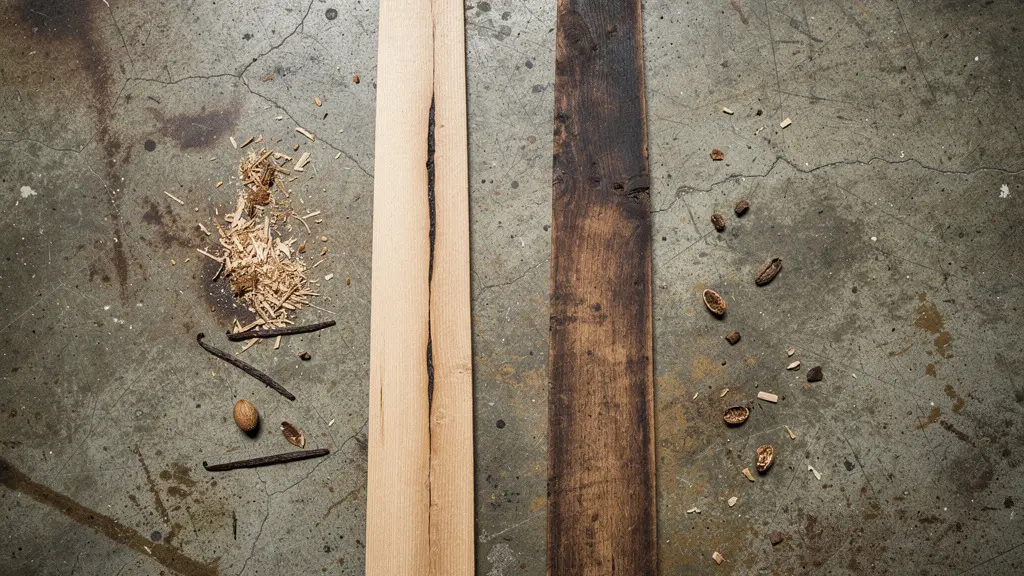
This dramatic difference in concentration explains the speed of flavor impartation. The virgin oak, with its full reserve of lactones, quickly infuses the spirit with those powerful coconut and vanilla notes. The ex-bourbon cask, with its depleted reserves, will impart flavor much more slowly and subtly. For an investor, this means a virgin oak cask offers rapid, transformative maturation but requires careful management to avoid being overpowering. An ex-bourbon cask offers a slower, more graceful maturation better suited for developing complex, spirit-forward whiskies over a longer period.
How Activated Carbon in Charred Wood Removes Sulfurs from the Spirit?
Maturation is not solely an additive process of taking flavors from the wood. It is also a crucial subtractive process, where the cask actively removes undesirable elements from the new-make spirit. One of the most important subtractive functions is the removal of volatile sulfur compounds, which can create off-notes described as rubbery, metallic, or vegetal. The key to this filtration is the char layer on the inside of the cask.
When the interior of a barrel is charred, the intense heat transforms the surface layer of wood into activated carbon. This is the same substance used in high-end water filters. The magic of activated carbon lies in its incredibly porous structure and vast surface area. From a chemical perspective, heavy char creates activated carbon with a surface area up to an astonishing 50,000 square meters per gram. This creates a microscopic labyrinth with an enormous capacity to trap and bond with molecules.
As the spirit expands and contracts into the wood with temperature fluctuations, it passes through this charcoal filter. The sulfur compounds, which are relatively large and polar molecules, are adsorbed onto the surface of the activated carbon and effectively trapped. As Cask Trade Research puts it, “The charred layer of the American White Oak Barrel wood also functions as a charcoal filter, absorbing the sulfur compounds and serving as a passage for alcohol through the pores”. This natural filtration “cleans” the spirit, removing harshness and allowing the more desirable fruity and floral esters of the distillate to come to the forefront. A well-charred cask doesn’t just add flavor; it purifies the foundation upon which those flavors are built.
Key takeaways
- Wood’s value is in its chemistry: A cask’s potential is defined by quantifiable compounds (lignin, lactones, tannins), not just its origin story.
- History dictates activity: A cask’s “fill history” (first-fill, refill, STR) is the primary indicator of its ability to impart flavor and its suitability for short vs. long-term aging.
- Char is a dual-function tool: The char layer is both an engine for flavor creation (breaking down wood polymers) and a filter for purification (removing unwanted sulfur compounds).
Why Does Heavy Barrel Char Filter Impurities Better Than Light Toast?
The difference between “toasting” and “charring” is a matter of temperature and time, and it fundamentally alters the function of the wood. Toasting is a longer, lower-temperature process that gently caramelizes wood sugars and begins to break down lignin into flavor compounds. Charring is a far more aggressive, high-temperature blast of fire that creates a thick layer of carbon. While both add flavor, only charring creates a significant filtration layer. A light toast simply does not generate the deep, porous activated carbon structure required for effective subtractive maturation.
The level of char, typically numbered from 1 (light) to 4 (heavy or “alligator” char), directly correlates to the thickness and efficacy of this filtration layer. A heavier char, created by longer exposure to a hotter flame, results in a deeper carbon layer. This provides more surface area for undesirable sulfur compounds to be adsorbed and removed from the spirit. A light toast, by contrast, has minimal filtration capacity and is almost purely for additive flavor creation.
For an investor, the char level is a specification that defines the cask’s intended function. A lightly toasted cask might be chosen for a delicate spirit where the goal is to preserve its character, while a heavy char is essential for taming a robust, sulfur-heavy new-make spirit. The following data from distillery research illustrates the direct link between the charring process and the resulting cask properties.
This comparative data, based on research from distilleries like pioneers in cask finishing, shows a clear progression. As the char level increases, the primary function shifts from simple flavor creation towards heavy-duty filtration. An “Alligator” char (#4) creates the thickest, most robust layer of activated carbon, making it the most effective tool for smoothing out and purifying a spirit during maturation.
| Char Level | Temperature | Duration | Filtration Capacity | Primary Effect |
|---|---|---|---|---|
| Light Toast | 300-350°F | 20-30 min | Minimal | Flavor creation only |
| Char #1 | 400°F | 15 seconds | Low | Light filtration |
| Char #3 | 450°F | 35 seconds | Medium | Balanced filtration/flavor |
| Char #4 (Alligator) | 500°F+ | 55 seconds | Maximum | Heavy filtration layer |
Ultimately, a heavy char provides a superior purification system. It ensures the final spirit is built on a cleaner base, allowing the complex, positive flavors—both from the distillate and the wood—to be expressed more clearly. It is the cooperage’s first and most important tool for ensuring a smooth, well-rounded final product.
By understanding these principles of wood chemistry, cask lifecycle, and the dual roles of maturation, you are no longer a passive buyer but an active, informed investor. The next step is to apply this knowledge when evaluating potential cask acquisitions, asking not just “what does it taste like now?” but “what is its chemical potential to become in the future?”.