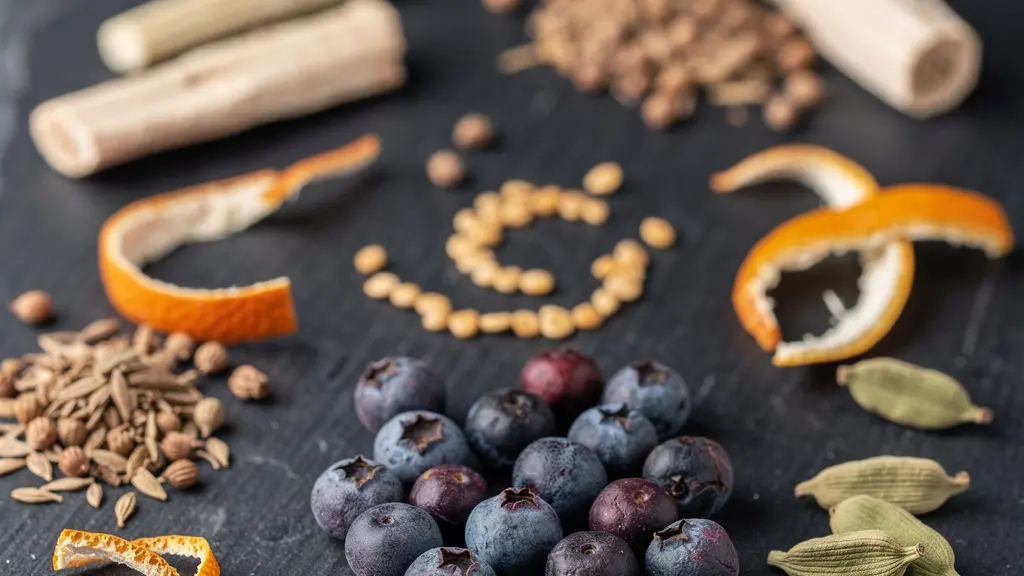
Identifying gin botanicals isn’t about having a ‘super-palate,’ but about understanding the distiller’s hidden choices.
- Distillation methods like vapor infusion (light/floral) vs. maceration (heavy/earthy) fundamentally change how botanicals taste.
- The gin’s internal “flavor architecture” (juniper-forward vs. citrus-forward) provides a roadmap for what flavors to look for.
Recommendation: Start by tasting a macerated gin against a vapor-infused one to physically feel the difference in flavor weight and texture.
That first sip of a gin and tonic often hits with a familiar, bracing wave of pine. For many, that’s where the story begins and ends: gin tastes like juniper. You might hear advice to “read the bottle” or “just smell it more,” but these tips only scratch the surface. They tell you *what* you should be tasting but not *how* to find it. This leaves you staring into your glass, wondering where the promised notes of cassia bark or grains of paradise are hiding behind that dominant juniper wall. As a distiller, I can tell you the secret isn’t just in the ingredients, but in the process. The true character of a gin is a carefully constructed botanical blueprint, forged by heat, pressure, and time.
The frustration of a flattened palate is real, but the solution isn’t to simply try harder. It’s to learn how to think like a distiller. What if the key to unlocking a gin’s complexity wasn’t in your nose, but in understanding the distiller’s craft? Every choice, from the height of the still to the method of infusion, is a deliberate act designed to shape the final spirit. Some techniques capture the delicate, fleeting aromas of flowers, while others extract deep, earthy tones from roots and barks. Understanding these decisions gives you a framework to deconstruct what’s in your glass.
This guide will take you beyond generic tasting notes. We will move from the foundational science of botanical extraction to the practical art of tasting. We’ll explore why different distillation methods create vastly different spirits, how to train your palate with at-home infusions, and even how advanced techniques like fat-washing can change your perception of flavor. By the end, you won’t just be tasting gin; you’ll be reading its story.
To navigate this journey into the heart of gin, this article is structured to build your knowledge layer by layer. We will begin with the fundamental choices in distillation and work our way towards advanced tasting strategies and cocktail theory, providing a comprehensive toolkit for your palate.
Summary: A Deep Dive into Gin’s Botanical Secrets
- Why Vapor Infusion Creates More Delicate Floral Notes than Maceration?
- How to Infuse Vodka with Botanicals at Home Without Extracting Bitterness?
- London Dry or New Western: Which Style Suits a Negroni Better?
- The Garnish Mistake That Overpowers Subtle Botanicals in Your G&T
- In Which Order Should You Taste Gins to Avoid “Palate Fatigue”?
- Why Tall Stills Produce More Floral Spirits than Short Stills?
- Manhattan or Daiquiri: Which Balance Structure is Harder to Master?
- How to Fat-Wash Spirits with Butter or Oil Without Making Them Greasy?
Why Vapor Infusion Creates More Delicate Floral Notes than Maceration?
The first step in deconstructing a gin’s flavor is understanding how its botanicals were introduced to the spirit. The two primary methods, maceration and vapor infusion, produce dramatically different results. Maceration is essentially a steeping process; botanicals are soaked directly in the base spirit before or during distillation. This direct contact extracts a broad, heavy spectrum of flavors, including oils and earthier base notes, akin to making a strong tea. Think of the robust, juniper-and-spice character of a classic gin like Beefeater.
Vapor infusion, on the other hand, is a more delicate process. Botanicals are placed in a basket above the boiling spirit, so only the hot, alcoholic vapor passes through them. This vapor gently coaxes out the most volatile, aromatic compounds without “stewing” the botanicals. The result is a lighter, brighter spirit that emphasizes floral and high-citrus notes. Bombay Sapphire is the archetypal example, known for its bright, lifted profile. The science confirms this: a 2019 study showed that vapor infusion can result in higher concentrations of over 90% of terpene compounds, which are responsible for many of gin’s fresh floral and piney aromas.
Understanding this distinction is the key to identifying the distiller’s intent. When you taste a gin, ask yourself: does it feel ‘heavy’ and integrated, or ‘lifted’ and ethereal? The answer points directly to its production method. To experience this firsthand, you can conduct a simple comparative tasting.
Your Action Plan: Comparative Tasting of Maceration vs. Vapor Infusion
- Select two benchmark gins: one known for maceration (e.g., Beefeater) and one for vapor infusion (e.g., Bombay Sapphire).
- Taste both neat at room temperature, paying close attention to the ‘weight’ and texture of the flavors on your palate.
- In the macerated gin, search for heavier, earthy notes reminiscent of stewed botanicals like angelica root or a nuttier expression of coriander.
- In the vapor-infused gin, hunt for the lighter, more volatile top notes—bright citrus peel and fresh floral character.
- Notice how the same botanical, like coriander, can express differently: nutty and warm in the macerated gin versus citrusy and bright in the vapor-infused one.
- Compare the overall feeling: the ‘lift’ and aromatic brightness of vapor infusion versus the ‘weight’ and depth of maceration.
How to Infuse Vodka with Botanicals at Home Without Extracting Bitterness?
One of the best ways to train your palate to identify individual botanicals is to isolate them. Creating your own single-botanical infusions at home using a neutral spirit like vodka is a powerful exercise. However, it’s a process fraught with a common pitfall: extracting unwanted bitterness. This often happens from over-infusing or using the wrong technique, which pulls out harsh tannins and bitter compounds alongside the desirable aromas.
The key to a clean infusion lies in controlling four variables: time, temperature, surface area, and alcohol-by-volume (ABV). Longer infusion times and higher temperatures accelerate extraction, but they also pull out more bitter compounds from things like citrus pith or woody spices. Similarly, crushing botanicals increases the surface area for faster infusion but also provides a quicker path to bitterness. A Bar Above’s guide to home gin-making highlights this by recommending infusing crushed cardamom pods for 24 hours but adding delicate citrus peels only in the final 12 to prevent pith bitterness from dominating. A 40-50% ABV spirit is often the sweet spot, powerful enough to extract oils but not so harsh that it strips everything indiscriminately.
This paragraph introduces the core challenge of home infusion. To better visualize a simple but effective setup, consider the image below.
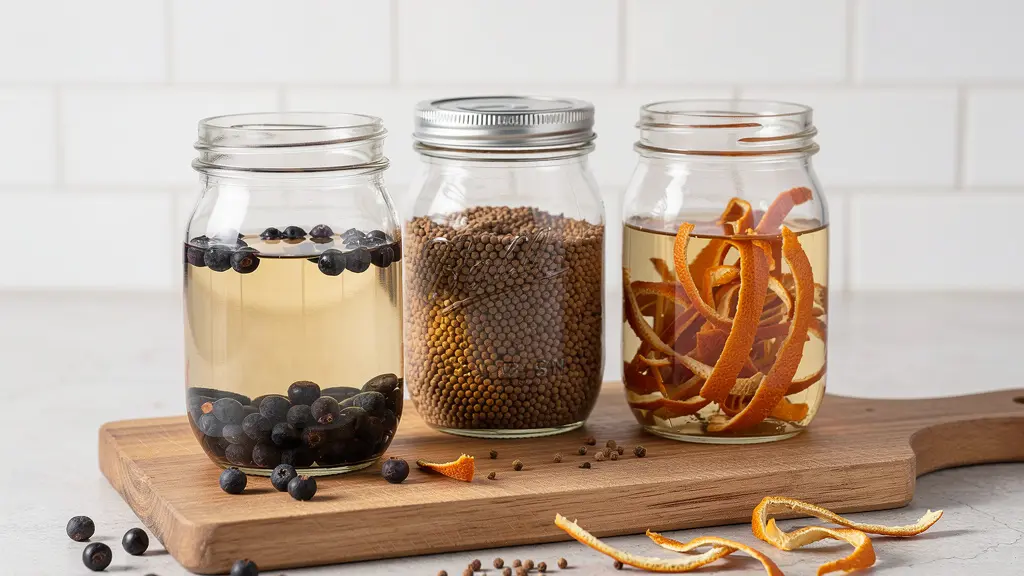
As you can see, the process can be clean and methodical. By using separate jars for each botanical—such as juniper, coriander, and orange peel—you can taste them at regular intervals and learn the unique extraction curve of each ingredient. Some, like cinnamon, can become overpowering in hours, while others, like whole coriander seeds, release their flavor more slowly and gently. Mastering this control is fundamental to creating a balanced flavor profile.
To avoid common mistakes, this table, based on principles from professional distillers, outlines how to manage each variable for a cleaner extraction. As highlighted in Distiller Magazine, a systematic approach is key to perfecting a botanical recipe by design.
| Variable | Effect on Bitterness | Recommended Approach |
|---|---|---|
| Time | Longer = more tannin extraction | 24 hours max for most botanicals |
| Temperature | Heat increases bitter compound extraction | Room temp or cold infusion for delicates |
| Surface Area | Crushed = faster, more bitter extraction | Whole spices for controlled extraction |
| ABV | Higher ABV extracts more oils | 40-50% ABV optimal balance |
London Dry or New Western: Which Style Suits a Negroni Better?
The Negroni is a cocktail of bold personalities: the assertive bitterness of Campari, the complex sweetness of vermouth, and the botanical backbone of gin. Choosing the right gin is not just about preference; it’s about understanding which botanical structure will stand up to, or complement, its powerful partners. The debate often centers on two major styles: the classic London Dry and the modern New Western. A London Dry is, by definition, juniper-forward. Its assertive pine and spice notes are strong enough to cut through the other ingredients, ensuring the gin’s presence is felt.
New Western gins, by contrast, de-emphasize juniper to allow other botanicals—often floral, citrus, or exotic spices—to take the lead. This can create a more complex and nuanced Negroni, but it also runs the risk of being completely overwhelmed by the Campari. As Becca Petersen, Bar Manager at Chicago’s Scofflaw, notes, while a London Dry is classic, “there are plenty of New Western–style gins that have big flavors that don’t necessarily come from just juniper.” The key is finding one with a bold enough profile to compete.
A 2024 blind tasting by PUNCH Magazine sought to settle this debate. In the end, they crowned Sipsmith London Dry Gin as the ideal choice for a Negroni. The judges found its robust juniper profile, even in a gin-forward build (1 oz gin to 0.75 oz each of the other ingredients), provided the necessary structure to balance the cocktail. They noted that many floral New Western styles were masked by the Campari’s bitterness. However, they also found that certain gins with strong herbal notes, like Mediterranean styles with rosemary, created a fascinating bridge to the vermouth’s spices. This suggests the answer isn’t a simple “either/or.” The best gin for a Negroni is one with a strong botanical point of view, whether it’s the juniper of a London Dry or the pronounced herbal character of a specific New Western gin, as it must be bold enough to hold its own in such an iconic, spirit-forward drink.
The Garnish Mistake That Overpowers Subtle Botanicals in Your G&T
The garnish in a Gin & Tonic is more than decoration; it’s the final botanical added to the glass. Yet, it’s also where many drinkers make a critical error: choosing a garnish that masks, rather than enhances, the gin’s delicate profile. The most common mistake is defaulting to a thick wedge of lime or lemon. While a citrus twist can be perfect for a classic juniper-forward gin, squeezing a large wedge into the glass releases a flood of acidic juice and bitter pith oils, effectively blanketing the subtle floral and spice notes the distiller worked so hard to create.
A strategic garnish works in harmony with the gin’s existing botanical blueprint. The goal is to either complement a dominant note or create a pleasant contrast that makes other flavors pop. A gin with a strong citrus profile, for instance, doesn’t need more lemon; it might benefit more from the fresh, green contrast of a cucumber ribbon, which can make the existing citrus notes taste even brighter. A spicy gin can be amplified by a star anise pod, which adds aroma without adding flavor-muting juice.
This thoughtful approach is about precision and aromatic synergy, as demonstrated by the delicate placement of the perfect garnish.
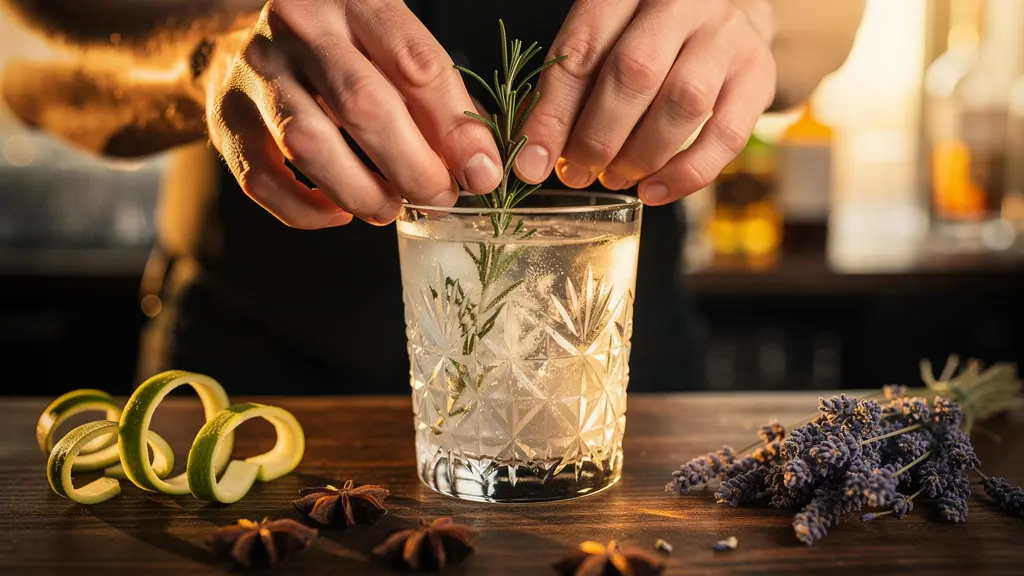
To avoid overpowering your drink, think aromatically. A sprig of rosemary, lightly bruised to release its oils, can beautifully amplify the herbal notes in a juniper-forward gin. A few edible lavender buds can elevate the floral notes in a delicate New Western gin. Here are a few pairings to guide your next G&T:
- For juniper-forward gins: A fresh rosemary sprig or a twist of grapefruit peel.
- For citrus-led gins: A thin cucumber ribbon or a sprig of fresh mint.
- For floral gins: Edible flowers like chamomile or lavender, or a thin slice of pear.
- For spiced gins: A star anise pod, a small cinnamon stick, or a few pink peppercorns.
- For savory/Mediterranean gins: A green olive or a sprig of fresh thyme.
In Which Order Should You Taste Gins to Avoid “Palate Fatigue”?
When tasting multiple gins, the biggest enemy is palate fatigue, a state where your senses become overwhelmed and unable to distinguish subtle differences. This often happens when you taste gins in a random order, starting with a powerful, complex spirit that blows out your palate for the more delicate ones that follow. To conduct a meaningful tasting, you need a strategic order that builds in intensity and complexity.
The most effective method is to start with a baseline and work your way up. This progressive approach allows your palate to acclimate and identify nuances more effectively. The ideal tasting order is as follows:
- Start with a benchmark London Dry: Begin with a classic, juniper-forward gin like Tanqueray or Beefeater. This establishes a clear baseline for juniper, the core of gin’s identity.
- Move to a citrus-forward gin: Tasting this next helps you isolate citrus notes from the juniper baseline you just established.
- Progress to a floral or herbal New Western: With your palate now tuned to juniper and citrus, it will be easier to hunt for the more delicate floral and herbal notes that define this style.
- Finish with complex or high-proof gins: End your flight with heavily spiced gins, aged expressions, or cask-strength versions. Their intensity would have crushed your palate if you had started with them.
Between each tasting, it’s crucial to reset your olfactory receptors. The professional technique is to smell something familiar and neutral. Contrary to popular belief, you don’t need fancy equipment; smelling the back of your own hand provides a familiar scent baseline that forces your nose to “re-calibrate.” A small container of coffee beans works for the same reason, introducing a strong, completely different scent that effectively cleanses the sensory slate. This simple reset prevents the aromas of one gin from bleeding into the next, ensuring a cleaner assessment of each spirit.
Why Tall Stills Produce More Floral Spirits than Short Stills?
The physical shape of the still is one of the most fundamental yet overlooked factors in determining a gin’s final character. The height of the still directly influences a critical process called reflux. During distillation, alcohol vapor rises. In a tall still, this vapor has a longer journey to the condenser. As it travels up the still’s long neck, it cools, condenses, and falls back down, only to be re-vaporized. This cycle can happen multiple times.
Each time reflux occurs, the spirit becomes purer and lighter. Heavier, oilier compounds with higher boiling points are left behind, while only the lightest, most volatile aromatic molecules—those responsible for delicate floral and bright citrus notes—make it all the way to the top. Furthermore, the extended journey in a tall copper still increases the spirit’s contact with the copper itself, which helps to strip out undesirable sulfur compounds, resulting in a cleaner, smoother spirit. The result is a spirit with what distillers call ‘lift’—an ethereal, bright, and floral character.
In contrast, a short, wide pot still offers a much quicker path for the vapor. There is far less reflux, meaning heavier and oilier flavor compounds are carried over into the final spirit. This creates a gin with more ‘weight’ and a bolder, richer character, often emphasizing earthy and spicy notes from botanicals like angelica root and cassia bark. The proprietary Carterhead stills used for Bombay Sapphire are a perfect example of the tall still principle in action. Their design maximizes reflux and copper contact to create the ‘lift’ that defines their bright, floral flavor profile. You can think of the difference like a singer’s voice: a tall still produces a clean, pure opera singer’s high note, while a short still produces the bold, rich, and textured voice of a blues singer.
Manhattan or Daiquiri: Which Balance Structure is Harder to Master?
When you taste a gin, you’re not just tasting a list of botanicals; you’re experiencing a deliberately constructed flavor architecture. A useful way to conceptualize this is to think of gins as having an internal “cocktail structure.” This framework helps you read through the most dominant notes to find the supporting cast. The two primary structures can be thought of as a “Botanical Manhattan” and a “Botanical Daiquiri.”
A “Botanical Manhattan” gin is built like the classic whiskey cocktail: bold, spirit-forward, and structured. In this gin, juniper plays the role of the robust whiskey, providing a powerful backbone. The supporting botanicals, like earthy angelica and spicy coriander, act as the ‘vermouth,’ adding depth and complexity around the central juniper theme. Classic London Dry gins like Tanqueray are perfect examples of this structure. To taste them properly, you must taste *through* the juniper to find the spicy, earthy base notes that give the gin its weight and foundation.
A “Botanical Daiquiri” gin, on the other hand, is structured around the delicate sour-sweet harmony of the classic rum cocktail. Here, juniper takes a backseat. The primary structure is a vibrant interplay between citrus, floral, and fruit notes. Gins like Hendrick’s (with its cucumber and rose) or Malfy Gin Con Limone are prime examples. The challenge here is not to taste through a single dominant note, but to analyze how the various bright notes interact and balance each other. Mastering the Daiquiri structure is arguably harder because it requires a more nuanced palate to discern the subtle interplay of delicate flavors, whereas the Manhattan structure provides a clear, juniper-led roadmap.
- Identify the dominant profile: Is the gin juniper-forward (Manhattan) or is it led by citrus/florals (Daiquiri)?
- For Manhattan structures: Consciously search for the flavors hiding *behind* the pine. Look for the earthy bitterness of angelica or the warm spice of coriander.
- For Daiquiri structures: Focus on the interaction. Does the citrus lift the floral notes? Does a hint of spice balance the fruit?
- Assess the ‘weight’: Manhattan-style gins will feel heavier and more viscous on the palate, while Daiquiri styles feel lighter and more fleeting.
Key Takeaways
- The production method (maceration vs. vapor infusion) is a primary indicator of a gin’s flavor profile—heavy and earthy vs. light and floral.
- A gin’s internal “flavor architecture” can be read like a cocktail: juniper-forward “Manhattans” require tasting ‘through’ the pine, while citrus-forward “Daiquiris” are about analyzing the interplay of bright notes.
- Advanced techniques like still design and fat-washing are not just novelties; they are tools that selectively mute or amplify botanicals, fundamentally changing how we perceive flavor and texture.
How to Fat-Wash Spirits with Butter or Oil Without Making Them Greasy?
Fat-washing—the process of infusing a spirit with a liquid fat like butter or oil and then freezing it to remove the solidified fat—might seem like an advanced cocktail trick far removed from identifying botanicals. However, it is an incredibly powerful tool for understanding how flavor compounds behave and how texture influences perception. When you fat-wash a gin, you are not just adding flavor; you are conducting a scientific experiment on solubility. Some aromatic compounds in botanicals are fat-soluble, while others are alcohol/water-soluble.
By infusing a gin with a fat like brown butter, you selectively pull certain flavors into the fat while leaving others behind. When you remove the fat, you are also removing the flavors it has captured. This process can fundamentally re-balance the gin’s botanical profile. As one expert on advanced cocktail techniques explains, this textural shift dramatically alters flavor perception.
The added fat coats the tongue and can mute sharp, high-toned notes like delicate florals or bright citrus while amplifying or complementing richer notes like nuts, vanilla, or spices.
– Professional Bartender, Advanced cocktail technique analysis
The key to avoiding a greasy final product is the freezing stage. After infusing the fat into the spirit at room temperature for a few hours, the entire mixture is placed in a freezer. The fat, being non-alcoholic, will freeze solid into a puck at the top, while the spirit remains liquid. This allows you to easily skim off the solidified fat, often passing the remaining spirit through a fine-mesh sieve or coffee filter to remove any last particles. The result is a spirit that has the aromatic essence and textural richness of the fat, without any of the grease. This technique doesn’t just make a tasty drink; it teaches a core lesson: a gin’s flavor is a complex system of compounds, and by changing the medium (adding fat), you can change which parts of that system are expressed.
Now that you are equipped with the distiller’s perspective—from infusion methods to the very shape of the still—the final step is to put this knowledge into practice. Pick two distinct gins from your collection, one you know to be a classic London Dry and another that promises a more modern profile, and begin your own comparative tasting tonight.