
The true quality of a spirit is not found in the bottle, but is created in the mind through a carefully orchestrated sensory ritual.
- The physical weight of your glass and the ambient sound in your room measurably alter your perception of taste and quality.
- Overcoming “nose burn” and resetting your palate are not technical chores, but mindful practices to heighten sensory awareness.
Recommendation: Stop analyzing your whisky and start curating your experience. The path to a better tasting is through mastering your environment, not just the spirit.
For the stressed professional, a glass of fine whisky or rum promises a moment of peace—a punctuation mark at the end of a long day. Yet, how often does that moment get lost in the noise of a lingering email, a buzzing phone, or a racing mind? We’re told to use a proper glass, perhaps add a splash of water, and “enjoy.” But this advice barely scratches the surface. It treats tasting as a mechanical process, overlooking the most crucial instrument in the entire experience: your own state of being.
The common approach focuses on dissecting the spirit, hunting for notes of vanilla or smoke as if it were an academic exercise. This misses the point entirely. What if the key to unlocking the deepest, most subtle flavors wasn’t about trying harder to analyze, but about creating an environment where your senses can’t help but pay attention? What if the weight of the glass in your hand and the music in the air were as important as the liquid itself?
This guide abandons the tired tasting checklists. Instead, we will explore a more holistic, sophisticated approach. We will treat the act of tasting not as an analysis, but as a deliberate act of mindfulness. This is about transforming your space and your mindset into a sensory sanctuary, a place where every element—from touch and sound to story and timing—is consciously curated to quiet the noise and awaken your palate. It’s time to move beyond simply drinking and learn the art of truly distraction-free sipping.
To guide you on this journey, we have structured this article to explore each facet of creating your sensory sanctuary. Below is a summary of the path we will take to elevate your tasting ritual from a simple habit to a profound experience.
Summary: A Guide to Mindful, Distraction-Free Sipping
- Why Does Whisky Taste Better in a Heavy Crystal Glass?
- How to Reset Your Palate Between Drams Without Using Dry Crackers?
- Jazz or Silence: Which Background Ambience Enhances Tasting Focus?
- The Dining Mistake That Numbs Your Palate to Delicate Flavors
- When Is Your Palate Most Sensitive: Morning or Evening?
- Weight or Thinness: Which Enhances the Psychological Perception of Quality?
- Why Building a “Story” Around the Region Makes the Spirit Taste Better?
- How to Overcome “Nose Burn” to Smell the Hidden Aromas?
Why Does Whisky Taste Better in a Heavy Crystal Glass?
The idea that a heavy glass improves a spirit’s taste might seem like pure marketing, but it’s grounded in a fascinating psychological principle: embodied cognition. This field of study explores how our physical interactions with the world shape our thoughts and perceptions. Your mind doesn’t just taste with your tongue; it tastes with your hands, your eyes, and your expectations. When you hold a substantial, weighty crystal tumbler, its heft and texture send a powerful, non-verbal signal to your brain: “This is important. This has value. This is a moment to be savored.”
This physical sensation primes your entire sensory system for a high-quality experience before the liquid even touches your lips. It’s a form of sensory storytelling. The weight creates an expectation of substance and complexity, which your brain then actively seeks out in the aroma and flavor. This phenomenon is well-documented, with research spanning over 25 years confirming that our cognitive processes are deeply grounded in our bodily sensations. The feel of the glass is not just a detail; it’s the first chapter of the tasting story you are telling yourself.
In essence, you are not just holding a glass; you are holding an argument. The weight argues for quality, the clarity for purity, and the design for elegance. By choosing your vessel with intention, you are consciously directing your own perception and setting the stage for a richer, more profound tasting experience.
How to Reset Your Palate Between Drams Without Using Dry Crackers?
The traditional advice to cleanse your palate with bland, dry crackers is functional, but it lacks elegance and joy. For a mindful ritual, every element should be a pleasure. It’s time to retire the dusty wafer and embrace a more sophisticated and effective alternative: a crisp, cool slice of a Granny Smith apple. Unlike a cracker, which can leave a pasty film, the apple’s high malic acid content, firm texture, and clean, tart flavor work to genuinely scrub the palate and stimulate saliva production, preparing your taste buds for the next spirit with a sense of freshness.
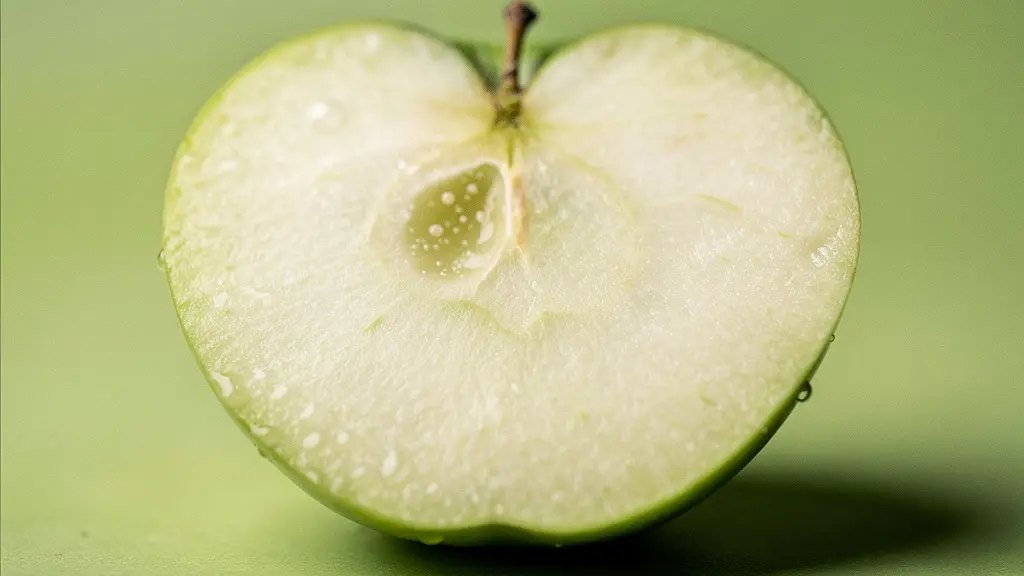
Beyond this simple swap, consider how professionals truly prepare their palate. It’s less about “cleansing” and more about “acclimatizing.” The first sip of a high-proof spirit should not be for analysis. Its purpose is to accustom your mouth to the strength of the alcohol. Take a tiny, almost imperceptible sip and hold it, letting it warm on your tongue. Then, for the first “real” taste, professionals recommend masticating the whisky for at least 30 seconds. This action stimulates the salivary glands, naturally diluting the spirit and unlocking a cascade of flavors that would otherwise be masked by the initial alcoholic shock.
This approach transforms palate preparation from a chore into a deliberate part of the ritual. You are not just wiping the slate clean; you are mindfully preparing the canvas, ensuring that every nuance of the next dram can be perceived with clarity and focus.
Jazz or Silence: Which Background Ambience Enhances Tasting Focus?
The debate between sound and silence in a tasting environment often misses the crucial point: it’s not about the *presence* of sound, but the *nature* of it. Complete silence can be unnerving for a stressed mind, making it louder internally. The key is to use sound as a tool to shape your perception. This is where the science of cross-modal correspondences becomes incredibly useful. You don’t just hear with your ears; you taste with them, too.
Remarkably, research into crossmodal perception demonstrates that what you hear can measurably change what you taste. High-pitched sounds, like tinkling piano keys or delicate wind chimes, have been shown to enhance our perception of sweetness. Conversely, low-pitched sounds, such as a deep cello, a resonant bassline, or even a crackling fire, can accentuate notes of bitterness and give a spirit a perceived richness or depth. This isn’t imagination; it’s your brain creating a cohesive sensory experience.
As the experts at The Scotch Malt Whisky Society astutely point out:
Flavor is in fact a lie – a brilliant, beautiful illusion created entirely by your brain.
– The Scotch Malt Whisky Society, Sensory School: Lesson 3
Instead of defaulting to silence or random jazz, curate your audio environment. Tasting a light, fruity Speyside? Try a minimalist ambient track with high-frequency tones. Exploring a dark, smoky Islay? A piece of slow, resonant classical music or the low rumble of a storm soundtrack might unlock deeper, earthier notes you’d otherwise miss. Your playlist becomes a part of your tasting toolkit.
By consciously pairing sound with spirit, you move from being a passive taster to an active conductor of your own sensory orchestra, directing your brain to perceive the most complete and complex version of the flavor profile.
The Dining Mistake That Numbs Your Palate to Delicate Flavors
We often worry about the obvious palate-killers: spicy foods, strong coffee, or minty toothpaste. While these certainly have an impact, the single greatest dining mistake that numbs your palate has nothing to do with what you’ve just eaten. The most destructive element is a distracted and overstimulated mind. For the busy professional, this is the default state—a mind still processing the day’s tasks, composing the next email, or scrolling through a newsfeed.
When your brain is engaged in cognitive tasks or processing stress, it actively filters out subtle sensory information. This is a survival mechanism. Your nervous system prioritizes the perceived “threat” of an overflowing inbox over the delicate floral notes in your rum. You can have the world’s most sensitive palate, but if your mental bandwidth is occupied, you are, for all intents and purposes, tasting blind. The spirit’s complexity is there, but your brain simply doesn’t have the resources to process it.
The antidote is not a complex palate cleanser, but a simple “cognitive reset.” Before you even pour the dram, you must consciously transition from your “work” mind to your “sensory” mind. This can be a ritual as simple as a thirty-second micro-meditation. Put your phone away, close your eyes, and take three slow, deliberate breaths. On the first breath, simply notice the physical state of your body. On the second, bring your awareness to the room around you. On the third, focus solely on the anticipation of the tasting. This simple act tells your brain to switch gears, freeing up the cognitive resources needed to perceive nuance.
Therefore, the most significant “pairing” for any fine spirit is a moment of intentional calm. Without it, you are merely consuming alcohol; with it, you are preparing for a genuine sensory experience.
When Is Your Palate Most Sensitive: Morning or Evening?
The conventional wisdom, often repeated by industry professionals, is that the palate is at its most sensitive in the morning, typically between 10 AM and 12 PM. The logic is sound: you are not fatigued, your senses are fresh, and your palate is “clean.” However, for a stressed professional looking for a mindful release, this advice is not only impractical but fundamentally misguided. The optimal time for a tasting is not dictated by a clock, but by your state of being.
As sensory research reveals, a multitude of factors alter your perception thresholds, including fatigue, emotional state, hunger, and stress. A “clean” morning palate that is accompanied by a mind racing with the day’s to-do list is far less receptive to nuance than an evening palate that is relaxed and at peace. Forcing a tasting into a sterile morning slot turns it into another task to be completed, defeating the entire purpose of the ritual.
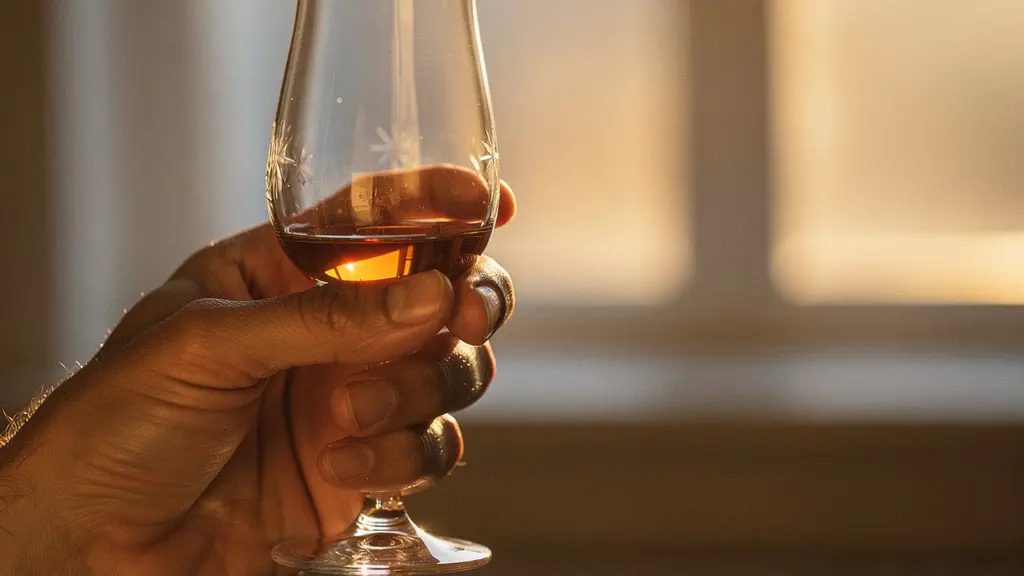
The real question is not “When is my palate most sensitive?” but “When am I most present?” For many, this moment comes at the end of the day. It’s the “golden hour,” when work is done and the mind is allowed to soften. This is the time to perform your cognitive reset and create your sanctuary. The act of sipping becomes a closing ritual, a way to wash away the day’s stresses and fully inhabit a moment of quiet pleasure.
Listen to your own rhythm. The best time to taste is when you can give the experience your full, unfragmented attention. Whether that’s a quiet Saturday afternoon or a late evening with the lights down low, your presence is the most crucial ingredient.
Weight or Thinness: Which Enhances the Psychological Perception of Quality?
The physical characteristics of a glass do more than just hold the liquid; they manipulate our perception of it. We’ve established that a heavier glass can signal quality, but the choice between a heavy, substantial vessel and a thin, delicate one is not about which is “better,” but about what story you want to tell. Each style leverages embodied cognition to enhance a different aspect of the spirit’s perceived character, as a recent analysis of psychological associations shows.
| Glass Type | Psychological Association | Best For |
|---|---|---|
| Heavy Crystal | Power, substance, longevity | Peated Islay, bold spirits |
| Thin Glass | Finesse, elegance, precision | Delicate Lowland, Japanese whisky |
| Thermal Properties | Insulation from hand heat | Temperature stability |
A heavy, thick-bottomed crystal tumbler feels powerful and enduring in the hand. This weight psychologically prepares you for a robust, complex, and perhaps older spirit. It’s the ideal vessel for a smoky Islay scotch or a rich, aged rum, as the physical sensation of substance reinforces the expected flavor profile. In contrast, a paper-thin, feather-light glass communicates elegance, finesse, and precision. It directs your attention to the delicacy of the spirit, making it the perfect choice for a nuanced Japanese whisky or a floral Lowland scotch. The lack of weight removes any sense of brute force, allowing the subtle aromas and flavors to take center stage.
Your Action Plan: Auditing Your Tasting Ritual
- Glassware Check: Does the weight and style of your glass match the character of the spirit you’re tasting (heavy for bold, thin for delicate)?
- Sensory Inputs: Have you chosen a specific sound (or intentional silence) and lighting level to complement the spirit’s expected profile?
- Palate Preparation: Are you using a clean palate reset tool (like a green apple) and acclimatizing your mouth with a small first sip before analyzing?
- Cognitive State: Have you performed a “cognitive reset” (e.g., three deep breaths, no phone) to transition from a busy to a receptive mindset?
- Story Priming: Have you spent two minutes reading about the distillery, region, or a tasting note to prime your brain with a narrative?
Ultimately, the choice of glass is an active part of the tasting. It’s not a passive container but a tool for psychological framing. By matching the glass to the spirit, you are aligning the physical sensations with the expected taste, creating a more cohesive and powerful sensory illusion.
Why Building a “Story” Around the Region Makes the Spirit Taste Better?
Have you ever noticed that a wine tastes better when you’ve visited the vineyard, or a whisky seems more complex after you’ve read about the distillery’s rugged coastal location? This is not a coincidence. It is a powerful psychological effect known as cognitive priming. Your brain is not a passive receiver of information; it is an active and brilliant storyteller. When you provide it with a narrative—a story of a windswept island, a centuries-old family tradition, or a unique production method—you give it a script to follow.
The brain loves to find patterns and confirm its own expectations. The story you build around the spirit before you ever take a sip sets a powerful precedent. This is a fundamental aspect of how we perceive the world, and it applies directly to flavor. As sensory experts from The Scotch Malt Whisky Society explain:
Your prior flavor experiences set expectations in your mind. These expectations begin to shape flavor perception even before you’ve taken a sip.
– The Scotch Malt Whisky Society, Sensory perception and expectation research
When you read that a whisky comes from Islay, your brain is primed for notes of smoke, salt, and brine. It will then actively search for those sensations, often amplifying them when it finds them. If you learn that a rum was aged in a tropical climate, you might be more attuned to its notes of banana and caramel. This doesn’t mean you’re imagining things; it means you’ve given your brain a map, and it’s using that map to navigate the complex landscape of the spirit’s flavor profile. The story provides context, and context creates flavor.
So, before your next tasting, invest two minutes in learning the story. Where was it made? Who made it? What makes it unique? By doing so, you are not just gathering trivia; you are actively collaborating with your brain to construct a richer, more meaningful, and ultimately more delicious tasting experience.
Key Takeaways
- Your mind tastes before your mouth does. Perception of flavor is an illusion created by the brain based on all sensory inputs, not just taste.
- You can actively shape your tasting experience. By controlling the environment—touch (glass weight), sound (music), and story (priming)—you guide your brain’s perception.
- A mindful ritual is superior to a technical process. The goal isn’t to analyze the spirit into submission, but to create a state of presence where its subtleties can be appreciated.
How to Overcome “Nose Burn” to Smell the Hidden Aromas?
The sharp, burning sensation you feel when nosing a high-proof spirit is the single biggest barrier to discovering its hidden aromas. Many assume it’s an unavoidable part of the process, a toll to be paid. However, understanding the science behind it transforms it from an obstacle into a gateway. This sensation has a name: chemesthesis. It’s a chemically induced thermal sensation, where ethanol molecules trigger the same nerve receptors in your nose that respond to physical heat. Your brain literally thinks your nose is being burned.
When your brain receives this pain signal, it goes into a protective mode, actively minimizing your other senses—including your sense of smell. This is why the burn seems to “erase” all the other aromas. To overcome it, you must retrain your approach. It’s not about pushing through the pain, but about gently coaxing the aromas out. The first step is to nose from a distance, keeping your mouth slightly open to allow some of the ethanol vapor to escape. Bring the glass closer slowly, in waves, until you find the “sweet spot” where you can detect the aromas without triggering the burn.
This patient approach is critical because your nose is an incredibly powerful instrument. While your tongue can only detect a few primary tastes, the nose has five million olfactory cells capable of discerning 32 primary aromas and thousands of nuances. Unlocking this potential requires a gentle hand. With each of the first three or four sips, you will get progressively more sensory information as your palate and olfactory system acclimatize. The aromas that were hidden behind the initial wall of ethanol will begin to emerge.
Overcoming nose burn is not a test of toughness but a lesson in finesse. It’s the final piece of the mindful ritual, teaching you that the most profound secrets of a spirit are revealed not to those who charge in, but to those who approach with patience, curiosity, and respect.