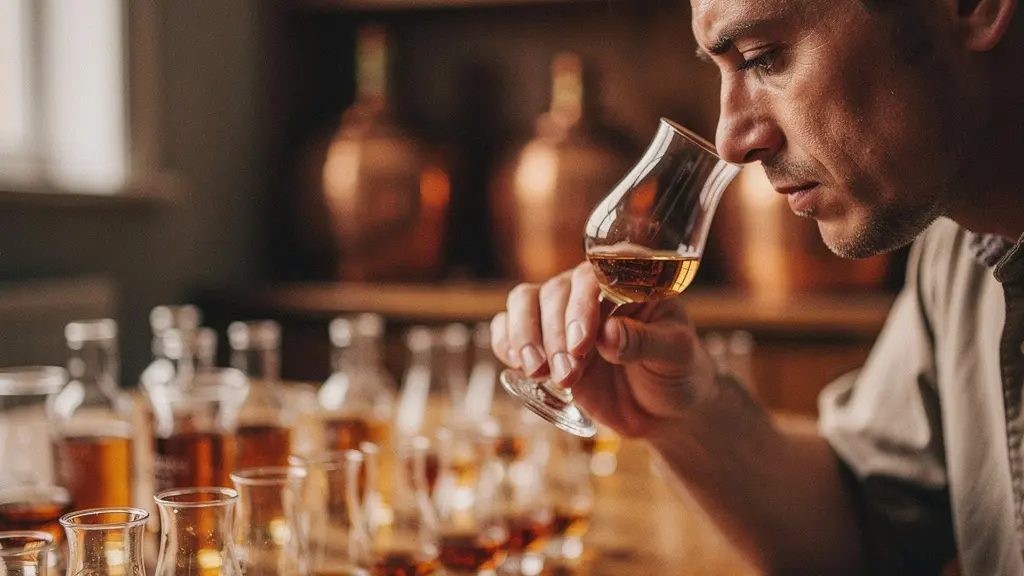
Contrary to popular belief, a Master Blender’s job isn’t to make every batch identical, but to skillfully conduct an orchestra of unique casks to recreate a consistent emotion and character.
- The “distillery character”—the spirit’s unique DNA—is valued far more than any simple age statement.
- Consistency is achieved through rigorous sensory calibration and the surprising art of using small amounts of “flawed” casks to perfect the final balance.
Recommendation: The next time you enjoy your favorite spirit, appreciate it not as a factory-made replica, but as a masterfully reconstructed piece of art.
Have you ever opened a new bottle of your favorite whisky, gin, or rum and marveled at how it tastes exactly as you remember? That comforting, familiar character is no accident. It’s the result of a quiet, relentless pursuit of perfection helmed by a figure who acts as both artist and scientist: the Master Blender. Many assume their job is simply to follow a recipe, mixing casks to erase any differences. But this barely scratches the surface. The reality is a far more fascinating dance with chaos, a deep understanding of heritage, and a few counter-intuitive secrets.
The true challenge isn’t just achieving consistency; it’s preserving a brand’s very soul. This soul, often called the “distillery character,” is a complex fingerprint of flavor, aroma, and texture. While others might chase impressive age statements, the blender is the guardian of a liquid legacy. Their mission is not to stamp out variation, which is inevitable, but to guide it. But if every cask is unique and the raw ingredients change with every harvest, how do they recreate that same magic, year after year, across millions of bottles? The answer lies not in a rigid formula, but in a philosophy of orchestration, where the blender conducts a symphony of disparate elements to play a single, familiar tune.
This article will pull back the curtain on this intricate craft. We will explore the fundamental principles, the specific rituals, and the surprising techniques that allow these guardians to maintain a spirit’s character across time, ensuring the bottle you buy today is a faithful echo of the one your grandfather might have enjoyed.
Summary: The Blender’s Art of Consistency
- Why Is “Distillery Character” More Important Than Age Statement?
- How to Use a “Control Sample” to Calibrate Your Palate Before Blending?
- Core Range or Single Cask: Which Truly Represents the Distillery’s Identity?
- The “Batch Drift” Phenomenon: Why Your Grandfather’s Whisky Tasted Different?
- In Which Order Should You Taste 10 Years of Releases to Spot Evolution?
- Why Adding 2% of a “Flawed” Cask Can Perfect a Premium Blend?
- The Transport Mistake That Makes Your Whisky Taste Flat for Two Weeks
- How to Blend Single Casks to Create a Spirit with Consistent Complexity?
Why Is “Distillery Character” More Important Than Age Statement?
In the world of spirits, age is often seen as the ultimate measure of quality. An older number on the label suggests more complexity, more refinement, and a higher price tag. Yet, for a Master Blender, age is merely one tool in a much larger toolbox. The true north star, the guiding principle of their craft, is something more profound and less tangible: the distillery character. This “house style” is the spirit’s unique DNA—a consistent profile of fruitiness, density, smokiness, or texture that defines the brand’s identity regardless of the specific batch.
This character is the promise made to the consumer. It’s the reason a Johnnie Walker Black Label tastes like itself anywhere in the world, or why a Laphroaig is instantly recognizable for its medicinal peat. As Brian Kinsman, Master Blender for William Grant and Sons, explains, “There’s a house style, and maintaining it is important. It’s a continuation of the fruit, the density, and oak, and where it’s going to sit on the map of evolution.” This focus on a consistent identity is far more challenging than simply bottling an old cask. It requires blending potentially hundreds of individual barrels together in giant vats to perfectly replicate that signature profile.
An age statement tells you the age of the youngest spirit in the bottle, but the distillery character tells you its soul. It’s the enduring personality that a blender is tasked to protect, making it a far more critical measure of a brand’s integrity and quality than a simple number.
How to Use a “Control Sample” to Calibrate Your Palate Before Blending?
A Master Blender’s most valuable instruments are their nose and palate. But these human tools are notoriously fickle, influenced by mood, health, and even the time of day. To make consistent, multi-million-dollar decisions, a blender cannot afford such variability. This is where a crucial, ritualistic practice comes into play: sensory calibration using a control sample. Before assessing new batches, a blender will first nose and taste a reference sample—a “perfect” example of the last approved batch of that spirit.
This control sample acts as a benchmark, a “true north” that resets their palate and reminds their senses of the precise target they are aiming for. The sheer volume of work makes this essential; as Chivas Regal Master Blender Sandy Hyslop reveals, he might nose between 1,500-2,000 samples per week, but only taste five. This reliance on smell necessitates an incredibly fine-tuned and consistent sensory memory, which the control sample helps lock in.
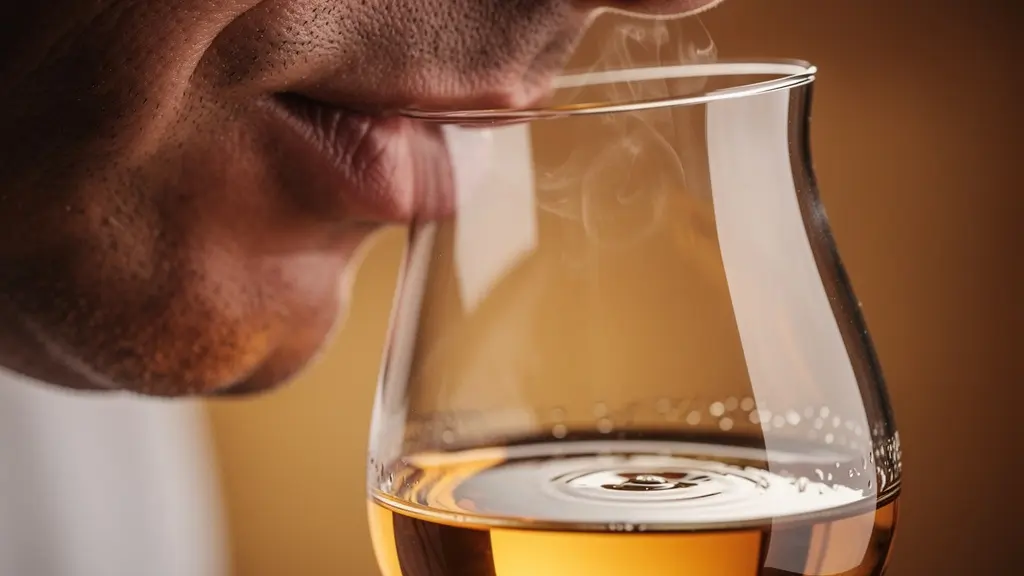
The process is often formalized into a blind test. A common method involves presenting a panel of experienced tasters with three glasses: two from the old, approved batch and one from the new batch being tested. Their task is to identify the “odd one out.” If the tasters can consistently pick out the new batch, it means the difference is perceptible. The Master Blender must then adjust the blend and repeat the process until the new batch is sensorially indistinguishable from the old one. This rigorous calibration ensures that every judgment is based on the brand’s established identity, not the whims of a single day’s tasting.
Core Range or Single Cask: Which Truly Represents the Distillery’s Identity?
Whisky enthusiasts often hunt for single cask releases, prized for their unique, one-of-a-kind character. A single cask is a snapshot in time—a singular expression of one barrel’s journey. However, from a Master Blender’s perspective, the truest and most complete representation of a distillery’s identity is found not in these outliers, but in the heart of its core range. As Emma Walker, Master Blender for Johnnie Walker, states, “Unless what you’re drinking is marked ‘single cask,’ a blender has their fingerprints on the liquid inside the bottle, whether it’s a blend or a single malt.”
A single cask can be spectacular, but it can also be eccentric or unbalanced, reflecting the specific quirks of its wood and maturation environment. The core range expression, by contrast, is a deliberate and masterfully constructed composition. It is the blender’s magnum opus, where they take dozens or even hundreds of different casks and weave them together to create a consistent, complex, and balanced spirit that perfectly embodies the house style. This process requires an incredible depth of knowledge about the distillery’s inventory.
For example, to create Bruichladdich’s Classic Laddie single malt, Head Distiller Adam Hannett evaluates up to 19 different component styles, factoring in barley variety, age, and cask type. He describes using sherry casks like “adding spices to a recipe”—the bourbon barrel base is the foundation, but the other components are what showcase the full breadth of the distillery’s capabilities. A single cask shows what one barrel can do; the core range shows what the entire distillery, under the guidance of its blender, can achieve.
The “Batch Drift” Phenomenon: Why Your Grandfather’s Whisky Tasted Different?
Even with the most skilled Master Blender at the helm, a whisky bottled today will likely taste subtly different from one bottled 20 years ago. This gradual evolution is known as “batch drift.” It’s not a mistake, but an inevitable consequence of the organic nature of whisky production. The raw materials—barley, water, and yeast—have their own variations from year to year. More importantly, the wooden casks used for maturation are not inert containers. As whisky analysis research confirms, every individual whisky barrel is unique due to factors like the specific tree it came from and the microclimate of its position in the warehouse.
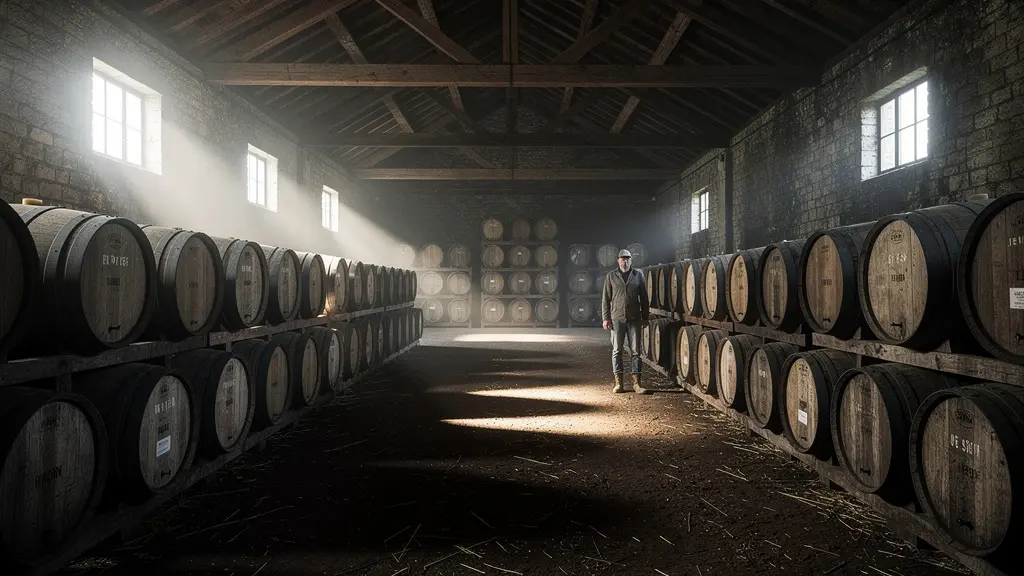
Over decades, a distillery’s wood policy may change, certain types of casks may become more or less available, and the average age of the component whiskies might shift. The blender’s job is not to halt this drift, which would be impossible, but to manage it. They steer the evolution of the flavour profile, ensuring the core character remains intact even as the finer details slowly change. It’s like a band playing their greatest hit 30 years later; the melody is the same, but the tempo and instrumentation might have a slightly different feel.
A perfect example comes from John Glaser of Compass Box. His famous Peat Monster blend has evolved over its journey. Recently, he consciously chose to eliminate whisky from Ardmore Distillery as a component because, in his expert opinion, the peated Ardmore available today “simply isn’t peaty enough” to fulfill its role in the blend. This is managed drift in action—a deliberate change made to preserve the spirit’s intended character in the face of evolving components.
In Which Order Should You Taste 10 Years of Releases to Spot Evolution?
For the curious consumer, identifying the “batch drift” we’ve discussed can be a fascinating detective game. Tasting a vertical series of the same whisky expression released over several years allows you to experience the subtle evolution of its character firsthand. However, the method you use to taste is critical. Simply tasting from oldest to newest might not reveal the nuances you’re looking for, as your palate can become fatigued or biased by the first sample.
Professionals use a more rigorous approach to identify these subtle differences. The key is not sequential tasting, but side-by-side comparison. This allows your senses to directly contrast one batch against another, making tiny variations in aroma or flavor much more apparent. Furthermore, conducting the tasting blind—without knowing which batch is from which year—is essential to remove any preconceived notions about older being “better” or newer being “different.” Your perception can also change from day to day, so repeating the tasting on another occasion is always a good idea.
A detailed comparison of Lagavulin 12-Year Cask Strength batches from 2012 to 2017 revealed that every single batch was different. The blender’s goal is to minimize this, but variation is inevitable. Side-by-side tasting is the only way for a connoisseur to truly identify and appreciate these changes.
Action Plan: How to Compare Whisky Batches Like a Pro
- Acquire Samples: Gather samples from different years or batches of the same whisky expression.
- Use Consistent Glassware: Ensure all samples are in identical glasses, as a brandy snifter can reveal different notes than a tulip glass.
- Conduct Blind Tastings: Conceal the identity of each batch to eliminate bias from knowing the release dates.
- Document Each Session: Take separate notes for each tasting, as your perception and the spirit’s flavors can change between sessions.
- Compare Side-by-Side: Rather than tasting one after the other, switch back and forth between two samples to highlight subtle differences.
Why Adding 2% of a “Flawed” Cask Can Perfect a Premium Blend?
One of the most counter-intuitive secrets of the Master Blender’s art is the concept of the “perfecting flaw.” It’s the idea that a balanced, harmonious final product is not always made from a selection of individually “perfect” casks. Sometimes, the key to unlocking complexity and achieving the target profile is to add a tiny percentage of a cask that, on its own, might be considered unusual, overly aggressive, or even slightly flawed. This component acts like a specific spice in a complex dish, bringing all the other ingredients into focus.
This could be an intensely smoky Islay whisky, a powerfully tannic French oak cask, or a grain whisky. For instance, Emma Walker of Johnnie Walker notes how “Grain whisky can help to reveal subtle characters in malt whiskies as they combine together.” A component that seems simple or one-dimensional on its own can act as a catalyst, brightening the fruit notes of one malt or taming the oakiness of another. The amount used is minuscule but has a disproportionate impact on the final blend.
Experts understand this delicate balance. For example, whisky blending experts warn that even just 5% of an Islay malt can quickly dominate a vat blend. The blender’s skill lies in using this power with precision. That 2% of a “strange” cask isn’t a flaw in the final product; it’s the secret ingredient that provides a point of contrast, adds a layer of complexity, or fills a missing gap in the sensory profile, ultimately making the entire composition more complete and compelling.
The Transport Mistake That Makes Your Whisky Taste Flat for Two Weeks
You’ve just received a long-awaited bottle of premium whisky. You open it with anticipation, pour a dram, and find it tastes… muted. The aromas are closed off, and the flavors feel flat and disjointed. Before you blame the distillery, consider a common phenomenon known as bottle shock or “travel sickness.” The agitation and temperature fluctuations during shipping can temporarily disrupt the delicate chemical balance of the spirit, causing its complex web of flavour compounds to “fall apart.” Master Blender Joe Beatrice explains that shaking a bottle “makes the whiskey really angry.”
This is related to the “marrying” period that blenders use after creating a blend. The component whiskies need time to integrate and harmonize. According to Beatrice, a blend should rest for a minimum of 12 hours, but often much longer, for the flavors to properly combine. The same principle applies to a bottled whisky that has been jostled in transit. It needs a period of rest for its components to reintegrate and for the flavor profile to return to its intended state.
Fortunately, the cure is simple: patience. Here’s what to do if you suspect your new bottle is suffering from travel sickness:
- Store the bottle upright in a cool, dark place with a stable temperature.
- Avoid any further shaking or excessive movement.
- Allow the bottle to rest for at least one to two weeks before opening and tasting again.
This resting period gives the volatile compounds time to settle back into equilibrium, allowing the whisky’s full character and complexity to shine through. The flat dram you first tasted will transform back into the vibrant spirit the Master Blender intended you to experience.
Key Takeaways
- A Master Blender’s primary goal is to preserve the “distillery character,” a unique DNA that is more important than an age statement.
- Consistency is achieved through rigorous sensory calibration with control samples and the masterful orchestration of hundreds of unique casks.
- Subtle evolution or “batch drift” over decades is inevitable; the blender’s role is to manage this change while preserving the core identity.
How to Blend Single Casks to Create a Spirit with Consistent Complexity?
Creating a consistent spirit is a monumental task when your palette consists of thousands of unique, ever-changing single casks. How does a blender take this kaleidoscope of individual personalities and create a single, unified, and replicable identity? The secret lies in systematic processes and an intimate, encyclopedic knowledge of their distillery’s cask inventory. The scale is staggering; as Master Blender, Emma Walker manages over 11 million casks for Johnnie Walker. At this level, consistency cannot be left to chance.
One of the most effective advanced techniques is the use of sub-blends, a methodology perfected by Japanese distilleries like Nikka. Instead of trying to create the final product in one massive blend, they first create smaller, intermediate blends from a handful of barrels. These sub-blends are designed to achieve specific characteristics—one might be particularly fruity, another smoky, and a third rich with sherry notes. Any off-flavors or imbalances are handled at this micro-level, giving the blender finer control.
The final product is then created by blending these pre-approved, consistent sub-blends. According to experts on Japanese whisky methodology, this iterative process allows for incredible precision in hitting a target profile. As Suntory’s Chief Blender Shinji Fukuyo notes, with their wide array of still shapes and cask types, they can produce over 100 distinct types of whisky. These become the “colors” on his palette, allowing him to paint the same masterpiece of consistent complexity, time and time again.
Now that you understand the art and science behind the consistency in your glass, the next step is to apply this knowledge to your own tasting experiences, appreciating each sip as a testament to a legacy of craft.