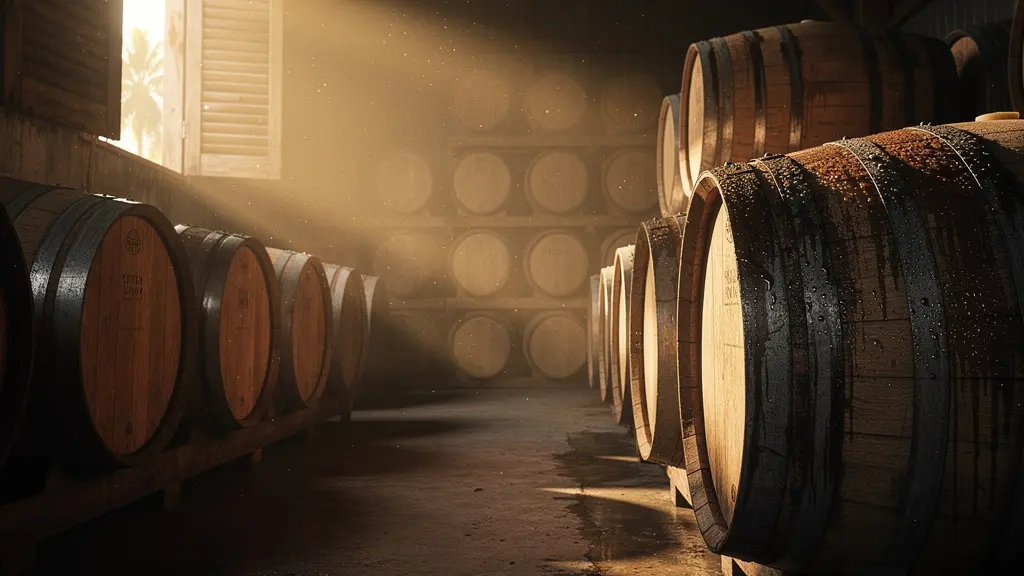
The accelerated aging of tropical rum isn’t magic; it’s a series of intense, quantifiable environmental pressures that force chemical and physical changes at a rate unthinkable in Scotland.
- Constant high heat and humidity act as chemical accelerants, driving the creation of flavor compounds (esters) far more rapidly.
- Extreme evaporation, or “angel’s share,” concentrates the remaining spirit, fundamentally altering its structure and forcing a different approach to inventory management.
Recommendation: Instead of comparing age statements directly, the savvy whisky drinker should assess a tropical rum based on the balance between its wood-driven intensity and the complexity of its evolved flavors.
As a warehouse manager here in Barbados, I often get questions from whisky enthusiasts. They’ll taste a 12-year-old rum and their eyebrows shoot up. The depth, the oak, the complexity—it feels like a Scotch twice its age. They ask if we have some kind of trade secret. The truth is, our secret is the relentless environment we operate in. You can’t just put a barrel away for two decades and expect a masterpiece; you’d be lucky to find anything left but a woody, bitter sludge. The common wisdom that “it’s just hotter” barely scratches the surface.
The real difference lies in understanding that we aren’t just aging a spirit; we are actively managing a series of powerful maturation accelerants. While a Scottish warehouse offers a slow, gentle evolution, a tropical warehouse is a crucible. The constant heat, the suffocating humidity, and the dramatic temperature swings force a conversation between spirit and wood that is less a gentle dialogue and more a high-speed negotiation. This isn’t better or worse than the process for Scotch, but it is fundamentally different. It requires a different mindset, different tools, and a deep respect for the volatile chemistry at play.
In this article, we’ll bypass the marketing talk and get straight to the operational facts. We will break down the specific chemical and physical mechanisms that define tropical aging. We’ll look at the data on flavor creation, the logistical nightmare of evaporation, the risks of getting it wrong, and the techniques we use to harness this power instead of becoming its victim. This is a look under the hood at the science of speed.
To fully grasp the dynamics at play, this article will systematically explore the core principles governing maturation in different climates. The following sections will guide you through the science, the risks, and the management techniques that define our craft.
Summary: Unpacking the Science of Accelerated Spirit Maturation
- Why Heat and Humidity Create More Esters in Tropical Warehouses?
- How to Manage Inventory When You Lose 8% of Your Volume Every Year?
- Continental vs Tropical Aging: Which Method Preserves the Spirit’s Fruitiness?
- The “Oak Soup” Risk: Why 20-Year-Old Tropical Rums Are Often Too Woody
- How to Use Solera Systems to Counteract Excessive Evaporation Rates?
- Why Large Diurnal Temperature Shifts Force Whisky In and Out of the Wood?
- The Humidity Trap: Why Coastal Warehouses Lose More Alcohol Volume?
- How Does High Altitude Storage Slow Down Spirit Maturation?
Why Heat and Humidity Create More Esters in Tropical Warehouses?
The core of a spirit’s fruity and complex aromas comes from esters, which are chemical compounds formed when acids and alcohols react. In the cool, stable climate of Scotland, this process of esterification is a slow, multi-decade affair. In a tropical warehouse, it’s a chemical sprint. Heat is a powerful catalyst for all chemical reactions, and the consistently high ambient temperatures in places like the Caribbean dramatically increase the rate of these flavor-producing reactions. It’s a key reason why research shows that rum aged in the Caribbean matures up to three times faster than spirits in colder climates.
But it’s not just about direct esterification. The high heat also promotes oxidative reactions. As the Black Tot research team explains, this creates a domino effect: “When ethanol is oxygenated it creates acetaldehydes, and when acetaldehydes are oxygenated they create acetic acid – a necessary building block for esters.” This means the environment isn’t just speeding up one reaction; it’s actively creating more of the raw materials needed for complex flavor development. This accelerated volatile chemistry creates a flavor profile rich in heavy, complex esters that a Scotch might take 20 or 30 years to develop.
Humidity plays a crucial supporting role. It keeps the barrel staves swollen and porous, facilitating the exchange of oxygen and spirit, which fuels these oxidative reactions. It’s an environment supercharged for creating flavor, but this speed comes with significant trade-offs that we must manage carefully.
How to Manage Inventory When You Lose 8% of Your Volume Every Year?
In Scotland, distillers speak poetically of the “angels’ share,” the 1-2% of spirit that evaporates from the cask each year. In the Caribbean, we call it a significant operational and financial challenge. Here, the angels are far greedier; the angels’ share in tropical rum aging can reach an astonishing 8% to 12% per year. A barrel that is full today could be half empty in just six or seven years. This isn’t a quaint tradition; it’s a major factor in our inventory management and a key driver of the rum’s final character.
This rapid volume loss dramatically concentrates the remaining liquid. The congeners—the flavor compounds, acids, and esters—become denser, intensifying the spirit’s profile. This concentration is a huge part of why a younger tropical rum can have the punch and presence of a much older Scotch. However, managing this high-velocity inventory is a logistical puzzle. We can’t simply let barrels sit for decades. The potential for total loss is too high.
This reality has forced producers to develop rigorous management systems. Consider the approach at Appleton Estate, which manages a staggering 350,000 barrels. As a case study reveals, their team disgorges and tests every single barrel on a three-year cycle. If the volume in a cask drops too low, it’s not just left to evaporate further. It is often topped up to a 70% fill level to slow down the rate of future evaporation. This is a hands-on, labor-intensive process born of necessity. It’s proactive maturation, not passive storage.
Continental vs Tropical Aging: Which Method Preserves the Spirit’s Fruitiness?
The debate between tropical and continental aging centers on a fundamental trade-off: speed and intensity versus subtlety and preservation. As we’ve established, tropical aging is an aggressive process. It rapidly builds deep, woody, and spicy notes through intense oak extraction and concentration. In contrast, continental aging, which takes place in the cooler, more stable cellars of Europe, is a much gentler and slower journey. The lower temperatures significantly slow down both evaporation and the rate of chemical reactions. As a result, a maturation period of 3-5 years in the tropics can equate to 8-12 years in a European cellar.
This slower pace has a profound effect on the spirit’s character. While tropical aging pushes the heavy, wood-derived flavors to the forefront, continental aging tends to better preserve the lighter, more volatile, and fruity esters from the original distillate. The lower evaporation rate means less concentration, allowing the spirit’s intrinsic character to shine through over a longer period. It’s a process of slow evolution rather than rapid transformation. For a whisky drinker accustomed to the delicate fruit and floral notes of a well-aged Speyside, a continentally aged rum might feel more familiar and elegant.
To visualize the difference, imagine the environment of a continental cellar. It’s a world away from the sun-baked warehouses of the Caribbean.
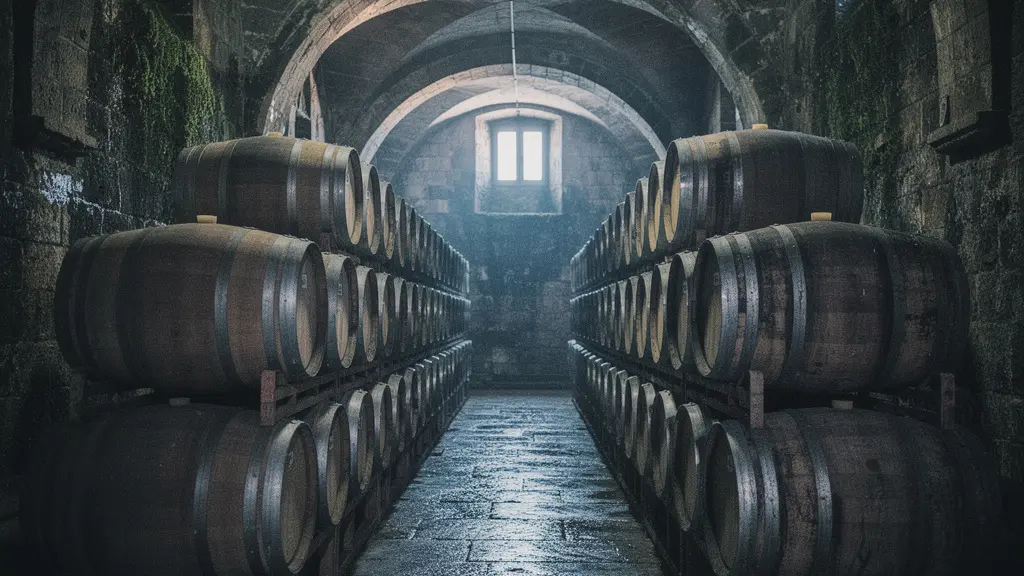
Some producers, like Plantation Rum, have built their entire philosophy on combining these two worlds. They practice a hybrid model, beginning the aging process in the Caribbean to build a foundation of tropical intensity, then shipping the casks to France. There, the rum undergoes a second, longer maturation in cool Cognac cellars, where it refines, softens, and develops a different layer of complexity. This method aims to capture the best of both worlds: the power of the tropics and the finesse of the continent.
The “Oak Soup” Risk: Why 20-Year-Old Tropical Rums Are Often Too Woody
In the world of Scotch whisky, older is almost always perceived as better. An 18-year-old is a step up from a 12, and a 25-year-old is an event. Applying this logic to tropical rum is a common but critical mistake. The same environmental forces that create complexity so quickly also carry an immense risk: over-extraction. When a spirit is aged in such an intense environment, the rate at which it pulls compounds like tannins and lignins from the oak can vastly outpace the slower, evolutionary reactions that create true complexity. The result is a spirit that is overwhelmingly woody, bitter, and astringent.
Many distillers find that rums aged over 12 years in the tropics begin to enter this danger zone. As Privateer Rum’s head distiller, Maggie Campbell, astutely observes, “The rate of extractive compounds from the oak can vastly outpace the rate of oxidative and esterification reactions that create complexity. The result is a spirit that tastes of wood, not of a spirit aged in wood.” This is the dreaded “oak soup”—a liquid so dominated by raw wood notes that the original character of the distillate is completely lost. It’s a cautionary tale against chasing high age statements without understanding the context.
For a whisky drinker, the goal is to find a rum where the wood is integrated, not dominant. It should provide a structure of vanilla, spice, and tannin that complements the estery, fruity notes of the rum itself, rather than bulldozing over them. A truly great, old tropical rum is a masterclass in balance, showcasing a producer’s ability to pull a cask at the precise moment before it tips over the edge.
Action Plan: How to Assess a Tropically Aged Rum
- Check the Color: A very dark color isn’t always a sign of quality; it can indicate excessive extraction or added coloring. Assess it with a healthy dose of skepticism.
- Nose for Balance: Swirl the glass. Are you getting a mix of fruit, spice, and oak? Or is it a one-note blast of lumber and vanilla? Look for complexity, not just power.
- Taste for Tannins: Take a sip. Does it leave your mouth feeling dry, bitter, or overly astringent? This tannic grip is a hallmark of over-extraction. A well-aged rum should have a smooth, rich finish.
- Identify the Distillate: Can you still taste the underlying rum? The sugarcane, the fermentation notes, the fruit? If all you can taste is the barrel, it has likely gone too far.
- Question the Age Statement: Don’t be seduced by a big number. A balanced 8-year-old tropical rum is often a far superior drinking experience to a woody 20-year-old.
How to Use Solera Systems to Counteract Excessive Evaporation Rates?
Given the dual challenges of massive evaporation and the risk of over-oaking, how do producers create a consistent, well-aged product? For many, the answer is the Solera system. This is a method of fractional blending, borrowed from the sherry producers of Spain, that is perfectly suited to the volatile conditions of the tropics. Instead of aging a single batch of rum in a single cask for a set number of years, the Solera system involves a dynamic process of blending rums of different ages.
Imagine a stack of barrels, called criaderas. The oldest rum is at the bottom (the solera row). When rum is bottled, it is drawn only from this bottom row, and never more than a fraction of the barrel’s contents. That barrel is then replenished with slightly younger rum from the row above it. This process continues all the way to the top, where the youngest rum is added to the system. This creates a continuous, cascading blend. The rum bottled is a complex mix of many different ages, ensuring that no single batch is ever fully depleted or left to over-extract for too long.
As Cynthia Vargas, Master Blender at Ron Matusalem, notes, “The solera aging system has revolutionized the art of rum making by providing a method to achieve consistent quality through the blending of different age profiles.” It ingeniously solves several tropical aging problems at once. First, it mitigates the extreme evaporation losses by constantly replenishing the older barrels. Second, it creates remarkable consistency from batch to batch, as the final product is always an average of the entire system. Finally, it allows producers to craft a specific flavor profile by balancing the fresh, vibrant notes of younger rums with the deep, complex character of the older stocks.
Why Large Diurnal Temperature Shifts Force Whisky In and Out of the Wood?
While heat provides the energy for chemical reactions, it’s the fluctuation in temperature that drives the physical interaction between spirit and wood. This principle, well-understood in the whisky world, is put into overdrive in the tropics. A warehouse in the Dominican Republic, for example, can experience daily temperature swings of up to 13°C (about 23°F). This is the engine of “barrel breathing.”
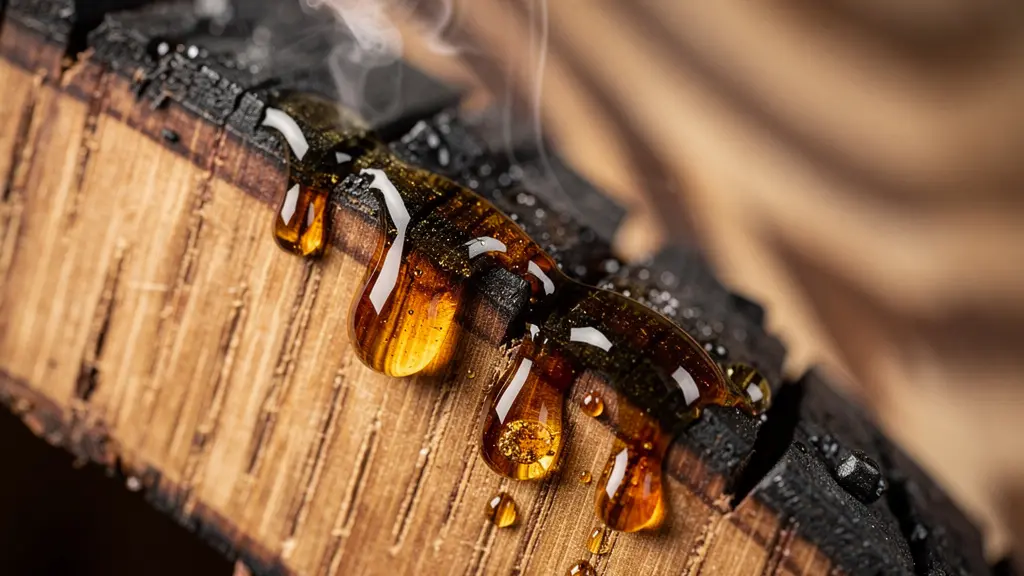
During the heat of the day, the liquid and the air trapped inside the barrel expand. This creates pressure, forcing the spirit deep into the pores and staves of the oak. This is the “exhale,” where the rum extracts flavors: vanillins, tannins, and color from the wood’s layers. Then, as night falls and the temperature plummets, everything contracts. This creates a vacuum, pulling the spirit back out of the wood, bringing all those extracted compounds with it. This is the “inhale.” In the tropics, this cycle happens with intense force, every single day.
This relentless process is what accelerates the extraction phase of maturation so dramatically. The spirit is physically agitated in and out of the oak, gaining color and woody notes at a phenomenal rate.
In Scotland, this breathing cycle is far more gentle and seasonal. The temperature swings are less dramatic, meaning the interaction is slower and less forceful. This allows more time for the evolutionary, oxidative reactions to occur relative to the extractive ones. For a whisky drinker, understanding this amplified diurnal mechanism is the key to grasping why a 12-year-old rum can have the oak structure of a much older malt.
The Humidity Trap: Why Coastal Warehouses Lose More Alcohol Volume?
We’ve discussed the high rate of evaporation in the tropics, but the story is more nuanced than that. What evaporates—alcohol or water—is determined by the ambient humidity. This is the principle of hygrometric balance. In a dry environment, like a Kentucky rickhouse, the air has a lower water content than the spirit in the barrel (which is typically 35-40% water). As a result, water molecules escape the barrel faster than alcohol molecules, causing the spirit’s proof (ABV) to rise over time.
In the tropics, the opposite is true. The air is saturated with humidity, often sitting at 80-90%. Here, the spirit in the barrel has a lower relative water content than the air outside. Meanwhile, ethanol is highly volatile. The result? Alcohol escapes the barrel much faster than water. In coastal warehouses like those in Jamaica, evaporation can reach 7% annually, with the majority of that loss being alcohol. This causes the proof of the rum to drop significantly as it ages.
This “humidity trap” has a massive impact. A cask filled at 65% ABV might be below 50% ABV a decade later. This is another reason why very long aging is often impractical; the spirit could eventually drop below the legal minimum strength for rum. It also changes the chemical environment inside the cask. With a lower alcohol content, the solubility of certain wood compounds changes, altering the maturation pathway and influencing the final flavor profile of the spirit. It’s yet another variable we must constantly monitor and manage.
Key Takeaways
- Tropical aging is an active management process driven by intense heat and humidity, not passive waiting.
- High evaporation rates (the “Angel’s Share”) can reach 8-12% annually, concentrating the rum but creating huge inventory challenges.
- The goal is balance; excessive aging in the tropics leads to “oak soup,” where bitter wood tannins overwhelm the spirit’s character.
How Does High Altitude Storage Slow Down Spirit Maturation?
To truly cement the principles of tropical aging, it’s useful to look at a contrasting environment: high-altitude maturation. If heat is the primary accelerant of aging, it stands to reason that reducing heat would slow it down. This is precisely what happens when spirits are aged at high elevations. As a general rule of atmospheric science, temperature decreases by approximately 0.65°C for every 100 meters of elevation gain.
Producers like Rum Zacapa in Guatemala age their rum at an altitude of 2,300 meters (7,500 feet) above sea level, in a facility they call “The House Above the Clouds.” At this height, the average temperature is significantly lower and more stable than at sea level. This cooler environment dramatically slows down all the processes we’ve discussed. The rate of esterification is reduced, the barrel breathing from diurnal shifts is less intense, and, most importantly, the angel’s share is drastically lower.
This method allows for a much longer, gentler maturation, more akin to continental aging but in a unique, low-oxygen environment. It enables the rum to age for extended periods (20 years or more) without the immediate danger of over-extraction or excessive volume loss faced in a coastal warehouse. High-altitude aging serves as the perfect control case, proving that the “magic” of tropical aging is, in fact, a direct and predictable result of specific environmental conditions. It reinforces that temperature is the master variable in the maturation equation.
Ultimately, a number on a bottle is just a starting point. For a whisky drinker exploring rum, the real joy comes from understanding the process behind the spirit. Tropical aging is a craft of harnessing environmental power, a high-wire act of balancing extraction and evolution. The next time you taste an old tropical rum, don’t just ask its age; ask how its journey through the heat has shaped its soul. To put these concepts into practice, start by critically assessing the balance in your next glass.