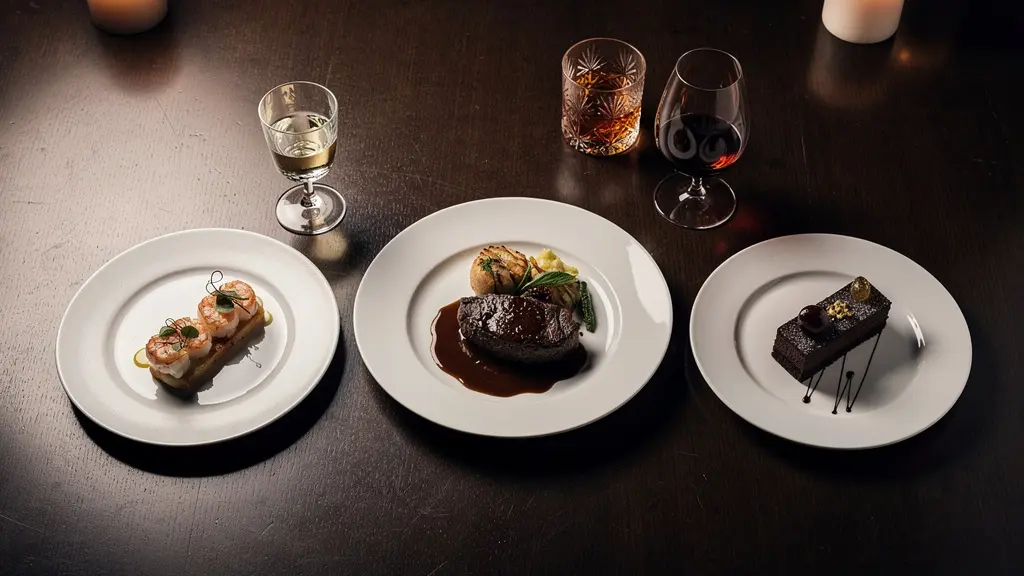
Designing a spirit-paired menu isn’t about following simple rules; it’s about mastering the physics and chemistry of flavor.
- Lighter spirits prime the palate by releasing volatile compounds, while high-proof spirits cleanse it by dissolving fats.
- Precise, diluted pours and temperature control are non-negotiable for preventing palate numbness and intoxication.
Recommendation: Focus on a progressive intensity, using spirits to manipulate sensory perception at each stage of the meal.
The predictable dance of Sauvignon Blanc with fish and Cabernet with steak has become a tired recital for the adventurous palate. For the chef or home cook seeking to innovate, the world of spirits offers a bold, complex, and largely uncharted territory for culinary pairing. Yet, many hesitate, daunted by the alcoholic intensity and the perceived lack of established rules. The common advice—pair light with light, dark with heavy—is a gross oversimplification that fails to capture the profound potential at play.
The truth is, a successful spirit-paired menu is not a matter of guesswork; it is a feat of gastronomic engineering. It requires a fundamental shift in thinking, moving away from wine’s acidic framework to embrace alcohol’s unique properties. This involves manipulating molecular interactions, leveraging dilution to release volatile compounds, and controlling temperature to avoid sensory overload. It is about constructing a progressive journey, a deliberate palate architecture that builds in intensity and complexity with each course.
This guide abandons the simplistic platitudes. Instead, we will deconstruct the science and technique behind a masterful three-course, spirit-paired experience. We will explore how to manage alcohol concentration, why whisky can outperform wine in certain contexts, and how to harness flavor synergies like ester resonance. Prepare to move beyond mere pairing and begin architecting a dining experience that is both intellectually stimulating and deeply memorable.
This article provides a comprehensive blueprint for that journey. Below is a summary of the key strategic pillars we will cover, from the foundational principles of spirit progression to the nuanced techniques that ensure a sophisticated and balanced tasting experience.
Summary: The Art of Architecting a Spirit-Paired Menu
- Why Start with White Spirits and End with Cask Strength Dark Spirits?
- How to Pour “Half-Drams” so Guests Don’t Get Drunk by the Main Course?
- Whisky or Wine: Which Cleanses the Palate Better After Fatty Meats?
- The Palate Shock Error: Why You Must Serve Water alongside Cask Strength Spirits?
- How to Pair a Light Rum with Ceviche to Enhance the Citrus Cure?
- Salty or Smoky: Which Element Should Lead in a Dinner Pairing?
- The Dining Mistake That Numbs Your Palate to Delicate Flavors
- How to Host a Spirit Dinner That Impresses Guests Without Over-Intoxicating Them?
Why Start with White Spirits and End with Cask Strength Dark Spirits?
The foundational principle of palate architecture in a spirit-paired menu is a calculated escalation of intensity. Beginning with a lighter, lower-ABV spirit like a silver rum or a London dry gin and concluding with a potent, cask-strength dark spirit isn’t arbitrary; it’s a deliberate strategy rooted in flavor chemistry. Lighter, unaged spirits typically have a cleaner, more floral, or citrus-forward profile. Served in a diluted format like a highball, they act as a palate primer. The lower alcohol concentration and effervescence gently awaken the senses without causing aggressive trigeminal stimulation, preparing them for the complexity to come.
As the menu progresses to richer, more robust dishes, the spirit pairing must escalate in parallel. This is where aged spirits—whiskies, brandies, dark rums—enter the stage. Their complexity comes from the cask: notes of oak, vanilla, leather, and dried fruit. Ending with a cask-strength pour (often 50-60% ABV or higher) serves a crucial function. As chef Edward Lee notes, you must “pair aggressive food with the aggressive flavor of whiskey.” The high proof is not for shock value; it’s a tool. It has the power to cut through rich fats and stand up to bold flavors like smoke and spice, providing a definitive and resonant finish to the meal.
This progression also aligns with how our senses perceive aroma. Dilution plays a critical role in releasing a spirit’s volatile compounds. Groundbreaking molecular research from Scientific Reports demonstrates that the concentration of key flavor compounds, like the smoky guaiacol in whisky, is highest at the liquid’s surface when diluted to around 27% ABV. Starting with a more diluted spirit effectively presents its bouquet more openly, while ending with a cask-strength spirit offers a concentrated, powerful profile that the guest can then dilute with water to their own preference, unlocking the aromas as a final interactive step.
How to Pour “Half-Drams” so Guests Don’t Get Drunk by the Main Course?
The single greatest fear in hosting a spirit-paired dinner is over-intoxication. The solution lies in precision, dilution, and technique, not abstinence. The concept of the “half-dram”—a small tasting pour of approximately 10-15ml (about 0.3-0.5 oz)—is central to this strategy. Unlike a standard bar pour, these measured servings are designed for sensory analysis, not intoxication. They provide just enough liquid to coat the palate and evaluate the interaction with the food, preventing guest fatigue before the main course even arrives.
Achieving this precision requires moving beyond free-pouring. Using tools like a graduated cylinder or a jigger with clear volume markings is non-negotiable for a serious spirit dinner. This ensures consistency for every guest and maintains control over the total alcohol consumed throughout the evening. The goal is to orchestrate a tasting, not a party. This measured approach respects the spirit and the guest equally.
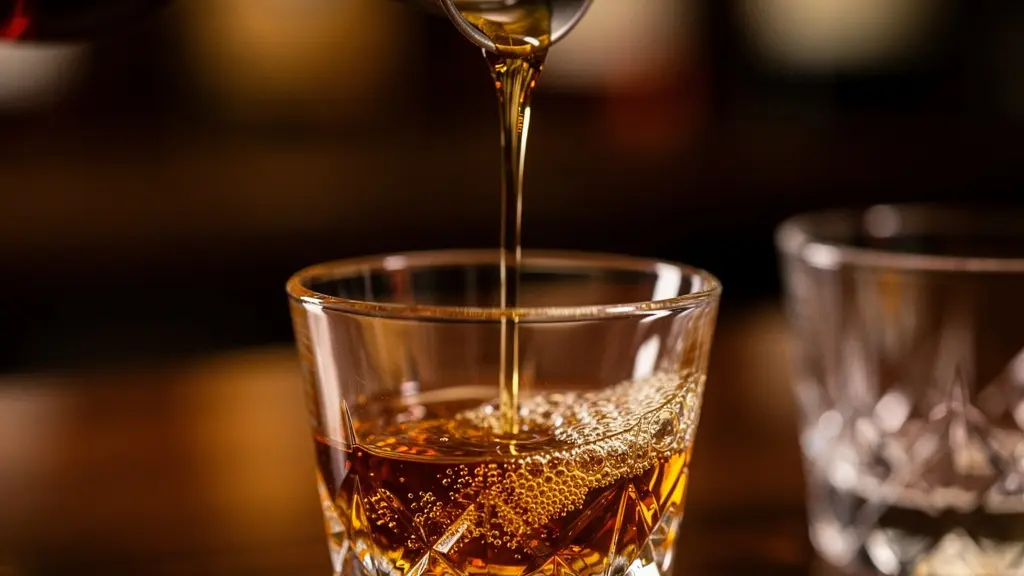
Furthermore, dilution is your most powerful tool. Serving every spirit neat is a rookie mistake. As noted by industry experts, starting with highballs or sours for early courses lightens the alcoholic load and “wakes up the palate.” This aligns with research from Washington State University, which reveals that an 80:20 whiskey-to-water ratio is a key threshold where aromas can be perceived differently, often more favorably. By strategically diluting spirits for the appetizer and middle courses, you manage the ABV while simultaneously enhancing the aromatic experience for your guests.
Action Plan: Pouring for a Multi-Course Spirit Dinner
- Start with Highballs: For the first course, serve the spirit (e.g., gin, light whiskey) in a highball to lighten the proof and refresh the palate.
- Use Precision Tools: Employ jiggers or graduated cylinders to pour exact 10-15ml tasting portions for neat or short-diluted pairings.
- Introduce Acidity: For a middle course, consider a Whiskey Sour or Crusta format to use acidity as a bridge to the food.
- Offer Tasting Flights: For the main course, serve a flight of 2-3 spirits in small portions to allow guests to compare and contrast with the dish.
- Pace the Service: Time the pouring of each spirit to align with when guests are actively eating that course, not before.
Whisky or Wine: Which Cleanses the Palate Better After Fatty Meats?
While wine, with its tannins and acidity, is the traditional choice for cutting through the richness of fatty meats, whisky offers a different and, in many cases, superior mechanism for cleansing the palate. The debate isn’t about which is “better” universally, but about understanding their distinct modes of action. Wine works through emulsification via acidity and the binding of salivary proteins by tannins. Whisky, particularly at a higher proof, operates on a principle of hydrophobic bonding, where the ethanol quite literally dissolves fat molecules left on the tongue.
This makes high-proof whisky an exceptionally effective palate reset after a bite of marbled steak, duck confit, or rich charcuterie. Where a red wine’s tannins can sometimes feel astringent or compete with heavy seasoning, a sip of whisky can provide a cleaner, more immediate cleansing effect. The sensation is often described as a “reset” due to the high-proof spirit’s trigeminal stimulation, leaving the palate neutral and ready for the next bite. This is a key reason why, as Global Whisky Master Ewan Gunn points out, whisky’s popularity is growing in pairings, especially with intensely flavored cuisines.
The following table, based on insights from pairing experts, breaks down the fundamental differences in how these two iconic beverages interact with fatty foods.
This comparison highlights the different tools at a chef’s disposal, as detailed in this comparative analysis of pairing properties.
| Property | Whisky | Wine |
|---|---|---|
| Fat Dissolution Method | Ethanol at 46%+ ABV dissolves fats through hydrophobic bonding | Emulsification via acidity |
| Tannin Type | Hydrolysable ellagitannins from oak | Condensed polyphenols that bind salivary proteins |
| Palate Reset Mechanism | High-proof creates trigeminal stimulation | Gentle acid cuts through fat layers |
| Ideal Pairing Temperature | Room temperature (20-22°C) | Varies by wine type (8-18°C) |
The Palate Shock Error: Why You Must Serve Water alongside Cask Strength Spirits?
Serving a cask-strength spirit (often 50-60% ABV) without an accompanying glass of water is a critical error in hospitality and sensory science. The primary mistake is assuming water’s only purpose is hydration or to “weaken” the spirit. Its true function is to prevent palate shock and to act as a key that unlocks the spirit’s full aromatic potential. A high-proof spirit served neat can overwhelm the palate with pure ethanol burn, a phenomenon known as palate shock or heat tunnel vision. This intense trigeminal stimulation effectively numbs the taste buds to the delicate, nuanced flavors hiding behind the alcohol.
The simple act of providing a water dropper and a glass of water empowers the guest to become an active participant in their tasting experience. It transforms the pairing from a passive reception to an interactive exploration. By adding a few drops of water, the guest can strategically lower the ABV, softening the alcohol’s heat and allowing the complex volatile compounds to be released and perceived. As one expert puts it, this is about reshaping the spirit’s presentation, not diminishing its quality.
As Executive Bourbon Steward Chris Blatner explains, the goal is discovery, not dilution:
Adding water can open up aroma, soften alcohol heat, and make flavors easier to identify, especially in higher-proof whiskey. A small amount of dilution can release volatile compounds that are otherwise masked by alcohol. It’s less about weakening the whiskey and more about reshaping how it presents itself.
– Chris Blatner, Executive Bourbon Steward
Even the temperature of that water is a crucial detail. Serving ice-cold water is another common mistake, as cold temperatures suppress aromas. The ideal is to use room temperature water (20-22°C). This, according to executive bourbon steward Chris Blatner, reduces the ethanol burn without creating a temperature conflict that can confuse the trigeminal nerve, ensuring the most authentic and pleasant tasting experience.
How to Pair a Light Rum with Ceviche to Enhance the Citrus Cure?
Pairing a spirit with a delicate and acidic dish like ceviche is a high-wire act that demonstrates a true mastery of flavor dynamics. The goal is not to overpower the fish but to achieve ester resonance—a chemical synergy where the flavor compounds in the spirit echo and amplify those in the food. A light, unaged rum or a silver whiskey is an ideal candidate for this task. Their bright, often fruity and citrusy notes, derived from fermentation esters like isoamyl acetate (banana) or ethyl acetate (pineapple), can create a stunning harmony with the citrus aldehydes in the ceviche’s lime or lemon cure.
The key is to match intensity. A light rum at a standard 40% ABV has just enough character to stand alongside the 2-3% acidity of a typical ceviche without dominating it. Serving the spirit slightly chilled can further enhance this pairing, as the coolness tames any potential alcohol burn and accentuates the rum’s crisp, refreshing top notes, mirroring the temperature and feel of the dish. This creates a seamless transition on the palate, where the spirit feels like an extension of the food itself.
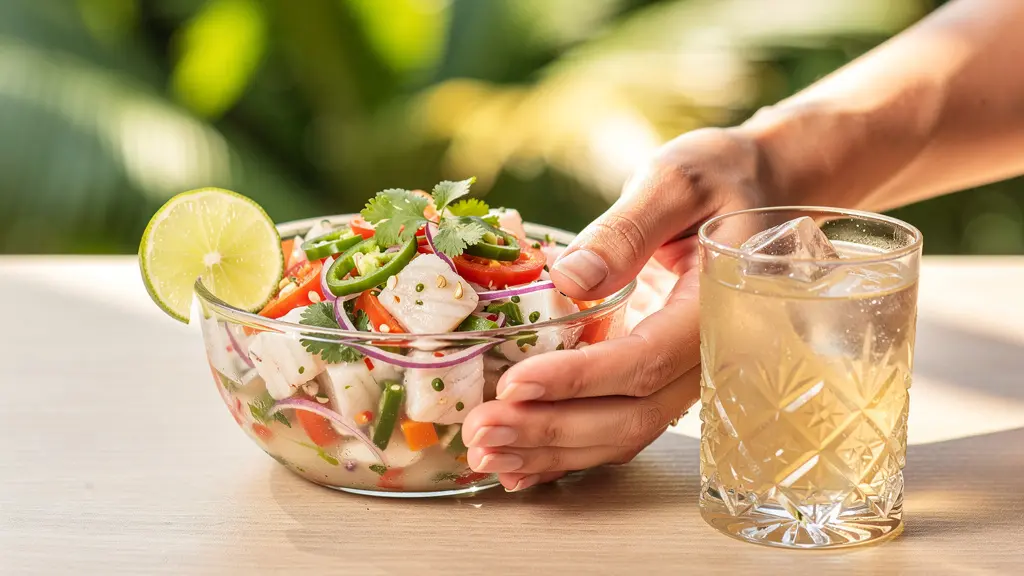
This principle of matching specific flavor compounds is the future of advanced pairing. It moves beyond generic categories into the realm of molecular gastronomy, as demonstrated by leading craft distillers.
Case Study: Brother Justus Silver Whiskey and Citrus Resonance
The American Single Malt Silver Whiskey from Brother Justus distillery is noted for its profile of bright citrus, tropical fruit, and cacao nibs. When paired with Citrus-Marinated Shrimp Skewers, a clear synergy emerges. The citrus and herbal notes of the Silver whiskey are directly echoed in the citrusy shrimp, creating a refreshing and light appetizer pairing. This is a perfect, real-world example of successful ester resonance, where the spirit doesn’t just accompany the food—it completes it.
Salty or Smoky: Which Element Should Lead in a Dinner Pairing?
When constructing a pairing that involves both salty and smoky elements—a classic combination in the world of spirits—the question of which should lead is a matter of strategic balance. The answer often lies in letting the elements complement rather than compete. In most successful pairings of this nature, smokiness acts as a powerful counterpoint to salinity. The phenolic compounds that create smokiness in a peated Scotch, for example, have an earthy, medicinal quality that can cut through and elevate the clean, mineral taste of brine.
A quintessential example is the pairing of a seaside Scotch like Talisker with raw oysters. The whisky’s inherent smoky and peppery notes provide a brilliant contrast to the oyster’s briny, metallic delicacy. The saltiness of the oyster primes the palate, which is then met by the complex, warming smoke of the Scotch. In this relationship, saltiness often presents first (from the food), with smoke following (from the spirit) to create a layered and evolving tasting experience. The choice is not about one element dominating, but about creating a dynamic interplay.
As one expert highlights, the interaction can be direct and integrated, turning the pairing into a ritual.
If a dish has citrus notes, it’ll cozy up to the smoky saltiness of peated Scotch. The saline note of seaside Scotch also works alongside brinier varieties of raw oysters. Talisker Whisky offered a virtual whisky and oyster pairing, sharing three ways to enjoy: drops of whisky directly on the oyster, using the shell as a shot glass, or washing down with a neat pour.
– Steven Lewis, Head Bartender at Bar Belly, New York
Ultimately, the decision of which element “leads” depends on the components. With a briny oyster, the salt leads. With a piece of smoked salmon, the smoke leads, and a saline-forward spirit could be used to enhance its maritime character. The masterful chef understands how to use one to frame the other, creating a dialogue between the plate and the glass.
The Dining Mistake That Numbs Your Palate to Delicate Flavors
One of the most pervasive and damaging mistakes in spirit service is the improper management of temperature. The common practice of serving spirits “on the rocks” without consideration for the spirit’s profile is a primary culprit for numbing the palate. While chilling can be beneficial for very high-proof spirits by taming alcohol heat, adding ice—especially poor-quality, fast-melting ice—indiscriminately does two things wrong: it over-dilutes the spirit erratically, and more importantly, extreme cold suppresses volatile aromatic compounds.
Delicate floral, fruity, and grassy top notes are the first casualties of cold. When a spirit’s temperature drops too low, these lighter, more ethereal molecules lack the energy to vaporize and reach your olfactory receptors. The result is a flattened, less expressive spirit where only the dominant base notes (like oak or caramel) and the alcohol burn remain. You are, in effect, tasting only a fraction of what the distiller created. A study on temperature’s impact on whisky perception reveals that chilling doesn’t necessarily diminish a spirit, but it profoundly transforms its character, a change that can be detrimental to a carefully planned pairing.
The second mistake is serving spirits too warm. While this avoids suppressing aromas, it can lead to an equally problematic issue. Spirits served significantly above room temperature (e.g., above 25°C or 77°F) can trigger excessive trigeminal nerve stimulation. The “burn” of the ethanol becomes the dominant sensation, creating a heat-induced tunnel vision that masks the very same delicate notes you were trying to preserve. The optimal temperature for most neat spirit tasting is right around room temperature (20-22°C), a delicate balance that must be consciously managed.
Key Takeaways
- Progression is key: Move from light, diluted spirits to cask-strength to build intensity without overwhelming the palate.
- Technique over volume: Use precise “half-drams” and highball-style dilutions to manage alcohol intake and enhance flavor.
- Science is your ally: Leverage alcohol’s fat-dissolving properties and dilution’s effect on aromatic compounds to create superior pairings.
How to Host a Spirit Dinner That Impresses Guests Without Over-Intoxicating Them?
Hosting an impressive spirit dinner is an exercise in control, curation, and storytelling. The goal is to guide your guests through a sensory journey, not a marathon of consumption. The strategies discussed—progressive intensity, precise half-dram pours, and strategic dilution—are the technical pillars that prevent over-intoxication. But to truly impress, you must weave these techniques into a compelling narrative. Explain *why* you’re starting with a gin highball, discuss the science of how the whisky is cutting through the fat of the main course, and demonstrate how a few drops of water can transform the final spirit.
This educational component is what elevates the experience from a simple meal to a memorable event. It aligns with a major shift in the luxury market, where consumers increasingly seek unique, story-driven experiences. As Mordor Intelligence reports that culinary tourism and food-pairing trends are significant drivers of the premium spirits market’s growth. By acting as a knowledgeable and confident guide, you provide an exclusive experience that is both indulgent and intelligent. Offer ample water, encourage slow sipping, and ensure the pace of the meal allows for conversation and digestion.
Ultimately, a successful spirit dinner is defined by balance. It is the balance between the food and the spirit, between intensity and delicacy, and critically, between enjoyment and excess. Your role as the host, or gastronomic director, is to be the architect of that balance. By mastering the techniques and communicating the “why” behind your choices, you create an event that impresses not with the volume of alcohol served, but with the depth of thought and care invested in every detail.
Frequently Asked Questions on Spirit and Food Pairing
Why does cold water damage whiskey tasting?
Colder temperatures tend to suppress a spirit’s aromas. The volatile compounds that create the bouquet have less energy at lower temperatures and do not release as readily. Adding room temperature water can slightly warm the whiskey, helping to release these volatiles, whereas adding chilled water will dampen them further, resulting in a flatter, less expressive tasting experience.
What’s the ideal ABV range for flavor perception?
While subjective, many experts find that the 46-50% ABV range is a sweet spot where a spirit is robust enough to carry complex flavors but not so overpowering that alcohol heat masks them. For spirits in this range, starting with 3-5 drops of water is a good practice to see how the profile evolves, as this is often where dilution makes a noticeable positive difference.
How does serving temperature affect delicate spirit notes?
Temperature has a profound effect. Spirits served too cold (e.g., with excessive ice) will have their delicate top notes suppressed. Conversely, spirits served too warm, typically above 25°C (77°F), can trigger excessive trigeminal nerve stimulation. This creates a “heat tunnel vision” where the palate primarily perceives the ethanol burn, masking the very same delicate notes.
Now that you have the architectural blueprint, the next step is to procure the materials. Begin by selecting a theme for your menu and sourcing spirits that offer a clear progression of intensity and a compelling story for you to share with your guests.