Preserving floral notes isn’t about adding more botanicals; it’s about mastering the art of volatility to prevent the most delicate aromas from escaping.
- Gentle extraction through vapor infusion and purification in tall stills are crucial for capturing light, floral “top notes.”
- Protective aging in used refill casks and mindful serving are non-negotiable to shield these fragile esters from degradation and evaporation.
Recommendation: Think like a perfumer: every decision, from still geometry to glass shape, is an act of managing the spirit’s aromatic integrity.
There is a unique disappointment reserved for the connoisseur of fine spirits. It’s the moment you raise a glass of what should be an exquisitely floral gin or a delicate Lowland whisky, only to find that the promised aromatic brightness has vanished. The vibrant, fleeting scents of elderflower, rose, or fresh grass have either faded into a generic alcoholic haze or were never there to begin with. Many believe the solution is simply to use more flowers or better botanicals, but this often leads to a muddled, “stewed” character rather than elegance. The real challenge lies not in adding flavor, but in protecting it.
This pursuit of elegance over power is where the mind of a distiller must merge with that of a perfumer. In perfumery, the most volatile and delicate aromas are known as top notes. They are the first to be perceived and the first to fade. Floral esters in spirits are the exact same. They are chemically fragile, easily destroyed by excessive heat, overpowered by aggressive wood compounds, or lost to the air through improper handling. The secret to a truly floral spirit is not brute force, but a mastery of volatility management at every single stage of its life.
But what if the key wasn’t about what you put in, but how you protect what you create? This guide reframes the process of distillation and aging through a perfumer’s lens. We will abandon the engineering mindset of simple efficiency and adopt an artist’s focus on preservation. We will explore how to capture these fleeting aromatic molecules during distillation, shield them during maturation, and present them perfectly in the glass, ensuring their aromatic integrity remains intact.
This article provides a complete roadmap for preserving those coveted floral notes. We will delve into the precise equipment, maturation strategies, and serving techniques required to craft and maintain a spirit with a truly elegant and lasting floral bouquet.
Summary: A Perfumer’s Guide to Preserving Floral Esters
- Why Tall Stills Produce More Floral Spirits than Short Stills?
- Refill Cask or First Fill: Which One Protects Delicate Floral Notes?
- Floral Esters or Fruity Esters: Which Degrades Faster in the Bottle?
- The Serving Error That Evaporates Floral Scents Before You Smell Them
- When to Taste Floral Spirits in a Flight to Avoid Palate Overload?
- How to Adjust Reflux Rates to Mimic 20 Years of Traditional Distillation?
- Why Vapor Infusion Creates More Delicate Floral Notes than Maceration?
- How to Store White Agricole to Keep the Fresh Cane Aroma for 2 Years?
Why Tall Stills Produce More Floral Spirits than Short Stills?
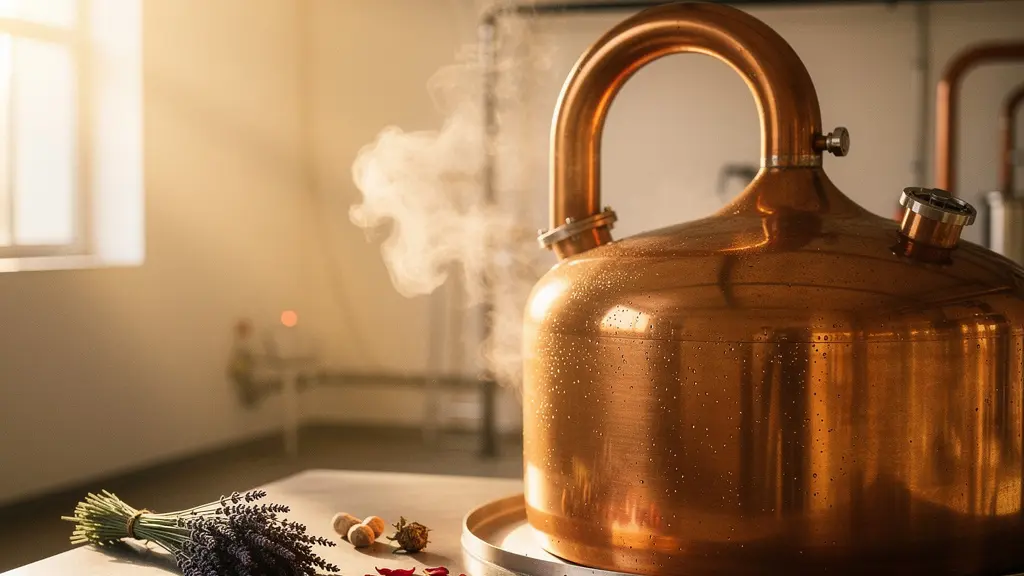
From a perfumer’s perspective, a pot still is not just a boiler; it is a fractionating column for aromas. The height of the still, particularly its neck, is the single most important factor in determining the final spirit’s aromatic profile. Shorter, fatter stills allow heavy, oily, and pungent congeners to easily travel with the ethanol vapor into the condenser. This results in a robust, but often less refined, spirit. Tall, slender stills, however, create a much more challenging journey for the vapor.
As the vapor rises, it begins to cool. Heavier, less volatile compounds with higher boiling points condense on the cooler copper walls of the tall neck and fall back down into the pot. Only the most volatile, lightest compounds—including the delicate floral esters—have enough energy to make it all the way to the top and over the lyne arm. This process is a form of passive reflux. As Anthony Wills, founder of Kilchoman Distillery, notes, “The spirit must work harder to climb up the neck… the more difficult the spirit finds it to rise up the still, the lighter our spirit will be.”
This “harder work” is essentially an increased number of “theoretical plates,” or mini-distillations, occurring inside the still neck. This effect is precisely why Islay’s Kilchoman Distillery uses tall, narrow neck stills to produce a uniquely clean and fruity spirit despite using heavily peated malt. The height physically separates the light, floral top notes from the heavy, phenolic base notes. For the distiller focused on floral character, a tall still isn’t a choice; it’s a fundamental requirement for capturing aromatic delicacy.
Refill Cask or First Fill: Which One Protects Delicate Floral Notes?
Once you have painstakingly captured your fragile floral esters, the next challenge is to mature the spirit without annihilating them. This is where cask selection becomes an act of protection, not just flavor addition. A first-fill cask, especially one made from new American oak, is an aggressive environment. It is saturated with powerful compounds like vanillin, lactones (coconut, woody notes), and tannins. Placing a delicate, floral new-make spirit into this environment is like shouting over a whisper; the powerful wood notes will completely dominate and mask the subtle florals.
The solution is the refill cask. A cask that has already been used once or twice has had its most aggressive wood compounds leached out by its previous occupant. It still facilitates the crucial oxidative reactions of maturation—which soften the spirit and help esters to form—but it does so gently. It imparts a subtle background character rather than a dominant woody flavor. Think of a refill cask as a patient chaperone for your floral notes, allowing them to evolve and integrate slowly without being bullied by oak.
The science confirms this approach. During aging, oak compounds such as vanillin and tannins react with the distillate. In a first-fill cask, these reactions are intense and transformative. In a refill cask, the reactions are slower and more subtle, allowing the original character of the distillate—including its floral top notes—to remain at the forefront. For a distiller chasing floral elegance, the “less is more” philosophy of refill casks is paramount. The goal is to enhance the spirit, not to replace its identity with that of the wood.
Floral Esters or Fruity Esters: Which Degrades Faster in the Bottle?
The aromatic life of a spirit doesn’t end when it leaves the cask; it continues to evolve in the bottle, though at a much slower pace. Here, the chemical nature of its esters determines their longevity. A typical spirit contains hundreds of different esters and other aromatic compounds, each with its own stability. From a perfumer’s standpoint, these can be categorized by their volatility and molecular structure, much like perfume notes.
Floral esters, such as linalool (lavender, bergamot) or geraniol (rose), are generally shorter-chain esters. They are smaller, lighter, and more volatile. This makes them wonderfully aromatic and immediately perceptible, but also more fragile. Fruity esters, like ethyl acetate (pear, apple) or isoamyl acetate (banana), are often longer-chain esters. They are heavier, less volatile, and more structurally robust. This difference in stability is key to understanding how a spirit’s profile changes over time.
In the bottle, especially one that has been opened, slow oxidation and other chemical reactions continue. According to research on ester formation, shorter-chain esters can be reformed if they are broken down, but they are also more prone to breaking down in the first place. Longer-chain fruity esters, once destroyed, are less likely to be reformed, but they are also much more resistant to degradation. Therefore, the floral esters degrade faster. Their fleeting, top-note character makes them the first aromatics to diminish with time and exposure to air, leaving the more resilient fruity and base notes behind.
The Serving Error That Evaporates Floral Scents Before You Smell Them
All the meticulous work in the distillery and warehouse can be undone in the final ten seconds before tasting. The biggest mistake when serving a delicate floral spirit is treating it like a robust, everyday drink. Serving it ice-cold or in a wide-mouthed tumbler is the equivalent of spraying a fine perfume into a gale-force wind. The most volatile and precious floral top notes, which give the spirit its character, are lost to evaporation before they ever reach your nose.
Volatility is governed by temperature. When a spirit is chilled, its aromatic compounds are “locked in” and release much more slowly. While this can tame a harsh spirit, it completely mutes a delicate one. The ideal temperature for a floral spirit is slightly below room temperature, which allows for a controlled release of its bouquet. Glassware is equally critical. A wide tumbler has a large surface area, which maximizes evaporation and allows the delicate aromas to dissipate rapidly. A tulip-shaped glass, like a Glencairn or a copita, concentrates these fleeting vapors and funnels them directly to your nose, ensuring you experience the full aromatic integrity of the spirit.
Even the act of swirling must be done with intention. A vigorous swirl aerates the spirit aggressively, stripping away the most volatile floral esters. A single, gentle swirl is all that is needed to “open up” the spirit. By managing temperature, glassware, and aeration, you are performing the final act of volatility management, ensuring the spirit’s top notes are presented, not wasted.
Action Plan: Preserving Floral Aromas in the Glass
- Assess Temperature: Serve spirits between 15°C-22°C (59°F-72°F) to allow proper volatilization of floral compounds without shocking them.
- Select Glassware: Use tulip-shaped glasses like the Glencairn to concentrate delicate aromas toward the nose. Avoid wide-mouthed tumblers.
- Control Aeration: Swirl the spirit gently only once to open the bouquet without stripping away its most volatile esters.
- Allow Rest: Let the spirit rest in the glass for at least 30 seconds after pouring to allow the aromatics to stabilize and collect.
- Nosing Technique: Bring the glass to your nose slowly and inhale gently, rather than taking a deep, sharp sniff which can overwhelm the senses.
When to Taste Floral Spirits in a Flight to Avoid Palate Overload?
Constructing a tasting flight is like composing a piece of music or designing an olfactory journey. The order in which you taste spirits has a profound impact on your ability to perceive their nuances. Tasting a heavily peated or richly oaked spirit first will completely overwhelm your palate, numbing your sensory receptors to the subtle and delicate notes of a floral spirit tasted afterwards. This is known as palate fatigue or palate overload. The more powerful flavors and aromas create a high “noise floor,” making it impossible to detect the faint “signal” of the floral esters.
To avoid this, a tasting flight must always be arranged in order of increasing intensity. This allows your palate to acclimate and appreciate the full spectrum of flavors. You should always begin with the spirits that have the lowest congener load and the most delicate character. This means floral spirits—like many gins, white rums, and Lowland Scotch whiskies—must always come first. Their gentle, ethereal notes can only be fully appreciated on a fresh, clean palate.
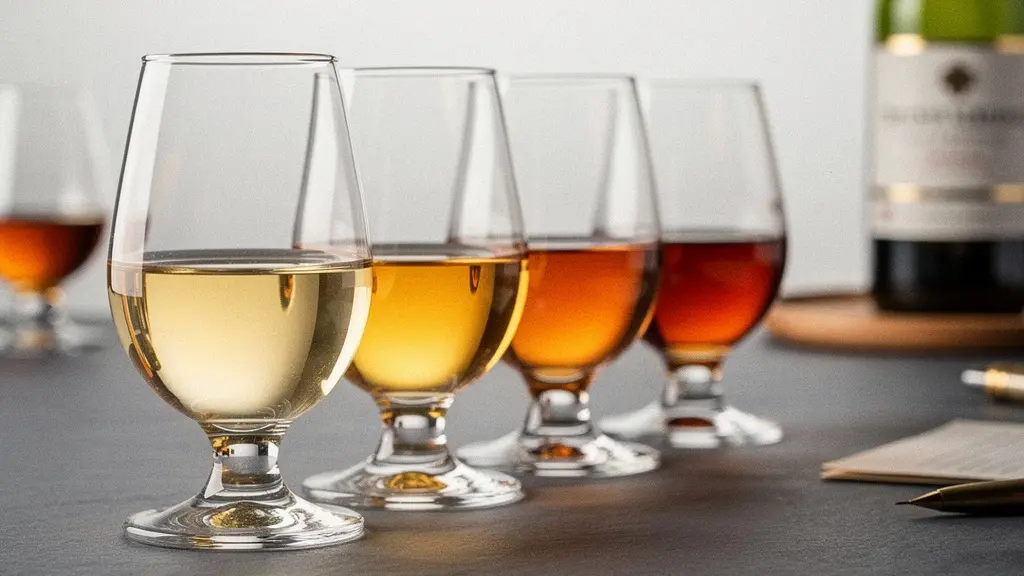
Following the floral spirits, you can move on to progressively more intense styles. This structured approach creates an “olfactory pyramid” on your palate, starting with the delicate top notes and moving through the fruity middle notes to the woody, earthy, or smoky base notes. This ensures that each spirit is given a fair chance to express its unique character without being overshadowed by its predecessor.
| Tasting Order | Spirit Type | Congener Level | Impact on Palate |
|---|---|---|---|
| 1st | Floral/Light Spirits | Low | Delicate, easily masked |
| 2nd | Fruity Spirits | Medium | More pronounced esters |
| 3rd | Oaked/Aged Spirits | High | Heavy wood compounds |
| 4th | Peated/Smoky Spirits | Very High | Dominant phenols |
How to Adjust Reflux Rates to Mimic 20 Years of Traditional Distillation?
While true maturation takes time, modern distillers can use advanced techniques to create a spirit with a similar level of purity and smoothness, which allows floral notes to shine. The key lies in precisely controlling reflux during distillation. Reflux is the process of condensed vapor returning to the still pot to be re-distilled. By increasing the reflux ratio, you are effectively increasing the number of distillations the spirit undergoes in a single run, which dramatically purifies it.
This is where technology like a dephlegmator comes in. A dephlegmator is a secondary condenser at the top of the still column. By controlling the coolant flow through it, a distiller can precisely manage how much vapor is knocked back down into the column for another pass. According to analysis from experts at Still in Cask, this repeated contact with copper dramatically increases purification. This intensive purification strips out heavier, sulphurous compounds that would normally take years of maturation in a cask to mellow out.
From a perfumer’s perspective, this isn’t “cheating” aging; it is a method of ‘polishing’ the new-make spirit to an exceptional degree of clarity. By removing the harsh, heavy base notes at the distillation stage, you create a cleaner canvas upon which the delicate floral top notes can express themselves without competition. While this process doesn’t replicate the oxidative and additive effects of barrel aging, it can produce a spirit with the refined, clean character often associated with very old, well-matured products, making the floral profile immediately more apparent and vibrant.
Why Vapor Infusion Creates More Delicate Floral Notes than Maceration?
When it comes to extracting aromas from botanicals like flowers, the method of extraction is everything. The traditional method, maceration, involves steeping the botanicals directly in the liquid spirit, often before or during distillation. While effective for robust ingredients like juniper or roots, this process is ruinous for delicate flowers. Boiling the petals directly in liquid effectively “cooks” them, destroying the most fragile aromatic oils and creating a stewed, often vegetal character.
Vapor infusion, by contrast, is a far gentler technique, akin to the perfumer’s art of steam enfleurage. In this method, the botanicals are placed in a basket within the still, above the boiling liquid. The hot, clean alcohol vapor rises, passes through the botanicals, and acts as a delicate and highly effective solvent. As one distillation expert explains, this hot alcohol vapor acts as a gentle, selective solvent with just enough energy to volatilize the lightest essential oils without the damaging high temperature of boiling liquid. This is the crucial difference.
Hot alcohol vapor acts as a gentle, selective solvent with enough energy to volatilize the lightest essential oils from botanicals without the high temperature of boiling liquid.
– Distillation Expert, LETIME STILL Technical Guide
The vapor gently coaxes out the most ethereal, volatile floral compounds and carries them over into the condenser. The result is a spirit with a much brighter, fresher, and more authentic floral profile. It captures the true “top note” of the flower, rather than a cooked memory of it. For any distiller serious about preserving the aromatic integrity of delicate botanicals, vapor infusion is not just a better option—it is the only option.
Key Takeaways
- Still geometry is the first and most critical step; tall stills are non-negotiable for separating delicate floral esters.
- Cask selection is an act of protection, not flavor addition. Used refill casks shield fragile notes from being overpowered by aggressive wood compounds.
- Preservation is an active process. Mindful serving in the correct glassware and proper storage are as crucial as the distillation itself.
How to Store White Agricole to Keep the Fresh Cane Aroma for 2 Years?
The principles for preserving the fresh, grassy, and floral notes of a white Rhum Agricole are universal for any unaged spirit prized for its delicate aromatics. Once the spirit is bottled, it has three primary enemies: light, oxygen, and temperature fluctuation. Each of these aggressors works to degrade the volatile esters you’ve worked so hard to create and protect. From a perfumer’s point of view, an opened bottle is a perfume with its cap left off—its top notes are actively escaping.
UV light from the sun or even fluorescent lighting can trigger chemical reactions that break down aromatic compounds. This is why professional distilleries and perfumers alike store their precious liquids in dark glass bottles in cool, dark places. Oxygen is an even more insidious enemy. Every time a bottle is opened, fresh oxygen enters, oxidizing the spirit and dulling its vibrant aromas. The more headspace (empty space) in the bottle, the more oxygen is present to do damage. Finally, temperature swings accelerate all chemical reactions, speeding up the degradation process.
To keep a spirit’s fresh aromas intact for up to two years, you must wage a defensive war against these elements. A consistent, cool environment and minimal exposure to air and light are paramount. This isn’t passive storage; it is active preservation of the spirit’s captured essence.
- Store bottles in a dark place, like a cabinet, to prevent UV degradation.
- Maintain a consistent, cool temperature between 15-20°C (59-68°F).
- As you consume the spirit, transfer the remainder to smaller bottles to minimize the headspace and reduce oxygen exposure.
- For truly prized bottles, consider using an inert gas preservation system (like those used for wine) to displace oxygen entirely.
- Always store bottles upright to minimize the surface area of the spirit exposed to the air in the neck.
By applying these principles of volatility management from the still to the glass, you can elevate your craft from simple production to the art of aromatic preservation. Begin today by assessing your own process and identifying where these delicate floral notes might be escaping.