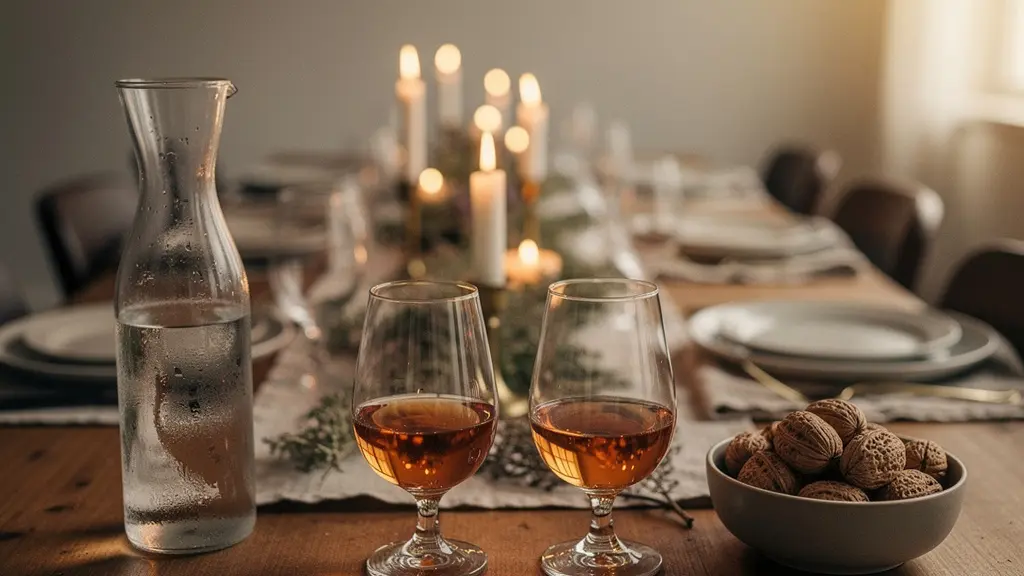
The secret to a sophisticated spirit dinner is not limiting your guests, but meticulously orchestrating their sensory experience with precision and control.
- Pacing consumption through strategically timed food and water enhances the tasting experience, not just sobriety.
- Smaller, measured pours in the correct glassware are a sign of hosting expertise, not stinginess, by focusing on aroma and flavour.
Recommendation: Shift your mindset from simply ‘serving drinks’ to curating a memorable and controlled tasting journey.
The vision is clear: an elegant evening where friends gather, conversations flow, and exceptional spirits are savoured. Yet, a common anxiety haunts every host—the fear of the night devolving from sophisticated to sloppy. The standard advice to “serve food” and “offer water” is well-intentioned but lacks the structure needed to guarantee a graceful event. It leaves too much to chance, turning the host into a worried observer rather than a confident guide.
But what if the solution wasn’t simply to moderate, but to elevate? What if the very tools used to control consumption were the same ones that unlocked a deeper appreciation for the spirits themselves? The true art of hosting a spirit-forward dinner lies in sensory orchestration. It’s an architected experience where every detail—from the story behind the spirit to the volume of the pour and the timing of the meal—is a deliberate choice designed to enhance the palate and manage the pace.
This approach transforms the host’s role from a passive provider to an active curator. You are not just pouring drinks; you are guiding your guests through a carefully constructed narrative. This guide will provide the professional event planner’s framework for achieving that balance, ensuring your dinner is remembered for its sophisticated flavours and engaging atmosphere, not for a messy conclusion.
This article provides a complete blueprint for executing a flawless spirit-paired dinner. We will explore the psychology of tasting, the science of pacing, and the practical mechanics of service that separate an amateur gathering from a professionally curated event.
Summary: The Professional’s Blueprint for a Flawless Spirit Dinner
- Why Building a “Story” Around the Region Makes the Spirit Taste Better?
- How to Ensure Guests Drink One Glass of Water for Every Dram?
- Formal Dinner or Tasting Station: Which Encourages Better Conversation?
- The Generosity Trap: Why Filling the Glass Too High Ruins the Tasting Ability?
- When to Serve the Main Course to Absorb the Peak Alcohol Levels?
- How to Pour “Half-Drams” so Guests Don’t Get Drunk by the Main Course?
- How to Calculate Standard Drinks in a Cask Strength Pour?
- How to Build a Full 3-Course Menu Paired Entirely with Spirits?
Why Building a “Story” Around the Region Makes the Spirit Taste Better?
The first step in transforming a simple dinner into a memorable tasting event is to shift the focus from drinking to experiencing. The most powerful tool for this is narrative. When a host builds a story around a spirit—its origin, the history of its distillery, the unique climate of its region—it does more than provide interesting trivia; it actively primes the guest’s brain and palate, measurably enhancing the perception of taste.
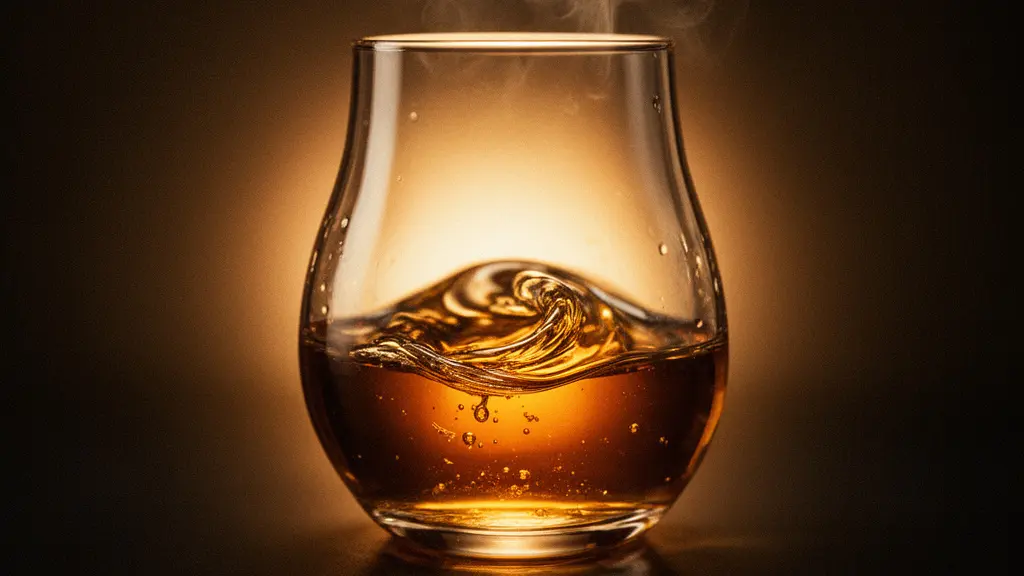
This isn’t just a psychological trick; it’s a documented phenomenon. A 2023 field experiment confirmed that storytelling-based messages about a wine’s origin significantly enhanced actual taste perception. When guests are transported by a narrative, they engage more deeply with the sensory details of the spirit. The story gives context to the flavours. A hint of brine in a coastal Scotch is no longer just a taste; it’s the taste of the sea spray crashing against the distillery walls. A caramel note in a bourbon becomes a reflection of a hot Kentucky summer aging the spirit in charred oak barrels.
Professor Charles Spence, a leading experimental psychologist, highlights this powerful connection between environment and taste. His research demonstrates how context can fundamentally alter flavour perception. As he notes in his work on sensory priming:
An identical whisky was rated differently by consumers depending on which themed room they drank the whisky in.
– Professor Charles Spence, The Marketing Society – The Hidden Potential of Sensory priming
As a host, you create this “themed room” with your words. By telling the story, you are not just serving a drink; you are serving a place, a history, and an art form. This act of sensory orchestration immediately elevates the evening, encouraging guests to sip thoughtfully and discuss what they taste, naturally slowing the pace of consumption.
How to Ensure Guests Drink One Glass of Water for Every Dram?
The common advice to “remind guests to drink water” is often ineffective because it frames hydration as a chore or a corrective measure. A professional host reframes it as an essential part of the tasting ritual itself. The goal is to make drinking water as seamless and sophisticated as tasting the spirit. This is achieved not through passive reminders, but through intentional hospitality and environmental design.
The “Two-Glass Rule” is the cornerstone of this strategy. At each place setting, every guest receives two identical, elegant glasses: one for the spirit and one for water. This immediately establishes visual parity and communicates that water is a co-star of the evening. Announce this as part of the evening’s philosophy, explaining that water is the professional’s tool for resetting the palate between sips, allowing the complex finish of each spirit to be fully appreciated.
Pacing is critical. We know the full effects of a drink are felt within 15 to 45 minutes, so integrating water systematically helps manage this absorption curve. The most effective method is to make it an automatic part of the service. Before a new spirit is poured, the host or a designated helper should top up every guest’s water glass. This non-verbal cue removes any social awkwardness and makes hydration an effortless, integrated part of the tasting flight. By turning water into a sophisticated element of the tasting, you maintain control while enhancing your guests’ sensory journey.
Your action plan: Implementing the Professional Palate Reset
- Set up a Water Bar: Offer two or three distinct water options (e.g., high-mineral still, soft spring, neutral sparkling) with labeled cards explaining their profiles to add a layer of sophistication.
- Announce the Two-Glass Rule: From the start, place two identical glasses at each setting and introduce water as a tool for enhancing taste, not just a sobriety measure.
- Frame as a Tasting Tool: Around the third taste, verbally guide guests to sip water to “reset the palate” and notice how the spirit’s finish evolves, turning hydration into a discovery.
- Automate the Refill: Pre-fill water glasses before each new spirit is poured. This makes hydration a seamless and automatic part of the service ritual.
- Explain the Interaction: Briefly mention how different mineral contents in water can interact with the spirit’s congeners, turning a simple glass of water into a point of curiosity.
Formal Dinner or Tasting Station: Which Encourages Better Conversation?
The physical format of your event is a primary driver of its energy and pacing. The choice between a structured, seated formal dinner and a more fluid tasting station is not merely logistical; it dictates the flow of conversation and your level of control over the experience. Neither is universally superior; the optimal choice depends on the complexity of the spirits and your desired social dynamic.
A formal, seated tasting offers maximum control. With guests seated, the host can act as a presenter, guiding everyone through a simultaneous nosing and tasting of each spirit. This format is ideal for subtle, nuanced spirits that demand focused attention. It encourages a single, shared conversation, allowing you to highlight specific tasting notes and build on the narrative you established. However, it can feel rigid if not managed with a light touch.
Conversely, a casual tasting station promotes mingling and more organic, smaller-group conversations. Guests can pour at their own pace and explore spirits in any order. While this creates a high-energy, social atmosphere, it offers the host the least control over consumption and pacing. It is best suited for bold, contrasting spirits where the room’s buzz complements the experience rather than detracts from it.
Case Study: The Scotch Whisky Experience’s Progressive Model
The Scotch Whisky Experience in Edinburgh, a world-renowned tasting institution, often employs a hybrid or “Progressive Model.” The evening begins with a casual welcome cocktail to encourage guests to relax and mingle. Then, for the core tasting, guests are seated for a structured, comparative flight of single malts guided by an expert. This approach captures the best of both worlds: it starts with social energy and then transitions into a focused, educational experience, demonstrating how the format can be adapted to guide the evening’s flow and energy.
This hybrid model is often the most effective for a home host. Starting with a welcome drink while guests arrive and then moving to a seated format for the main tasting flight provides structure without sacrificing social warmth. This allows you to set the stage, control the core tasting experience, and then relax the format again for the main course and dessert, ensuring both great conversation and a well-managed event.
The Generosity Trap: Why Filling the Glass Too High Ruins the Tasting Ability?
One of the most common mistakes a host can make is falling into the “generosity trap”: pouring a large dram to show hospitality. While well-intentioned, this act of generosity fundamentally undermines the tasting experience and sabotages your efforts at pacing and control. A large pour in the wrong glass drowns the very aromas you want your guests to discover and encourages gulping over sipping.
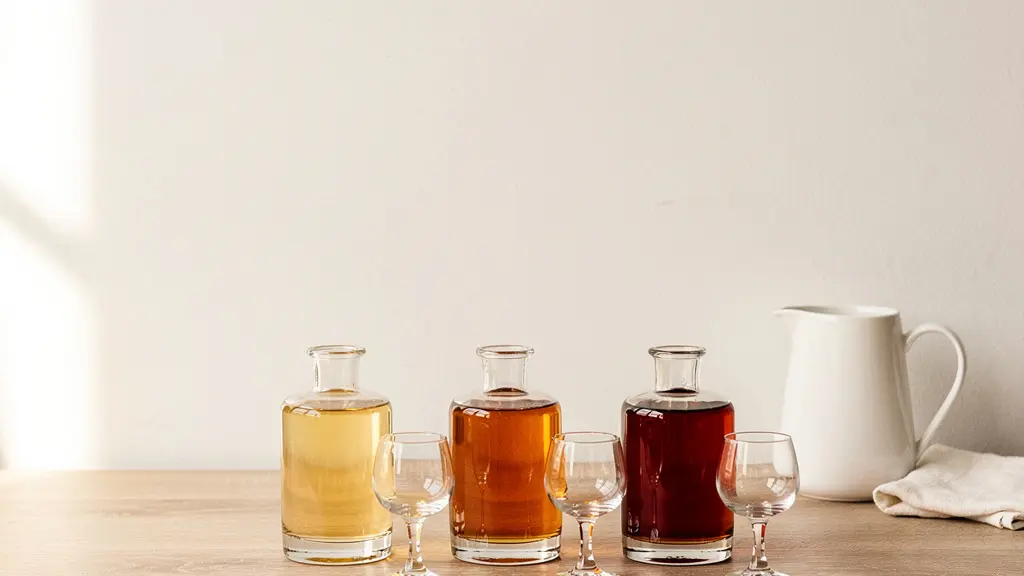
The science of glassware and aroma is clear. A proper nosing glass, such as a Glencairn or a Copita, features a wide bowl that tapers to a narrow rim. This design is not arbitrary. The wide base allows for swirling, which increases the surface area and volatilizes the spirit’s aromatic compounds. The tapering rim then concentrates these aromas, delivering them directly to the nose. An overfilled glass leaves no “headspace” for these aromas to collect, effectively muting the spirit’s bouquet and reducing the experience to taste alone.
Experts agree that the optimal pour for tasting is remarkably small. For a professional nosing glass, the ideal volume is just enough to cover the widest part of the bowl. According to tasting experts, a proper nosing glass is designed to look appropriately filled with only 15-20ml of spirit (approximately a half-dram). This small amount is all that is needed to assess the color, body, nose, and palate of a spirit. Anything more is not just wasteful; it’s detrimental to the experience.
By using proper glassware and pre-measuring small, elegant pours (perhaps in small carafes, as pictured), you reframe the act of serving. It is no longer about quantity but about quality and precision. This is a powerful visual cue of intentional hospitality, demonstrating that you are a knowledgeable host focused on providing the best possible sensory journey for your guests.
When to Serve the Main Course to Absorb the Peak Alcohol Levels?
Food is a host’s most powerful tool for managing alcohol absorption, but its effectiveness depends entirely on strategic timing. Serving the main course too early or too late can miss the crucial window to buffer the effects of the spirits. A professional event planner doesn’t just serve food; they deploy it with precision to intercept peak alcohol levels and ensure the evening remains smooth and enjoyable.
The key is to understand the absorption timeline. Alcohol begins to enter the bloodstream through the stomach, but the vast majority (around 80%) is absorbed in the small intestine. Food, particularly fat and protein, works by slowing “gastric emptying”—the process of the stomach releasing its contents into the small intestine. By keeping the pyloric valve closed longer, food acts as a time-release mechanism for alcohol.
Therefore, the main course should be timed to coincide with the peak absorption of the spirits served during the tasting flight. Since the effects of alcohol are generally felt within 15 to 45 minutes of consumption, the ideal moment to serve a substantial meal is approximately 30-40 minutes after the most significant spirit tasting portion of the evening begins. This ensures a substantial food buffer is present in the stomach just as the alcohol from the tasting flight is reaching its peak concentration.
An even more sophisticated approach involves a multi-stage food strategy. Start with a foundation of fatty, protein-rich appetizers served *before* or *with* the very first spirit. This initial layer slows absorption from the outset. Then, after the main tasting flight, serving the main course provides the major buffer needed to carry guests gracefully through the rest of the evening.
Your Action Plan: The Strategic Meal Timing Protocol
- Foundation First: Serve a substantial, fat-and-protein-rich appetizer (e.g., cheese, charcuterie, nuts) BEFORE the first significant spirit pour to slow initial alcohol absorption.
- Time the Main Course: Serve the main course 30-40 minutes after the second or third spirit is introduced, directly intercepting the peak absorption window.
- Insert a Strategic Interlude: Between the appetizer pairing and main course, serve a non-alcoholic palate cleanser (like a granita or broth) to create a 10-15 minute buffer and reset the palate.
- Prioritize Absorptive Foods: Design the main course around foods that slow digestion, such as fatty meats, rich sauces, cheese, or hearty starches.
- Monitor the Pace: Plan your pouring schedule so that, on average, no guest receives more than one standard drink equivalent per hour, aligning with the liver’s metabolic rate.
How to Pour “Half-Drams” so Guests Don’t Get Drunk by the Main Course?
The concept of the “half-dram”—a pour of approximately 0.5 oz or 15ml—is the mechanical heart of a well-controlled spirit tasting. It is the single most effective technique for allowing guests to sample a variety of spirits without becoming over-intoxicated. The challenge for a host is to present this smaller pour not as a limitation, but as a deliberate, expert choice that enhances the tasting experience. This is achieved through a combination of the right glassware, precise measurement, and confident presentation.
As established, the visual impression of a pour is highly dependent on the glass. A half-dram can look pitifully small in a large rocks glass but appears perfectly appropriate and intentional in a proper nosing glass. This visual satisfaction is key to avoiding the perception of being stingy.
The following table illustrates why glass selection is so critical for making a half-dram pour feel generous and correct:
| Glass Type | Total Capacity | Recommended Tasting Pour | Visual Impression | Best For |
|---|---|---|---|---|
| Glencairn | 175ml (6 oz) | 15-20ml (0.5 oz) | Appears one-third full — designed to concentrate aromas in headspace | Whisky, Bourbon, Rum |
| Copita / Sherry Glass | 120ml (4 oz) | 15-20ml (0.5 oz) | Appears nearly half full due to narrow bowl | Scotch, Sherry-cask spirits, Brandy |
| Standard Rocks Glass | 300ml (10 oz) | 30ml (1 oz) | Appears nearly empty — discourages proper nosing | Cocktails, casual sipping (not ideal for tasting) |
| Shot Glass | 45ml (1.5 oz) | 30ml (1 oz) | Appears full but no room for nosing or headspace | Quick pours only (not recommended for tasting) |
Case Study: HGTV’s Half-Ounce Tasting Standard
In its guide to hosting whiskey parties, HGTV establishes the half-ounce pour as the definitive standard for tasting events, stating it is “plenty” for a full evaluation. The guide’s strategy for making this small pour feel substantial is to pair it with a rich multi-sensory experience. By presenting the half-dram in a proper Glencairn glass alongside small bowls containing aroma references like honey, vanilla, and cinnamon, the host transforms the modest portion into a sophisticated and engaging activity, focusing the guest’s attention on analysis rather than volume.
To execute this perfectly, use a jigger—a bartender’s measuring tool—to pour each half-dram. This act of measuring, done in front of guests or pre-poured, signals precision and care. It communicates that you are an expert host who understands the craft of tasting, thereby turning a small pour into a hallmark of a professional and well-orchestrated event.
How to Calculate Standard Drinks in a Cask Strength Pour?
The ultimate level of hosting control comes from understanding not just volume, but potency. Serving cask strength spirits (which can range from 50% to over 65% ABV) without adjusting pour size is the fastest way to lose control of an evening. As the event’s orchestrator, being able to mentally calculate the “standard drinks” in each pour is a non-negotiable skill for responsible and sophisticated hospitality.
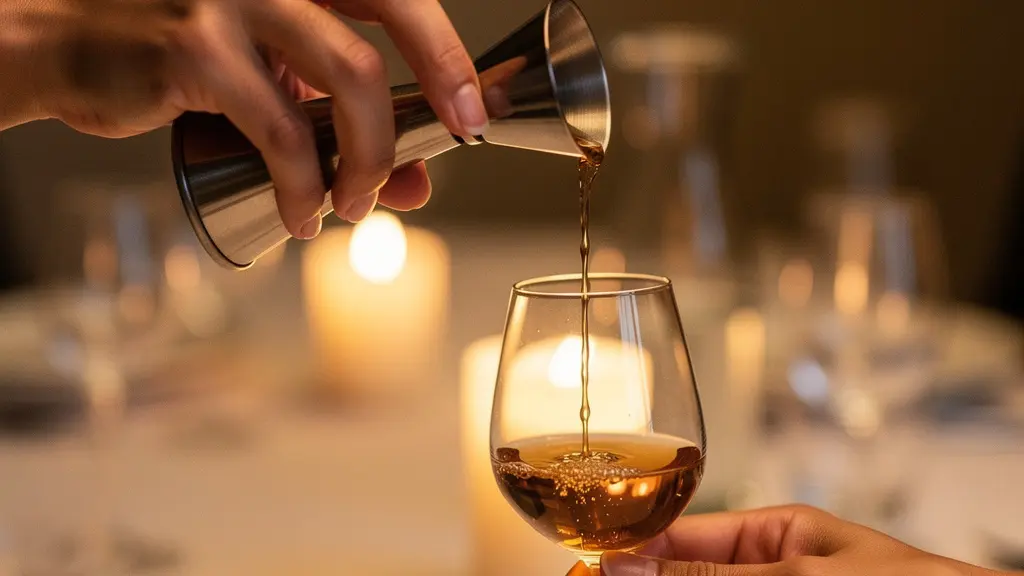
In the US, a single US standard drink consists of 0.6 fl oz / 14g of pure alcohol. This is the amount of pure ethanol found in a 1.5 oz shot of 40% ABV spirit, a 12 oz regular beer, or a 5 oz glass of table wine. When dealing with higher-proof spirits, this calculation changes dramatically. For example, a 1.5 oz pour of a 60% ABV cask strength whisky contains 1.5 standard drinks—50% more alcohol than a standard shot of vodka or gin.
This is why the half-dram (0.5 oz) pour is so essential when serving high-proof spirits. A 0.5 oz pour of that same 60% ABV whisky contains 0.5 standard drinks, bringing the alcohol content back into a manageable range and allowing guests to enjoy the spirit’s undiluted character safely.
The following table provides a quick reference for understanding these equivalents, empowering the host to make informed pouring decisions instantly.
| Beverage | Typical Serving Size | ABV | Pure Alcohol Content | Standard Drinks (approx.) |
|---|---|---|---|---|
| Regular Beer | 12 oz (355ml) | 5% | 0.6 fl oz | 1.0 |
| Table Wine | 5 oz (148ml) | 12% | 0.6 fl oz | 1.0 |
| Standard Spirit (40% ABV) | 1.5 oz (44ml) | 40% | 0.6 fl oz | 1.0 |
| Cask Strength Whisky | 1 oz (30ml) | 60% | 0.6 fl oz | 1.0 |
| Cask Strength Whisky | 1.5 oz (44ml) | 60% | 0.9 fl oz | 1.5 |
| Half-Dram Tasting Pour | 0.5 oz (15ml) | 60% | 0.3 fl oz | 0.5 |
By internalizing these calculations, you can confidently plan a tasting flight of 4-5 half-dram pours over several hours, knowing that your guests’ total consumption will remain well within a moderate and responsible range (approximately 2-2.5 standard drinks), especially when paired with food and water.
Key Takeaways
- Control Through Curation: The host’s primary role is to design a controlled sensory journey, not just serve drinks.
- Hydration is a Tasting Tool: Frame water as a professional method for resetting the palate to encourage consistent consumption.
- Pour for Aroma, Not Volume: Use proper nosing glasses and small, measured “half-dram” pours to concentrate aromas and signal expertise.
How to Build a Full 3-Course Menu Paired Entirely with Spirits?
Constructing a full menu paired with spirits is the final act of sensory orchestration, bringing together every principle of pacing, flavour, and control. A successful pairing menu doesn’t just place a drink next to a dish; it uses the principles of “Echo and Contrast” to create a culinary dialogue where the food and spirit elevate each other. This framework provides a reliable structure for building a cohesive and impressive menu.
Echo Pairings match congruent flavours. The goal is to find a flavour note or characteristic present in both the food and the spirit. For example, the smoky, briny notes of a coastal Islay Scotch are beautifully echoed by smoked salmon. The dried fruit and toffee notes of a sherry-cask aged spirit are a perfect match for the rich sweetness of a dark chocolate dessert. These pairings create a sense of harmony and resonance.
Contrast Pairings, on the other hand, match complementary or opposing elements. This is often used to cut through richness or add a new dimension of flavour. A spicy, high-rye bourbon, for instance, provides a brilliant contrast to the unctuous fat of braised pork belly, with the spirit’s dryness cleansing the palate. The key is to ensure the contrast is balancing, not clashing.
A well-architected menu will typically use a combination of both. Below is a template that puts these principles into practice, complete with sophisticated non-alcoholic options to ensure every guest feels included in the curated experience.
Menu Template: A 3-Course Spirit-Paired Dinner
- Course 1 – Appetizer (Echo Pairing): Smoked salmon blinis with crème fraîche paired with a coastal Islay Scotch. The food’s brine and smoke echo the spirit’s maritime salinity. Non-alcoholic counterpart: Sparkling water with a dash of smoked sea salt and a squeeze of lemon.
- Course 2 – Main Course (Contrast Pairing): Braised pork belly with a tart apple chutney paired with a high-rye bourbon. The spirit’s spice and dryness cut through the richness of the pork fat. Non-alcoholic counterpart: A sharp apple cider shrub with ginger and aromatic bitters.
- Course 3 – Dessert (Echo Pairing): Dark chocolate torte with candied orange peel paired with a sherry-cask aged single malt. The dried fruit and toffee notes in the whisky echo the chocolate and citrus. Non-alcoholic counterpart: Rich hot chocolate infused with orange zest.
- The Departure: A final, thoughtful gesture of hospitality. Serve a very small (15ml) amaro digestif alongside strong espresso, plentiful water, and a pre-arranged list of rideshare options. This demonstrates complete mastery of responsible hosting.
By embracing your role as a sensory orchestrator, you can confidently design and execute a spirit-paired dinner that is both impressive and impeccably controlled. This framework empowers you to guide your guests on a memorable journey of flavour, ensuring the evening is celebrated for its sophistication, conversation, and elegance.
Frequently Asked Questions on Hosting a Spirit Dinner
How many standard drinks should a guest consume over a full spirit dinner?
The liver metabolizes approximately one standard drink per hour. For a 3-4 hour dinner with 4-5 spirit pours of half-dram size (15ml each at ~45% ABV), each guest would consume approximately 2-3 standard drinks total — well within a moderate range when paired with food and water.
What types of food are most effective at slowing alcohol absorption?
Greasy, high-protein, and fatty foods are the most effective because they are difficult to digest and keep the pyloric valve closed longer, preventing alcohol from reaching the small intestine where 80% of absorption occurs. Examples include cheese, charcuterie, nuts, and fatty meats.
How do I accommodate non-drinkers at a spirit-paired dinner?
For each course, design a sophisticated non-alcoholic drink that mirrors the spirit’s flavor profile. If serving a botanical gin, offer a craft tonic with similar botanicals. If serving a smoky Scotch, offer smoked tea with sea salt. This ensures non-drinkers are fully included in the pairing experience.