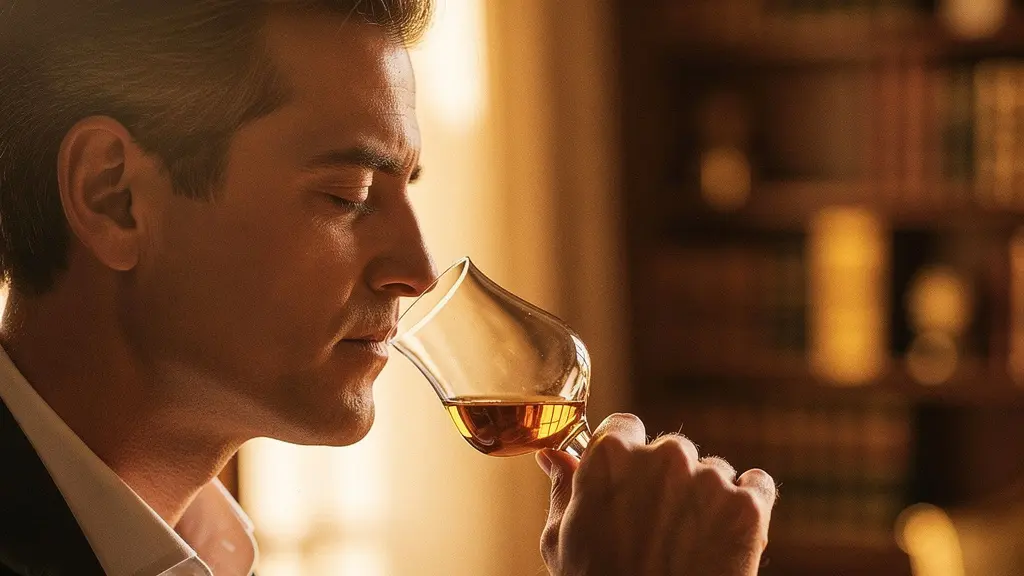
That sharp, burning sensation when you smell a spirit isn’t a barrier; it’s a signal from your body you can learn to manage. Instead of just adding water or avoiding the glass, this guide treats nosing as a trainable skill. By understanding the simple science behind the “burn” and applying specific breathing and handling techniques, you can retrain your senses to bypass the discomfort and finally access the complex, hidden aromas in your favorite spirits.
If you’ve ever leaned in to appreciate the aroma of a fine whiskey, rum, or tequila, only to be met with a sharp, eye-watering sting, you’re not alone. For many beginners, this aggressive “nose burn” feels like an insurmountable wall, making it impossible to detect the subtle notes of vanilla, oak, or fruit promised on the label. The common advice—add water, don’t stick your nose in the glass—offers temporary relief but misses the fundamental point. It teaches you to avoid the problem, not to solve it.
But what if that burn wasn’t a flaw in the spirit, but a predictable physiological reaction you could learn to control? What if, instead of diluting the spirit, you could train your own senses to work more intelligently? The key to unlocking the rich tapestry of aromas hidden behind the wall of ethanol isn’t about avoidance. It’s about technique, understanding, and a little bit of sensory science. It’s about retraining your brain and body to separate the sensation of pain from the perception of aroma.
This guide is your personal coaching session. We will break down the ‘why’ behind the burn and provide you with a structured toolkit of exercises and methods. We’ll explore how to breathe, which glassware to use, and how to prime your palate, transforming your tasting experience from a painful chore into a rewarding exploration.
To help you navigate this sensory journey, we’ve structured this guide into a clear, step-by-step program. Each section builds on the last, equipping you with the knowledge and practical skills to become a more confident and perceptive taster.
Summary: A Coach’s Playbook to Taming the Alcohol Burn
- Why Does Ethanol Trigger Pain Receptors in Your Nose?
- How to Breathe with Your Mouth Open to Reduce Alcohol Sting?
- Tulip Glass or Tumbler: Which Shape Dissipates Ethanol Vapors Best?
- The “Deep Inhale” Error That Numbs Your Olfactory Bulb for 5 Minutes
- How to “Prime” Your Palate to Ignore the Burn on the First Sip?
- The Tasting Error: Is It Ethanol Burn or Tannic Grip on Your Tongue?
- Why Does a Sauvignon Blanc Glass Concentrate Aromas Better Than a Tumbler?
- How to Create a Sensory Sanctuary for Distraction-Free Sipping?
Why Does Ethanol Trigger Pain Receptors in Your Nose?
The first step in our training is to understand the opponent. The “burn” you feel is not just a strong smell; it’s a genuine pain signal. Ethanol, the type of alcohol in spirits, is a chemical irritant. When its vapors enter your nasal passages, they don’t just interact with your olfactory receptors (for smell); they directly activate your pain receptors. This is known as the trigeminal response, named after the trigeminal nerve that handles sensations in your face, including pain, touch, and temperature.
The science is quite specific. Research shows that the TRP vallinoid 1 (TRPV1) and TRP ankyrind 1 (TRPA1) ligand-gated channels, also known as the capsaicin receptor (what makes chili peppers hot) and the wasabi receptor, are directly triggered by ethanol. In essence, your nose is telling your brain it’s encountering something potentially harmful, just as it would with a hot pepper. This is a protective instinct, but it’s one that overwhelms your ability to perceive the delicate, volatile aroma compounds that make each spirit unique.
Understanding this is crucial. You’re not “weak” for feeling the burn; your body is doing exactly what it’s designed to do. Our goal as sensory trainees is not to ignore this signal, but to moderate the stimulus so that the pain response doesn’t drown out everything else. Factors like your personal hydration level can also affect your sensitivity, so what feels harsh one day may feel milder the next. The key is to manage the ethanol vapor before it has a chance to overload these receptors.
How to Breathe with Your Mouth Open to Reduce Alcohol Sting?
Now that we know the burn comes from a high concentration of ethanol vapor hitting your pain receptors, the solution is logical: we need to reduce that concentration. The single most effective technique to achieve this is learning to breathe correctly. Shoving your nose into the glass and inhaling deeply is the fastest way to cause a sensory whiteout. Instead, we’ll use a method that bypasses the initial, aggressive blast.
The technique is simple: approach the glass with your lips slightly parted, as if you’re about to take a sip. Breathe in gently *through your mouth* while holding the glass a few inches below your nose. Then, close your lips and exhale slowly and naturally through your nose. Professional bourbon educator Tim Knittel calls this the “gentle in-and-out” method. By breathing in through your mouth, you create a gentle airflow that pulls the delicate aromas from the glass towards your face without sucking a concentrated cloud of ethanol directly into your sensitive nasal cavity.
This is what is known as retronasal olfaction, or smelling “through the back door.” The aromas enter your mouth and travel up the passage connecting to your nasal cavity, delivering the scent without the painful chemical assault on the front entrance. It allows you to “taste” the aromas without risking an ethanol blast across your olfactory membranes.
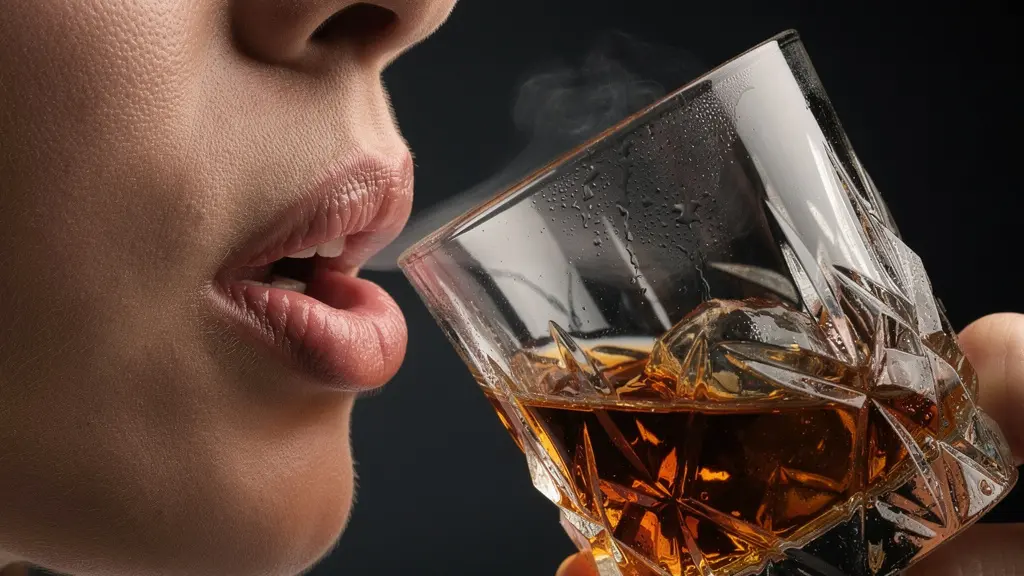
As you can see in the demonstration, the mouth is only slightly open, and the glass is held at a respectful distance. This isn’t a gasp for air; it’s a soft, controlled inhalation. This method diffuses the ethanol, allowing the heavier, more complex aromatic compounds to reach your olfactory receptors gently. Practice this a few times with the glass far away, then gradually bring it closer as you get comfortable. It will feel unnatural at first, but this is the foundational technique for all serious spirit tasting.
Tulip Glass or Tumbler: Which Shape Dissipates Ethanol Vapors Best?
Your technique is crucial, but your equipment is just as important. Think of a tasting glass not as a simple container, but as a precision tool designed to manage aroma and ethanol. The common rock glass or tumbler, with its wide, open mouth, is great for cocktails with ice but is the worst possible choice for nosing a spirit neat. Its shape allows the highly volatile ethanol vapors to escape in a chaotic, uncontrolled cloud, which rushes straight up your nose and triggers that burn.
The ideal tool for our purpose is a tulip-shaped glass. This design, which includes popular styles like the Glencairn, the copita, or a standard white wine glass, is engineered for sensory analysis. Its wide bowl provides a large surface area for the liquid, allowing it to “breathe” and release its full spectrum of aromatic compounds. However, the magic happens at the top. The glass tapers to a narrower rim, which serves two critical functions.
First, it concentrates the heavier, more interesting aroma molecules, which are less volatile than ethanol. Second, it funnels them towards your nose in a focused, manageable stream. As tulip-shaped glasses trap and direct aromas, they effectively separate the desirable scents from the aggressive alcohol vapor. Professional distillers and blenders exclusively use this shape because it allows them to assess a spirit’s character without the sensory overload. The shape does the initial work of diffusing the ethanol for you, making your breathing techniques even more effective.
The “Deep Inhale” Error That Numbs Your Olfactory Bulb for 5 Minutes
Instinct tells us that to smell something better, we should get closer and inhale more deeply. When tasting spirits, this instinct is your worst enemy. Taking a deep, sharp sniff from the glass is like staring directly at the sun to see it better. It overwhelms your system and leads to a condition called olfactory fatigue or numbing. The intense blast of ethanol molecules saturates your olfactory receptors, effectively shutting them down for several minutes. You’ve not only caused a painful burn, but you’ve also made it impossible to smell anything at all.
As the team at Barrell Craft Spirits wisely advises, this approach can lead to a world of hurt. They note:
Both can result in burning nostrils rather than big aromas. Instead, bring the glass a few inches below your nostrils and sniff gently. You can always move it closer, but you can’t quickly undo that wasabi-like searing in your sinuses.
– Barrell Craft Spirits Team, How to Taste Bourbon Guide
The correct approach is gentle and patient. Hold the glass a few inches away from your face and use soft, shallow “bunny sniffs” rather than a single deep inhale. This allows you to pick up the most volatile, lighter aromas first without getting overwhelmed.
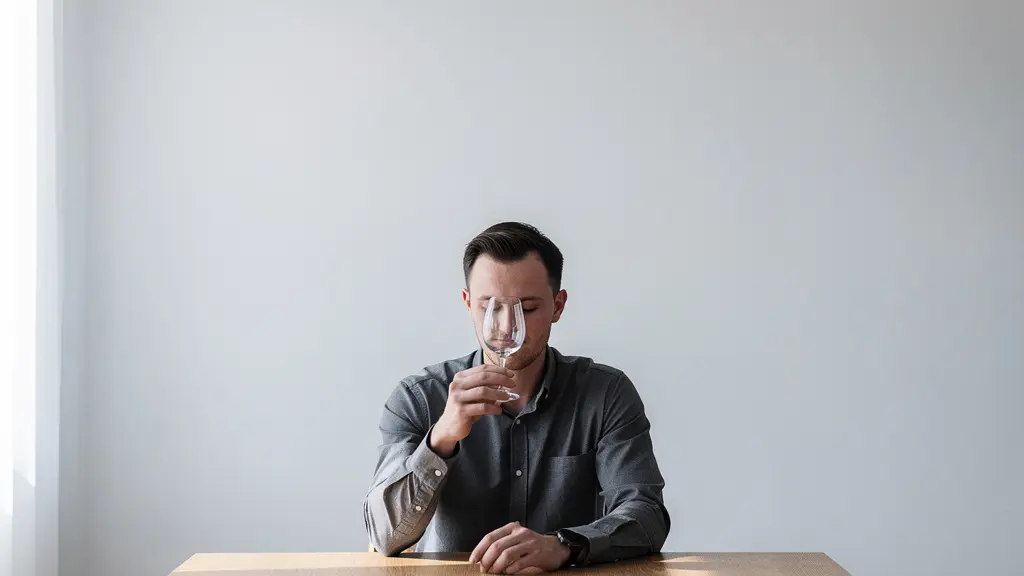
This image perfectly illustrates the proper distance and posture. It’s a contemplative act, not a race. If you do accidentally get an overwhelming blast of ethanol, don’t try to power through it. You’ve temporarily numbed your senses. It’s time for a reset.
Your Action Plan: Recovery Protocol After Olfactory Overload
- Immediate Retreat: Move the glass far away and breathe normally and calmly through your mouth for at least 30 seconds to clear the nasal passages.
- Avoid Deep Inhales: Resist the temptation to take another deep breath of the spirit. Simply open your mouth slightly and draw in some neutral air.
- Reset Your System: To recalibrate your olfactory senses, smell a neutral but distinct scent. The crook of your elbow, your own skin, or a small container of coffee beans works perfectly to reset the palate.
- Patient Re-entry: Wait a full 60 to 90 seconds before attempting to nose the spirit again. When you do, approach with the gentle mouth-open technique and from a greater distance.
How to “Prime” Your Palate to Ignore the Burn on the First Sip?
Just as your nose needs to acclimate, so does your palate. The first sip of a high-proof spirit can often feel fiery and aggressive on the tongue, masking any subtle flavors. To counter this, master distillers and experienced tasters use a technique called palate priming. The goal is to prepare your mouth for the intensity of the alcohol, allowing subsequent sips to be much more flavorful and less shocking.
There are a few effective ways to do this, forming a 3-stage protocol:
- Stage 1 – The Sacrificial Sip: This is the most common method. Your first sip is not for tasting; it’s purely for acclimation. Take a very small amount of the spirit into your mouth—smaller than a normal sip. Swish it around for just a second and swallow. It will likely burn. That’s the point. This initial shock prepares your taste buds and nerve endings. After you swallow, pause for about 30-45 seconds. Your second sip will be dramatically different; you’ll notice the burn is significantly reduced, and the actual flavors (sweet, fruity, spicy) start to emerge.
- Stage 2 – The Kentucky Chew: A more advanced version of the first sip. Take a small sip and, instead of swallowing immediately, “chew” on the liquid for 3-5 seconds. This ensures the spirit coats every surface of your mouth—tongue, cheeks, gums. This total coating acclimates your entire palate at once and helps in distinguishing flavors across different parts of your mouth.
- Stage 3 – The Food-Based Barrier: For particularly sensitive palates, creating a small physical barrier can help. Eating a single, unsalted almond or a small piece of dark chocolate (70% cocoa or higher) before your first sip lays down a thin layer of lipids (fats) in your mouth. This coating can help blunt the initial harshness of the ethanol without significantly altering the spirit’s flavor profile.
Think of it like learning to ski. You must start on the beginner slopes to get your balance before tackling the more challenging runs. Giving your palate time to adapt is the single best way to progress from feeling the burn to picking out the complex fruit, wood, and spice notes that were there all along.
The Tasting Error: Is It Ethanol Burn or Tannic Grip on Your Tongue?
As you become more accustomed to the initial intensity of spirits, you’ll start to notice other sensations in your mouth. One of the most common points of confusion for a developing palate is distinguishing the hot, spicy feeling of ethanol from the drying, astringent sensation of tannins. Mistaking one for the other can lead you to misjudge a spirit. For example, you might think a well-aged bourbon is “too hot” when what you’re actually feeling is a strong, but desirable, tannic structure from the barrel.
Ethanol burn is a chemical heat. It’s sharp, often felt on the tip and center of the tongue and in the back of the throat. It feels “hot” or “spicy,” makes you want to exhale sharply, and typically fades relatively quickly after you swallow, within about 60 seconds.
Tannic grip, on the other hand, is a physical sensation of astringency. Tannins are compounds that come from the wood of the barrels used for aging. They bind to the proteins in your saliva, creating a drying, slightly rough, or “sandpaper” texture. This feeling is most prominent on the sides of your tongue, your inner cheeks, and your gums. Instead of a sharp burn, it’s a slow-building “grip” that can linger for several minutes and makes you want to salivate to relieve the dryness. Think of the feeling you get from drinking strong black tea or a heavy red wine—that’s tannin.
Learning to tell them apart is a milestone in your sensory training. The following table breaks down the key differences to help you identify what you’re truly experiencing.
| Characteristic | Ethanol Burn | Tannic Grip |
|---|---|---|
| Location | Tip and center of tongue, throat | Sides of tongue, cheeks, gums |
| Sensation | Hot, spicy, chemical feeling | Drying, astringent, sandpaper texture |
| Duration | Immediate but fades within 60 seconds | Builds slowly, lingers for minutes |
| Trigger | High ABV spirits, especially unaged | Barrel-aged spirits, wine finishes |
| Response | Makes you exhale sharply | Makes you want to salivate |
Next time you take a sip and feel a strong sensation, pause and ask yourself: Is it hot and fleeting, or is it dry and lingering? Is it on the tip of my tongue, or the sides? As this sensory map helps to clarify, identifying the source of the sensation is key to appreciating the complexity of aged spirits.
Why Does a Sauvignon Blanc Glass Concentrate Aromas Better Than a Tumbler?
To further refine our understanding of glassware, we can take a valuable lesson from the world of wine. Oenophiles (wine lovers) have known for decades that the shape of a glass has a profound impact on the aroma of a specific grape varietal. A glass designed for Sauvignon Blanc is tall with a narrow bowl, while one for Burgundy is wide and balloon-like. This isn’t marketing; it’s physics. The same principles apply directly to tasting spirits and explain why a tulip shape is always superior to a tumbler.
The core concept is aroma focalization. A glass with a wide bowl that tapers to a narrow rim acts like a lens for aroma. Volatile compounds, including ethanol and the much heavier, more complex flavor molecules (esters, phenols, aldehydes), evaporate from the surface of the liquid. In a wide-mouthed tumbler, they escape in a chaotic, undifferentiated plume. The light, aggressive ethanol molecules hit your nose first and overwhelm everything else.
However, in a tulip-shaped glass, the tapered neck channels this vapor. The lighter ethanol tends to rise and dissipate more quickly, while the heavier, more desirable aroma compounds are concentrated and directed in a focused stream toward your nose. A Sauvignon Blanc glass, for example, is designed to capture and concentrate the grape’s delicate citrus and herbal notes. A spirit-tasting glass like a Glencairn does the exact same thing for notes of caramel, smoke, or spice. The immediate difference when comparing a spirit in a tumbler versus a tulip glass is not subtle; the aromas in the tulip glass will be clearer, more defined, and less obstructed by alcohol burn.
Key Takeaways
- The “burn” is a manageable pain signal (trigeminal response), not just a strong smell. Understanding this is the first step to controlling it.
- Master the “mouth-open” breathing technique to let aromas in gently, bypassing the direct blast of ethanol that causes olfactory fatigue.
- Always use a tulip-shaped glass (like a Glencairn). Its shape is a tool designed to separate delicate aromas from aggressive alcohol vapors.
How to Create a Sensory Sanctuary for Distraction-Free Sipping?
Finally, to give yourself the best chance of success, you must control your environment. Professional tasters don’t work in a busy kitchen or a living room with scented candles. They create a neutral, distraction-free space to allow their senses to focus entirely on the spirit. Creating your own “sensory sanctuary” is the final piece of the puzzle, ensuring that your practice is as effective as possible.
Your tasting station should be free of competing odors. This means no cooking smells, no air fresheners, no scented candles, and no perfume or cologne. Your visual environment should also be neutral; a plain white or light-colored background helps you accurately assess the spirit’s color without interference. Your complete tasting setup should include:
- Proper Glassware: At least two identical tulip-shaped glasses, which allow for side-by-side comparisons.
- Neutral Water: A small pitcher of neutral spring water at room temperature and a pipette or dropper for making precise, controlled additions if you choose to dilute.
- A Nosing Journal: A notebook and pen to document your perceptions. The act of writing down what you smell and taste forces you to pay closer attention and builds your sensory memory.
- Sensory Aids: When training, it’s useful to have small, labeled glass jars with reference scents (like vanilla bean, cinnamon, dried fruit) to help you identify notes in the spirit.
This isn’t about being pretentious; it’s about eliminating variables so you can focus on the liquid in the glass. As spirits writer Heather Wibbels notes in a guide for the Kentucky Distillers’ Association, creating this focused environment can also make tasting more engaging and memorable. It encourages you to talk about “memories associated with smells and tastes,” turning a technical exercise into a fun and social experience.
By applying these techniques with patience and consistency, you will transform your relationship with spirits. The wall of fire will recede, revealing a world of incredible complexity and pleasure that has been waiting for you all along. Your sensory training starts now.