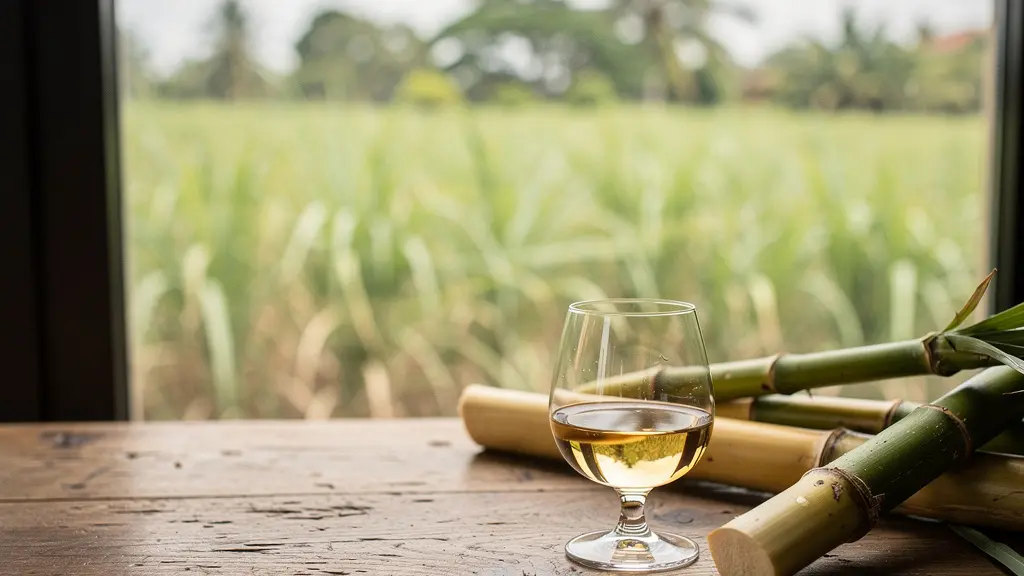
So, you’re ready to explore the world beyond mass-market rums. You’ve heard whispers of “rhum agricole,” the artisanal spirit from the French Caribbean, praised for its complexity. But you’ve also heard the warnings: it’s “grassy,” “funky,” “vegetal.” It can be an intimidating word, one that makes you hesitate, picturing a cocktail that tastes like a freshly mowed lawn. As a bartender here in Martinique, I see that hesitation all the time. Visitors come looking for an authentic taste but are afraid of it being *too* authentic.
Many guides will just give you a list of brands or a basic recipe. They tell you *what* agricole is—a rum made from fresh sugarcane juice, not molasses. But they rarely tell you *how* to approach it. The secret isn’t to find a rum with no vegetal character; that would be like asking for a wine with no grape character. The secret is to understand that “vegetal” isn’t one flavor. It’s a wide spectrum, from bright, fresh-cut grass to earthy, briny green olive, with floral and fruity notes woven throughout. The key is learning how to navigate this spectrum and find the bottle that sings to you.
Forget everything you think you know about rum being just sweet. We’re about to decode the soul of the sugarcane. I’ll show you why these rums have their unique profile, how to choose a proof that matches your taste, and how to build cocktails that either tame or celebrate that vibrant freshness. This is your journey from being a rum drinker to becoming a rum connoisseur, one who understands the terroir in their glass.
This guide is structured to walk you through that journey of understanding, from the science behind the flavor to the practical art of mixing. Here’s what we’ll cover:
Summary: Your Path to Mastering Agricole Rum
- Why Do Cane Juice Rums Smell Like Fresh Grass and Olives?
- Why Does the Martinique AOC Label Guarantee Quality Over Quantity?
- 50% vs 55% ABV: Which Strength Carrying More Aroma in Cocktails?
- The Sniffing Mistake That Burns Your Nose with High-Proof Agricole
- How to Balance Lime and Sugar to Perfect the Classic Daiquiri?
- Caipirinha or Mojito: Which Cocktail Demands Fresh Cane Spirit?
- How to Prepare a Ti’ Punch Like a Local Without Crushed Ice?
- How to Store White Agricole to Keep the Fresh Cane Aroma for 2 Years?
Why Do Cane Juice Rums Smell Like Fresh Grass and Olives?
The first step to appreciating agricole is to understand where its unique aromas come from. It’s not an additive or a flaw; it’s the pure expression of its raw material. As the writer Wayne Curtis beautifully put it in his guide for PUNCH Magazine, “Sugar cane is, essentially, a freakishly tall grass, and when freshly pressed it has the faint aroma of a lawn being cut on a warm summer’s day.” Unlike 98% of the world’s rum, which is made from molasses (a cooked, industrial byproduct of sugar production), rhum agricole is distilled directly from fresh, fermented sugarcane juice. This preserves the volatile, aromatic compounds of the plant itself.
This process is what gives the rum its famous “terroir”—a sense of place. The aromas are a direct reflection of the soil, the climate, and the specific variety of sugarcane grown. That’s why you get a vibrant spectrum of scents: from clean, green notes of sugarcane leaf and bamboo to more complex, savory hints of green olive, black tea, and even a slight salinity or brininess. These aren’t just poetic descriptions; they are the result of specific chemical compounds called congeners.
In Martinique, this is taken very seriously. To even be called “rhum agricole AOC Martinique,” the spirit must meet strict standards. This includes a legal requirement that the AOC Martinique specifications require a minimum of 225 grams of aromatic congeners per hectoliter of pure alcohol. This isn’t just a number; it’s a legal guarantee of aromatic intensity and complexity. You are tasting the living essence of the cane, not the cooked-down remnant.
Why Does the Martinique AOC Label Guarantee Quality Over Quantity?
When you see “Appellation d’Origine Contrôlée (AOC) Martinique” on a bottle, it’s more than just a sticker. It’s a legally binding promise, similar to the AOC for Champagne or Roquefort cheese. It’s the only one of its kind for rum in the world. This framework was established not to make the most rum, but to make the *best* and most authentic rum. This focus on quality over quantity is a key reason for agricole’s higher price point compared to industrial rums—you’re paying for a protected, artisanal process.
The AOC dictates every step of production, all designed to preserve that fresh, vegetal character we just discussed. It’s a set of rules that forces producers to capture the soul of the sugarcane. Here are the most critical rules that shape the final taste:
- Geographic Limitation: The sugarcane must be grown in one of just 23 designated municipalities in Martinique, ensuring a specific terroir.
- Harvest Window: The harvest is restricted to the dry season, typically January to August, when the cane is at its peak maturity and sugar concentration.
- Cane Quality: The freshly pressed juice must have a minimum sugar content (Brix) and a specific pH level, ensuring consistency and a vibrant starting point.
- Short Fermentation: Fermentation is limited to a maximum of 120 hours. This short window prevents the development of heavy, funky flavors and preserves the fresh, bright vegetal notes.
- Distillation Method: Distillation must be done in a traditional Creole-style column still, which is expert at capturing specific, lighter aromatic compounds (esters) that define the agricole profile.
These rules mean that a producer can’t just use any cane, from anywhere, at any time. They are bound to a rigorous process that champions freshness. This is your guarantee that the vegetal notes in the bottle are a deliberate, celebrated expression of Martinique’s unique environment, not an accident.
50% vs 55% ABV: Which Strength Carrying More Aroma in Cocktails?
Now we move from the “why” to the “how.” The single most important tool you have for controlling the vegetal intensity of agricole is choosing the right alcohol by volume (ABV), or proof. Not all agricoles are created equal. A rum bottled at 50% ABV will behave very differently from one at 55% or 59%. Higher proof doesn’t just mean more alcohol; it means more flavor concentration and a different aromatic expression.
Think of alcohol as the vehicle that carries the flavor compounds. A higher concentration can carry more of those volatile esters that give agricole its character. This is what we call structural integrity in a cocktail. A higher-proof rum can stand up to dilution from ice, sugar, and citrus without its personality being washed away. A lower-proof rum will soften more easily. For a cocktail lover, understanding this is everything. You choose your proof based on the job you want the rum to do.
This table breaks down how the experience changes with the strength of the rum. As you can see, a 50% ABV (100 proof) rum is often ideal for sipping or for cocktails where you want the vegetal notes to be a bit more subdued. It’s a great entry point. But for the classic Ti’ Punch, where there’s minimal dilution, a 55% ABV (110 proof) is the local standard because it has the power to shine.
| ABV Level | Vegetal Note Intensity | Best Use Case | Dilution Behavior |
|---|---|---|---|
| 50% (100 proof) | Moderate grassiness | Sipping neat or on rocks | Opens up with water, vegetal notes soften |
| 55% (110 proof) | Concentrated vegetal/floral | Ti’ Punch and cocktails | Maintains character through dilution |
| 59% (118 proof) | Intense grassy/briny | Professional cocktail use | Cuts through citrus and sugar effectively |
Case Study: Rhum J.M’s Dual-Strength Strategy
To see this in practice, look at a distillery like Rhum J.M. As noted in a review by Paste Magazine on their expressions, they strategically offer their white agricole at different proofs. Their 55% ABV expression is purpose-built for the traditional Ti’ Punch, where its robust, herbaceous profile can stand proud with just a touch of lime and sugar. This is a perfect example of a producer understanding that different applications demand different levels of aromatic intensity.
The Sniffing Mistake That Burns Your Nose with High-Proof Agricole
You’ve chosen your bottle. You pour a small amount into a glass. Your first instinct is to stick your nose right in and take a big sniff, just like you would with wine. This is the biggest mistake you can make with high-proof agricole, and it’s why so many people are immediately put off. All you will smell is burning ethanol, which completely masks the delicate aromas underneath. There is a proper “nosing etiquette” that allows you to bypass the alcohol and unlock the complex bouquet.
Instead of thinking of it as smelling, think of it as letting the aromas come to you. High-proof spirits are generous with their scent, but you have to give them space. The goal is to let the heaviest element, the ethanol, dissipate slightly so the lighter, more interesting esters can reach your nose. This is how you find the notes of white flowers, banana, and fresh cane hiding behind the alcoholic punch. Mastering this is as important as any cocktail recipe because if you can’t smell it properly, you can’t taste it properly.
This isn’t just some snobby ritual; it’s a practical technique to enhance your tasting experience. We don’t want to just endure the rum; we want to explore it. By following these simple steps, you’ll be able to dissect the aroma profile of any agricole you encounter and truly appreciate its complexity.
Your Action Plan: The Three-Step Agricole Nosing Technique
- Initial Approach: Hold the glass about 6 inches away from your face, below your chin. Swirl gently and let the most volatile, lighter aromas (grass, floral notes) drift up to you. Don’t put your nose in the glass.
- Retro-Nasal Breathing: Bring the glass a little closer, to just under your nose, but keep your mouth slightly open. Inhale gently. This allows some of the ethanol vapor to escape through your mouth, giving the heavier, earthier aromas a clearer path to your olfactory senses.
- The Palm Method: For a pure assessment, pour a few drops into one palm and rub your hands together briskly until they feel dry. The friction evaporates the alcohol almost instantly. Then, cup your hands over your nose and inhale deeply. You’ll be left with the pure, unadulterated base aroma of the sugarcane itself.
How to Balance Lime and Sugar to Perfect the Classic Daiquiri?
The Daiquiri is the perfect training ground for your new bottle of agricole. It’s a cocktail you likely already know, with a simple structure: rum, lime, sugar. This familiarity provides a perfect baseline to understand how agricole behaves. You can’t just swap Bacardi for a 55% ABV agricole and expect it to work with the same specs. That vibrant, vegetal character needs to be respected and balanced—a process we can call palate calibration.
The sharp, green notes of a powerful agricole can be perceived by your palate as being more “dry” or even slightly bitter than the round, sweet profile of a molasses rum. If you use a standard Daiquiri ratio (like 2 oz rum, 1 oz lime, 0.75 oz simple syrup), you might find the result overly tart or harsh. The key is to adjust the other ingredients to build a bridge between the citrus and the rum’s unique character. You need to give the vegetal notes a soft place to land.
This doesn’t mean drowning the rum in sugar. It’s about a thoughtful adjustment. A slight increase in the sugar content can round out the sharp edges of the rum and lime, creating a more harmonious cocktail. The type of sugar also makes a huge difference. Using a rich demerara or unrefined cane syrup instead of white sugar syrup can add complementary caramel and molasses notes that beautifully connect with the rum’s earthy undertones.
Expert Advice: The Agricole Daiquiri Ratio Adjustment
This isn’t just my opinion; it’s a widely recognized technique. For instance, in an article on agricole, The Whisky Exchange’s experts recommend this exact adjustment. They advise either slightly increasing the sugar or using a richer 2:1 sugar-to-water syrup when making an agricole Daiquiri. This additional sweetness is crucial to counter the rum’s dry, grassy profile and achieve a perfect balance, transforming the drink from potentially jarring to sublimely complex.
Caipirinha or Mojito: Which Cocktail Demands Fresh Cane Spirit?
Once you’re comfortable with the Daiquiri, you can start thinking about other cocktails. This is where understanding flavor pairing becomes crucial. Does that grassy, vibrant character complement or clash with other ingredients? Let’s look at two famous cocktails: the Caipirinha and the Mojito.
The Caipirinha, Brazil’s national cocktail, is traditionally made with cachaça—another spirit distilled from fresh sugarcane juice. While production methods differ (cachaça is often pot-distilled, while Martinique AOC agricole must be column-distilled), they share the same spiritual DNA. A Caipirinha is made by muddling fresh lime wedges with sugar before adding the spirit and ice. That process releases the lime oils and expresses a raw, intense citrus flavor that beautifully complements the grassy notes of agricole. Substituting a blanc agricole for cachaça is a natural, almost seamless switch. The two spirits speak the same language.
The Mojito, however, is a different story. The star of the Mojito, besides rum and lime, is mint. Mint has its own powerful, cool, and distinctly vegetal aroma. When you combine the grassy, sometimes briny notes of a strong agricole with the sharp notes of mint, they can often clash rather than harmonize. Instead of a refreshing blend, you can end up with a confusing mix of competing “green” flavors. It’s not impossible to make a good agricole Mojito, but it’s much trickier. It often requires a less aggressively vegetal agricole, perhaps one with more fruity or floral notes, and a careful hand to ensure one flavor doesn’t dominate the other.
For a beginner, the lesson is clear: start with cocktails where the other ingredients naturally support the rum’s profile. The Caipirinha is an excellent choice. It celebrates the fresh cane spirit, making it an ideal next step in your exploration.
Key Takeaways
- The “vegetal” flavor of agricole is a protected sign of quality, not a flaw, derived directly from fresh sugarcane juice.
- You can manage the intensity of these notes by selecting the right ABV: 50% for softer profiles, 55%+ for more robust cocktail presence.
- Proper nosing technique (smelling from a distance) is essential to appreciate the complex aromas without being overwhelmed by alcohol.
How to Prepare a Ti’ Punch Like a Local Without Crushed Ice?
You’ve learned the science, you’ve mastered the nosing, and you’ve calibrated your palate. Now you are ready. It is time to make a Ti’ Punch the way we do here in Martinique. Forget the fancy shakers and, most importantly, forget the crushed ice. The Ti’ Punch is not meant to be a cold, diluted drink. It is a ritual, an expression meant to be sipped and savored at room temperature to appreciate the full, unadulterated power of the rum. The name itself is short for “petit punch,” or small punch, and it’s built right in the glass you drink from.
The philosophy of the Ti’ Punch is captured in the local saying, *Chacun prépare sa propre mort*—”Each prepares his own death.” It sounds grim, but it means the drink is deeply personal. The ratio of lime to sugar is entirely up to you. The traditional method uses a small disc of lime, not a wedge or squeezed juice. You press the peel-side of the disc against the rim of the glass and squeeze, releasing the fragrant oils directly into the rum. This adds a bright, aromatic citrus zest without the sharp acidity of the juice.
This technique elevates the drink from a simple mixture to an aromatic experience. The oils float on top, greeting your nose with every sip, while the rum underneath remains pure. Use a small spoon, what we call a *bois lélé*, to gently stir in a touch of cane syrup or raw sugar. No ice. This is the *chaleur du canne*—the warmth of the cane. You are tasting the rum as the distiller intended.
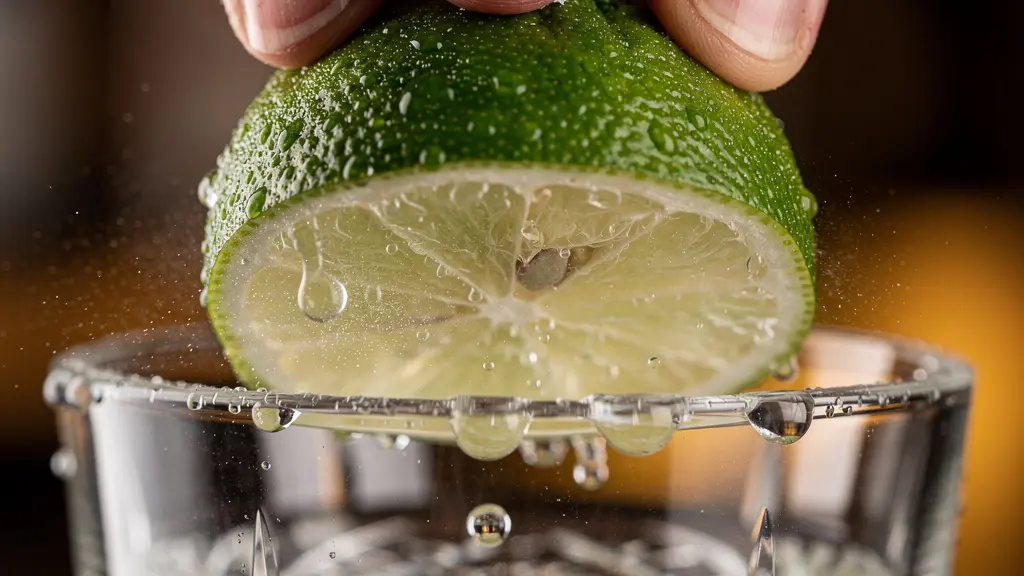
As the photo shows, the focus is on the direct infusion of lime oil into the spirit. This is the authentic way. It’s a simple, elegant ritual that puts the quality of the rum front and center. Once you’ve had it this way, you’ll understand why we don’t dilute this liquid gold with a mountain of ice. It’s a drink that evolves as you sip it, warming you from the inside out.
How to Store White Agricole to Keep the Fresh Cane Aroma for 2 Years?
Your journey with a bottle of fine agricole doesn’t end when you’ve perfected your Ti’ Punch. The final piece of the puzzle is preservation. Those beautiful, volatile grassy and floral notes you’ve learned to appreciate are also the first to disappear with improper storage. Unlike aged spirits that can be more forgiving, white agricole is a living spirit, and its enemy is oxygen.
When a bottle is half-empty, the rum is exposed to a large amount of air in the headspace. Over weeks and months, oxidation begins to take its toll. This process dulls the bright, fresh top notes first. The vibrant “fresh-cut grass” aroma fades, leaving behind the heavier, earthier, and sometimes more aggressive “cooked vegetable” flavors. Your once-lively rum can start to taste flat, stale, and one-dimensional. The good news is, this is entirely preventable.
The second enemy is light. Specifically, UV light. Storing your clear bottle on a sunny windowsill is a death sentence for its delicate flavors. UV radiation breaks down the ester compounds that are responsible for the complex aromas. A rum left in the sun will quickly lose its fresh character and develop unpleasant, harsh notes. Proper storage isn’t just about neatness; it’s about protecting your investment and ensuring that the last glass from the bottle is just as vibrant as the first.
Now that you are equipped with the knowledge to select, taste, and preserve your rhum agricole, your adventure is just beginning. Go forth, explore the shelves with confidence, and start your own journey into the heart of the sugarcane.
Frequently Asked Questions about White Agricole Rum
Why does my agricole rum taste more vegetal after being open for months?
Oxidation in a half-empty bottle dulls the fresh, volatile grassy notes first, leaving behind heavier, earthier, and potentially more ‘funky’ vegetal flavors that become more pronounced.
What’s the best container size for long-term agricole storage?
Transfer partially used bottles to smaller decanters to minimize headspace and oxygen exposure, which preserves the delicate top notes and fresh cane character.
Does UV light really affect the vegetal notes in agricole?
Yes, UV light breaks down delicate ester compounds, altering the flavor from ‘fresh and grassy’ to ‘stale and cooked’, making the vegetal notes less pleasant and more harsh.