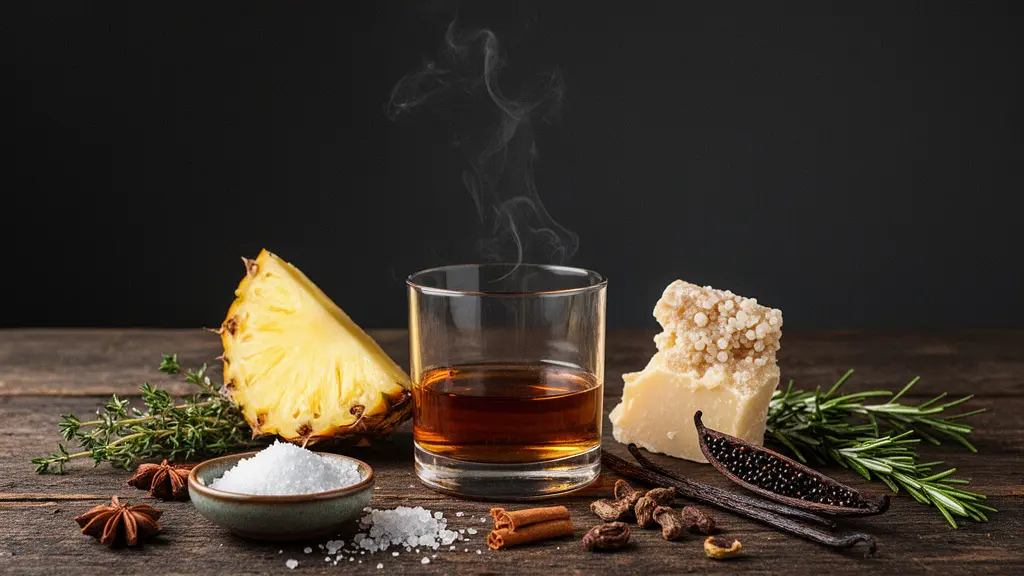
True flavor pairing isn’t about contrast or similarity; it’s about building “molecular bridges” with shared chemical compounds.
- Ingredients like pineapple and rum pair well because they share specific flavor esters (e.g., ethyl butyrate) created during fermentation.
- Strategic use of dairy (casein) or smoky notes (phenols) can create links that either tame intense heat or build deep aromatic complexity.
Recommendation: Stop guessing and start analyzing the molecular profile of your spirit and dish to build intentional, harmonious flavor continuums.
The frustration is familiar to any ambitious foodie: you pair a beautiful, spicy aged rum with a carefully prepared savory dish, only for the combination to fall flat. One element overpowers the other, flavors clash, or a harsh alcoholic burn obliterates any nuance. The common advice—pair sweet with sweet, or use acidity to cut through fat—offers a starting point, but it rarely unlocks the transcendent pairings we crave. These rules treat the spirit and the food as two separate entities battling for dominance on the palate.
This approach misses the fundamental secret of world-class beverage and food pairing. The real magic isn’t in contrast or simple congruence; it’s in connection. But what if that connection wasn’t just thematic or cultural, but chemical? What if the key to a sublime pairing was less about balancing broad tastes and more about identifying and deploying specific ‘bridge ingredients’ that share the exact same flavor molecules as the spirit itself? This is the art of building a molecular bridge, creating a seamless aromatic and gustatory continuum from the glass to the plate.
This guide moves beyond the basics to explore the science of flavor architecture. We will deconstruct why certain pairings work on a chemical level, from shared esters in fruit and rum to the power of phenols in smoke. You will learn to think like a flavor consultant, identifying the specific compounds in your rum and using that knowledge to select or create bridges that build harmony, tame unwanted heat, and unlock new layers of complexity in your pairings.
This article provides a detailed roadmap for mastering the art of the molecular bridge. By exploring the chemical foundations of flavor, you will gain a new framework for creating unforgettable pairings that are not just successful, but intentional and deeply harmonious. The following sections will guide you through this new way of thinking about flavor.
Summary: The Flavor Alchemist’s Guide to Rum and Savory Food
- Why Do Pineapple and Aged Rum Share the Same Flavor Molecules?
- How to Choose: Cut the Fat with Acid or Match the Sweetness with Sugar?
- Oysters or Smoked Salmon: Which Seafood Benefits More from Islay Peat?
- The Capsaicin Trap: Why High Alcohol Makes Spicy Food Taste Hotter?
- When to Serve the Cheese Board: Before or After the Dessert Pairing?
- How to Match Peach-Noted Whisky with Creamy Desserts Without Clashing?
- Rum Old Fashioned vs Whiskey Old Fashioned: Which Fits Your Dessert Course?
- Cooking with Spirits: How to Reduce Whisky Without Turning the Sauce Bitter?
Why Do Pineapple and Aged Rum Share the Same Flavor Molecules?
The classic pairing of rum and pineapple is often attributed to shared terroir or tropical vibes, but the truth is far more scientific and fascinating. The connection is forged at a molecular level through a class of organic compounds called esters. These aromatic molecules are created during the fermentation process of both sugarcane for rum and the ripening of fruit like pineapple. They are the primary building blocks of what we perceive as fruity and floral aromas.
The specific link between the two is a shared ester called ethyl butyrate. In-depth analysis of high-ester Jamaican rums shows that distillers intentionally cultivate fermentation conditions to produce this very compound, which gives off a distinct pineapple aroma. Simultaneously, food chemists have identified ethyl butyrate as one of the dominant aroma compounds responsible for the characteristic scent of fresh pineapple pulp. This isn’t a coincidence; it’s a direct chemical bridge. When you taste them together, your brain recognizes the same molecule from two different sources, creating a powerful sense of harmony and flavor amplification.
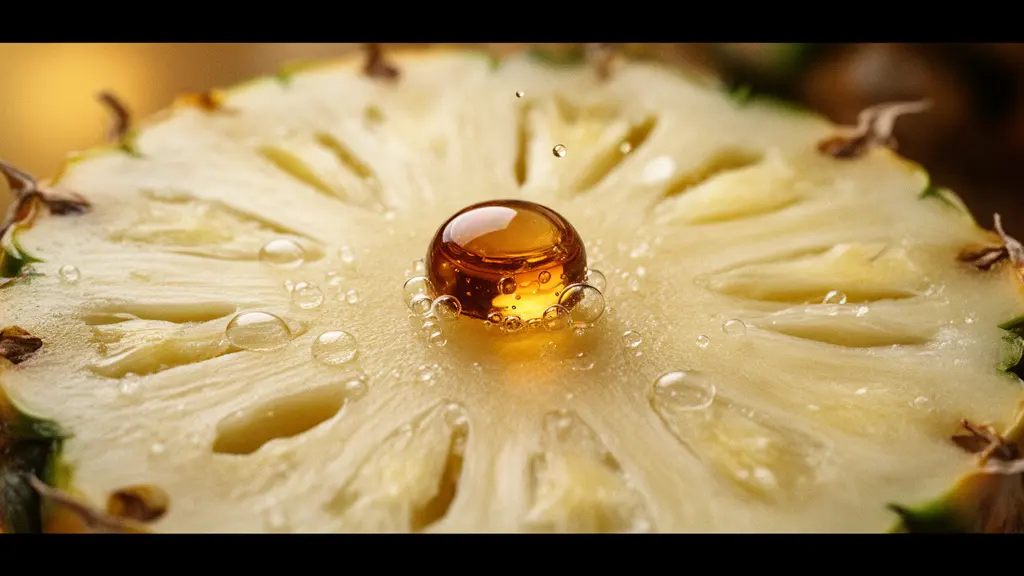
This principle of shared esters is the foundation of molecular pairing. An analysis of rum’s complex chemistry reveals that while a few compounds dominate, it is the interplay of dozens of minor esters that creates a unique aromatic signature. A detailed analysis on Rum Wonk explains that this phenomenon is a core principle of rum production, where specific esters like ethyl butyrate (pineapple) and isoamyl acetate (banana) are deliberately created. Understanding this allows you to move beyond pineapple and identify other ingredients that share these molecular fingerprints, such as mango, banana, or passionfruit, to build your own congruent flavor bridges.
How to Choose: Cut the Fat with Acid or Match the Sweetness with Sugar?
The traditional playbook for pairing offers two primary strategies. The first is “Cut with Acid,” where the sharp, proton-donating nature of an ingredient like lime juice or a vinegar-based mignonette cleanses the palate by breaking down fatty coatings. This is effective for pairing light, acidic rums with rich or fried foods. The second is “Match with Sugar,” a congruent approach where the sweetness in a rum is amplified by pairing it with dishes containing caramelized fruits or honey glazes. Both methods work, but they represent a limited, two-dimensional view of flavor interaction.
A more advanced approach, inspired by the principles of molecular gastronomy pioneered by chefs like Heston Blumenthal, introduces a “third way”: building an aromatic or umami-based molecular bridge. This strategy ignores the simple balance of taste (sweet, sour, fat) and instead focuses on identifying shared volatile compounds that create an aromatic continuum between the spirit and the dish. This is where true alchemy begins, using ingredients not for their primary taste, but for their chemical ability to connect other flavors.
This comparative analysis from The Rum Lab provides a framework for understanding these different strategies. The third way unlocks pairings that would seem dissonant under traditional rules, like pairing a spicy rum with an umami-rich savory dish.
| Strategy | Mechanism | Best Bridge Ingredients | Best For | Avoid With |
|---|---|---|---|---|
| Cut with Acid | Proton donation cleaves fat perception, resets palate | Citrus, vinegar mignonette, tamarind | Light rum + rich seafood, fried foods | Coconut cream (curdling risk), dairy-based sauces |
| Match with Sugar | Sweetness amplifies complementary rum esters | Caramelized fruits, honey glazes, palm sugar | Aged rum + roasted vegetables, BBQ | Already-sweet desserts (cloying effect) |
| Umami-Ester Bridge (Third Way) | Glutamate binds with ethyl esters via hydrophobic interaction | Aged parmesan, fish sauce, dried shiitake, miso | Spicy rum + savory/fatty dishes | Delicate raw preparations |
| Terpenic Aromatic Bridge | Shared terpenes (cineole, thymol) create aromatic continuity | Thyme, rosemary, Thai basil, lemongrass | Spiced rum + herb-crusted meats | Fruit-forward cocktails |
The “Umami-Ester Bridge,” for example, uses glutamate-rich ingredients like aged parmesan or miso. The glutamate molecule has an incredible ability to bind with flavor esters in the rum through hydrophobic interaction, creating a savory-fruity link that is deeply complex and satisfying. Similarly, a “Terpenic Aromatic Bridge” uses herbs like rosemary or thyme, which share terpenes (aromatic oils) with many spiced rums, creating a seamless herbal-spicy connection. These methods, as detailed in the analysis of advanced rum pairings, allow for far more creative and sophisticated combinations.
Oysters or Smoked Salmon: Which Seafood Benefits More from Islay Peat?
This question seems to pit two seafood classics against the iconic smoky character of Islay Scotch, but the same principle of phenolic alignment applies to smoky rums. The key isn’t the “peat” itself, but the specific smoky, medicinal compounds—phenols like guaiacol and syringol—that are imparted to a spirit either through peat-smoked malt or, in the case of rum, through heavy pot still distillation and aging in heavily charred oak barrels. The success of the pairing depends on whether the food’s flavor profile aligns with these specific phenols.
Oysters are defined by their delicate, briny, and metallic notes. They are prized for a clean flavor profile that reflects their marine environment. Introducing a spirit heavy in phenolic compounds creates a jarring clash. The smoky, tar-like notes of the spirit don’t just sit alongside the oyster’s flavor; they completely obliterate it, leaving an acrid, unbalanced taste. The bridge doesn’t connect; it collapses.
Smoked salmon, on the other hand, is a perfect candidate for phenolic alignment. The cold-smoking process imparts the very same families of phenolic compounds, including guaiacol, into the flesh of the fish. When you pair a smoky rum with smoked salmon, you are creating a congruent molecular bridge. The shared smoky compounds resonate, amplifying each other and creating a deep, cohesive, and richly layered flavor experience. The smokiness in the rum enhances the smokiness in the fish, while the rum’s underlying sweetness can cut through the salmon’s oiliness, creating a multi-layered and successful pairing.
The Capsaicin Trap: Why High Alcohol Makes Spicy Food Taste Hotter?
It’s a counterintuitive but painful reality: pairing a high-proof spirit with spicy food often makes the heat feel more intense, not less. This is the “Capsaicin Trap.” Capsaicin, the molecule responsible for the burning sensation in chili peppers, is fat-soluble but also highly soluble in ethanol (alcohol). When you take a sip of rum after a spicy bite, the alcohol acts as a solvent, breaking up the capsaicin oils and spreading them across your entire palate. Instead of washing the heat away, it effectively paints your mouth with fire, intensifying and prolonging the burn.
The solution is not to avoid spice, but to build a functional molecular bridge designed for capsaicin sequestration. This means introducing an ingredient that can physically bind to the capsaicin molecules and remove them from the mouth’s pain receptors (TRPV1 channels). The most effective and delicious tool for this job is dairy protein, specifically casein. Casein proteins are lipophilic (fat-loving) and form structures called micelles that are brilliant at encapsulating capsaicin molecules, creating a creamy cushion that soothes the palate.
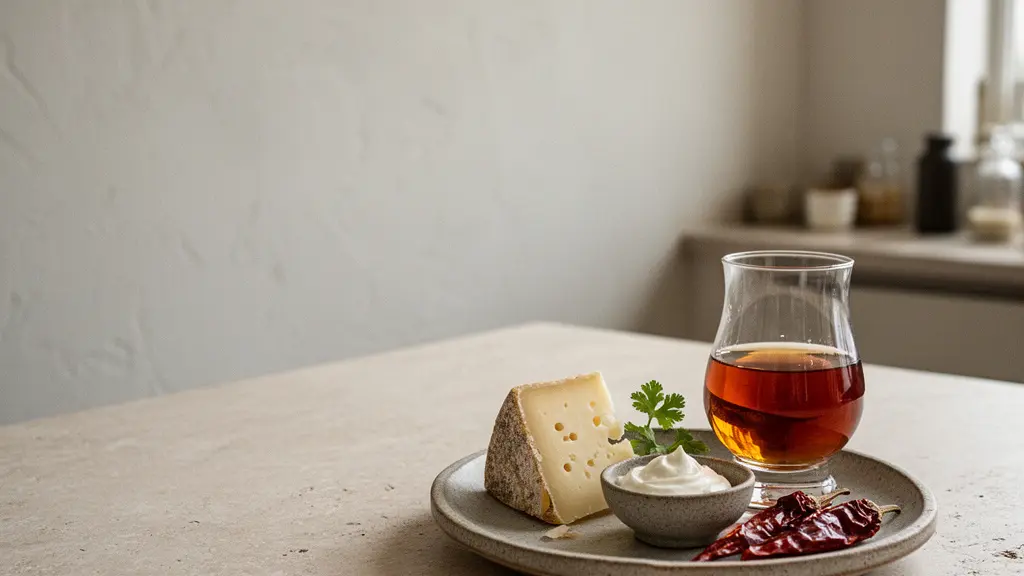
The science backs this up decisively. A 2023 study found that a solution of micellar casein was dramatically more effective at reducing chili burn than water or even other types of protein. According to a study published in the Journal of Food Science, participants experienced a 43% reduction in oral burn with 5% micellar casein compared to a control group. This means a dollop of crème fraîche, a creamy cheese sauce, or a yogurt-based marinade isn’t just a tasty addition; it’s a scientifically validated tool for managing heat and allowing the nuanced flavors of both the spicy rum and the dish to shine through.
When to Serve the Cheese Board: Before or After the Dessert Pairing?
The conventional placement of a cheese course is a subject of endless debate, but when viewed through the lens of molecular pairing, the answer becomes a matter of strategy, not just tradition. As The Rum Lab’s editorial team notes, the goal is to find “Flavors that connect the spirit and the food.” The cheese board’s optimal placement depends on the function you need it to perform: is it a bridge to dessert, or is it a palate reset after a challenging main course?
Flavors that connect the spirit and the food, like tropical notes in a rum that enhance coconut-based dishes.
– The Rum Lab editorial team, Rum & Food Pairing: Unexpected Combinations That Will Change How You Enjoy Rum
If you’ve just served a powerfully spicy main course paired with a robust rum, your guests’ palates are likely fatigued and saturated with capsaicin. Serving a sweet dessert at this point would be a waste, as its nuances would be lost in the lingering heat. This is where the cheese board serves a critical function as a molecular palate cleanser. As established, the casein proteins in cheese are exceptionally effective at sequestering capsaicin.
A 2024 study further confirmed this mechanism, showing that casein solutions provide tangible relief from capsaicin-induced burning. By serving a selection of high-fat, casein-rich cheeses (like a triple-cream brie or a rich cheddar) *after* the spicy main and *before* the dessert, you are not just offering another course. You are deploying a lipid-protein sponge that actively cleanses the palate, neutralizes the burn, and prepares the taste buds to fully appreciate the subtleties of the upcoming dessert and its accompanying spirit. In this context, the cheese board is the functional bridge that makes the entire latter half of the meal possible.
How to Match Peach-Noted Whisky with Creamy Desserts Without Clashing?
Pairing a fruit-forward spirit with a creamy dessert can be treacherous. The bright, acidic notes of the fruit can cause the dairy flavors to “separate” or taste sour, while the richness of the cream can dull the spirit’s delicate aromatics. The solution, once again, lies in chemistry—specifically, in a molecular bridge known as the “lactone sandwich.” Lactones are a class of esters that are responsible for creamy, coconut, and stone fruit aromas. The key is that barrel-aged spirits, stone fruits, and dairy all contain structurally similar lactones.
Aged spirits like whisky or rum develop a compound called cis-whiskey lactone during their time in oak barrels, which imparts sweet, coconut-like notes. Peaches and apricots owe their characteristic aroma to a compound called gamma-decalactone. Cream and other dairy products get their creamy scent from delta-decalactone. While distinct, these three molecules are close chemical cousins. When you pair a peach-noted whisky with a creamy dessert (like panna cotta or cheesecake), you create a three-way molecular bridge.
The lactones in the whisky resonate with the lactones in the peach element, and both connect to the lactones in the cream. This creates a seamless aromatic continuity that prevents the flavors from clashing. Instead of fighting, they support one another, creating a unified and complex profile. It’s a reminder that flavor is driven by specific, powerful molecules. Indeed, as a doctoral study on premium aged rum aroma chemistry explains, cis-whiskey lactone is one of the most potent odorants found in barrel-aged spirits, making it a powerful tool for building these bridges.
Rum Old Fashioned vs Whiskey Old Fashioned: Which Fits Your Dessert Course?
The Old Fashioned, in its classic simplicity, is a perfect vehicle for exploring flavor bridges. The choice between a rum or whiskey base for a dessert pairing isn’t about which spirit is “better,” but which molecular bridge you intend to build. Though they share a structure (spirit, sugar, bitters, water), the base spirit’s origin—sugarcane for rum, grain for whiskey—creates two fundamentally different cocktails with distinct pairing capabilities.
A Rum Old Fashioned is built on a foundation of fermentation esters (fruity, tropical notes) and caramelized sucrose from the sugarcane base. This creates a powerful bitter-sweet bridge. The aromatic bitters interact with the rum’s inherent sweetness, making it a perfect partner for desserts that play on this contrast, such as dark chocolate tortes, coffee-infused tiramisu, or tropical fruit tarts. Its flavor profile tends to evolve dramatically in the glass as it dilutes, starting sweet and finishing with a drier, more complex bitterness.
A Whiskey Old Fashioned, by contrast, builds its profile on the spirit’s grain mash origins (cereal, nutty notes) and the phenols from oak aging (smoke, spice, tannin). This lends itself to a smoke-salt bridge. The bitters bind with the grain polyphenols rather than sucrose, creating a more savory and robust profile that excels alongside salted caramel, nutty pralines, or smoked maple confections. Its flavor evolution is more linear, maintaining its core character even with dilution. This in-depth comparison from Colours of Rum highlights the different bridges each cocktail creates.
The following table, based on an analysis of rum’s flavor origins, breaks down the key differences for dessert pairing.
| Characteristic | Rum Old Fashioned | Whiskey Old Fashioned |
|---|---|---|
| Base Spirit Flavor Origin | Fermentation esters (fruity, tropical) + oak aging (vanilla, caramel) | Grain mash (cereal, nutty) + oak aging (smoke, tannin) |
| Dilution Flavor Evolution | Sweet → Bitter → Dry (dramatic three-phase shift) | Grain → Smoke → Tannin (more linear, stable) |
| Primary Bridge to Dessert | Bitter-sweet bridge (pairs with chocolate, tropical fruit desserts) | Smoke-salt bridge (pairs with caramel, salted confections) |
| Best Dessert Texture | Multi-textured (crunchy, creamy, liquid layers) | Linear single-texture (flan, panna cotta, crème brûlée) |
| Key Bitterant Interaction | Angostura secoiridoids bind sugarcane-derived sweetness | Angostura secoiridoids bind grain polyphenols |
| Optimal Serving Window | First 5-8 minutes (before sugar bridge collapses) | Stable over 10-15 minutes |
Key Takeaways
- Congruent Ester Bridges: The most harmonious pairings often occur when the spirit and a food ingredient share the exact same aromatic esters (e.g., ethyl butyrate in both rum and pineapple).
- Functional Protein Bridges: Casein protein in dairy acts as a “molecular sponge,” actively sequestering capsaicin to tame spice and cleanse the palate for subsequent courses.
- Lactone Alignment: Create seamless connections with creamy desserts by aligning structurally similar lactones from barrel-aged spirits (cis-whiskey lactone), stone fruits (gamma-decalactone), and dairy (delta-decalactone).
Cooking with Spirits: How to Reduce Whisky Without Turning the Sauce Bitter?
Using spirits in a pan sauce is a classic technique, but it often ends in disappointment: a harsh, bitter flavor that overpowers the dish. This happens because of volatile chemistry. The desirable, delicate fruity and floral esters that define a spirit’s aroma are highly volatile and evaporate quickly with heat. What’s left behind is a concentration of harsher, heavier alcohols and bitter-tasting compounds, resulting in an acrid sauce.
The secret to a successful spirit-based reduction is to preserve the good esters while cooking off the undesirable elements. This requires a precise, multi-step approach that treats the spirit not as a simple liquid, but as a fragile collection of chemical compounds. The goal is to create conditions that “trap” the desirable volatiles within the sauce while allowing the harsh ones to escape. It’s about controlling heat, timing, and the chemical reactions within the pan.
By following a specific protocol, you can create a sauce that is rich, complex, and deeply infused with the spirit’s true character, not its bitter ghost. This involves selecting the right spirit, building a stable sauce base first, and using a two-stage addition of the alcohol to preserve its aromatic integrity.
Your 5-Step Protocol for Flavour-Rich Spirit Reductions
- Select for Survival: Choose a spirit with higher concentrations of less volatile esters (like ethyl lactate) over those dominated by highly volatile ones (like ethyl acetate, which burns off easily).
- Build the Base First: Create your sauce foundation (sautéed aromatics, stock, etc.) and reduce it to about 60% of its final volume *before* adding the spirit. This creates melanoidin compounds that act as volatile traps.
- Add with Gentle Heat: Add the spirit off the direct flame or at a very gentle simmer (never a rolling boil). This allows the harshest high-note alcohols to flash off while preserving the more delicate esters.
- Time the Inversion: A spirit’s sugar (especially in rum) undergoes thermal inversion around 110-115°C. Managing this allows it to form inverted syrups that bind with food proteins, adding depth through caramelization rather than just dilution.
- Finish with a Fresh Dose: Just before serving, stir a very small amount (a teaspoon or so) of the un-cooked spirit into the finished sauce. This reintroduces the fresh, volatile top-note aromas that were lost during cooking, completing the flavor profile.
Now that you understand the molecular principles, the next step is to put them into practice. Choose a bottle from your shelf, analyze its dominant characteristics—is it ester-heavy and fruity, or phenolic and smoky?—and start experimenting with building your own intentional molecular bridges. This is where the true craft of the flavor alchemist begins.