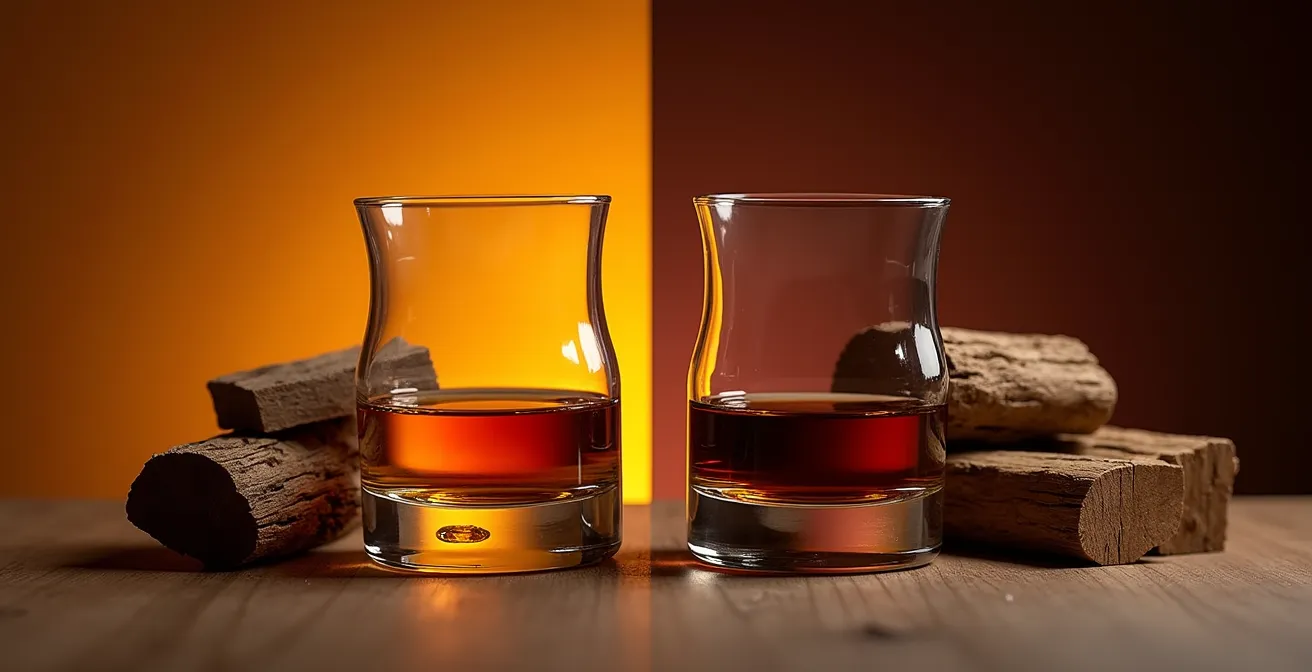
The choice between Oloroso and PX is not about which is ‘better,’ but about understanding that the wine is only one part of a much larger story.
- The true character of a sherry cask whisky is forged by the type of oak used, the modern “seasoning” process, and the journey the cask takes from Spain to Scotland.
- Common beliefs about old “solera” casks are largely a myth; the industry relies on new, purpose-built casks seasoned for short periods.
Recommendation: Instead of choosing a whisky based only on the sherry type, learn to identify the signs of the cask’s underlying quality—from the oak’s influence to the duration of the finish.
Many whisky enthusiasts believe the debate between Oloroso and Pedro Ximénez casks is a simple matter of preference: the dry, nutty complexity of Oloroso versus the intense, syrupy sweetness of PX. As a bodega manager in Jerez, where the soul of sherry is born from our albariza soil, I can tell you this view barely scratches the surface. The liquid that once inhabited the cask—the sherry itself—is merely the final brushstroke on a canvas prepared with generations of expertise. To truly understand the dram in your glass, you must look beyond the wine and into the very wood of the cask.
The conversation often revolves around which style creates the ultimate “dessert dram,” but this question is flawed. It presumes the sherry is the sole artist. The real artistry lies in the interplay between the spirit, the wood, and the wine. It’s a trinity. The journey of the cask, its construction, and its treatment before it ever reaches a Scottish distillery are the factors that truly dictate its potential. Is it made from spicy Spanish oak or vanilla-rich American oak? Has it been carefully seasoned, or is it a tired old barrel carrying unwanted sulphur notes? These are the questions a true aficionado should ask.
This article will not give you a simple answer. Instead, it will provide you with the knowledge we live by in Jerez. We will explore the hidden variables: the logistics of cask transport, the secrets of wood selection, the truth behind the “old wood” myth, and the delicate science of fermentation and finishing. By the end, you will no longer see two competing sherry styles, but a beautiful and complex spectrum of flavour, and you will have the tools to navigate it with the confidence of an expert.
To navigate this deep dive into the world of sherry cask maturation, we have structured our journey into distinct chapters. Each section addresses a critical, often-overlooked aspect of what makes a great “Sherry Bomb,” giving you a complete picture from the cooperage in Spain to the glass in your hand.
Summary: The True Story Behind Sherry Cask Maturation
- Why Are Sherry Casks Shipped Whole Rather Than Staved to Scotland?
- How to Detect Candle Wax Notes Caused by Sulfured Sherry Casks?
- American Oak or Spanish Oak: Which Wood Base Suiting Sherry Seasoning Best?
- The “Old Wood” Myth: Why Freshly Seasoned Casks Are More Potent Than 50-Year-Old Solera Butts?
- How Long Should a Finish Last to Impart Fruit Without Masking the Spirit?
- How Sherry Seasoning Works: The Process Behind the “Sherry Bomb” Style
- Why Long Fermentation Creates More Stone Fruit Aromas than Short?
- Why Is Virgin Oak Finishing Becoming the New Trend in Scotch Whisky?
Why Are Sherry Casks Shipped Whole Rather Than Staved to Scotland?
The journey of a sherry cask, or *bota*, from our bodegas in Andalusia to the warehouses of Scotland is a matter of preserving integrity. Shipping them whole is not a mere logistical preference; it is a fundamental requirement for quality. A cask is a living, breathing vessel. Its staves are held together by pressure and moisture, a delicate equilibrium that maintains its structure and, most importantly, its aromatic soul. To disassemble it into staves for shipping would be to break that seal, exposing the sherry-soaked interior to contamination and oxidation. It would arrive in Scotland as a kit of wooden planks, not a vessel ready to impart its magic.
Furthermore, the modern whisky industry’s demand for these casks is immense. The Consejo Regulador reports that around 90,000 sherry butts are supplied annually to the spirits industry. This is a highly valuable trade, with distilleries making significant investments to secure their supply. For example, the Ardgowan distillery announced a partnership worth £100 million for sherry casks, demonstrating their critical importance. Shipping them whole ensures that this investment arrives intact, ready to perform its duty without the costly and risky process of re-coopering on-site, which could never fully restore the original integrity of a cask seasoned in Jerez.
The practice also preserves the “micro-environment” within the cask. The residual sherry, the absorbed compounds in the wood, and the specific humidity are all part of the package. Shipping it whole is akin to sending a sealed bottle rather than a collection of ingredients. It guarantees that what the Scottish distiller receives is as close as possible to the vessel that we, the sherry producers, have prepared for them. It is a matter of respect for the wood, the wine, and the final whisky.
How to Detect Candle Wax Notes Caused by Sulfured Sherry Casks?
Ah, the dreaded whisper of sulphur. It is a sensitive topic, but one an educated drinker must understand. Sulphur is used in the wine world, sometimes to clean and sterilise casks, particularly those destined for a long journey. When a cask is emptied of sherry and prepared for shipment, a sulphur candle might be burned inside to prevent bacterial growth. This is a practice known as “candling.” If not done with extreme care, or if the cask is of poor quality, sulphur compounds can impregnate the wood. When new-make spirit is filled into such a cask, it can extract these compounds, leading to undesirable notes of struck match, rubber, or a waxy, extinguished-candle aroma.
These notes are a flaw, a sign of a poorly prepared cask, and can easily mask the beautiful fruit and spice we work so hard to develop. As one frustrated whisky lover noted after a bad experience, “those other Oloroso sherried drams which I had tasted must have been heavily contaminated by sulpher.” This contamination can turn a promising dram into a profound disappointment. Detecting it is a key skill. It is not always obvious, and it requires a methodical approach to nosing and tasting. Water can be a powerful tool, as it can help release these volatile sulphur compounds, making them more apparent.
Your Action Plan: Identifying Sulphur Contamination in a Sherry Cask Whisky
- Initial Nosing: Pour a dram and nose it immediately. Search for any sharp, rubbery, or “struck match” notes before the aromas have a chance to open up.
- The Water Test: Add a few drops of water. This helps release volatile compounds. Note if any underlying sulphur notes become more prominent after this addition.
- Patience is Key: Let the whisky rest in the glass for 15-20 minutes. This allows some of the more volatile compounds to dissipate.
- Re-evaluate the Aroma: Check if the sulphur note has “blown off.” If it has largely disappeared, it was likely a minor flaw. If it persists or intensifies, the cask was probably heavily sulfured.
- Final Taste Confirmation: If the note persists on the palate with a metallic or rubbery finish, your suspicions are confirmed.
American Oak or Spanish Oak: Which Wood Base Suiting Sherry Seasoning Best?
The type of sherry is important, but the type of oak is the foundation upon which the final flavour is built. In Jerez, we have traditionally used both Spanish oak (*Quercus robur*) and American oak (*Quercus alba*), and each interacts with our wines—and later, the whisky—in a profoundly different way. To ask which is “best” is the wrong question; one must ask what character the distiller wishes to achieve. They are two different paths to two different destinations.
Spanish oak is the more traditional choice for sherry maturation. It is more porous, has a wider grain, and is significantly richer in tannins. When seasoned with Oloroso, it imparts powerful notes of spice, clove, leather, and dried figs. With the sweeter Pedro Ximénez, it provides a robust, tannic structure that balances the intense sweetness, yielding flavours of dark fruitcake, espresso, and bitter chocolate. It is assertive and bold.
American oak, on the other hand, is denser with a tighter grain. It is lower in tannins but higher in vanillins—the compounds that give vanilla and coconut notes. When seasoned with Oloroso, it creates a softer, nuttier profile with hints of vanilla and dried fruit. Paired with PX, it results in a sweeter, more confectionary style, reminiscent of chocolate fudge, cherries, and sweet spice. It offers a gentler, creamier influence. The choice, therefore, is a strategic one for the master blender.
This table from a recent comparative analysis elegantly summarises the flavour profiles you can expect.
| Oak Type | With Oloroso | With Pedro Ximénez |
|---|---|---|
| Spanish Oak (Quercus Robur) | Spicy, tannic, leathery dried fruit | Dense, treacly fruitcake, espresso notes |
| American Oak (Quercus Alba) | Nutty, vanilla-backed dried fruit | Sweet chocolate-fudge, cherry cola |
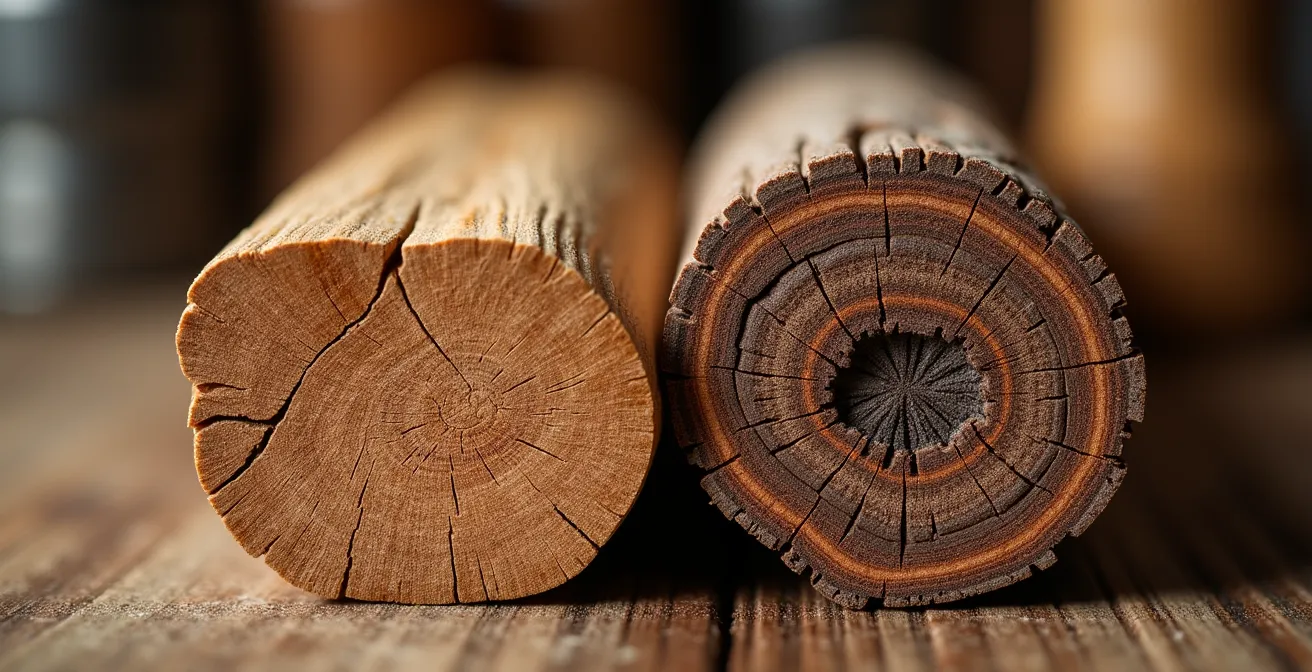
As you can see, the wood’s origin is as critical as the wine it holds. An Oloroso-seasoned American oak cask will produce a vastly different whisky than an Oloroso-seasoned Spanish oak cask. The former will be softer and nuttier; the latter will be spicier and more structured. This is the level of detail a true enthusiast must appreciate.
The “Old Wood” Myth: Why Freshly Seasoned Casks Are More Potent Than 50-Year-Old Solera Butts?
There is a romantic but pervasive myth in the whisky world: the idea that the best sherry cask whiskies are aged in ancient *botas* taken directly from a 50-year-old solera system in Jerez. While this makes for a wonderful story, it is, for the most part, untrue. A true solera cask is a treasure, often centuries old, and its wood is largely inactive or “exhausted.” It has given all its tannins and flavours to generations of sherry. Using such a cask for whisky maturation would result in a spirit with very little wood influence—it would be like aging whisky in a glass bottle.
The reality is that the vast majority of sherry casks used by the whisky industry today are not solera casks. They are purpose-built “transport casks” or, more accurately, seasoning casks. These are new casks, made from either American or Spanish oak, which are specifically commissioned by cooperages for the whisky industry. They are then delivered to a bodega, where they are “seasoned” with a young, often basic, Oloroso or PX sherry for a relatively short period.
This seasoning process is designed for maximum flavour extraction. As Mark Littler’s research explains, casks are seasoned with sherry for between 6 months and 2.5 years. A fresh, new cask has a wealth of flavour compounds (vanillins, tannins, lactones) to give. The sherry serves to extract some of these, modify them, and add its own layer of fruity, nutty character. When this freshly seasoned cask is then emptied and sent to Scotland, it is incredibly potent and active. It’s primed and ready to impart a huge burst of sherry and oak flavour to the whisky in a short amount of time. This is how the modern “Sherry Bomb” is created—not with old, tired wood, but with fresh, purpose-seasoned casks.
How Long Should a Finish Last to Impart Fruit Without Masking the Spirit?
The concept of “finishing”—transferring a mature whisky into a different cask for a final, shorter period of ageing—is a delicate art. It is not about overwhelming the spirit but about adding a final layer of complexity. With powerful casks like first-fill Oloroso or PX, the question of “how long” is critical. Too short, and the influence is negligible. Too long, and the original character of the distillery’s spirit can be completely erased, resulting in a generic “sherry” flavour rather than a beautifully integrated whisky.
Generally, a sherry finish can last anywhere from a few months to a couple of years. For many whiskies, the spirit is transferred to a sherry cask for a period of 3 to 12 months to complete its maturation. However, the ideal duration depends on two main factors: the activity of the cask and the style of sherry used. A “first-fill” cask (one that has held sherry but not yet whisky) will impart flavour exponentially faster than a “refill” cask. Pedro Ximénez, with its intense, sugary profile, is also a much faster actor than the drier, more complex Oloroso. A PX finish can quickly dominate a spirit, lending it powerful notes of raisin and treacle, while an Oloroso finish might take longer to integrate its spicier, nuttier characteristics.
The goal is always balance. The finish should complement, not conquer. It should be a harmonious marriage where you can still taste the DNA of the original spirit—be it the floral notes of one distillery or the peaty smoke of another—enhanced by the sherry cask, not buried beneath it. Finding that perfect “sweet spot” is the ultimate test of a Master Blender’s skill.
This comparative table gives a good general idea of the timelines involved.
| Cask Type | Sweet Spot Duration | Character Impact |
|---|---|---|
| Pedro Ximénez | 6-12 months | Intense sweetness, can overwhelm quickly |
| Oloroso | 24+ months | Adds complexity without dominating |
| First-fill cask | 3-6 months | Exponentially faster flavor transfer |
| Refill cask | 12-36 months | Gentler integration |
How Sherry Seasoning Works: The Process Behind the “Sherry Bomb” Style
The term “Sherry Bomb” evokes an image of a whisky exploding with rich, fruity, and spicy notes. This powerful profile is the direct result of the modern cask seasoning process, an industrial-scale operation tailored specifically to the needs of the whisky industry. As we’ve discussed, these are not the historic casks from a working solera. Instead, as the practice is now widely understood, sherry casks are now manufactured purely for the whisky industry—by seasoning new casks with sherry before they are sent to distilleries. This is a crucial distinction.
The process begins with a newly built oak cask. This cask is then filled with a young, fermenting sherry—often a basic Oloroso or PX that may not even be destined for commercial sale as a wine. The purpose of this sherry is not to be aged, but to act as a solvent and flavouring agent for the wood. Over a period of several months to a couple of years, the wine works on the oak. It leaches out harsh tannins, extracts desirable wood compounds like vanillin and spices, and simultaneously soaks its own character—dried fruits, nuts, or sweet raisins—deep into the staves.
When the seasoning period is complete, the sherry is emptied (and often reused for seasoning other casks), and the “wet” cask is quickly sealed and shipped to Scotland. It arrives brimming with potential, its wood saturated with sherry character and activated oak compounds. When the new-make whisky spirit is filled into this cask, the flavour transfer is rapid and intense. This is the engine of the “Sherry Bomb.” The enormous demand for this flavour profile has driven a massive increase in cask procurement, with one report showing a 37% compound annual growth in sherry cask purchases by independent bottlers in recent years. This industry-within-an-industry is dedicated entirely to creating these potent vessels of flavour.
Why Long Fermentation Creates More Stone Fruit Aromas than Short?
Before a single drop of spirit ever touches the inside of a sherry cask, its fundamental character is forged during fermentation. This is a point often lost in the obsession with wood. The cask can only enhance or modify the flavours that are already present in the new-make spirit. One of the most critical factors in creating those base flavours is the length of fermentation. A long fermentation, lasting 60 hours or more, encourages the development of a specific group of chemical compounds called esters.
Esters are responsible for the fruity and floral aromas in whisky. During a longer, slower fermentation, yeast has more time to work, and secondary bacterial activity can occur. This environment is perfect for creating the esters that produce notes of stone fruits like apricot, peach, and plum, as well as lighter floral and apple notes. A short fermentation, by contrast, is more efficient for producing alcohol but tends to yield a spirit with more cereal and nutty characteristics. Therefore, a distiller who wants to create a rich, fruity whisky that will pair beautifully with a sherry cask will deliberately choose a long fermentation time. The GlenAllachie distillery, for example, is famous for its fruity style, achieved in part through a 60-hour fermentation before its spirit is finished in Oloroso and PX casks.
This is where the marriage of spirit and cask becomes truly beautiful. When a fruity, ester-driven spirit is placed in an Oloroso cask, the cask’s spicy, nutty notes complement the stone fruit aromas, creating a complex, layered dram. When the same spirit is placed in a PX cask, the cask’s intense sweetness amplifies the fruit, creating a decadent, jammy profile. As the team at Whisky Unfiltered aptly puts it:
The most noticeable difference between Oloroso and PX cask-matured whisky is sweetness. Oloroso adds dry fruit and nutty flavors with little residual sweetness, while PX imparts an intense syrupy sweetness.
– Whisky Unfiltered Editorial Team, Whisky Unfiltered
The cask does not create the fruit; it provides the context for it. A spirit born from a short fermentation will never become a fruit bomb, no matter what cask it is aged in.
Key Takeaways
- The “Sherry Bomb” style is a product of modern, purpose-built seasoning casks, not ancient solera barrels.
- The choice of oak (spicy Spanish vs. vanilla-rich American) has as much impact on the final flavour as the type of sherry used.
- The character of the whisky is born in fermentation; long fermentations create the fruity esters that sherry casks then enhance and complement.
Why Is Virgin Oak Finishing Becoming the New Trend in Scotch Whisky?
While the allure of sherry casks remains powerful, the world of whisky is one of constant innovation. The very same curiosity that led distillers to explore Oloroso and PX casks is now pushing them into new territory: virgin oak finishing. This practice involves finishing whisky in brand new, unseasoned, and often heavily charred oak casks. It is the antithesis of the sherry cask philosophy, which relies on a vessel already imbued with flavour. Here, the wood itself is the only flavouring agent.
This trend is part of a broader movement towards what is known as “barrel experimentation.” Distillers are routinely using casks that have previously held port, rum, wine, and even vermouth to add unique layers of flavour to their spirits. Virgin oak, however, is a more direct and powerful approach. It imparts intense notes of vanilla, caramel, coconut, and fresh spice directly from the wood. It is a way to add a layer of “bourbon-style” richness to a Scotch whisky, creating a fascinating hybrid profile. This experimentation is a significant driver of the market, with some forecasts suggesting that approximately 30% of new whisky product launches in recent years feature innovative cask finishes.
So why is this happening now? It reflects a desire for new flavour profiles and a way for distilleries to differentiate themselves in a crowded market. It also shows a deep understanding of wood science. By controlling the origin of the oak, the level of toasting and charring, distillers can dial in specific flavours with incredible precision. While it may seem like a departure from tradition, it is in fact a return to the most fundamental element of maturation: the wood. It serves as a reminder that whether the cask is seasoned with sherry or left in its virgin state, it is the oak that provides the essential canvas for the final masterpiece.
Now that you are equipped with a deeper understanding of the wood, the process, and the spirit, the choice between an Oloroso and a Pedro Ximénez dram is no longer a simple guess. It is an informed decision. The next time you nose a glass, look for the clues: the spice of Spanish oak, the vanilla of American oak, the balance of a perfect finish, and the fruity heart born from a long fermentation. This is the true appreciation of a great sherry cask whisky.