Tasting & Techniques
Tasting a spirit is far more than simply drinking it. Behind every pour lies a complex interplay of chemistry, tradition, and craftsmanship that transforms raw ingredients into layered flavor experiences. Whether you’re nosing a single malt whisky, evaluating a carefully crafted blend, or analyzing the impact of barrel aging on rum, the ability to decode what’s in your glass requires both knowledge and practice.
This comprehensive resource introduces the essential techniques and scientific principles that underpin spirit evaluation. From understanding how fermentation creates foundational flavors to mastering the sensory skills needed to overcome alcohol burn, these methods will transform your relationship with spirits. You’ll learn how production choices influence what you taste, how to analyze spirits systematically, and why certain techniques—like adding water or adjusting temperature—unlock hidden complexity.
The Foundation: How Fermentation Shapes Flavor
Before distillation even begins, fermentation establishes the flavor blueprint that will define a spirit’s character. The choices made during this biological transformation—yeast selection, temperature management, and fermentation duration—create the congeners and esters that give spirits their distinctive personalities.
Yeast Selection and Its Impact on Character
The debate between wild yeast versus cultured strains represents one of the most consequential decisions in spirit production. Cultured yeasts offer predictability and consistency, producing specific flavor compounds reliably batch after batch. Wild yeasts, by contrast, introduce unpredictability—sometimes delivering remarkable complexity through unexpected esters, other times threatening bacterial contamination that can ruin an entire fermentation.
Think of cultured yeast as a trained orchestra following a precise score, while wild fermentation resembles jazz improvisation: potentially brilliant, but requiring expertise to manage. Distillers who use wild fermentation must monitor temperature and pH constantly, watching for signs of unwanted bacterial infection that manifest as off-flavors.
Temperature Control and Congener Creation
Managing fermentation temperature directly impacts the creation of heavy esters and congeners—the compounds responsible for fruity, floral, and funky notes in spirits. Warmer fermentations (above 35°C) accelerate yeast activity and produce more congeners, creating robust, characterful spirits but risking stressed yeast that generates unpleasant sulfur compounds.
Cooler fermentations preserve delicate aromatics and allow longer fermentation times, which many distillers believe creates more complex flavor precursors. This extended timeline also affects when to time the distillation cut: spirits from shorter, hotter fermentations may require different cut points than those from slow, cool fermentations to capture optimal flavor while avoiding harsh fusel alcohols.
Visual Assessment: Reading Your Spirit Before Tasting
The moment you pour a spirit into a glass, visual analysis begins revealing clues about its production, aging, and potential flavor profile. However, appearance can mislead as easily as it informs, making it essential to understand both what visual cues reveal and their significant limitations.
Color Analysis and Its Deceptive Nature
A deep amber hue might suggest extended aging in oak, but color alone tells an incomplete story. Spirit producers can legally add caramel coloring to achieve visual consistency across batches, making a young spirit appear deceptively mature. Using a white background for accuracy helps you assess true color, but remember that pale spirits aren’t necessarily young, nor are dark spirits always well-aged.
Natural color extraction from barrels depends on multiple factors: the char level inside the cask, the number of times that barrel has been used, warehouse temperature fluctuations, and aging duration. A twice-used bourbon barrel will impart far less color than a first-fill sherry cask, regardless of time.
Interpreting Legs and Viscosity
When you swirl a glass, watch the speed and formation of droplets (commonly called “legs” or “tears”) that form and descend. These indicate the alcohol content and dissolved solids present in the spirit. Slower, more pronounced legs suggest higher alcohol or residual sugars, while fast-moving, thin legs indicate lighter spirits.
Proper glass handling matters here: fingerprints, residue, or detergent films distort leg formation. However, avoid the risk of judging spirit quality solely by this visual phenomenon—legs tell you about viscosity and alcohol strength, not necessarily about flavor quality or complexity.
Tasting Techniques: Overcoming Alcohol and Revealing Complexity
The most common obstacle to accurate spirit evaluation is the physiological reaction to ethanol vapors, which can overwhelm your senses and mask the subtle aromatics that define a spirit’s true character. Mastering techniques to overcome alcohol bite transforms harsh burning sensations into nuanced tasting experiences.
Breathing Methods and Nosing Strategy
When you first nose a spirit, your nasal passages encounter ethanol vapors that trigger a protective response—the familiar “burn” that makes many people recoil. The mistake of inhaling too deeply exacerbates this reaction, temporarily numbing your olfactory receptors.
Instead, try these proven breathing techniques:
- Keep your mouth slightly open while nosing, which allows ethanol vapors to disperse
- Take short, gentle sniffs rather than deep inhalations
- Alternate nostrils, as one is typically more sensitive than the other
- Allow 20-30 seconds between nosing attempts for your receptors to recover
Acclimatizing the palate requires patience. Your first sip will always burn more than your third, as sensory adaptation gradually reduces ethanol perception while maintaining sensitivity to aromatic compounds.
Glassware Choice to Mitigate Burn
The shape of your tasting glass dramatically affects alcohol intensity. Wide-mouthed tumblers allow ethanol to disperse before reaching your nose, reducing burn but also diminishing aromatic concentration. Tulip-shaped glasses with narrow openings concentrate aromas but can intensify alcohol harshness if the spirit exceeds 50% ABV.
For high-proof spirits, consider glasses with a slight outward taper at the rim, which provides aromatic focus while allowing some ethanol escape. Temperature also plays a role: spirits served too cold mute flavors, while room temperature maximizes both aroma and alcohol perception.
The Science of Water Addition
Adding water to spirits isn’t dilution—it’s revelation. The physics behind this transformation involves disrupting molecular clusters that trap aromatic compounds. When water contacts alcohol, hydrophobic molecules (like certain flavor esters) get released from solution, making them more volatile and therefore more detectable to your nose.
You’ll sometimes observe a visible reaction of cloudiness (called “flocking” or “louching”) when water hits the spirit. This indicates the presence of fatty acid esters or essential oils that are soluble in alcohol but precipitate in water. Rather than a flaw, this cloudiness often signals a spirit rich in flavorful congeners.
Best practices for water addition include:
- Use a pipette for precision, adding drops rather than splashes
- Consider mineral water versus tap water—chlorinated tap water can introduce off-flavors
- Add water gradually, tasting between additions to find your optimal dilution
- Avoid the mistake of drowning the spirit; even 20% ABV maintains flavor integrity in most cases
Timing matters: allow 2-3 minutes after adding water before nosing again, giving molecules time to reorganize and volatile compounds to emerge.
Decoding Flavor Components: Oak, Tannins, and Aromatics
The flavors you perceive in aged spirits result from chemical extraction during barrel maturation. Understanding these components—particularly vanillin, wood tannins, and delicate esters—helps you identify how production and aging choices manifest in the glass.
Vanillin Extraction and the Oak Effect
That distinctive vanilla note in whisky, rum, or brandy originates from lignin breakdown in oak barrels. When barrel wood is toasted or charred, heat causes lignin polymers to decompose into vanillin and related compounds. The intensity of vanilla character depends on char level, barrel age, and maturation temperature.
However, beware the mistake of confusing vanilla with sweetness. Vanillin provides aromatic sweetness (perceived through smell) but doesn’t add sugar or residual sweetness to the liquid itself. Some producers enhance vanilla notes through serving temperature—slightly warmer spirits (18-20°C) volatilize vanillin more effectively than chilled pours.
When tasting spirits with pronounced vanilla character, consider pairing vanilla-heavy spirits with foods that complement rather than compete: creamy desserts, caramelized fruits, or roasted nuts that echo the oak’s contribution without overwhelming it.
Understanding Wood Tannins in Mouthfeel
Wood tannins fundamentally differ from grape tannins found in wine. While both create astringency, ellagitannins from oak interact differently with alcohol, producing a drying sensation that contributes structure and length to a spirit’s finish rather than the aggressive pucker of unripe grape tannins.
The interaction between alcohol and ellagitannins creates textural complexity—that velvety or mouth-coating sensation that distinguishes well-aged spirits. However, excessive tannin extraction can create harsh astringency, which novice tasters sometimes mistake for alcohol burn. True tannin character affects the sides and roof of your mouth with a drying sensation, while alcohol burn manifests as heat on the tongue and throat.
Balancing sweetness with structure represents a master distiller’s art. Spirits with residual sugars or sweet vanilla notes benefit from tannic structure that prevents cloying sweetness, while lean, dry spirits can become excessively austere if over-tannic. This balance directly impacts finish length—the duration and evolution of flavors after swallowing.
Preserving Floral Esters Through Production
Delicate floral esters represent some of the most volatile and fragile compounds in spirits. Preserving these aromatics during distillation and aging requires careful technical choices, starting with the role of copper contact during distillation. Copper acts as a catalyst, removing heavy sulfur compounds that would mask floral notes, but excessive copper contact can strip desirable esters as well.
Choosing the right cask to avoid masking these delicate flavors becomes critical. Active, first-fill barrels can overwhelm subtle florals with oak dominance, which is why spirits prized for floral character often mature in refill casks or neutral vessels. Understanding the distinction between floral versus fruity profiles helps you appreciate different production philosophies: floral notes (rose, violet, lavender) indicate specific ester compounds, while fruity notes (apple, pear, citrus) suggest different fermentation or distillation decisions.
Temperature also matters—the mistake of high-temperature serving volatilizes alcohol faster than delicate aromatics, creating imbalance. Floral spirits benefit from slightly cooler serving temperatures (12-16°C) that moderate alcohol while preserving aromatic compounds.
The Art of Blending and Flavor Architecture
While single malt whisky purists celebrate the expression of individual distilleries, blending represents an equally valid—and technically demanding—art form. Creating multi-layered flavor profiles through careful component selection demonstrates mastery of flavor architecture that rivals any single-origin spirit.
Understanding the role of ‘distinctive component’ whiskies in a blend reveals how master blenders think. Rather than averaging flavors, skilled blending uses small proportions of characterful spirits to add specific notes—a peaty Islay malt for smoke, a sherried Speyside for sweetness, a grain whisky for smoothness—building complexity through strategic layering.
The methodology for layering flavors from base to top notes mirrors perfume construction. Base notes provide foundation (oak, tannins, weight), middle notes deliver the spirit’s core character (malt, fruit, spice), and top notes offer immediate aromatic appeal (floral, citrus, vanilla). A well-constructed blend presents all three layers simultaneously, revealing different facets as you nose and taste.
When comparing complexity in single malts versus blended whiskies, neither approach inherently produces superior spirits. Single malts offer transparency and terroir expression, while blends provide consistency and the opportunity to create flavor combinations impossible from a single source. Common errors when mixing different ages of spirits include assuming older always means better—sometimes young, vibrant spirits provide freshness that prevents over-oaked staleness in the blend.
Sequencing the tasting to appreciate all layers of complexity requires starting neat, then progressively adding small amounts of water. Each dilution stage reveals different compounds, allowing you to map the spirit’s flavor architecture from concentrated to open.
Maintaining Consistency: House Style and Reference Standards
Professional distilleries face a challenge that home enthusiasts rarely consider: defining and maintaining the core identity of a spirit brand across decades, changing raw materials, and staff transitions. This consistency relies on the concept of “House Style”—a flavor target that guides all production decisions.
Using reference samples forms the backbone of quality control. Distilleries maintain libraries of past releases, tasting current production against these benchmarks to ensure continuity. When a master blender retires after 40 years, these references allow successors to understand the flavor profile they must preserve, even if their personal preferences differ.
The debate between single cask releases versus core range bottlings reflects different philosophies. Single casks celebrate individual variation and barrel uniqueness, accepting that each release will differ. Core range products prioritize consistency, using blending to achieve the same flavor profile regardless of vintage or barrel variation.
The risk of drift over decades represents a genuine challenge. Gradual, incremental changes in production—new yeast strains, different barley varieties, modified fermentation times—can slowly alter house character. Without vigilant reference tasting and documentation, a brand’s flavor profile can evolve unintentionally, alienating long-time enthusiasts who notice the deviation.
Sequencing a vertical tasting (multiple vintages of the same spirit) reveals these shifts while demonstrating how aging affects spirits over time. Tasting chronologically, from youngest to oldest, shows evolution within individual releases, while reverse order (oldest to youngest) prevents palate fatigue from overwhelming delicate, aged spirits.
Ultimately, developing your tasting skills requires consistent practice, curiosity, and a willingness to analyze rather than simply consume. Each technique described here—from managing alcohol burn to understanding vanillin extraction—builds upon the others, creating a comprehensive framework for spirit evaluation. Whether you’re exploring the nuances of a rare single malt, appreciating the technical mastery in a complex blend, or simply seeking deeper enjoyment from your favorite pour, these foundational methods transform passive drinking into active, informed appreciation.
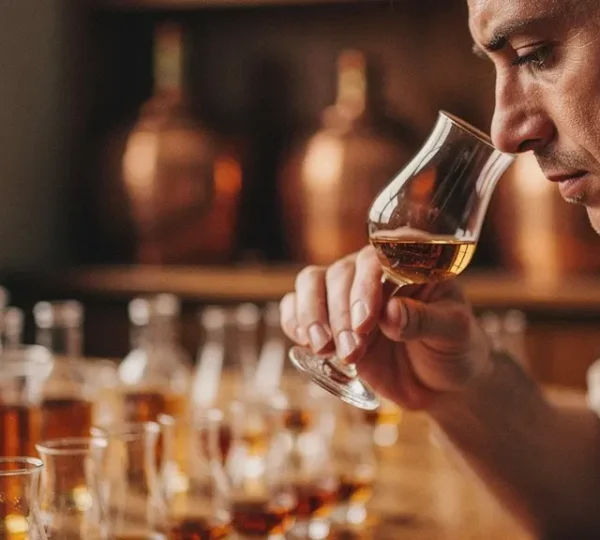
How Do Master Blenders Maintain Brand Character Across 50 Different Batches?
Contrary to popular belief, a Master Blender’s job isn’t to make every batch identical, but to skillfully conduct an orchestra of unique casks to recreate a consistent emotion and character. The “distillery character”—the spirit’s unique DNA—is valued far more than…
Read more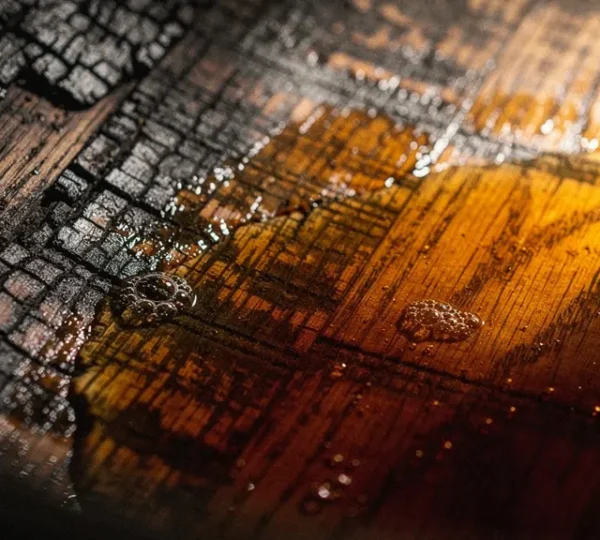
How Do Oak Tannins Create the “Dryness” That Defines a Premium Finish?
The “dryness” in a premium spirit is not a flavour, but the sensory fingerprint of its underlying tannic architecture, a textural quality entirely different from the ethanol burn. Unlike wine’s grape-derived tannins, a spirit’s tannins are extracted from oak, resulting…
Read more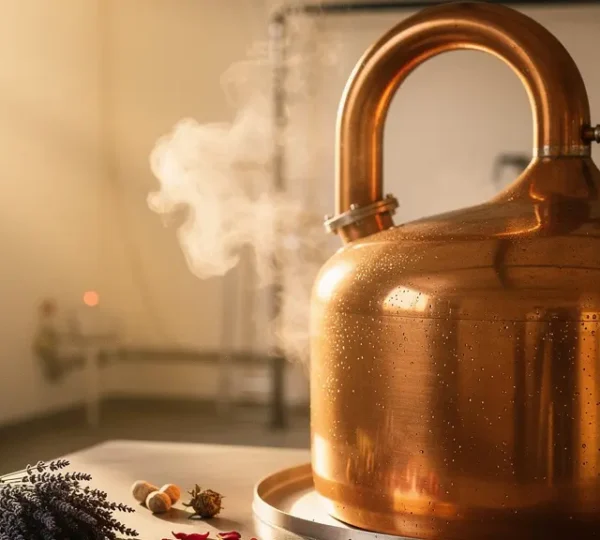
How to Distill and Age Spirits to Retain Their Most Fragile Floral Esters
Preserving floral notes isn’t about adding more botanicals; it’s about mastering the art of volatility to prevent the most delicate aromas from escaping. Gentle extraction through vapor infusion and purification in tall stills are crucial for capturing light, floral “top…
Read more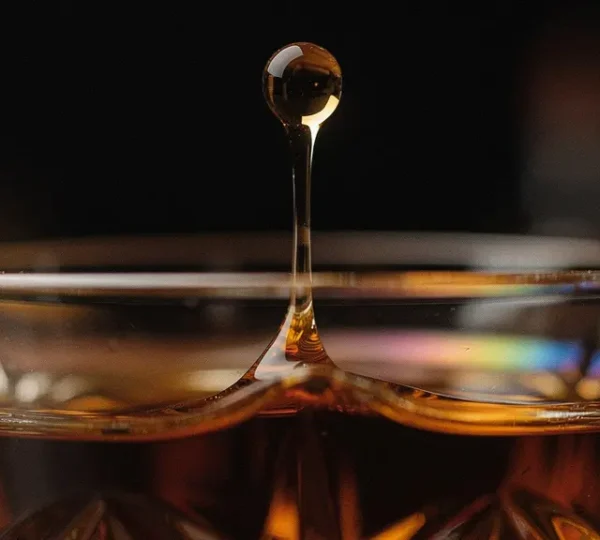
Why Does Adding Water to Whisky Unlock Aromas You Couldn’t Smell Before?
Adding water to whisky isn’t about dilution; it’s a controlled chemical event that restructures the liquid to force key flavor molecules to the surface. The “opening up” effect is driven by the behavior of amphipathic compounds (like the smoky molecule…
Read more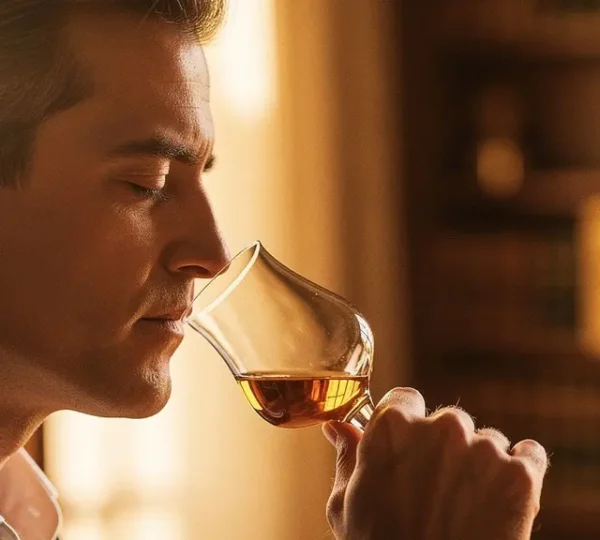
How to Overcome “Nose Burn” and Unlock the Hidden Aromas in Spirits
That sharp, burning sensation when you smell a spirit isn’t a barrier; it’s a signal from your body you can learn to manage. Instead of just adding water or avoiding the glass, this guide treats nosing as a trainable skill….
Read more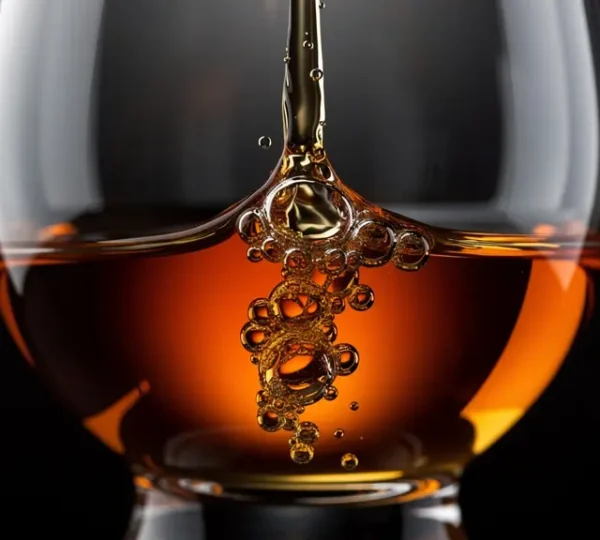
What Can “Legs” and Viscosity Tell You About a Spirit Before You Taste?
Contrary to popular belief, a spirit’s visual cues are not a direct measure of quality, but rather a set of structural clues about its production and character. Slow, thick “legs” indicate higher alcohol or sugar, not inherent quality. They are…
Read more
That Vanilla Note in Your Spirit: Is It Real Oak or an Artificial Trick?
Contrary to popular belief, a powerful vanilla flavor is not always a sign of superior quality; it can be an indicator of artificial manipulation. Authentic vanilla aroma is a complex chemical fingerprint resulting from the thermal degradation of wood lignin,…
Read more
Short vs. Long Fermentation: How 48 Extra Hours Change Flavor Forever?
The secret to a spirit’s complex flavor isn’t just time, but the controlled microbial war that unfolds after the primary yeast has finished its job. After 48-72 hours, as alcohol levels rise and sugars deplete, pitched yeast growth slows, allowing…
Read more
How to Blend Single Casks: The Art of Composing Consistent Complexity
Creating a complex, consistent blend isn’t about finding perfect casks; it’s about orchestrating an imperfect conversation between them. True complexity arises from the dialogue between different spirits, where a tiny percentage of a “flawed” or powerfully characterful cask can provide…
Read more