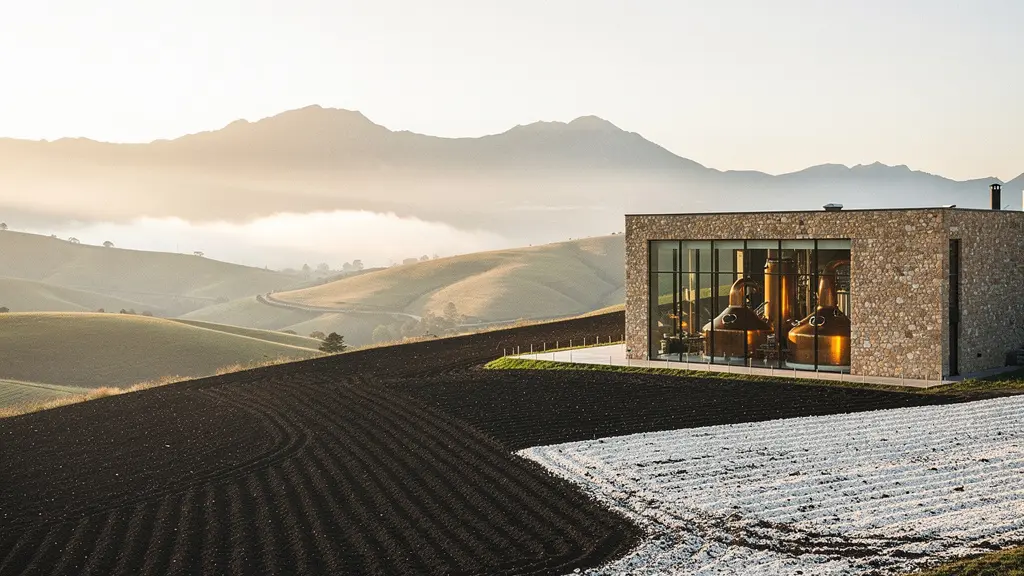
Contrary to the common belief that distillation erases all sense of place, terroir in spirits is a measurable scientific reality, not just a romantic marketing term.
- The raw ingredients—grain, sugarcane, agave—carry a distinct biochemical signature from their environment which can be preserved.
- Key production decisions, from fermentation times to cask management, act as filters that either amplify or completely silence this original terroir signal.
Recommendation: Shift your focus from simply asking *if* terroir exists to learning *how* to identify the specific production choices that allow it to be expressed in the final spirit.
The term ‘terroir’ has long been the dominion of wine, a romantic notion that a vineyard’s soil, climate, and soul can be captured in a glass. When applied to spirits, however, the concept is often met with a healthy dose of skepticism. The conventional wisdom argues that the violent heat of distillation acts as a great reset, obliterating any subtle nuances from the raw ingredients and leaving a blank canvas for the distiller’s craft and the barrel’s influence. Many connoisseurs wonder if terroir is even a valid consideration for neutral spirits like vodka, or if it is simply a clever story sold by marketers.
This debate often frames it as a simple binary: either the spirit reflects its origin, or it doesn’t. But what if this perspective is fundamentally flawed? What if terroir is not an all-or-nothing proposition, but a fragile, quantifiable signal? A set of biochemical markers that begins in the field and can, with meticulous care, survive the journey from farm to bottle. The true question for the modern drinker is not *if* terroir exists, but under what specific conditions it can be expressed, and how it can be erased by industrial-scale production or clumsy aging.
This investigation moves beyond the myth and into the measurable. We will dissect the chain of provenance, from the mineral content of the soil to the esters formed during fermentation, to demonstrate that a spirit’s sense of place is a tangible characteristic. By understanding the specific choices that amplify or mute this signal, you can learn to distinguish authentic terroir-driven spirits from those that are merely wearing a mask of marketing.
To navigate this complex topic, this article deconstructs the key stages where terroir is either preserved or lost. The following sections will guide you through the evidence, from the field to the finished product.
Summary: Unpacking the Evidence for Terroir in Spirits
- Why Volcanic Soil Produces Rums with Higher Mineral Content?
- How to Trace Your Bottle’s Grain Origin Using Lot Codes?
- Highland vs Island Barley: Can You Taste the Difference in a Blind Test?
- The Storage Mistake That Turns Terroir-Driven Spirits into Generic Oak Bombs
- When Is the Best Time of Year to Distill for Maximum Floral Character?
- Why Do Casks Stored Closer to the Ocean Floor Have Higher Salinity?
- Why 51% Corn is the Legal Minimum but Most Bourbons Use 70%?
- Agricole vs Molasses Rum: Which Style Defines the True Essence of Cane?
Why Volcanic Soil Produces Rums with Higher Mineral Content?
The journey of terroir begins not in the distillery, but in the ground. The very composition of the soil dictates the nutrients and minerals available to the plant, be it sugarcane, barley, or agave. Volcanic soils, rich in elements like magnesium, iron, and calcium, create a unique nutritional profile for the crops they sustain. During growth, sugarcane absorbs these minerals, which become part of its cellular structure. While many volatile compounds are lost during distillation, these non-volatile minerals can carry through, influencing the fermentation environment and contributing to the final spirit’s mouthfeel and subtle flavor profile.
This is not mere conjecture; it’s a field of growing scientific inquiry. While much research has focused on wine, pioneering projects in spirits are revealing similar connections. The evidence suggests that the environment’s impact is far from negligible, with studies showing that as many as 50% of the 42 identified flavor compounds in a spirit can be directly influenced by its agricultural origin. These are the foundational biochemical markers of terroir.
Case Study: The Coastal Terroir of Martinique Rhum
Rhum Agricole from Martinique offers a compelling example. Distilleries like Trois Rivières showcase how different growing areas on the same island yield distinct rhums. Their “Cuvée de L’Océan” is made exclusively from sugarcane grown in fields battered by coastal winds. The resulting spirit captures this maritime influence with distinct notes of sea air and brine, a direct expression of the cane’s unique seaside environment and the mineral-rich soil it grows in.
This demonstrates that the initial signal of terroir is established long before the still is fired up. The raw material is not a blank slate; it is a complex ingredient already imprinted with the signature of its specific location. The distiller’s first job is to recognize and preserve this inherent character.
How to Trace Your Bottle’s Grain Origin Using Lot Codes?
If terroir begins in a specific field, a critical question for the skeptical connoisseur is: how can you prove it? The answer lies in a concept that is revolutionizing the industry: radical traceability. For terroir to be more than a story, there must be an unbroken chain of provenance linking a finished bottle back to the exact parcel of land where its grain was grown. This is where technology and meticulous record-keeping come into play, turning an abstract idea into a verifiable fact.
Producers at the forefront of the terroir movement are now embedding this information directly onto their products. Lot codes, QR codes, or unique alphanumeric sequences on a bottle are no longer just for internal batch tracking. For distilleries like Renegade Rum or Waterford Whisky, these codes are a public declaration of origin. By entering a code on their website, a consumer can unlock a wealth of data: the farm’s name, the soil type, the harvest date, and even the specific weather conditions for that growing season. This level of transparency is the ultimate counter-argument to the claim that “it’s all marketing.”
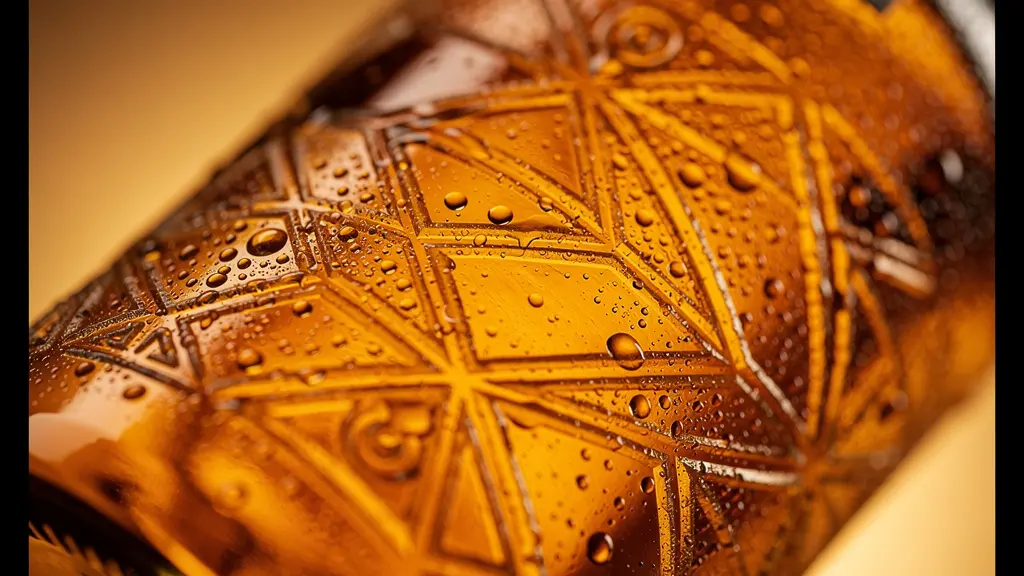
This practice elevates the conversation. It forces producers to be accountable for their claims and empowers consumers to look beyond the brand and connect with the agricultural source. The intricate patterns on a bottle become a map, a tangible link to the barley field in Wexford or the sugarcane plot in Grenada. It is the physical evidence that a spirit’s identity is deeply rooted in a specific place, making the chain of provenance a cornerstone of authentic terroir expression.
This commitment to transparency proves that for some producers, terroir is the entire philosophy, not just a footnote. It’s an investment in a process that values agricultural identity as much as distillation or maturation, ensuring the story in the glass is a true one.
Highland vs Island Barley: Can You Taste the Difference in a Blind Test?
The debate over barley terroir is central to the discussion in whisky. For years, the prevailing industry view was that barley was a commodity; its origin mattered less than its yield and starch content. However, dedicated research and blind tasting experiments are systematically dismantling that notion, proving that barley grown in different environments produces measurably different spirits. The difference between barley from a windswept, saline-exposed island and a sheltered inland Highland glen is not just poetic—it’s chemical.
This is precisely what groundbreaking research has set out to prove. In a controlled study comparing barley from two different Irish microclimates, the results were unequivocal. As lead researcher Dr. Dustin Herb stated, the differences were clear on a sensory level. This expert analysis confirms what many distillers have long suspected.
Sensory analysis indicated that the Athy site provided higher fruit and malt flavors compared to Bunclody, which was higher in green, grassy, mineral notes.
– Dr. Dustin Herb, SevenFifty Daily – Terroir in Whisky Research
These findings show that terroir imparts a distinct regional signature. Island barley, influenced by maritime air and different soil, tends to produce a spirit with more saline, briny, and sometimes subtly peaty characteristics, even if the malt itself isn’t peated. Highland barley, from more protected inland farms, often yields a profile that is more floral, honeyed, and focused on orchard fruits. These differences are best understood when compared directly.
| Characteristic | Highland Barley | Island Barley |
|---|---|---|
| Primary Notes | Floral, honeyed | Maritime, briny |
| Texture | Light, delicate | Oily, coating |
| Secondary Flavors | Orchard fruits | Sea spray, iodine |
| Finish | Clean, short | Lingering, saline |
Ultimately, a blind test is the final arbiter. When a panel of experienced tasters can consistently distinguish between spirits made from barley grown in different locations, the argument for terroir moves from theoretical to empirical. It confirms that the sensory threshold for these differences is not just for super-tasters; it is a real and identifiable characteristic for anyone paying close attention.
The Storage Mistake That Turns Terroir-Driven Spirits into Generic Oak Bombs
One of the most potent arguments against terroir is the overwhelming influence of the cask. Critics rightly point out that years spent in a heavily charred new oak barrel can easily obliterate any subtle flavors from the raw ingredients, leaving behind a one-dimensional “oak bomb.” This is not an invalid point; it’s a critical one. Maturation can indeed be the stage where the terroir signal is completely erased. However, this is a failure of cask management, not a failure of terroir itself.
The fundamental storage mistake is using the cask as a primary flavor additive rather than a vessel for gentle, oxidative maturation. An aggressive wood policy, particularly with first-fill American oak or heavily charred barrels, imparts dominant notes of vanilla, caramel, and spice that can blanket the delicate, grain-forward character of the new make spirit. The goal of a terroir-focused distiller is different: it is to use the cask to preserve and elevate the spirit’s innate character, not to replace it.
This requires a more nuanced approach to wood. Using second or third-fill casks, larger format barrels (like hogsheads or butts), or experimenting with less aggressive wood types (such as French oak) allows the spirit to mature and develop complexity without being overpowered. The cask’s role becomes one of rounding out sharp edges, adding structure, and allowing slow oxygen ingress to create new, subtle esters, all while letting the original grain- or cane-derived profile shine through.
Case Study: Bruichladdich’s Philosophy of Preservation
The Islay distillery Bruichladdich is a key proponent of this philosophy. They meticulously track their barley from different Islay farms and understand that the resulting new-make spirits have extraordinary variety. Their cask management program is designed to retain these subtle characteristics. By carefully selecting their casks, they ensure that the unique signatures of the harvest, yield, and specific farm are not lost but are instead allowed to evolve during maturation, resulting in a library of whiskies with incredible depth and provenance.
In essence, the cask should be a frame for the art, not the art itself. When a spirit tastes only of wood, it is a sign that the distiller has chosen to prioritize the influence of the warehouse over the influence of the field. This is a stylistic choice, but it is also the point of signal erasure where terroir is sacrificed for a more generic, wood-driven profile.
When Is the Best Time of Year to Distill for Maximum Floral Character?
The transformation of raw ingredients into alcohol during fermentation is a hotbed of chemical activity where a huge portion of a spirit’s flavor is born. This is also a critical control point for preserving or creating terroir-specific character. One of the most influential and often overlooked factors is temperature, which is directly tied to the time of year. Distilling in the cold, stable conditions of winter versus the fluctuating heat of summer has a profound impact on the final spirit’s profile.
Slower, cooler fermentations, typical of winter months, are known to favor the creation of delicate and desirable flavor compounds. As Head Distiller Adam Hannett explains, these conditions inhibit the production of heavier, more aggressive phenols and instead promote the formation of light, fruity, and floral esters. This is where a spirit’s elegance and complexity are often born.
This isn’t just anecdotal distiller’s lore; it’s backed by data. The evidence for this “seasonal terroir” is quantifiable. For example, Bruichladdich’s fermentation data reveals that longer, 60-80 hour fermentations common in colder weather can produce up to 35% more floral esters than shorter, warmer fermentations. This is a perfect example of a specific production choice amplifying a desired set of biochemical markers.
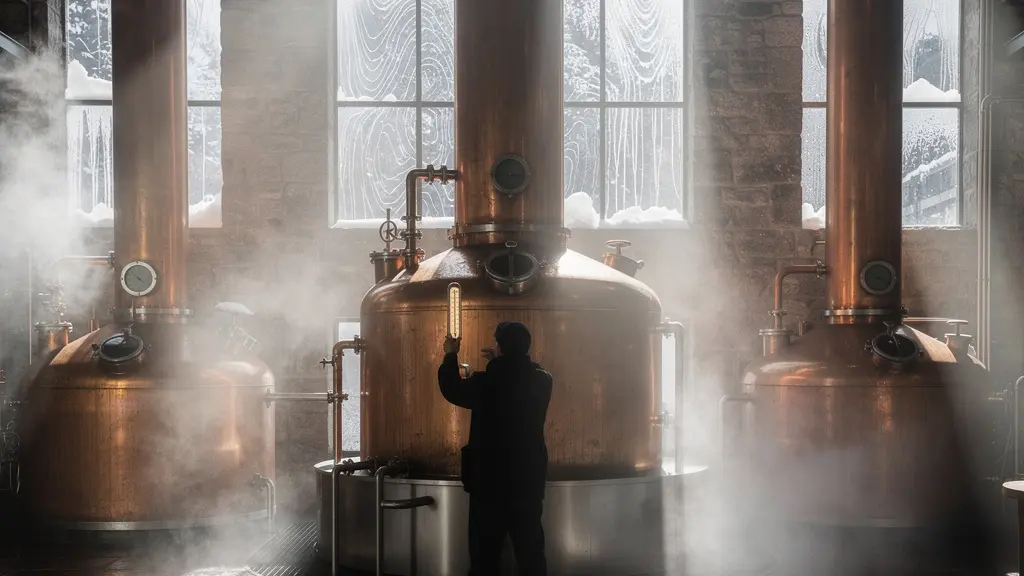
Therefore, the “when” of distillation is as important as the “how.” A distiller chasing maximum floral character will intentionally schedule their most important runs for the winter. This choice is a direct manipulation of the environment to steer the biochemical outcome, creating a spirit that is not just a product of its ingredients, but also of the season in which it was born. It’s a layer of temporal terroir that adds another dimension of complexity to the final product.
Why Do Casks Stored Closer to the Ocean Floor Have Higher Salinity?
The idea of aging spirits at the bottom of the ocean is a romantic one, evoking images of treasure chests and maritime lore. While a few producers have experimented with underwater aging, the distinctive saline or briny character found in many “maritime” spirits almost always comes from a much more traditional source: coastal maturation. The question is not about literal ocean floor storage but about the scientific process through which a coastal environment imparts its character to a cask.
Casks are not inert vessels; they breathe. As temperatures fluctuate, the spirit expands and contracts, pushing vapor out of the wood and pulling air in. In a warehouse located by the sea, this “air” is laden with salt spray and humidity. Over years of maturation, these aerosolized salt particles are drawn into the cask and interact with the spirit. This process, combined with the unique coastal microflora (yeasts, molds) in the warehouse environment, contributes to the development of flavors described as briny, saline, or having a hint of iodine. It’s the terroir of the warehouse itself.
True underwater aging is exceedingly rare and presents different conditions. The constant, cool temperature and high pressure would lead to a much slower, more reductive maturation compared to the oxidative aging in a dunnage warehouse. The spirit would have less interaction with oxygen, potentially preserving more of the new-make character but developing fewer of the complex notes that come from air exchange. Distinguishing between a spirit that is genuinely “maritime-influenced” and one that is simply marketed as such requires a critical eye.
Action Plan: How to Identify a Maritime-Influenced Spirit
- Label Claims: Check for specific terms like “coastal maturation” or “matured by the sea” on the label or marketing materials.
- Tasting Notes: Look for official or independent tasting notes that consistently mention brine, iodine, sea spray, or a distinct salinity.
- Distillery Location: Verify if the distillery and its primary warehouses are physically located near a coastline. A landlocked producer claiming maritime influence is a red flag.
- Aging Method: Research if underwater aging was genuinely employed (very rare and usually a major selling point) versus traditional coastal warehouse aging.
- Flavor Profile: Compare the spirit’s oxidative notes (like nuttiness, common in coastal aging) versus a potentially more raw, reductive character which could suggest a different aging style.
Ultimately, the salty tang in your glass is far more likely to be the ghost of sea air breathed in by a cask in a windswept warehouse than a souvenir from the ocean depths. It is a testament to the powerful influence of the maturation environment—a crucial final layer of terroir.
Why 51% Corn is the Legal Minimum but Most Bourbons Use 70%?
The identity of American bourbon is inextricably linked to corn. Legally, a whiskey must have a mash bill of at least 51% corn to be called bourbon. This rule sets the baseline for the category’s characteristic sweetness. However, a fascinating divergence exists between the legal minimum and the industry standard. While craft producers might experiment with “barely legal” 51% corn recipes to create spicier, more grain-forward whiskies, the vast majority of major distilleries use mash bills containing 70% corn or more.
The reason for this is not solely about flavor; it is rooted in economics and production efficiency. Corn is a high-yield crop that is exceptionally efficient at producing alcohol. From a purely scientific standpoint, distilling science research shows that 70% corn mashbills produce 23% more alcohol yield per bushel compared to lower-corn recipes. For large-scale producers, this increase in efficiency translates directly to significant cost savings and a more predictable production process. It is a pragmatic choice that has come to define the dominant style of bourbon.
This decision, however, has a profound impact on the final product’s terroir, or in this case, its “style terroir.” The percentage of corn in the mash bill is one of the most significant levers a distiller can pull to define a bourbon’s flavor profile, creating a spectrum from spicy and complex to exceptionally sweet and smooth.
The choice of a high-corn mash bill is a perfect example of how economic pressures and a desire for consistency can create a regional flavor profile. While not “terroir” in the agricultural sense of soil and climate, it functions as a form of stylistic terroir, where a production norm defines the taste of an entire category.
| Corn % | Flavor Profile | Example Distilleries |
|---|---|---|
| 51-60% | Spicy, complex, grain-forward | Craft producers |
| 65-70% | Balanced sweet and spice | Four Roses, Buffalo Trace |
| 70-80% | Sweet, vanilla, traditional | Jim Beam, Wild Turkey |
| 80%+ | Very sweet, smooth | Some wheated bourbons |
By choosing a mash bill with 70-80% corn, major distillers are prioritizing the sweet, vanilla, and caramel notes that consumers have come to expect from classic bourbon. This creates a consistent and recognizable product, but it also moves the spirit further away from the character of its other grain components, like rye or wheat.
Key Takeaways
- Terroir is a quantifiable signal that originates from the raw ingredients’ agricultural environment; it is not just a marketing concept.
- Key production choices regarding fermentation, distillation, and aging act as filters that can either preserve and amplify this signal or erase it entirely.
- The cask’s influence is significant but not absolute; a mindful maturation program can elevate a spirit’s innate character rather than overpowering it.
Agricole vs Molasses Rum: Which Style Defines the True Essence of Cane?
Nowhere is the impact of a single production decision on terroir more apparent than in the world of rum. The category is split by a fundamental philosophical and methodological divide: distilling from fresh sugarcane juice (rhum agricole) versus distilling from molasses, a byproduct of sugar production. This single choice creates two vastly different spirits and serves as a perfect final case study for the entire terroir debate. It forces us to ask: which style more purely expresses the character of the raw ingredient?
Rhum agricole, born in the French Caribbean islands like Martinique, is the champion of fresh expression. By pressing sugarcane and fermenting the raw juice within hours of harvest, producers capture the plant in its most vibrant state. This process preserves the grassy, vegetal, and sometimes earthy notes inherent to the cane. The resulting spirit is a direct snapshot of the cane variety, the soil it grew in, and the season it was cut.
Fresh cane juice is rich in grassy, vegetal compounds (aldehydes) and living microbes that are destroyed when boiled down to create molasses, while the boiling process creates new compounds via Maillard reactions.
– Nicholas Feris, Skurnik Wines & Spirits
Molasses-based rum, which accounts for over 95% of rum produced globally, tells a different story. Molasses has been cooked, concentrated, and stripped of its sugar, a process which fundamentally alters its chemical makeup. The Maillard reactions and caramelization that occur during boiling create a new set of rich, dark, and sweet flavor precursors. While this produces a delicious and complex spirit, it is an expression of a processed material, not the raw cane. It is a terroir of industry and process, rather than a terroir of agriculture.
Case Study: Renegade Rum’s Obsessive Pursuit of Cane Terroir
In Grenada, Renegade Rum is taking the agricole philosophy to its logical extreme. They have mapped their land into 12 farms, 40 terroir plots, and 150 individual fields. Each field is harvested, milled, and distilled separately to capture its unique character. This field-by-field approach is the ultimate commitment to proving that the essence of cane is inextricably tied to the specific piece of ground where it grew, creating a library of rums that are a pure expression of place.
The comparison is clear. Agricole is a direct line to the field, a spirit defined by subtraction—preserving what is already there. Molasses rum is a spirit of addition and transformation, creating new flavors from a processed base. Neither is inherently “better,” but in the search for the true essence of cane, the evidence points overwhelmingly to fresh juice as the clearer channel for agricultural terroir.
By learning to identify these key decisions in a spirit’s production, you move from being a passive consumer to an active, critical taster, capable of discerning the authentic taste of a place from a carefully constructed imitation. The next step is to apply this knowledge to your own explorations.