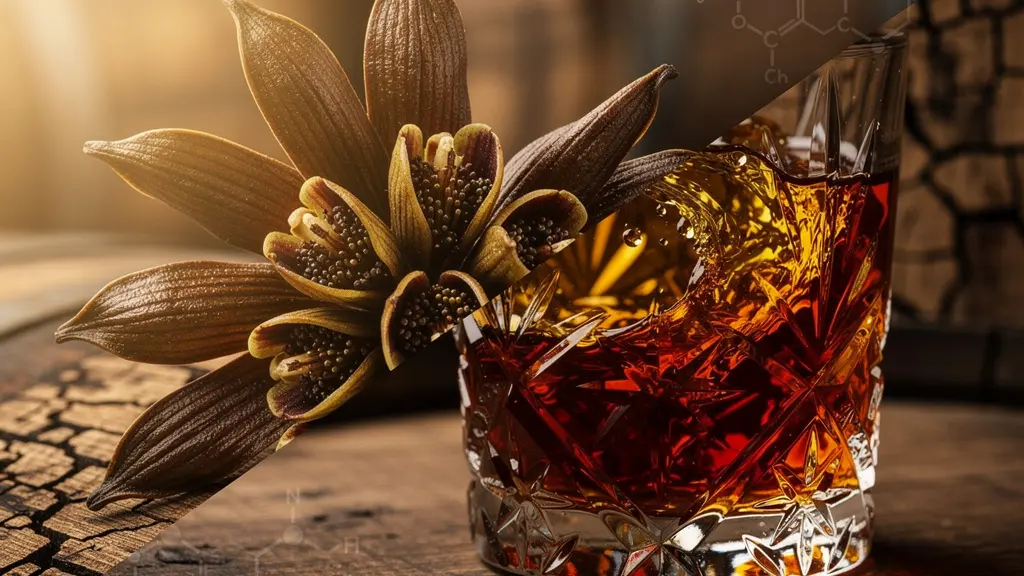
Contrary to popular belief, a powerful vanilla flavor is not always a sign of superior quality; it can be an indicator of artificial manipulation.
- Authentic vanilla aroma is a complex chemical fingerprint resulting from the thermal degradation of wood lignin, not a single note.
- Visual cues like thick, slow-moving “legs” in the glass can suggest the presence of glycerin or sugar, carriers for artificial flavors.
Recommendation: Trust the complexity of the aromatic profile and the physical behavior of the liquid over simplistic cues like dark color or overt sweetness to judge a spirit’s authenticity.
You pour a dram of amber liquid, swirl it, and a wave of sweet, comforting vanilla hits your nose. It’s a hallmark of a well-aged spirit, the signature of time spent in an oak barrel. Or is it? For the discerning consumer, a nagging suspicion can arise, especially when that vanilla note feels a little too loud, a little too simple. While the common wisdom states that barrel aging imparts these flavors, the full story is far more complex and fascinating. The truth lies not in a simple “real versus fake” debate, but in understanding the specific chemical markers and sensory illusions that separate authentic maturation from clever enhancement.
This isn’t about demonizing certain production methods but about empowering you, the taster, with knowledge. The real magic of an aged spirit is its complexity—a symphony of compounds derived from wood. An artificial additive, by contrast, is a solo instrument playing a single, often overpowering, note. This guide moves beyond the label to provide you with the analytical tools of a sensory scientist. We will deconstruct the very molecules that create flavor, examine the physical evidence left in your glass, and decode the sensory tricks that can fool your palate.
By the end, you will be equipped to identify the chemical fingerprint of true oak influence and spot the tell-tale signs of artificial intervention. You’ll learn to trust your senses, but only after you’ve trained them to look for the right evidence.
This article provides a complete analytical framework, from the chemistry of the barrel to the final perception in the glass. Explore the sections below to build your expertise step by step.
Summary: Decoding the Source of Vanilla in Your Spirit
- Why Charring Oak Barrels Unlocks More Intense Vanilla Flavors?
- How to Spot Artificial Vanilla Additives by Looking at the Liquid’s Viscosity?
- Bourbon or Rum: Which Vanilla Profile Pairs Best with Crème Brûlée?
- The Sensory Illusion: Why Vanilla Aromas Make Dry Spirits Taste Sweet
- At What Temperature Does Vanillin Become Most Volatile and Detectable?
- Why Does Virgin Oak Impart Coconut Flavors Faster Than Ex-Bourbon Wood?
- Why American White Oak Gives More Vanilla than European Varietals?
- Dark Color vs Pale Color: Which Actually Indicates Older Spirits?
Why Charring Oak Barrels Unlocks More Intense Vanilla Flavors?
The creation of natural vanilla flavor in a spirit is a process of controlled deconstruction, a form of high-heat alchemy. It begins with lignin, one of the primary structural polymers in oak wood. In its natural state, lignin is flavorless. However, when subjected to the intense heat of toasting and charring during the coopering process, it breaks down into a range of aromatic compounds. This process, known as thermal degradation, is the genesis of a spirit’s complex vanilla character.
The most famous of these compounds is vanillin, the primary chemical responsible for the aroma we identify as vanilla. But true oak-derived flavor is never just vanillin. The breakdown of lignin also produces other key molecules like syringaldehyde (which has a smoky, spicy character) and coniferaldehyde. The specific ratio of these compounds forms a unique “chemical fingerprint” that cannot be replicated by a simple artificial additive. This complexity is what gives barrel-aged spirits their depth and nuance.
Case Study: Woodford Reserve’s Toasting and Charring Method
To maximize this flavor generation, some distilleries employ a meticulous two-step process. Woodford Reserve, for instance, uses a pre-char toast for about ten minutes. This initial, gentler heating is specifically designed to degrade the oak’s lignin into vanillin and its related aldehydes, creating the foundational vanilla flavors before the barrel’s interior is subjected to the more aggressive charring process.
The charring itself creates a layer of activated carbon on the barrel’s interior. This layer serves two purposes: it filters out undesirable sulfur compounds from the new-make spirit and acts as a catalyst for further chemical reactions between the spirit and the toasted wood underneath. This is where the spirit begins to extract that rich, multifaceted vanilla profile.
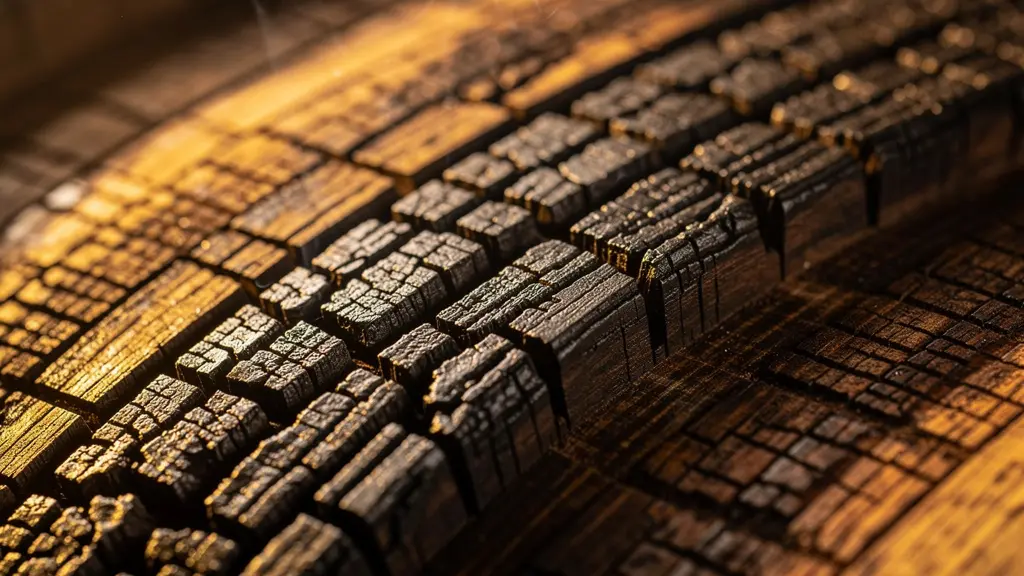
As you can see in the texture of a charred barrel, the process creates deep fissures and an “alligator skin” pattern. This vastly increases the surface area available for interaction with the spirit, accelerating the extraction of the complex flavors unlocked from the lignin. It’s not merely burning the wood; it’s a precise technique to create a flavor-generating engine.
How to Spot Artificial Vanilla Additives by Looking at the Liquid’s Viscosity?
While the aroma tells part of the story, the physical behavior of the liquid in the glass can provide crucial clues about its composition. An authentically aged spirit’s body and texture come from the extraction of fatty acids, esters, and other congeners from the wood. These compounds create a complex mouthfeel and a specific visual signature. Artificial flavorings, however, often require a carrier to dissolve and integrate into the spirit, and these carriers leave behind tell-tale viscosity markers.
The most common carriers are glycerin or sugar-based syrups. While adding a pleasant sweetness and mouth-coating texture, they alter the spirit’s natural viscosity and surface tension. A simple visual test can often reveal their presence. When you swirl a spirit in a glass, you should observe the formation of “legs” or “tears” running down the side. In a natural spirit, these streaks are typically thin, somewhat irregular, and descend at a moderate pace, indicative of the complex mixture of alcohols and oils.
In a spirit with added glycerin or sugar, the legs will appear noticeably different. They tend to be thicker, more uniform, and much slower-moving. This syrupy, viscous behavior is a strong indicator that something other than just spirit and wood extract is in your glass. After you take a sip, observe the coating left behind. An artificially enhanced spirit may leave a thick, even, almost painted-on residue, whereas a naturally aged one often leaves a more uneven, oily film.
Your Action Plan: Visual Tests for Detecting Artificial Additives
- Pour and Swirl: Pour the spirit into a clean wine or tulip glass and swirl it gently to coat the sides and observe the initial formation of the “legs.”
- Watch the Descent: Time the descent of the tears. Look for unnaturally thick, slow-moving legs that suggest the presence of added glycerin or sugar carriers.
- Observe the Residue: After sipping, examine the coating left on the glass. A syrupy, perfectly even residue can be a red flag for artificial additives.
- Compare and Contrast: If possible, compare the suspect spirit side-by-side with a benchmark spirit you know to be naturally aged. The difference in viscosity and leg formation will be much clearer.
- Note the Mouthfeel: Pay attention to the texture in your mouth. A one-dimensional, cloying sweetness is different from the complex, evolving mouthfeel derived from natural fatty acids and congeners.
Bourbon or Rum: Which Vanilla Profile Pairs Best with Crème Brûlée?
Understanding the origin of vanilla notes—complex and oak-derived versus singular and additive-driven—is not just an academic exercise. It has direct applications in culinary pairings, especially with desserts where vanilla is a star player, like crème brûlée. The choice between a Bourbon and a rum is not arbitrary; it’s a strategic decision based on their fundamentally different vanilla profiles.
Bourbon, by law, must be aged in new, charred oak containers, almost always American white oak. This process guarantees that its vanilla character is a complex oak-derived vanillin, interwoven with notes of caramel, toffee, and baking spice from the wood’s other congeners. This creates a multifaceted profile that can complement and elevate the flavors of a crème brûlée. The spirit’s complexity mirrors the dessert’s own layers of creamy custard and bitter caramelized sugar.
Flavor Bridging: Angel’s Envy and Desserts
A prime example is Angel’s Envy Kentucky Straight Bourbon, which is finished in port wine barrels. This finishing step enhances its already pronounced aroma and taste of vanilla and caramel, creating a complex flavor profile that has gained a significant following among fans of dessert-like whiskeys. Its profile is designed to bridge flavors, not just match them.
Rum, on the other hand, has much looser regulations. While many high-quality aged rums derive their vanilla from barrel aging (often in ex-bourbon casks), the “spiced rum” category frequently uses added vanilla flavor. This results in a more singular, potent, and sweet vanilla essence. This can be used for a different pairing strategy: contrast. A spiced rum’s direct vanilla hit can cut through the richness of the crème brûlée, while its common accompanying notes of tropical fruit and molasses can introduce a new and exciting flavor dimension.
| Spirit Type | Vanilla Character | Complementary Notes | Pairing Strategy |
|---|---|---|---|
| Bourbon | Oak-derived complex vanillin | Caramel, baking spice, toffee | Complements dessert profile |
| Spiced Rum | More singular vanilla note | Tropical fruit, molasses | Creates sharp contrast |
| Aged Rum | Sweet vanilla essence | Brown sugar, butterscotch | Bridges sweetness levels |
The Sensory Illusion: Why Vanilla Aromas Make Dry Spirits Taste Sweet
One of the most powerful and misunderstood aspects of tasting is the interplay between aroma and flavor. Many spirits, especially Bourbon, are technically dry, containing little to no residual sugar. Yet, we perceive them as sweet. This phenomenon is a classic example of a sensory illusion, driven almost entirely by the aroma of vanillin. Our brain has been conditioned over a lifetime to associate the smell of vanilla with sweet foods like ice cream, cake, and cookies.
When you nose a glass of whiskey, aromatic compounds like vanillin become volatile and enter your nasal cavity. This is known as orthonasal olfaction (smelling through the nose). When you sip the spirit, these same compounds are warmed in your mouth and travel up the back of your throat to your olfactory receptors from behind. This is retronasal olfaction. In both cases, the signal for “vanilla” is sent to your brain. Because of the strong learned association, your brain anticipates sweetness and effectively “fills in the blank,” creating the perception of sweetness on your palate even when very little sugar is physically present.
This illusion is incredibly potent. It’s a survival mechanism of sorts; our brains are hardwired to create shortcuts based on past experiences. The vanilla = sweet connection is one of the strongest in our sensory library.
This is further amplified by a peculiar quality of vanillin, as highlighted by sensory scientists. As the Whiskipedia Science Team notes in their analysis on whisky maturation:
Vanillin is already noticeable in extremely low concentrations, and the smell does not increase noticeably, regardless of the increasing concentration.
– Whiskipedia Science Team, The Science of Whisky Maturation
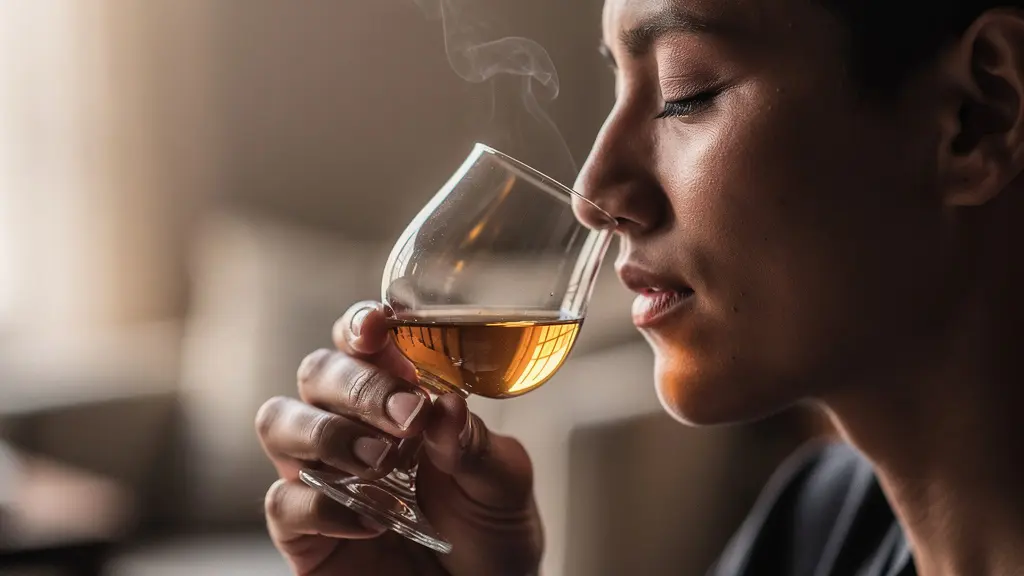
This means that even a small amount of vanillin can trigger a powerful perception of sweetness, and adding more (as an artificial flavor might do) doesn’t necessarily make it smell more like vanilla—it just makes the overall profile feel sweeter and less balanced. It’s the presence, not the quantity, that creates the primary illusion.
At What Temperature Does Vanillin Become Most Volatile and Detectable?
To accurately assess the vanilla notes in a spirit, it’s not enough to just pour it into a glass. The temperature of the spirit plays a critical role in the volatility of its aromatic compounds. Volatility is the tendency of a substance to vaporize, and for you to smell a compound like vanillin, its molecules must leave the liquid and enter the air in your glass. Temperature is the primary catalyst for this process.
If a spirit is served too cold—straight from the freezer, for example—the volatility of all its congeners, including vanillin, is suppressed. The aromatic profile will seem muted and “closed.” The cold temperature effectively locks the delicate aromas in the liquid, preventing them from reaching your olfactory receptors. This is why adding excessive ice can dull the complexity of a fine, aged spirit, reducing it to a simple, cold sensation.
Conversely, if a spirit is too warm, the alcohol itself can become overly volatile. This results in an aggressive, “hot” sensation in the nose that can overwhelm the more subtle aromas. The burn of ethanol vapor will mask the delicate notes of vanillin, spice, and fruit that you are trying to detect. Finding the right balance is therefore essential for a proper sensory analysis.
For this reason, expert tasters and industry analysis recommend a specific temperature band for nosing and tasting spirits. The consensus is that the optimal range for detecting delicate vanillin is 15-20°C (60-68°F). This is often referred to as “room temperature,” but it’s important to be precise. In this range, the vanillin is volatile enough to be easily detected, but the ethanol is not so aggressive that it burns the nose. Holding the glass in your hand for a few minutes is often enough to gently warm a spirit to this ideal temperature, allowing its full aromatic bouquet to be released.
Why Does Virgin Oak Impart Coconut Flavors Faster Than Ex-Bourbon Wood?
While vanillin is the most famous flavor compound derived from oak, it is far from the only one. The type and condition of the wood contribute a whole spectrum of notes, and one of the most distinctive is coconut. This flavor is particularly prominent in spirits aged in virgin American oak, and the reason lies in a specific class of compounds called oak lactones, also known as whiskey lactones.
These lactones, specifically cis- and trans-methyloctalactone, are naturally present in the wood. American white oak (Quercus alba) has a significantly higher concentration of these compounds than its European counterparts. When a spirit is aged in a “virgin” or first-fill barrel, it has first access to this rich reserve of lactones, extracting them relatively quickly. This is why many young Bourbons and virgin oak-aged whiskies have such a pronounced, sweet, and creamy coconut or sometimes dill-like character.
The Chemical Source of Coconut Aroma
Scientific analysis confirms the source of these distinctive notes. Oak lactones, particularly methyloctalactone and its variations, are found in higher concentrations in American oak. They are directly responsible for a range of aromas described as sweet, spicy, woody, and most notably, coconut.
When a barrel is reused, as is common for aging Scotch, Irish whiskey, Rum, or Tequila (often using ex-Bourbon casks), the story changes. The first fill of spirit has already extracted the majority of the easily accessible lactones. A second or third fill will therefore extract these coconut notes much more slowly and to a lesser degree. The dominant flavor contribution from these refill casks comes more from the slow oxidation of the spirit and the extraction of the remaining, more stubborn wood compounds, as well as the character of the previous liquid stored in the barrel.
American oak is bolder and brasher, giving more intense and distinct flavors of vanilla, butterscotch, and even coconut.
– Vikre Distillery, What’s Really Happening Inside a Whiskey Barrel
Why American White Oak Gives More Vanilla than European Varietals?
The choice of oak species is one of the most impactful decisions a distiller can make, as not all oak is created equal. The reason American white oak (Quercus alba) is the wood of choice for Bourbon and is prized for its vanilla-imparting qualities lies in its fundamental chemical makeup. It simply contains more of the precursors necessary for generating vanillin.
As we’ve established, vanillin is produced by the thermal degradation of lignin. However, the lignin structure itself varies between oak species. American oak lignin is composed in a way that, when heated, yields a higher proportion of vanillin. This is so pronounced that, as an extreme example, the lignin from American oak is sometimes commercially processed to create imitation vanilla extract, a testament to its potency.
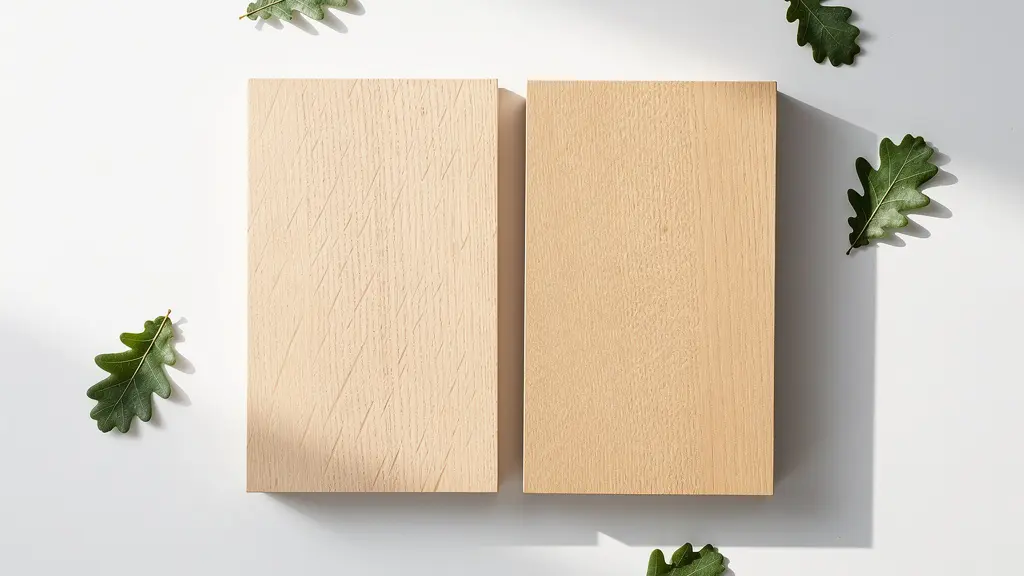
European oak species, such as Quercus robur and Quercus petraea, have a different lignin structure. While they also produce vanillin, they tend to yield a higher ratio of syringaldehyde. This compound imparts more spicy, smoky, and clove-like notes. Further research demonstrates that a syringaldehyde/vanillin ratio of roughly 2:1 is indicative of a balanced oak lignin composition, but American oak skews heavily towards vanillin. European oak also contains more tannins, which contribute a drier, more astringent character to the spirit. This is why it is often favored for aging wine and certain styles of Scotch or Brandy where a spicy, structured character is desired over a bold, sweet vanilla profile.
Case Study: American Oak Lignin as a Vanilla Source
The sheer amount of vanillin that can be extracted from American oak is remarkable. Its lignin is so rich in the necessary chemical precursors that it has been explored and used as a source material for producing imitation vanilla extract on an industrial scale, highlighting its natural abundance compared to other wood types.
Key Takeaways
- True vanilla flavor is born from the thermal degradation of wood lignin into a complex blend of compounds, not a single molecule.
- American white oak (Quercus alba) is chemically predisposed to produce more vanillin than European oak, which yields spicier notes.
- Perceived sweetness and dark color are often misleading; they can be created by sensory illusions or artificial coloring and are not reliable indicators of age or quality.
Dark Color vs Pale Color: Which Actually Indicates Older Spirits?
One of the most pervasive myths in the world of spirits is that “darker is older” and therefore “darker is better.” This assumption is a dangerous oversimplification that can easily mislead a consumer. While it is true that a spirit extracts color from the oak barrel over time, color is an incredibly unreliable indicator of age, quality, or flavor profile for several critical reasons.
First and foremost is the legal use of E150a caramel coloring in many spirit categories, including Scotch, Canadian whisky, rum, and brandy. This additive is used purely for cosmetic consistency, ensuring every bottle of a particular brand looks identical on the shelf. It adds a dark hue but contributes negligible flavor. Therefore, a dark rum or Scotch could be quite young, with its color artificially enhanced. It’s crucial to note that Straight Bourbon Whiskey is not permitted to contain any additives, so its color is always “natural.”
Second, the type of cask has a massive impact. A spirit aged in a first-fill sherry butt or a virgin oak barrel will extract a huge amount of color in just a few years. Conversely, a spirit aged in a third- or fourth-fill “refill” cask will extract very little color, even over several decades. It’s entirely possible to have a 25-year-old Scotch that is pale straw in color, yet possesses immense complexity from long-term oxidative aging.
Finally, the peak extraction of certain flavor compounds does not align with a linear darkening of color. For instance, industry analysis shows that years 2-4 often mark the peak vanillin concentration in bourbon aging. After this point, the rate of vanillin extraction can slow, while color continues to deepen and other, more woody or tannic flavors emerge. A very old, very dark bourbon might actually be less vanilla-forward than a much younger one. Authentic color comes from the slow, long-term oxidation of congeners and the gradual extraction of wood compounds—a process that has no direct, reliable correlation with a simple color chart.
Frequently Asked Questions on Is the Vanilla Note in Your Spirit Natural or Artificially Enhanced?
Does darker color always mean older whiskey?
No, color can be artificially enhanced with E150a caramel coloring, which is legal in many spirit categories including Scotch, Rum, and Brandy. Therefore, color is often used for consistency and is not a reliable indicator of age.
Can very old spirits be pale in color?
Yes, absolutely. Spirits aged in 3rd or 4th-fill casks extract very little color from the wood but can still undergo decades of oxidative aging. This creates complex, desirable “rancio” notes without a corresponding dark hue.
What creates authentic color in aged spirits?
True, natural color is the result of a slow, multi-faceted process. It comes from the gradual extraction of color-imparting compounds from the wood and the long-term oxidation of various congeners (flavor compounds) within the barrel over many years.