The coupe glass isn’t inherently unstable—it’s simply misunderstood by modern drinking culture.
- Mastering the “wash line” and thermal dynamics eliminates spillage risks entirely
- The choice between Nick & Nora and wide coupe shapes depends on aroma concentration vs. social accessibility
Recommendation: Apply the two-part pouring technique and 10-minute consumption window to transform your next party experience from anxious to graceful.
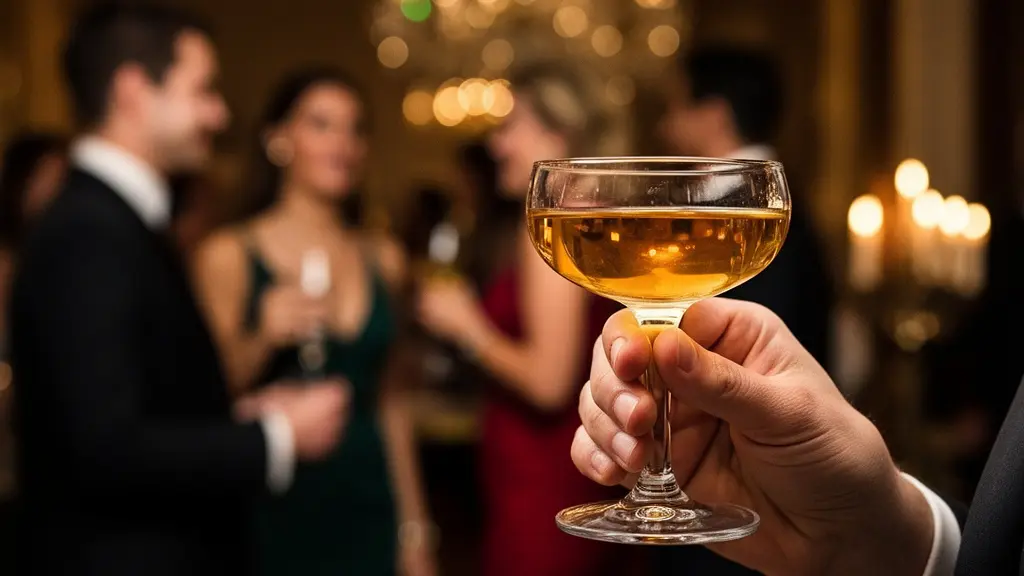
The image of a guest navigating a crowded soirée with a brimming coupe glass strikes fear into the hearts of vintage enthusiasts. One misstep, one animated gesture, and the precious liquid arcs through the air like a ruby-tinted comet. This anxiety has fueled the misconception that the coupe is inherently unstable—a beautiful relic best left to period films rather than modern parties. Yet this reputation stems not from the glass’s architecture, but from a collective forgetting of the techniques that once made it the vessel of choice for the sophisticated drinker.
During the 1980s and 1990s, the angular V-shaped martini glass dominated popular culture, becoming synonymous with sugary concoctions like Lemon Drops and Appletinis. Its conical walls seemed to promise control, while the shallow curve of the coupe appeared treacherous by comparison. However, as contemporary mixology sought to reclaim seriousness and tradition, the coupe returned—not as a liability, but as a testament to the marriage of physics and poise.
The truth is that carrying a coupe without spillage requires understanding the wash line, respecting thermal dynamics, and mastering the physics of liquid behavior. When these elements align, the glass transforms from a precarious balancing act into an extension of graceful hospitality. This guide dismantles the myth of the “impractical” coupe, replacing anxiety with the quiet confidence of the etiquette coach and the precision of the professional bartender.
Throughout the following sections, we will explore the historical context of the coupe’s decline and revival, the precise science of pouring to the meniscus, the comparative ergonomics of vintage glassware shapes, and the critical time limits that govern temperature. You will learn how garnish placement affects stability, why stirring preserves clarity, and when shaking is actually preferable. Each concept builds upon the last to create a comprehensive framework for coupe mastery.
Table of Contents: Mastering the Art of the Coupe Glass
- 45.1:Why Did the Coupe Fall Out of Fashion in Favor of the Flute?
- 45.2:How to Pour a Cocktail to the Perfect “Wash Line” just below the Rim?
- 45.3:Nick & Nora or Wide Coupe: Which Vintage Shape Is Easier to Drink From?
- 45.4:The Time Limit: Why You Must Drink Cocktails in Coupes Within 10 Minutes?
- 45.5:Where to Place the Skewer in a Coupe to Prevent it Sliding into Your Face?
- 34.1:Why Stirring for 30 Seconds Dilutes Less Than Shaking for 10 Seconds?
- 46.4:The Cloudy Mistake: Why Shaking Ruins the Jewel-Like Clarity of a Manhattan?
- 35:When to Stir and When to Shake: The Physics of Texture in Mixology?
Why Did the Coupe Fall Out of Fashion in Favor of the Flute?
The resurgence of the coupe glass represents a deliberate rejection of the excesses that defined late-century cocktail culture. When modern mixology began its renaissance, practitioners sought to distance themselves from the weird, blasphemous variations on a Martini that had proliferated in previous decades. The V-glass had become the unfortunate symbol of saccharine Lemon Drops, neon Cosmos, and artificial Appletinis—concoctions that prioritized visual gimmickry over botanical integrity.
Bartenders consequently turned to the coupe and the Nick & Nora glass to signal a return to seriousness. This shift was not merely aesthetic but philosophical: the coupe’s wide, shallow bowl encourages a different relationship with the drink, one of contemplation rather than rapid consumption. According to recent market analysis, the cocktail glass market reached USD 5.2 billion in 2024, with coupe glasses experiencing a notable resurgence as consumers gravitate toward authentic experiences.
The flute, meanwhile, had gained favor for its perceived practicality in preventing spills, yet its narrow aperture actually concentrates alcohol vapors aggressively, masking subtle aromatics. The coupe’s open field allows volatile compounds to breathe, creating a more nuanced olfactory experience. Understanding this historical pendulum swing—from the speakeasy elegance of the 1930s to the neon excess of the 1980s and back again—helps appreciate why the coupe’s revival signifies maturity in drinking culture rather than mere nostalgia.
How to Pour a Cocktail to the Perfect “Wash Line” just below the Rim?
The meniscus—that beautiful dome created by surface tension where liquid meets glass—is your first defense against spillage. Filling a coupe to this “wash line,” just millimeters below the physical rim, utilizes physics to create a natural barrier against sloshing. Exceed this invisible boundary, and you forfeit the surface tension that keeps the liquid contained; fall too far short, and you waste the glass’s capacity while disappointing the eye.
Professional bartenders employ a two-part pouring technique to achieve this equilibrium. The initial pour fills the glass to approximately ninety percent, allowing the liquid to settle and any foam to dissipate. The subsequent, slower addition of the final ten percent brings the meniscus to its perfect curvature without breach. This method requires chilling the glass beforehand—not merely for temperature, but because cold crystal reduces evaporative loss that can destabilize the surface tension.
Your 5-Step Protocol for the Perfect Pour
- Handle the glass exclusively by the base or stem to prevent finger marks and temperature transfer
- Pre-chill the coupe in a freezer for optimal thermal retention and surface tension stability
- Execute the first pour at 90% volume, allowing the liquid to settle and stabilize
- Complete with the final 10% slowly to achieve the precise meniscus curve at the wash line
- Verify that no fingers enter the bowl during service to maintain hygiene and elegance
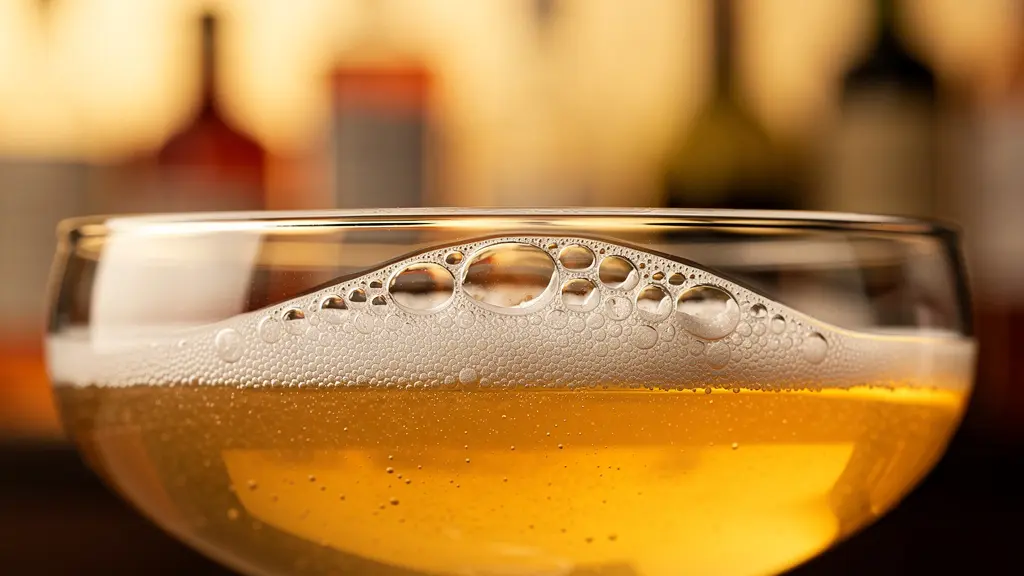
When executed correctly, the wash line creates a liquid architecture that actually resists disturbance better than the straight walls of a flute. The shallow curve of the coupe, combined with the surface tension of a properly poured meniscus, allows the liquid to move in harmonious oscillation rather than violent waves. This is the secret to carrying the glass through crowded rooms: you are not fighting physics, but partnering with them.
Nick & Nora or Wide Coupe: Which Vintage Shape Is Easier to Drink From?
The choice between a wide, breast-shaped coupe and the elongated Nick & Nora glass involves negotiating between social accessibility and aromatic concentration. The traditional coupe presents an open field of immediate impact, its shallow bowl allowing volatile compounds to dissipate broadly, creating an airy, celebratory drinking experience. In contrast, the Nick & Nora functions as an olfactory funnel, its deeper, bell-like structure concentrating aromatics and directing them upward in a more intimate stream.
| Feature | Coupe Glass | Nick & Nora Glass |
|---|---|---|
| Capacity | 5.5-7 oz typical | 4-6 oz typical |
| Bowl Shape | Shallow, wide, rounded | Deeper, bell-like, narrower |
| Stability | Moderate (high center of gravity) | Better (lower center of gravity) |
| Aroma Delivery | Open field – immediate impact | Olfactory funnel – concentrated |
| Best For | Gin-forward, aromatic cocktails | Whiskey, aged spirits, contemplative drinks |
| Social Feel | Open, celebratory, social | Intimate, sophisticated |
These dainty stemmed elongated glasses date from the 1930s, tend to be smaller than the more commonplace curvy breast-shaped Coupe and can be a third of the size of a 1980s Martini lunch-style angular Martini glass. Evocative of speakeasies, Nick & Nora glasses are and can be used for pretty much any drink served in a Coupe.
– Difford’s Guide, Cocktail Glassware Guide
Your choice should reflect the cocktail’s character and the social context. Gin-forward drinks with delicate botanicals thrive in the open expanse of a wide coupe, where the nose can explore evolving aromatics. Whiskey-based cocktails or aged spirits benefit from the Nick & Nora’s concentrated delivery, creating a more contemplative, sophisticated experience. Neither is objectively superior; each represents a different philosophy of engagement with the drink.
The Time Limit: Why You Must Drink Cocktails in Coupes Within 10 Minutes?
Cocktails served in coupes exist in a state of thermal fragility that demands respect. Unlike rocks glasses that maintain equilibrium through ice mass, or flutes that minimize surface area, the coupe’s wide bowl acts as a thermal interface rapidly exchanging heat with the environment. This creates a critical consumption window—approximately ten minutes—during which the drink exists in its optimal state.
The physics involves a delicate balance: a Martini must be cold enough to suppress alcohol burn yet not so frigid that it numbs the tongue and dulls botanical nuance. Similarly, a Whiskey Sour requires slight warmth to volatilize oak-derived vanillin and lactones, but excessive heat amplifies harsh fusel oils. Glassware material density and surface-to-volume ratio determine how quickly ambient heat infiltrates the liquid, making the coupe’s thin crystal walls both a blessing and a curse.
Beyond flavor degradation, temperature affects physical stability. As the drink warms, its viscosity changes, and dilution from any remaining ice crystals accelerates, potentially altering the wash line tension. The etiquette of the coupe is therefore temporal: one must approach the drink with the intention of consumption within that golden window, treating it not as a possession to be hoarded but as a moment to be seized. Delay transforms a jewel-like concoction into a tepid, unbalanced shadow of itself.
Where to Place the Skewer in a Coupe to Prevent it Sliding into Your Face?
Garnish placement in a coupe requires understanding cantilever physics and counterweight principles. The classic error—placing a skewer of olives or onions vertically—invites disaster, as the garnish becomes a pendulum waiting to swing into the drinker’s face or splash the contents. Instead, the professional employs horizontal stability techniques that transform potential chaos into elegant equilibrium.
Professional Techniques for Garnish Stability
- For long skewers: Use the cantilever method by resting the skewer across the full diameter of the rim
- For short picks: Apply the counterweight method where the garnish (olives, onions) acts as an anchor inside the glass
- For citrus twists: Drape a long, sturdy lemon or orange twist over the side to self-anchor
- For dehydrated garnishes: Float light citrus wheels on the surface to eliminate sliding entirely
- Pro tip: Create a tiny notch in wooden skewers where they meet the rim to ‘clip’ them in place
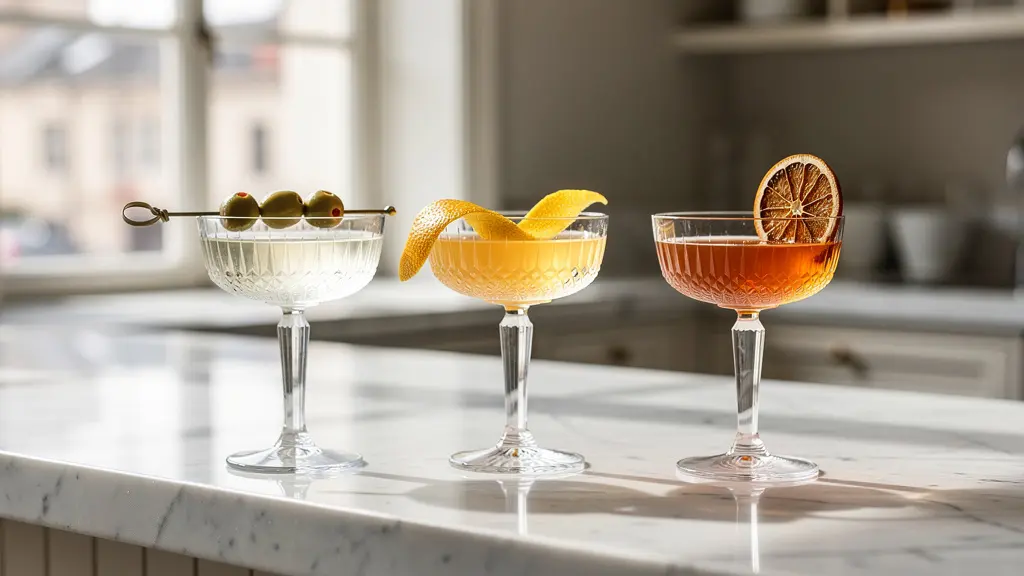
The cantilever method, resting the skewer across the full diameter, distributes weight evenly and creates a bridge that actually stabilizes the glass’s center of gravity. For citrus elements, a long, sturdy twist draped over the side serves as both aromatic garnish and functional anchor. Dehydrated wheels, floated gently on the surface, eliminate sliding entirely while adding visual interest.
These techniques serve dual purposes: they prevent the awkward moment of fishing a garnish from your lap, and they maintain the visual integrity of the wash line. A sliding skewer disrupts the meniscus, potentially causing spillage or dilution. By treating the garnish as a structural element rather than a mere decoration, you ensure that the glass remains balanced and beautiful from the first glance to the final sip.
Why Stirring for 30 Seconds Dilutes Less Than Shaking for 10 Seconds?
The difference between stirring and shaking extends beyond tradition into the physics of ice and surface area. Shaking is a violent process that shatters ice into small shards, massively increasing the total surface area exposed to liquid and leading to rapid, aggressive dilution. In contrast, stirring is a gentle process that cools the liquid by conduction with large, solid cubes, offering far more control over the final temperature and dilution rate.
This explains why thirty seconds of stirring produces less dilution than ten seconds of shaking. The large cubes used in stirring vessels maintain their structural integrity, chilling through controlled conduction rather than mechanical erosion. When preparing a cocktail destined for a coupe—whether a spirit-forward Manhattan or a citrusy Daiquiri—this distinction becomes crucial, as the glass itself offers no dilution buffer once the drink is poured.
The texture results differ dramatically. Stirring preserves a silky, viscous mouthfeel ideal for contemplative sipping from a coupe, while shaking introduces air bubbles and tiny ice fragments that create a frothy, lively texture. Understanding this thermal and textural dynamic allows you to choose your method not by rote rule, but by the specific experience you wish to deliver in that shallow, elegant bowl.
The Cloudy Mistake: Why Shaking Ruins the Jewel-Like Clarity of a Manhattan?
The clarity of a properly stirred cocktail is not merely aesthetic—it is an indicator of textural integrity. When you shake a Manhattan, you force thousands of tiny air bubbles and microscopic ice crystals into the liquid, creating a persistent haze that obscures the drink’s jewel-like depths. This cloudiness corresponds directly to mouthfeel: whereas a stirred Manhattan offers a viscous, weighty, and smooth experience, the shaken version delivers a frothy, thinner, and sharper texture that betrays the drink’s intended character.
The coupe acts as a crystal-clear display case, its wide, shallow bowl and transparent walls showcasing the perfect limpidity of a well-executed cocktail. This visual purity signals to the drinker that they are about to experience the spirit as the distiller intended, without the distraction of aeration artifacts. Industry data reveals that Martini glasses and coupe glasses hold a combined 40% share of the cocktail glass market for spirit-forward drinks, indicating a sophisticated consumer base that values this clarity.
Respecting the distinction between stirred clarity and shaken opacity is the hallmark of the educated host. When serving in a coupe, where every visual detail is magnified by the glass’s curvature, the cloudy mistake becomes unforgivable. The glass demands the jewel-like brilliance that only patient stirring can provide, turning each cocktail into a luminous centerpiece worthy of its vintage vessel.
Key Takeaways
- The coupe’s spillage reputation stems from technique deficits, not design flaws—mastering the wash line and thermal window transforms the experience
- Stirring preserves clarity and silky texture essential for spirit-forward coupes, while shaking suits citrus cocktails requiring emulsification
- Garnish placement using cantilever principles prevents physical disruption and maintains the meniscus integrity
When to Stir and When to Shake: The Physics of Texture in Mixology?
The decision to stir or shake represents a fundamental choice in texture physics. Stirring suits spirit-forward cocktails—Manhattans, Martinis, Negronis—preserving their clarity and creating a silky, contemplative mouthfeel. Shaking serves citrus or dairy-based drinks, achieving proper emulsification and a lively, refreshing froth essential for Daiquiris or Whiskey Sours.
| Technique | Best For | Texture Result | Classic Examples |
|---|---|---|---|
| Stirring | Spirit-forward drinks | Silky, contemplative, clear | Manhattan, Martini, Negroni |
| Shaking | Citrus/dairy cocktails | Lively, refreshing, frothy | Daiquiri, Cosmopolitan, Whiskey Sour |
| Dilution Rate | Controlled, minimal | Rapid, aggressive | – |
| Temperature Drop | Gradual, even | Quick, dramatic | – |
The coupe accommodates both methodologies, though each imposes different constraints. Shaken cocktails must be double-strained to remove ice shards that would disrupt the wash line, while stirred drinks demand precise timing to achieve optimal temperature without over-dilution. Shake for 10-15 seconds until the shaker becomes quite cold, stir for 20-30 seconds with large cubes for controlled dilution and temperature.
The Golden Rules of Stirring vs Shaking
- Shake cocktails containing citrus juice or dairy products to achieve proper emulsification
- Stir spirit-forward cocktails (Manhattan, Martini) to preserve clarity and silky texture
- Use coupe glasses for both shaken citrus drinks (Daiquiri, Southside) and stirred spirit drinks
- Shake for 10-15 seconds until the shaker becomes quite cold to the touch
- Stir for 20-30 seconds with large ice cubes for controlled dilution and temperature
Understanding these physics elevates the home bartender from recipe follower to host. When you present a coupe filled with a properly prepared cocktail, you demonstrate mastery over the invisible forces of temperature, dilution, and texture. The glass becomes a testament to your precision, carrying not just liquid, but the assurance of expertise.
Begin your next gathering with the confidence of these techniques, transforming the coupe from a source of anxiety into the ultimate expression of sophisticated hospitality.
Frequently Asked Questions About Cocktail Clarity and Technique
Why does shaking make a Manhattan cloudy?
The cloudiness results from thousands of tiny air bubbles introduced through aeration and microscopic ice crystals sheared off the cubes, creating a persistent haze until they melt.
How does the coupe glass showcase clarity?
The coupe acts as a crystal-clear display case. Its wide, shallow bowl and clear glass walls perfectly showcase the jewel-like clarity of a properly stirred cocktail.
Does cloudiness affect taste as well as appearance?
Yes, the clarity of a stirred Manhattan corresponds to a specific mouthfeel: viscous, weighty, and smooth. Cloudiness from shaking creates a frothy, thinner, and sharper texture that completely alters the drink’s character.