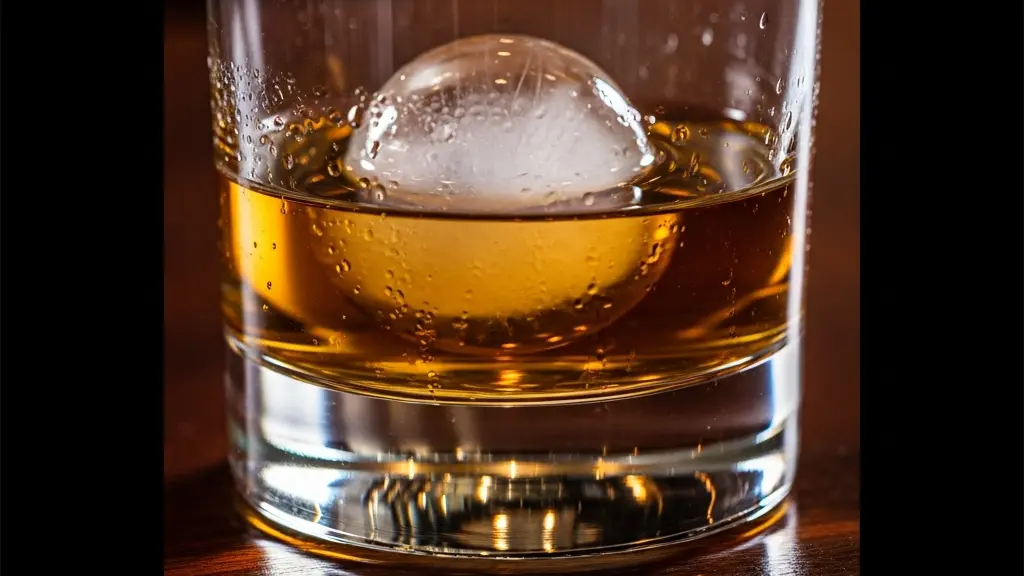
The substantial weight of an Old Fashioned glass is not a stylistic choice, but a critical design feature engineered for mechanical and thermal performance.
- The heavy base provides the necessary stability and counter-torque for effective, one-handed muddling.
- Its high thermal mass significantly slows ice dilution by acting as a heat sink, preserving the integrity of the spirit.
Recommendation: Choose a tumbler based on its weight distribution and diameter to ensure it provides both the stability for drink preparation and a comfortable, ergonomic grip.
The satisfying heft of a quality Old Fashioned tumbler is an undeniable part of the cocktail ritual. As you grip the glass, its weight conveys a sense of purpose and permanence. Most enthusiasts attribute this to a simple, subjective feeling of “quality” or a nod to tradition. They assume the heavy base is merely a stylistic flourish, a marker of premium craftsmanship that separates a fine tumbler from a common water glass. This perspective, however, overlooks the brilliant functionalism at its core.
From an industrial designer’s perspective, the Old Fashioned glass is not just a vessel; it is a specialized tool, perfected over time to perform a specific set of tasks with maximum efficiency. The common wisdom that it’s “good for muddling” or “keeps the drink cold” barely scratches the surface. The true genius lies in the unseen physics of its design—the deliberate manipulation of mass, geometry, and material properties to master the forces of torque, thermal dynamics, and even human psychology.
But what if the key to the perfect Old Fashioned experience isn’t just the ingredients, but the meticulously engineered object in your hand? This article deconstructs the tumbler as a piece of functional equipment. We will analyze how its weight distribution is not an accident but a solution to specific mechanical problems, how its material thickness governs the rate of dilution, and how its very form is designed to deliver critical haptic feedback to the user, ultimately shaping the perception of the drink itself.
To fully appreciate this object’s design, we will examine each functional aspect in detail. The following sections break down the physics, ergonomics, and sensory science behind the classic heavy-bottomed tumbler.
Summary: Deconstructing the Functional Design of the Old Fashioned Glass
- Why Does a Thick Base Keep Your Ice Sphere Frozen Longer?
- How to Build a Drink Directly in the Tumbler Without Splashing?
- DOF or Single Rocks: Which Size Accommodates a 2-Inch Ice Cube?
- The Rim Danger: Why Heavy Bases Often Lead to Chipped Rims in the Dishwasher?
- How to Choose a Tumbler Width That Fits Your Hand Comfortably?
- Cube or Sphere: Which Shape Minimizes Surface Area for Whiskey?
- Why Does Whisky Taste Better in a Heavy Crystal Glass?
- How to Riff on the Old Fashioned Template Using Local Syrups and Bitters?
Why Does a Thick Base Keep Your Ice Sphere Frozen Longer?
The common explanation that a thick glass “insulates” the drink is a misconception. In reality, the opposite is happening, and it’s a principle known as thermal mass. The substantial base of an Old Fashioned glass acts not as a barrier, but as a heat sink. When you place the glass on a warm bar top or hold it in your hand, the thick base has a large capacity to absorb thermal energy from its environment. It effectively intercepts heat before that energy can be transferred to the liquid and, subsequently, the ice.
This process is governed by the material’s specific heat capacity. For instance, engineering data confirms that standard soda-lime glass has a specific heat capacity of around 0.84 J/g·K. This means it takes a significant amount of energy to raise the temperature of that dense glass base by even one degree. The greater the mass of the base, the more ambient heat it can absorb and sequester away from your ice.
A thin-walled glass has very little thermal mass. Any heat from your hand or the table is rapidly transferred directly to the drink, accelerating dilution. The heavy-bottomed tumbler, by design, sacrifices initial coolness (it may feel warmer to the touch at first) for long-term temperature stability, ensuring the drink’s dilution rate remains slow and controlled, preserving its intended flavor profile for a longer period.
How to Build a Drink Directly in the Tumbler Without Splashing?
Muddling a sugar cube with bitters is a foundational step of the Old Fashioned, and it’s an act that generates significant physical force. Attempting this in a lightweight, unstable glass is an exercise in frustration. The heavy-bottomed tumbler is engineered specifically to counteract these forces. The key lies in its low center of gravity and substantial mass, which work together to resist the rotational force, or torque, applied by the muddler.
When you press down and twist a muddler, you apply torque that tries to spin the glass on the countertop. The tumbler’s heavy base provides the necessary friction and inertia—a form of counter-torque—to keep it stationary. This allows for efficient, one-handed muddling, leaving your other hand free. This stability is a critical functional requirement, not a byproduct of aesthetics. It transforms a potentially clumsy action into a controlled, precise ritual.
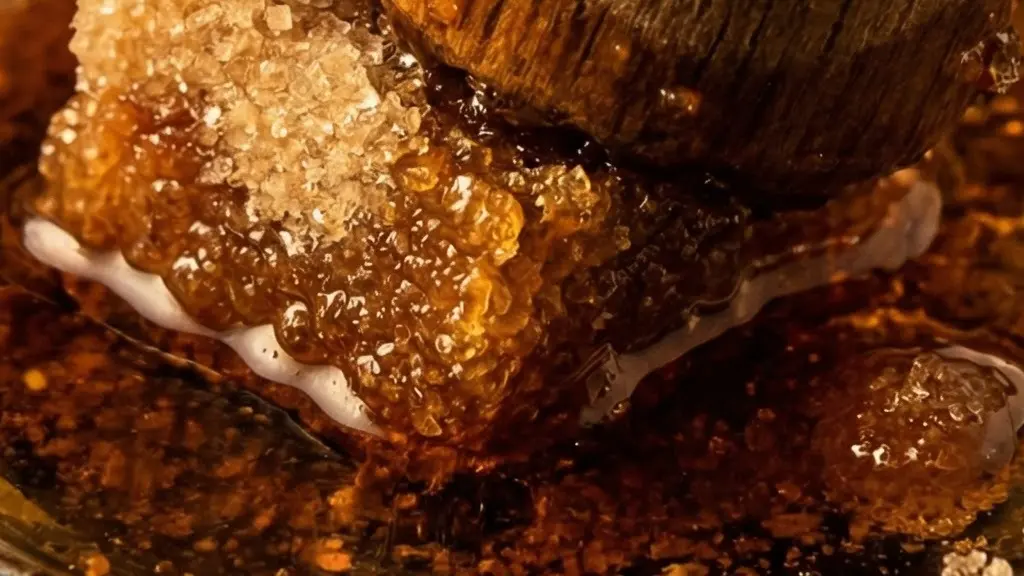
The technique for muddling is as much about ergonomics as it is about ingredients. By using the glass’s weight to your advantage, you create a stable platform that allows for a perfect, grit-free dissolution of the sugar without splashing or spinning. This is the first mechanical test a well-designed tumbler must pass.
Action Plan: The Dry-Build Muddling Technique
- Place the sugar cube directly on the punt (center) of the heavy-bottomed glass to align with the center of gravity.
- Saturate the cube completely with bitters; wait 10 seconds for the structure to soften.
- Grip the glass base with a ‘claw grip’ (fingers under the heavy bottom) to counteract torque.
- Apply downward pressure with the muddler, twisting your wrist rather than your arm to grind the sugar without spinning the glass.
DOF or Single Rocks: Which Size Accommodates a 2-Inch Ice Cube?
The rise of craft ice, particularly the large 2-inch (5 cm) sphere or cube, has placed new geometric demands on glassware. The choice between a Single Old Fashioned (typically 6-8 oz) and a Double Old Fashioned (DOF, typically 12-14 oz) is now primarily a question of volumetric displacement. A 2-inch ice sphere is a significant object that will displace a large amount of liquid, and only a DOF glass is properly dimensioned to handle it.
A standard DOF tumbler usually has an internal diameter of around 3 to 3.5 inches (7.5 to 9 cm). This width is crucial; it allows the 2-inch sphere to sit comfortably at the bottom without being wedged. More importantly, its height provides the necessary volume to accommodate both the ice and a standard 2-3 oz spirit pour, plus any dilution, without the risk of overflowing. The liquid should ideally come to the “equator” or “wash line” of the ice sphere, an aesthetic and functional sweet spot.
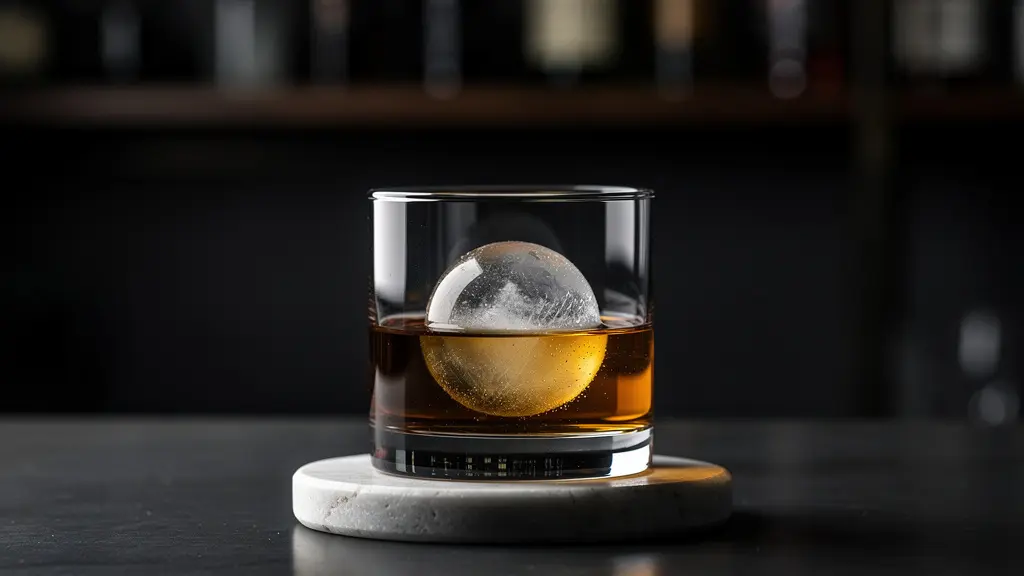
In contrast, a Single Old Fashioned glass is simply too small. A 2-inch ice sphere would leave almost no room for the liquid, resulting in a comically full glass that is impossible to drink from without spilling. Therefore, the DOF has become the de facto standard for modern cocktails served on large-format ice, a direct result of its superior internal geometry and volume.
The Rim Danger: Why Heavy Bases Often Lead to Chipped Rims in the Dishwasher?
The very design feature that makes a heavy-bottomed tumbler so stable on a countertop—its low center of gravity—becomes a liability when it is inverted. In a dishwasher, a tumbler is placed upside down on prongs. This flips its physics: the heavy base is now at the top, creating a high and unstable center of gravity. The glass becomes top-heavy and is far more susceptible to tipping over from the water jets or slight vibrations.
When it topples, the thinnest and most fragile part of the glass—the rim—is what collides with other glasses, the rack, or the dishwasher’s interior. This impact is the primary cause of chips and fractures. It’s a classic engineering trade-off: optimizing for stability in its primary use-case creates a vulnerability in its maintenance cycle. Another factor is thermal shock, where hot water causes the thin rim to expand at a different rate than the thick, cold base, creating internal stress.
Glassware experts are acutely aware of this design conflict. To mitigate the risk, proper loading is essential. As the world-renowned manufacturer Riedel advises in its care guide:
Place your glasses in a way that they do not come into contact with other racks or the spray arms… Avoid contact of glass with other glass or metal.
– Riedel Glas, Glass Care & Use Guide
By ensuring the tumbler is securely positioned and has ample space, you can counteract its inherent top-heavy instability and protect the vulnerable rim, extending the life of the glassware.
How to Choose a Tumbler Width That Fits Your Hand Comfortably?
Beyond stability and thermal properties, the most personal interaction with a glass is the grip. The ergonomics of a tumbler are defined primarily by its diameter and weight distribution. An uncomfortable glass, no matter how beautiful, detracts from the drinking experience. The ideal tumbler should feel like a natural extension of your hand, a principle centered on haptic feedback and anthropometry (the study of human body measurements).
For most adults, a secure and comfortable palm grip is achieved with a glass diameter between 3 and 3.5 inches (7.5 to 9 cm). A glass that is too narrow forces a less stable fingertip grip, while one that is too wide can feel strenuous to hold, especially given the tumbler’s weight. The texture of the glass also plays a role; cut crystal patterns are not merely decorative, they increase the surface area and provide tactile reference points for your fingers, improving grip security.
The weight itself contributes to the haptic experience. A heavier glass requires more muscle engagement to lift and hold, a physical action that sends signals to the brain. This sensory input is often subconsciously interpreted as “substance” and “quality.” A well-designed tumbler balances its total mass with a diameter that allows for a confident, low-effort grip, making the physical act of drinking feel both secure and satisfying.
Cube or Sphere: Which Shape Minimizes Surface Area for Whiskey?
The choice between a large ice cube and a large ice sphere is a decision rooted in pure geometry. The primary goal of using large-format ice is to cool the spirit with minimal dilution. Dilution is a function of melting, and the rate of melting is directly proportional to the amount of surface area exposed to the warmer liquid. Therefore, the optimal shape is the one that has the least surface area for a given volume.
Mathematically, for any given volume, the sphere is the shape with the minimum possible surface area. This is a fundamental principle of physics and geometry. Compared to a cube of the same volume, a sphere has approximately 24% less surface area. This significant reduction means less of the ice is in direct contact with the whiskey, resulting in a much slower transfer of heat and, consequently, a slower rate of melting and dilution.
This allows the drink to remain cold and strong for a longer period, evolving gently in the glass rather than becoming watery and weak. As spirits writer Roger Kamholz notes, the benefit is a more preserved flavor profile:
Larger ice has less surface area so melts slower, meaning more lengthy dilution… Sphere ice will keep that bracing, spirit-forward flavor around for longer.
– Roger Kamholz, Tasting Table Interview
While a large, sharp-edged cube is a dramatic improvement over small, quick-melting ice, the sphere remains the undisputed champion of slow dilution from a purely scientific standpoint.
Why Does Whisky Taste Better in a Heavy Crystal Glass?
The notion that the glass itself can change the taste of a drink may seem subjective, but it is a documented phenomenon in the field of sensory science. The “premium feel” of a heavy crystal tumbler is not just in your head; it’s a form of powerful haptic feedback that directly influences your brain’s perception of the contents. The weight, the texture, and even the temperature of the vessel create expectations that prime you for a higher-quality experience.
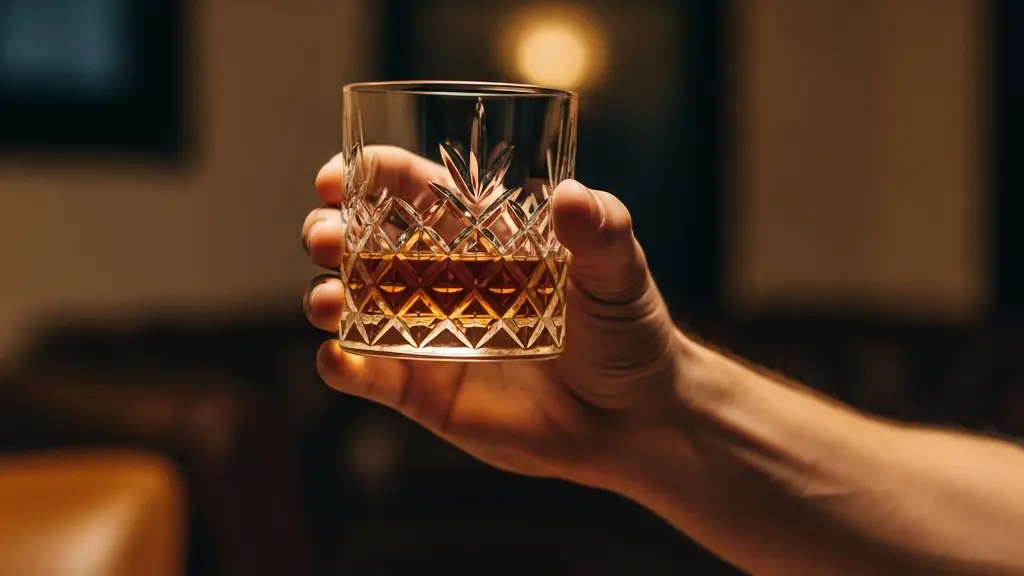
This concept is a cornerstone of the work by experimental psychologist Charles Spence at the University of Oxford. His research demonstrates that our sense of taste is not isolated but is a multisensory experience, heavily influenced by sight, sound, and touch. The physical act of lifting a heavy, substantial glass sends a cascade of signals to the brain that pre-frame the drink as significant and valuable. As Professor Spence’s research states:
The vessel in which a drink is consumed has been shown to affect everything from a consumer’s hedonic response to the beverage through to how refreshing they find it.
– Charles Spence, Beverage perception and consumption (ResearchGate)
So, when you say whiskey “tastes better” in a heavy crystal glass, you are not imagining it. The weight and tactile sensation of the glass are actively enhancing your hedonic (pleasure) response. The glass is not chemically changing the whiskey, but it is changing your perception of it. This is perhaps the most subtle, yet most profound, aspect of the tumbler’s design: it’s engineered not just for the drink, but for the mind of the drinker.
Key Takeaways
- The heavy base is a functional tool providing stability and counter-torque for efficient, one-handed muddling.
- Its high thermal mass acts as a heat sink, absorbing ambient heat to significantly slow ice dilution and preserve the drink’s integrity.
- The weight and form provide powerful haptic feedback that has been scientifically shown to influence the brain’s perception of taste and quality.
How to Riff on the Old Fashioned Template Using Local Syrups and Bitters?
Once you understand the Old Fashioned tumbler as a high-performance tool, it ceases to be a static object and becomes a reliable platform for creativity. A well-designed tool should not only perform its primary function flawlessly but also empower the user to experiment. The tumbler’s robust construction and stable thermal environment provide a consistent and forgiving canvas for exploring variations on the classic Old Fashioned formula.
The classic template—spirit, sugar, bitters, water (from ice)—is a design “chassis” that invites modification. The stability of the glass means you can confidently muddle not just sugar cubes, but alternative sweeteners like rich demerara syrup, maple syrup, or agave nectar, without fear of tipping or spinning. Its superior thermal control ensures that whether you are using a classic Angostura or experimenting with cardamom, lavender, or mole bitters, the drink’s temperature and dilution will remain consistent, allowing the nuances of your chosen ingredients to shine through.
Think of the glass as the controlled environment of a laboratory. By providing a stable mechanical and thermal foundation, it removes variables and allows the user—the home bartender—to focus purely on the creative act of balancing flavors. This is the final stage in the life of a well-designed product: when it transcends its basic function to become an enabler of its user’s creativity. The Old Fashioned glass is the perfect stage for this performance.
Now that you understand the deep design principles behind the classic tumbler, the next step is to confidently select a glass that fits your own hand, bartending style, and aesthetic preferences, turning every drink into a deliberate and elevated ritual.