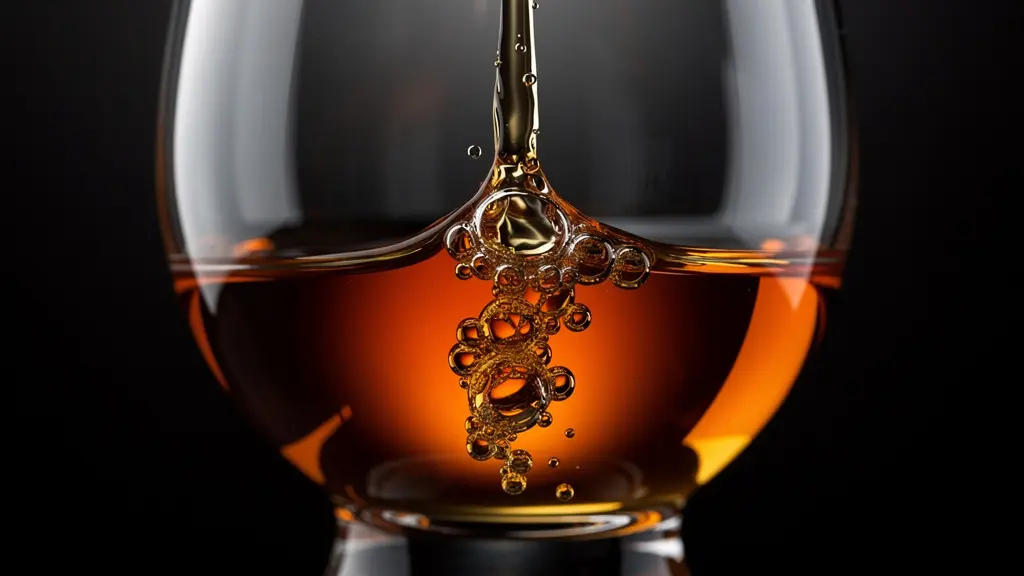
Contrary to popular belief, a spirit’s visual cues are not a direct measure of quality, but rather a set of structural clues about its production and character.
- Slow, thick “legs” indicate higher alcohol or sugar, not inherent quality. They are a clue about potential mouthfeel.
- Color is a reflection of cask influence, not necessarily age. A pale whisky can be older and more complex than a dark one.
- Perfect clarity can signify aggressive filtration that strips flavor, while a slight haze can be a positive sign of retained texture.
Recommendation: Adopt a judge’s methodology—treat every visual sign as a sensory hypothesis to be confirmed or denied on the nose and palate, rather than a premature judgment.
For the novice taster, the first swirl of a spirit in a glass is often a moment of uncertainty. A cascade of slow-moving “legs” or a deep amber color might seem like obvious indicators of a superior product. This is the common narrative: thicker legs and darker colors equal higher quality. It’s an easy-to-grasp rule that offers a shortcut to expertise. Yet, in the world of professional spirit evaluation, these shortcuts are recognized as the most common visual traps.
The truth is that visual analysis is not about finding a simple answer to “Is this good?”. It is a disciplined, methodical process of gathering evidence. As a spirits judge, one learns that the appearance of a liquid is a dossier of its history—a story of its base ingredients, distillation proof, filtration methods, and maturation environment. The goal is not to pass a verdict based on sight alone, but to form a sensory hypothesis. Is the spirit likely to be viscous on the palate? Was it aged in an active, first-fill cask? Has it been chill-filtered?
This guide deconstructs the process of visual assessment from a judge’s perspective. It moves beyond the myths to provide a rigorous framework for interpreting the structural clues a spirit offers before it ever reaches your lips. By understanding the science behind viscosity, the deceptions of color, and the significance of clarity, one can begin to read a spirit, not just look at it.
To master this skill, we will systematically examine the key visual indicators, from the behavior of the liquid in the glass to the nuances of its hue and transparency. This structured approach will equip you with the knowledge to analyze a spirit with the precision and confidence of an expert.
Summary: What Can “Legs” and Viscosity Tell You About a Spirit Before You Taste?
- Why Slow-Moving Legs Indicate Higher Alcohol or Sugar Content?
- How to Hold the Snifter to Avoid Heating the Spirit Too Quickly?
- Dark Color vs Pale Color: Which Actually Indicates Older Spirits?
- The Visual Trap: Why You Should Never Judge Quality by Clarity Alone
- How to Use a Neutral Background to Spot Defective Haze in Spirits?
- Why Does Non-Chill Filtered Whisky Turn Cloudy When You Add Water?
- The Dark Color Trap: Why Pale Whiskies Are Often the Smokiest?
- 40% vs 46% ABV: Why Does That 6% Difference Change Mouthfeel?
Why Slow-Moving Legs Indicate Higher Alcohol or Sugar Content?
The phenomenon known as “legs,” “tears,” or “cathedral windows” is the most discussed yet frequently misinterpreted visual cue in a spirit. A gentle swirl of the glass coats the sides with liquid, which then descends in streams. The common belief is that slow, thick legs are a hallmark of high quality. This is an oversimplification. In reality, these legs are a direct visual manifestation of the Marangoni effect—a phenomenon driven by fluid surface tension and evaporation rates.
Alcohol evaporates more quickly than water. As the spirit coats the glass, the alcohol at the top of the film evaporates first, increasing the surface tension of the remaining water-rich liquid. This higher surface tension pulls more spirit up the sides of the glass, forming an arch that eventually becomes too heavy and collapses, flowing down as legs. A higher alcohol concentration (ABV) creates a greater differential in surface tension, resulting in more pronounced, slower-moving legs. This principle is not exclusive to spirits; research shows that wines with ABV over 14% produce significantly thicker and slower legs. Similarly, a high sugar content, common in liqueurs or some rums, increases the liquid’s viscosity, which also causes legs to flow more slowly.
From a judge’s perspective, legs are not a quality score. They are a structural clue. Slow legs form a sensory hypothesis: the spirit likely has a higher ABV or residual sugar content, which may translate to a richer, more viscous mouthfeel. Fast, thin legs suggest a lower ABV and potentially a lighter body. It is an indicator of physical properties, not a verdict on flavor or complexity.
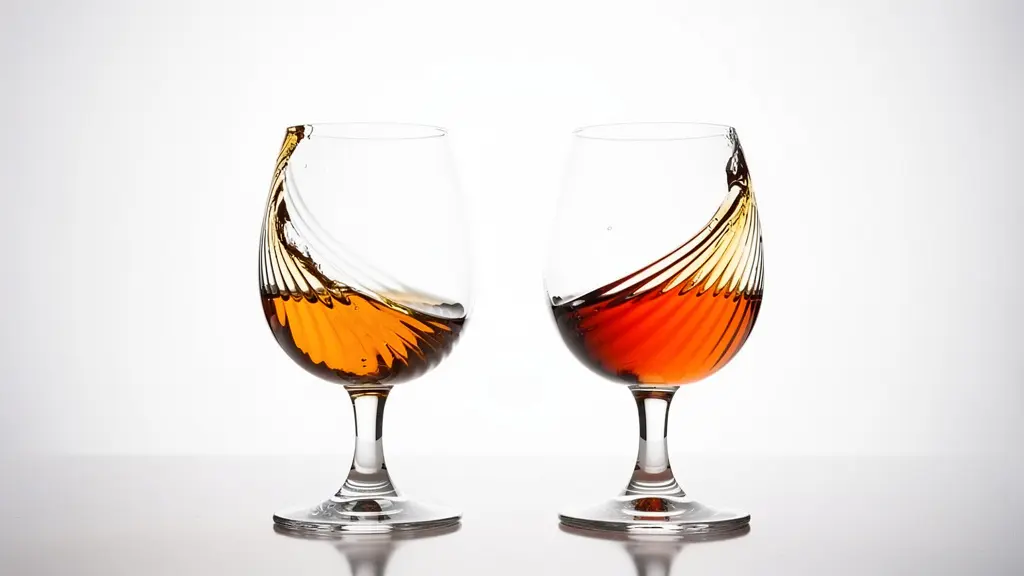
This visual diagnostic is the first step in anticipating the spirit’s texture. The observation must then be validated on the palate. A spirit with impressive legs might still taste thin if other elements are not in balance, proving that visual analysis is only the beginning of the evaluation process.
How to Hold the Snifter to Avoid Heating the Spirit Too Quickly?
Before one can even assess legs or color, the first step in a professional evaluation is to handle the glassware correctly. The temperature of a spirit is a critical variable that dramatically influences the volatility of its aromatic compounds and its texture on the palate. Holding the glass improperly can quickly alter this temperature, compromising the integrity of the assessment. Cupping the bowl of a snifter with your palm is a common sight, but it is an action that transfers body heat directly to the liquid, causing it to warm rapidly.
This warming accelerates the evaporation of alcohol, leading to a premature and aggressive release of aromas. This can be overpowering, masking subtler notes with a rush of ethanol, an effect often referred to as “alcohol burn” on the nose. A professional taster seeks a controlled, gradual release of aromas to dissect the spirit’s complexity layer by layer. The standard practice, therefore, is to hold the glass by its base or stem. This technique minimizes heat transfer, ensuring the spirit remains at its optimal tasting temperature (typically 18-20°C for most whiskies) for a longer period.
Professional Practice: Temperature Control at The Famous Grouse
Master Blender Kirsteen Campbell of The Famous Grouse exemplifies this rigorous approach. During sensory panel evaluations, temperature controls are strictly maintained. Panelists are explicitly trained to hold their tasting glasses by the base to prevent any heat transfer from their hands. This ensures that every sample is assessed under consistent and optimal conditions, allowing for reliable and repeatable evaluation of the spirit’s true character.
While holding by the stem is the default for objective evaluation, intentionally warming the spirit does have its place as an advanced technique. If a spirit seems “closed” or unexpressive on the nose, gently cupping the bowl for a few seconds can help it open up. This is a deliberate action to probe the spirit’s character, not an unconscious habit. The following table, based on data from professional tasting guides, outlines the impact of different holding methods.
| Holding Method | Temperature Change | Aroma Release | Best Use |
|---|---|---|---|
| By the base/stem | Minimal (+0-1°C) | Controlled, gradual | Initial nosing & evaluation |
| Cupping the bowl | Significant (+3-5°C in 30 sec) | Accelerated, intense | Opening up closed aromas |
| Palm under bowl | Moderate (+2-3°C) | Enhanced volatility | Cask strength assessment |
| Two-handed cup | Rapid (+5-7°C) | Maximum release | Detecting subtle notes |
This demonstrates that proper glass handling is not a matter of etiquette, but a fundamental tool for controlling the sensory experience. Mastering this methodical approach is the first mark of a serious taster.
Dark Color vs Pale Color: Which Actually Indicates Older Spirits?
One of the most persistent myths in the world of spirits is that a darker color is a direct indicator of greater age and, by extension, superior quality. While it is true that spirits like whisky, rum, and brandy extract color from the wooden casks they mature in, the relationship between color and age is far from linear. Judging a spirit’s age by its color is a classic “visual trap” that fails to account for the most significant variable: cask influence.
The color of a spirit is determined not just by the time spent in a cask, but by the type of cask, the number of times it has been used, and its char level. A spirit aged in a “first-fill” sherry or port cask, which has never held whisky before, will absorb a deep, rich color in just a few years. Conversely, a spirit matured in a “refill” cask—one that has already been used to age whisky two or three times—will extract color much more slowly. An expert’s analysis often highlights this nuance.
A 25-year-old whisky can be surprisingly pale if it spent its life in a 3rd or 4th-fill cask that has already given up most of its color-imparting compounds.
– Whisky Expert Analysis, Whiskipedia – Professional Whisky Education
This means a 12-year-old whisky from a first-fill sherry cask can be significantly darker than a 25-year-old from a fourth-fill bourbon barrel. Furthermore, some spirits, particularly certain rums and brandies, may contain caramel coloring (E150a), an additive used for color consistency that has no bearing on age or flavor. Therefore, a judge never assumes age from color. Instead, color is treated as a clue about the likely cask type, which forms a sensory hypothesis about potential flavors (e.g., dark fruits and spice from a sherry cask, vanilla and caramel from an American oak bourbon cask).
Case Study: Laphroaig 10 Year vs. GlenDronach 12 Year
This comparison perfectly dismantles the color-age-flavor myth. Laphroaig 10 Year Old is famously pale, with a light straw color, yet it delivers a powerfully smoky and medicinal flavor profile from its peat-kilned barley. In stark contrast, GlenDronach 12 Year Old boasts a deep amber-red hue from its maturation in first-fill sherry casks, offering rich flavors of dried fruit and spice with absolutely no smoke. This demonstrates that color is entirely independent of flavor intensity and age, being primarily a function of cask type and production methods.
The Visual Trap: Why You Should Never Judge Quality by Clarity Alone
In our modern consumer world, we are conditioned to associate diamond-bright clarity with purity and quality. This assumption is another visual trap for the aspiring spirits expert. While cloudiness can sometimes indicate a flaw, in many premium spirits, a lack of perfect clarity is actually a positive sign of character and texture. The determining factor is a production process known as chill-filtration.
Whisky and other spirits contain natural oils, fatty acids, and esters that are major contributors to flavor and mouthfeel. However, at low temperatures or when water is added, these compounds can precipitate out of the alcohol solution, causing the liquid to become hazy or cloudy. To ensure a product that remains perfectly clear under all conditions (for example, when served with ice or in a cold store), many large-scale producers chill the spirit to around 0°C and filter out these compounds. This process guarantees cosmetic stability but can come at a cost to the spirit’s texture and complexity, often resulting in a thinner mouthfeel.
Conversely, many craft distillers and premium brands choose to bottle their spirits without chill-filtration, preserving these delicate compounds. This is often done at a higher strength—typically 46% ABV or above—as the higher alcohol content helps keep the oils in solution. These “non-chill filtered” (NCF) expressions retain the full, natural character of the spirit. In fact, industry analysis reveals that non-chill filtered whiskies at 46% ABV retain up to 100% of their natural oils and fatty acid esters compared to their filtered counterparts. For a judge, this “filtration signature” is a crucial piece of information.
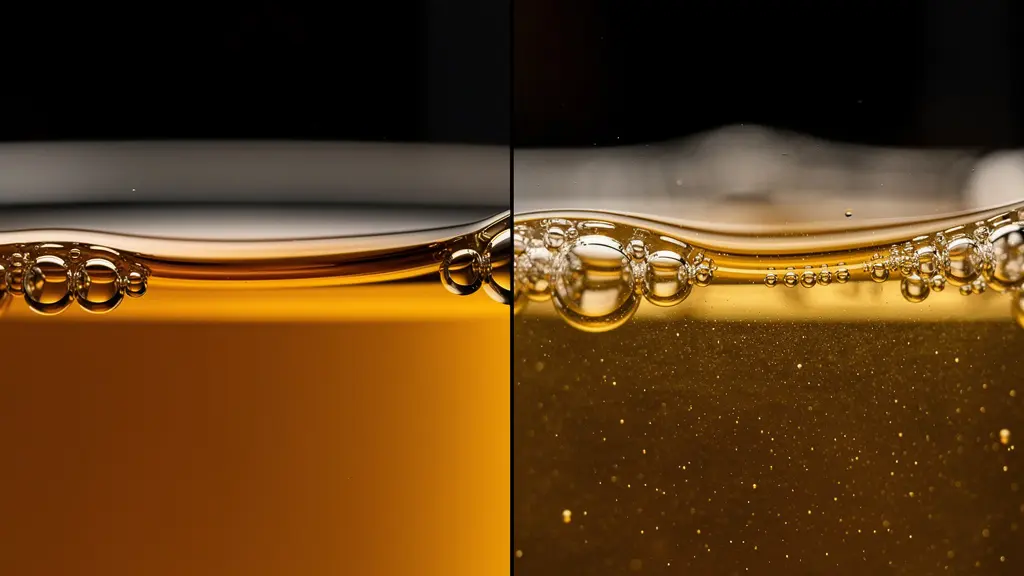
A slight haze at room temperature or an oily sheen on the surface of the spirit is therefore not a defect. It is a positive indicator of a rich, full-bodied spirit with its natural texture intact. An NCF spirit promises a more complex and viscous palate experience. Judging a spirit by its clarity alone means potentially misinterpreting a sign of authenticity as a flaw.
How to Use a Neutral Background to Spot Defective Haze in Spirits?
While a lack of clarity in a non-chill filtered spirit is a positive sign, it is still crucial to be able to distinguish this desirable “Scotch Mist” from a haze or sediment that indicates a genuine flaw. Not all cloudiness is created equal. True defects can arise from issues like protein instability, contamination, or poor-quality cask material. A professional taster must be able to perform a quick and effective visual diagnostic to differentiate between natural character and a potential problem.
The key to this assessment is controlling the environment. Simply holding the glass up to a light source is insufficient, as the color of the spirit and ambient lighting can mask subtle imperfections. The standard professional technique is to evaluate the spirit against a plain, neutral, and well-lit background, such as a white wall or a sheet of white paper. This removes distracting variables and makes any deviation from perfect clarity immediately apparent.
The methodology, as taught in professional sensory programs and used in distilleries, is the “tilt and swirl” technique. A judge will tilt the glass at a 45-degree angle against the white background and slowly rotate it. As described in quality control protocols from institutions like Moonshine University’s professional sensory training, this action allows for two distinct observations. First, any heavy sediment or unwanted particles will collect at the bottom edge of the tilted glass, making them easy to spot. Second, the natural oils in an NCF spirit will create a distinct, oily trail or “sheen” on the glass wall, while a uniform, milky haze might suggest a different issue. This simple, methodical approach allows for immediate and accurate differentiation.
The following chart provides a basic guide for diagnosing what you might see when employing this technique. It helps to form a hypothesis about the cause and significance of any visual characteristics observed.
| Visual Appearance | Likely Cause | Quality Indicator | Action Required |
|---|---|---|---|
| Uniform Haze | Non-chill filtration or ‘Scotch Mist’ | Often positive – retained oils | Normal for NCF whisky |
| Floating Specks | Harmless cask char particles | Neutral – natural sediment | Can be filtered if desired |
| Clouds/Floaters | Protein/yeast flocculation | Potentially concerning | Check storage conditions |
| Oily Surface Sheen | Natural fatty acids and esters | Positive – sign of texture | Indicates quality NCF spirit |
Why Does Non-Chill Filtered Whisky Turn Cloudy When You Add Water?
The moment a few drops of water are added to a glass of non-chill filtered whisky is a moment of truth for the taster. The spirit, once clear, will often bloom into a cloudy haze. For the uninitiated, this can be alarming, suggesting that the whisky has somehow “gone bad.” For the knowledgeable taster, this phenomenon—known as louching or “Scotch Mist”—is a celebrated visual confirmation of a flavor-packed, authentic spirit.
This clouding occurs because, as discussed, NCF whiskies retain all their natural long-chain fatty acid esters and oils. These flavor-rich compounds are soluble in high concentrations of alcohol (typically 46% ABV and above). When you add water, you lower the overall alcohol percentage of the solution. The alcohol is no longer strong enough to hold these oils in suspension, and they precipitate out, becoming visible to the naked eye as a delicate, swirling cloud. A chill-filtered whisky, by contrast, will remain perfectly clear because these compounds have already been removed.
This is more than just a visual effect; it is the “flavor bloom.” As these compounds come out of solution, they are more readily available to your senses. The addition of water opens up the whisky, releasing a new wave of aromatic compounds to the nose and altering the texture on the palate. The clouding is the physical marker that this sensory transformation is taking place. It signals that the spirit is presenting its full, unadulterated profile.
Observing and understanding this effect is a key part of the tasting ritual. It provides definitive proof that you are dealing with a non-chill filtered expression and allows you to control the tasting experience, deciding precisely how much water to add to achieve the desired level of aromatic release and dilution.
Your Action Plan: Testing the ‘Flavor Bloom’ Effect
- Begin with a non-chill filtered (NCF) whisky, preferably at 46% ABV or higher, served at room temperature in a clear glass.
- Add a few drops of cool, still water and immediately observe the liquid against a neutral background. Note the speed and intensity of the clouding effect.
- Notice how the long-chain fatty acid esters become visible as they precipitate, creating a swirling haze.
- For comparison, repeat the process with a standard chill-filtered whisky (often at 40-43% ABV). Observe that no clouding occurs.
- Test the temperature effect: use a single ice cube instead of water in the NCF whisky. The cold temperature alone can be enough to trigger the louching.
The Dark Color Trap: Why Pale Whiskies Are Often the Smokiest?
We have established that dark color does not equate to age, but another pervasive myth links it to flavor intensity. Many drinkers assume a dark, brooding whisky will be rich and powerful, while a pale one will be light and delicate. This is another visual trap, and nowhere is this more evident than with peated, or “smoky,” whiskies. Counter-intuitively, the palest whiskies are often the most intensely smoky.
The smoky flavor in spirits like Scotch whisky comes from phenols, chemical compounds absorbed by the barley during the malting process when peat is used as a fuel source for drying. The level of smokiness is measured scientifically in Parts Per Million (PPM) of phenols. This entire process happens before the spirit ever enters a cask. Color, on the other hand, is derived almost exclusively from cask maturation. The two factors are completely independent.
Many of the world’s most heavily peated whiskies come from Islay and are matured in refill American oak casks that impart very little color, resulting in a pale, straw-colored liquid that packs an immense phenolic punch. Scientific analysis demonstrates that phenolic load can exceed 50 PPM in these pale Islay whiskies, while many dark, heavily sherried whiskies that mature in first-fill European oak casks register 0 PPM. The dark color in the latter comes from the cask’s previous contents (sherry) and the wood itself, not from any smoky element.
The Ultimate Proof: Joven Mezcal
If any doubt remains, one only needs to look at Mezcal. A “Joven” (young) Mezcal is crystal clear, having spent no time in a cask. Yet it can deliver some of the most intense and complex smoky flavors found in any spirit category. This smokiness comes from the traditional production method of roasting agave hearts in underground, wood-fired pits. The complete absence of color, coupled with profound smoky character, provides definitive and universal proof that a spirit’s color gives zero indication of its smokiness.
This principle is a cornerstone of professional evaluation. A judge sees a pale whisky and knows it could be anything from a light, unpeated Lowland to a ferociously smoky Islay. The color is noted, but the sensory hypothesis remains open until the nose confirms or denies the presence of phenols.
Key Takeaways
- Visual analysis is a tool for forming a “sensory hypothesis,” not for making a final judgment on quality.
- Legs indicate alcohol or sugar content, which hints at mouthfeel. Color suggests cask type, not age or flavor intensity.
- A lack of perfect clarity (haze, louching) is often a positive sign of a non-chill filtered spirit with more retained flavor and texture.
40% vs 46% ABV: Why Does That 6% Difference Change Mouthfeel?
The final piece of the visual diagnostic puzzle brings us back to alcohol by volume (ABV). We began by observing that a higher ABV creates more pronounced legs due to the Marangoni effect. We also noted that non-chill filtered spirits are typically bottled at 46% ABV or higher to keep their flavorful oils in solution. This is no coincidence. That seemingly small 6% difference between the legal minimum of 40% ABV and the craft standard of 46% ABV is one of the most significant factors influencing a spirit’s final character, particularly its mouthfeel.
At 40% ABV, a spirit has a higher water content. To ensure cosmetic stability and prevent clouding when chilled, it almost always undergoes chill-filtration. This process, as we’ve seen, strips out many of the fatty acids and esters that contribute to a viscous, oily texture. The result is often a spirit that feels lighter, thinner, and cleaner on the palate. While perfectly pleasant, it may lack the depth and textural complexity of its higher-proof counterpart.
At 46% ABV, chill-filtration is no longer a necessity. The higher alcohol concentration is sufficient to hold the full spectrum of natural compounds in suspension. This preserves the spirit’s authentic texture, resulting in a richer, oilier, and more coating mouthfeel. The spirit feels weightier and more substantial. For the taster, this provides a more complex sensory experience and also offers greater control. An expression bottled at 46% ABV or cask strength (50-60%) is a blank canvas; the taster can add water to their exact preference, unlocking different layers of aroma and adjusting the intensity, a flexibility not available with a pre-diluted 40% spirit.
Therefore, when a judge observes the slow-moving legs indicative of a higher ABV, their sensory hypothesis is not just “this is strong.” It is “this spirit likely possesses a richer mouthfeel and has retained more of its natural production character.” It is the final connection in the chain of visual analysis, linking an initial observation directly to a key sensory expectation. This is the essence of reading a spirit: moving from a simple visual cue to a sophisticated prediction about flavor and texture.
To apply these principles effectively, one must adopt this methodical mindset. Begin every evaluation with a clean slate, free of preconceptions. Observe the spirit’s behavior, its color, and its clarity, and use each piece of information to build a hypothesis. Then, and only then, raise the glass to confirm, deny, or refine that hypothesis on the nose and palate. This is the path from novice observer to expert analyst.