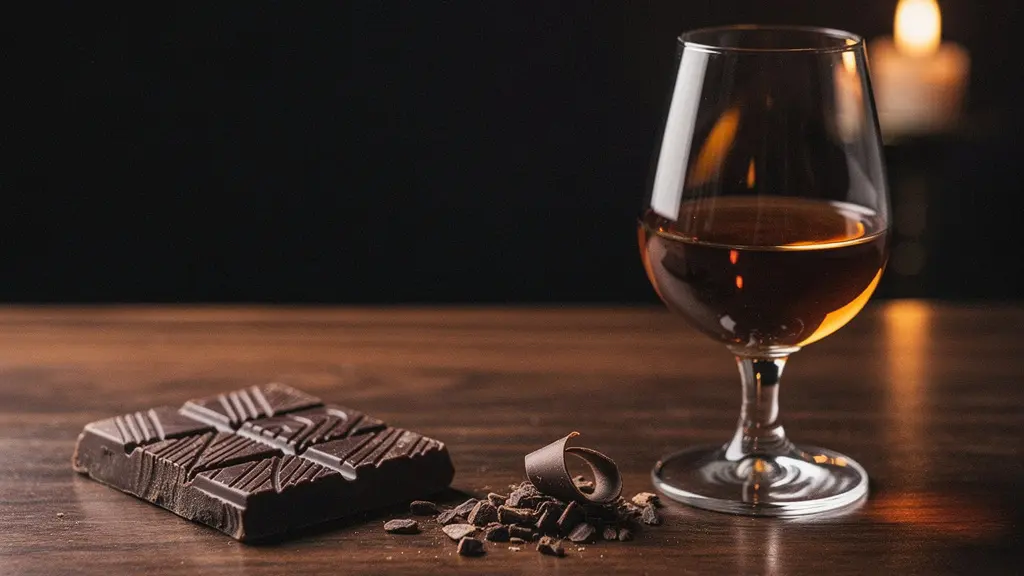
Contrary to popular belief, successful pairing relies not on matching sweetness levels but on molecular interference patterns that modulate trigeminal nerve activation.
- 70% cocoa strikes the optimal balance between polyphenol astringency and sugar interference, creating a lipid membrane that buffers alcohol burn.
- Origin-specific terroirs create distinct aromatic bridges: Madagascar’s bright acidity amplifies fruity spirits while Ecuador’s floral depth complements sherried expressions.
- Sodium ions and specific cocoa percentages can be strategically employed to suppress bitterness and match spirit maturation levels.
Recommendation: Master the three-step melting protocol—allowing Form V cocoa butter crystals to create a palate coating before introducing the spirit—to unlock the full architecture of flavor.
The disappointment is familiar: you take a sip of fine aged rum after a bite of chocolate, expecting transcendence, but instead encounter a clash—a sour note, an alcoholic burn, or simply confusion on the palate. Most advice suggests simply choosing “good” dark chocolate or matching sweet with sweet, perhaps reaching for the nearest dessert wine or assuming that any bar above 60% will suffice. These platitudes ignore the physiological reality of tasting, where ethanol activates pain receptors, sugar creates perceptual dissonance rather than harmony, and temperature-sensitive crystal structures determine how flavor compounds reach your olfactory bulb.
But what if the secret lies not in the flavor profiles alone, but in the crystalline architecture of cocoa butter and the molecular interference of polyphenols with trigeminal nerve pathways? The conventional wisdom of “pair what tastes good” fails because it doesn’t account for the biochemistry of perception—how TRPA1 channels process alcohol’s burn, how Form V crystals melt at precisely 33.8°C to create selective lipid membranes, and how terroir-specific acidity can bridge or break a spirit’s aromatic potential depending on fermentation character.
This article dismantles the trial-and-error approach to dessert pairing. Through the lens of a chocolatier obsessed with cocoa percentages and origin specificity, we will explore the scientific architecture behind why 70% dark chocolate serves as the universal mediator for aged spirits. From the volcanic soils of Ecuador to the phenolic compounds of Islay whisky, we will construct a framework that transforms intuitive guesswork into deliberate, replicable technique—ensuring that your next after-dinner moment achieves the elegant symmetry you seek.
To navigate this landscape systematically, we will examine the physiological mechanisms of taste, master specific tasting techniques, explore origin-driven flavor architectures, and finally compare how these principles extend beyond chocolate into the broader realm of culinary pairing.
Table of Contents: The Architecture of Chocolate and Spirit Pairing
- Why Does the Bitterness of Cocoa Cancel Out the Burn of Alcohol?
- How to Melt the Chocolate on Your Tongue Before Sipping the Spirit?
- Madagascar or Ecuador: Which Cocoa Origin Pairs Best with Fruity Scotches?
- The Sugar Clash: Why Milk Chocolate Often Makes Dry Spirits Taste Sour?
- How to Choose the Right Cocoa % Based on the Age of the Rum?
- Bourbon or Rum: Which Vanilla Profile Pairs Best with Crème Brûlée?
- Why A Pinch of Salt Makes Dark Chocolate Pair Better with Smoky Whisky?
- Blue Cheese or Comté: Which Cheese Style Stands Up to Peated Whisky?
Why Does the Bitterness of Cocoa Cancel Out the Burn of Alcohol?
The burning sensation of alcohol isn’t mere taste—it’s trigeminal nerve activation. When ethanol contacts oral tissues, it metabolizes into acetaldehyde, a confirmed agonist of the TRPA1 channel, the body’s sentinel for chemical irritants. Simultaneously, ethanol lowers the activation threshold of heat receptors from 42°C to 35°C, explaining why spirits feel physically hot. This physiological response explains why high-proof spirits feel aggressive regardless of their actual flavor complexity.
Enter 70% dark chocolate. Its dense concentration of cocoa polyphenols interacts with these same nociceptive pathways. Rather than simply masking alcohol’s aggression, the theobromine and flavonoids engage in molecular interference, modulating the TRPA1 response according to a 2023 study published in the Journal of Biomedical Science. This isn’t sweetness covering burn; it’s biochemical cancellation.
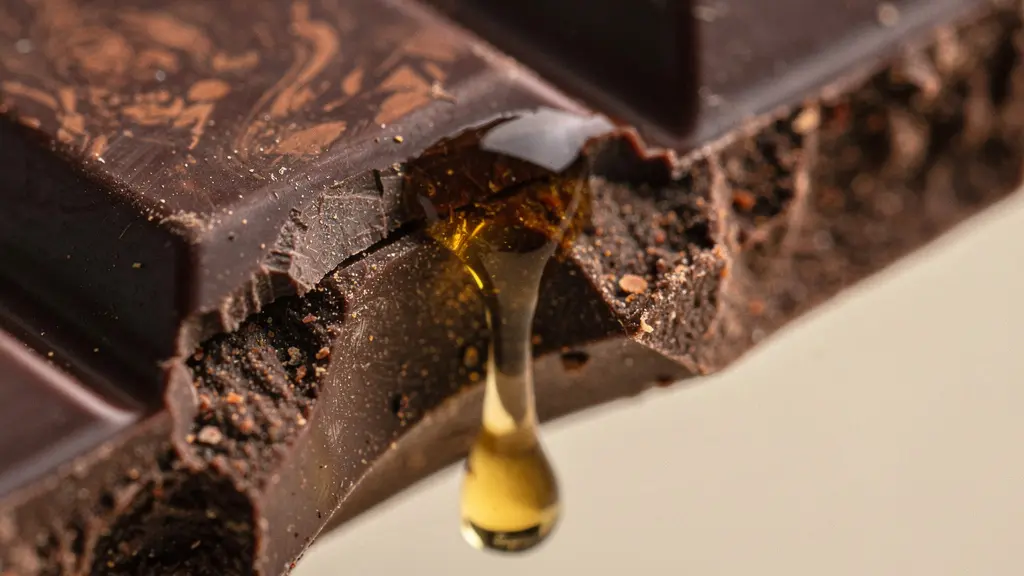
The 70% threshold proves critical. Below this, sugar content disrupts the mechanism by coating taste buds and altering retronasal perception. Above it, excessive astringency creates a different form of palate fatigue. At precisely 70%, we achieve equilibrium: sufficient polyphenols to neutralize the ethanol metabolites without introducing aggressive tannin clash. This crystalline architecture of cocoa butter further aids the process, creating a lipid membrane that physically buffers the spirit’s initial contact.
How to Melt the Chocolate on Your Tongue Before Sipping the Spirit?
The technique of tasting matters as much as the ingredients. Cocoa butter exists in six polymorphic crystal forms, but only Form V provides the snap and melt we associate with fine chocolate. Crucially, Form V crystals melt at precisely 33.8°C (92.8°F), just below human oral temperature of 37°C as documented in cocoa butter polymorphism research. This narrow thermal window creates a controlled release mechanism essential for proper pairing.
When you place chocolate on your tongue, lingual heat initiates the solid-to-liquid transition. The cocoa butter doesn’t merely melt; it undergoes a phase change that creates a lipid membrane coating the palate. This fatty layer serves as a selective filter, altering how volatile aromatic compounds reach the olfactory epithelium during retronasal olfaction, effectively tuning the frequency of flavor perception.
Your Tasting Protocol: The Three-Step Method
- Place a small piece of dark chocolate on your tongue and allow it to begin to melt for approximately 10-20 seconds without chewing, letting lingual heat initiate the Form V crystal transition.
- Once the chocolate has formed a smooth coating across the palate, creating a lipid membrane from the melted cocoa butter, take a small sip of the spirit neat at room temperature.
- Allow the spirit to mingle with the melted chocolate layer for several seconds, letting retronasal olfaction capture the combined aroma compounds before swallowing.
This sequence ensures the chocolate’s architecture modulates the spirit’s delivery, creating a flavor bridge rather than a collision. The result is a transformed sensation where the spirit’s aromatic complexity emerges without the distracting burn.
Madagascar or Ecuador: Which Cocoa Origin Pairs Best with Fruity Scotches?
Terroir expresses itself violently in cocoa. Madagascar’s Criollo and Trinitario varieties, grown in lateritic iron-rich soils, develop bright red fruit notes—raspberry, blood orange—with piercing citrus acidity. These characteristics create an aromatic bridge to fruity Highland and Speyside Scotches, where orchard fruit and citrus notes find harmonic resonance rather than competition.
| Characteristic | Madagascar Cocoa (Criollo/Trinitario) | Ecuador Cocoa (Nacional/Arriba) |
|---|---|---|
| Dominant Flavor Notes | Bright red fruit, raspberry, blood orange, citrus acidity | Floral, jasmine, earthy, woody, tannic |
| Soil Type | Lateritic (iron-rich, acidic) | Volcanic (magnesium-rich, mineral) |
| Best Scotch Pairing Style | Fruity Highland/Speyside (orchard fruit, citrus notes) | Sherried/Complex Scotch (dried fruit, spice, oak) |
Conversely, Ecuador’s Nacional (Arriba) varietal, thriving in volcanic magnesium-rich terrain, produces chocolate with jasmine florality, earthy woodiness, and structured tannins. This profile demands Sherried Scotches with dried fruit and spice, where the oxidative complexity of the whisky meets the chocolate’s assertive structure without being overshadowed by acidity as shown in recent pairing analyses. VinePair’s research confirms Madagascar’s efficacy with Calvados, where honeyed apple notes allow the chocolate’s fruit character to shine through.
The Sugar Clash: Why Milk Chocolate Often Makes Dry Spirits Taste Sour?
Milk chocolate presents a fundamental error in spirit pairing. The lactose and added sucrose—often comprising 50% of the bar’s mass—create a palate-coating film that distorts retronasal olfaction. When confronted with dry spirits, this sugar residue creates a perceptual dissonance: the spirit tastes suddenly sour or aggressively alcoholic as the sugar amplifies the contrast rather than bridging it.
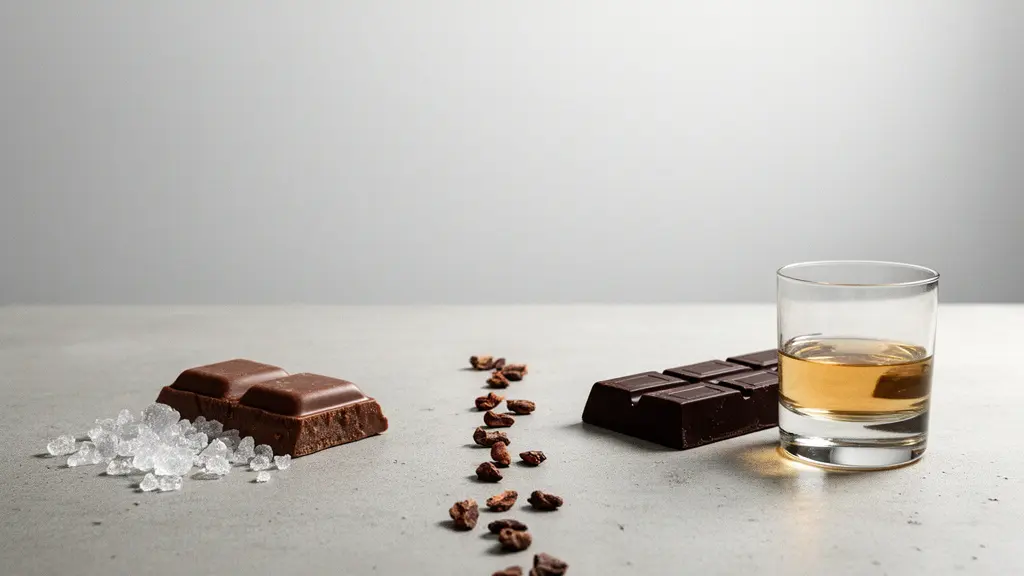
To’ak Chocolate’s food science research illuminates the mechanism: successful pairing requires that combined ingredients produce a sensorial experience superior to either alone. Sugar interference breaks this rule by introducing a third variable that competes rather than synergizes. The tannins in dry spirits clash with the dairy proteins and added fats in milk chocolate, creating metallic or sour off-notes that neither component possesses independently.
As chocolate expert Megan Giller observes regarding flavor complexity, excessive contrasting elements create confusion rather than harmony in complex tasting environments. The sugar rush blocks the subtle phenolic compounds and oak lactones that define aged spirits, reducing a nuanced whisky to mere alcoholic heat. This explains why milk chocolate often makes dry spirits taste sour—the sweetness highlights the spirit’s dryness through negative contrast, while physically blocking the aromatic compounds that would otherwise create balance.
How to Choose the Right Cocoa % Based on the Age of the Rum?
Rum maturation creates an evolving tannin profile that demands specific cocoa percentages. Young rums (2-5 years) retain aggressive hydrolyzable tannins and sharp ethanol heat. These require chocolate with 75-85% cocoa content, where high polyphenol density matches the spirit’s astringency without introducing competing sugar. The minimal residual sweetness prevents the cloying contrast that would otherwise emphasize the spirit’s raw edges.
| Rum Age Category | Flavor Profile | Recommended Cocoa % |
|---|---|---|
| Young (2-5 years) | Aggressive tannins, raw sugar, sharp ethanol | 75-85% |
| Medium-aged (5-12 years) | Developing vanillin, balanced oak, caramel | 68-75% |
| Well-aged (12-18 years) | Smooth oxidized phenolics, deep vanilla | 60-70% |
| Extra-aged (18+ years) | Highly oxidized, mellow, sherry-like | 55-65% |
As barrels age into the 5-12 year medium category, vanillin and Maillard products develop from toasted oak. Here, 68-75% cocoa creates optimal synergy—the pyrazine density in the chocolate complements the furfural compounds from the barrel, while balanced sweetness bridges the caramel notes. Well-aged rums (12-18 years) present smooth oxidized phenolics and deep vanilla. These require gentler treatment: 60-70% cocoa allows the spirit’s complexity to lead without competition as barrel-aged spirits echo natural vanilla richness.
Bourbon or Rum: Which Vanilla Profile Pairs Best with Crème Brûlée?
Vanilla manifests differently in bourbon versus rum, creating distinct pairing architectures with crème brûlée. Bourbon draws its vanillin from heavy-charred new American oak (char #3/#4), creating a complex portfolio including oak lactones and coumarin alongside the primary vanilla notes. This heavy char mirrors the advanced Maillard stage of the brûlée’s caramelized sugar crust, creating a three-way flavor bridge when dark chocolate enters the equation.
Expert Jake Ireland explains that similarities between bourbon and chocolate emerge from shared chemistry between oak barrels and roasted cocoa. The charred oak barrel imparts vanillin, oak lactones, and caramelized sugar compounds that mirror the Maillard reaction products found in both roasted cocoa and the caramelized sugar crust of crème brûlée. When the chocolate’s cocoa butter fat interacts with bourbon’s complex vanillin portfolio filtered through egg yolk phospholipid micelles, the result is enhanced perception of toasty bitterness and caramelized sweetness.
Aged rum derives vanilla primarily from ethyl vanillin derivatives in reused or lightly toasted casks. This creates higher vanillin concentration but a simpler aromatic profile that penetrates the dairy fat matrix more directly, complementing the custard base rather than the sugar crust. For optimal pairing, sip bourbon immediately after cracking the brûlée’s crust to capture the char-to-char resonance; sip rum with the custard body itself to emphasize the vanilla-cream synergy. The chocolate acts as the mediator—its cocoa butter coating the palate to allow simultaneous perception of spirit and dessert without either dominating.
Why A Pinch of Salt Makes Dark Chocolate Pair Better with Smoky Whisky?
Sodium ions fundamentally alter gustatory perception at the cellular level. When salt contacts the tongue, it selectively suppresses bitterness while enhancing the salience of desirable flavor compounds. This isn’t psychological preference but physiological interference with bitter taste transduction prior to brain processing, creating a clearer signal pathway for aromatic compounds.
A landmark study published in Nature by Breslin and Beauchamp (1997) demonstrates that sodium salts filter flavors asymmetrically: unpleasant tastes like bitterness are suppressed more than palatable ones like sweetness. A split-tongue experiment confirmed this mechanism—bitterness reduced significantly more when salt and bitter stimuli mixed than when applied separately, proving the effect occurs at peripheral taste receptors, not central processing.
The salt in the chocolate opens up the taste buds, bringing out the flavours of the cocoa and whisky, adding a whole new level to the drinking experience.
– Whisky Tasting Co. editorial team, Whisky and Chocolate: The Ultimate Pairing Guide
In salted dark chocolate paired with smoky whisky, the sodium suppresses theobromine bitterness while allowing smoky phenolic compounds from peat to reach perception unimpeded. The salt creates a clearer channel for the phenolic dialogue between spirit and cocoa. This explains why a mere pinch of salt transforms an aggressive peated whisky into a harmonious partner for dark chocolate—the sodium effectively clears the signal path, removing the bitter static that would otherwise compete with the smoke.
Key Takeaways
- 70% cocoa provides optimal polyphenol density to neutralize alcohol burn through TRPA1 channel modulation without excessive astringency.
- Form V cocoa butter crystals melting at 33.8°C create a lipid membrane that controls aromatic release during retronasal olfaction.
- Match Madagascar’s bright acidity with fruity spirits and Ecuador’s floral depth with sherried expressions.
- Avoid milk chocolate with dry spirits due to sugar interference and tannin clash.
- Adjust cocoa percentage inversely to rum age: younger spirits require higher percentages (75-85%), while extra-aged rums pair best with 55-65%.
Blue Cheese or Comté: Which Cheese Style Stands Up to Peated Whisky?
When peated whisky meets cheese, protein architecture determines survival. Blue cheese relies on Penicillium roqueforti lipolysis, releasing short-chain fatty acids (C4-C6) including butyric and caproic acids. These aggressive compounds form ester bonds with whisky phenols and cresols, creating entirely new flavor molecules through biochemical transformation rather than simple complementarity.
Comté, aged 24+ months, employs Propionibacterium freudenreichii producing propionic acid and nutty precursors. Its dense protein matrix with crystallized tyrosine provides textural contrast but offers different interaction mechanics. The nutty, sweet amino acid profile complements smoky notes rather than transforming them.
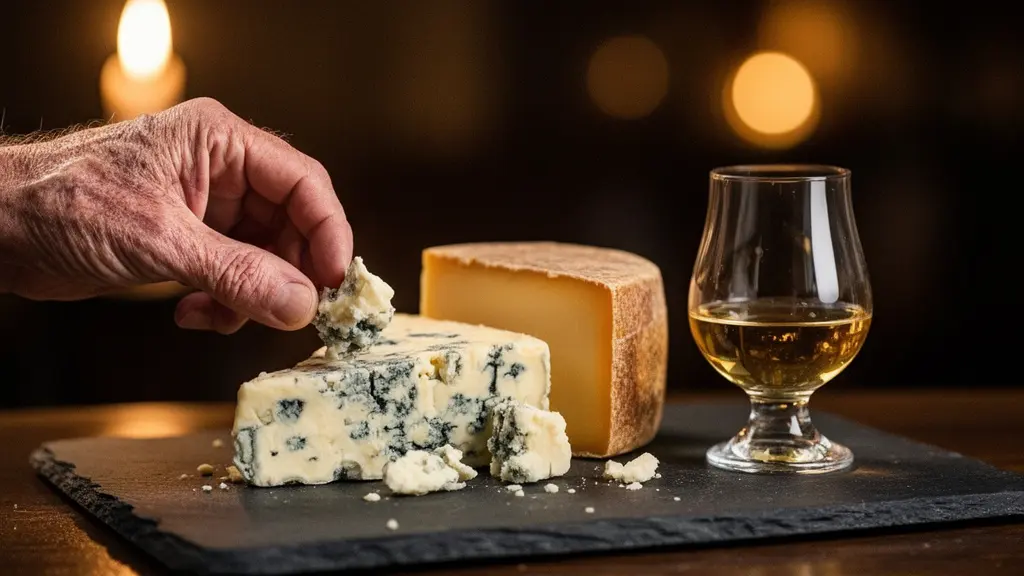
Blue cheese’s casein micelles absorb phenolic aggression through hydrophobic protein pockets, while its strong umami from proteolysis creates a savory bridge to peaty iodine notes. This high-intensity match suits heavily peated Islay whiskies (40+ ppm phenol). Comté’s moderate intensity suits lighter Highland or Island peated expressions (15-30 ppm). The choice depends on whether you seek transformation (blue cheese) or complementarity (Comté). Both work through the same principle that governs chocolate pairing: fat content buffers aggression while flavor compounds either clash, bridge, or synthesize new sensory experiences.
Understanding these protein-fat interactions extends your pairing expertise beyond the dessert course into the savory realm, completing your education in flavor architecture.
Begin your exploration tonight: select a 70% Madagascar chocolate and a medium-aged rum, apply the three-step melting protocol, and observe how the architecture of flavor transforms your perception of both ingredients.