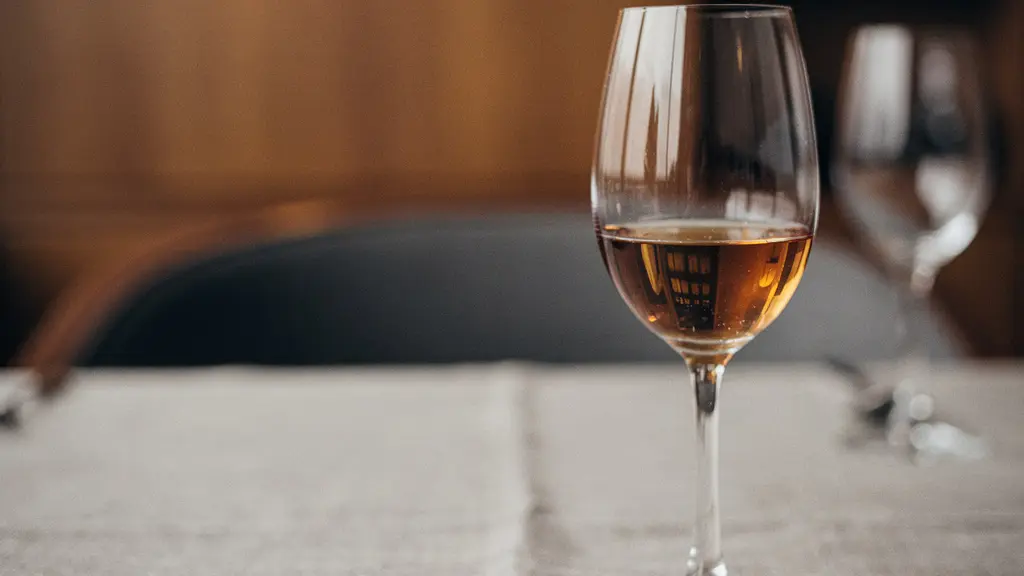
Contrary to popular belief, you don’t need a cabinet full of specialized glassware to properly appreciate fine spirits.
- A standard white wine glass’s tapered bowl is highly effective at concentrating delicate aromas while managing harsh ethanol vapors.
- The stem is not just for show; it’s a functional tool that prevents your hand from warming and altering the spirit’s temperature and flavor profile.
Recommendation: Before buying a dedicated spirits glass, try your favorite aged spirit in a quality white wine glass. You’ll likely find it reveals more complexity than a traditional tumbler.
You see it in a high-end cocktail bar or a forward-thinking restaurant: a sommelier, with quiet confidence, pours a measure of fine aged rum not into a hefty tumbler or a tiny, ornate snifter, but into a crisp, elegant white wine glass. For the minimalist who prizes function and resists collecting single-purpose items, this can be a confusing sight. It seems to break all the “rules” of spirits service, which often dictate that specific drinks demand specific vessels. The common wisdom is that whiskey belongs in a Glencairn or rocks glass, and brandy in a snifter.
This article pushes past that dogma. We will explore the practical, science-backed reasons why a simple stemmed wine glass, particularly one designed for aromatic white wines like Sauvignon Blanc, is a powerful and versatile tool for tasting any complex spirit. This isn’t about tradition; it’s about physics, sensory perception, and getting the most aromatic bang for your buck without cluttering your shelves. It’s an approach rooted in functional minimalism, proving that the best tool is often the one you already own.
We’ll delve into how glass shape dictates aroma delivery, why holding a stem is crucial for temperature control, and what those “legs” running down the side of the glass can actually tell you. By the end, you will understand not just how to use a wine glass for spirits, but why it’s a strategically sound choice for anyone who values performance over prescribed ritual.
For those who prefer a visual summary, the following documentary explores the deep culture and mastery behind fine spirits, setting the stage for why the tasting experience—and the vessel—matters so much.
To fully grasp the functional advantages of this approach, we will break down the science behind each element of the glass, from the bowl’s curve to the rim’s thickness. The following sections provide a complete guide to turning your existing wine stemware into an expert tasting tool.
Summary: The Sommelier’s Guide to Using Wine Glasses for Spirits
- Why Does a Sauvignon Blanc Glass Concentrate Aromas Better Than a Tumbler?
- How to Swirl Spirits in a Stemmed Glass Without Spilling?
- Standard ISO or Riesling Glass: Which Gives a Better Bouquet?
- The Stemless Error: Why Holding the Bowl Warms the Spirit Too Fast?
- How Much to Pour in a Wine Glass to Allow Proper Headspace for Aromas?
- Tulip Glass or Tumbler: Which Shape Dissipates Ethanol Vapors Best?
- How Thin Should the Rim Be to Direct Liquid to the Right Part of the Tongue?
- What Can “Legs” and Viscosity Tell You About a Spirit Before You Taste?
Why Does a Sauvignon Blanc Glass Concentrate Aromas Better Than a Tumbler?
The primary job of a tasting glass is to deliver aroma to your nose effectively. A spirit’s bouquet is a complex mix of volatile compounds, but the most dominant one is ethanol. The key to a good tasting experience is managing this ethanol “burn” while promoting the more subtle, desirable aromas. This is where the shape of a Sauvignon Blanc glass proves its worth. Its wide base and tapered bowl act like an aromatic funnel, achieving two critical goals simultaneously.
First, the wide bowl provides a large surface area, encouraging the spirit to volatilize and release its full spectrum of aroma compounds into the air trapped above the liquid (the “headspace”). Second, the inward-curving walls guide these collected aromas upward, focusing them toward the narrow opening. A straight-sided tumbler, by contrast, lets these same aromas escape in all directions, diluting the experience. The concentration effect in a wine glass is not just perception; it’s physics. It presents a more intense and coherent bouquet to your nose.
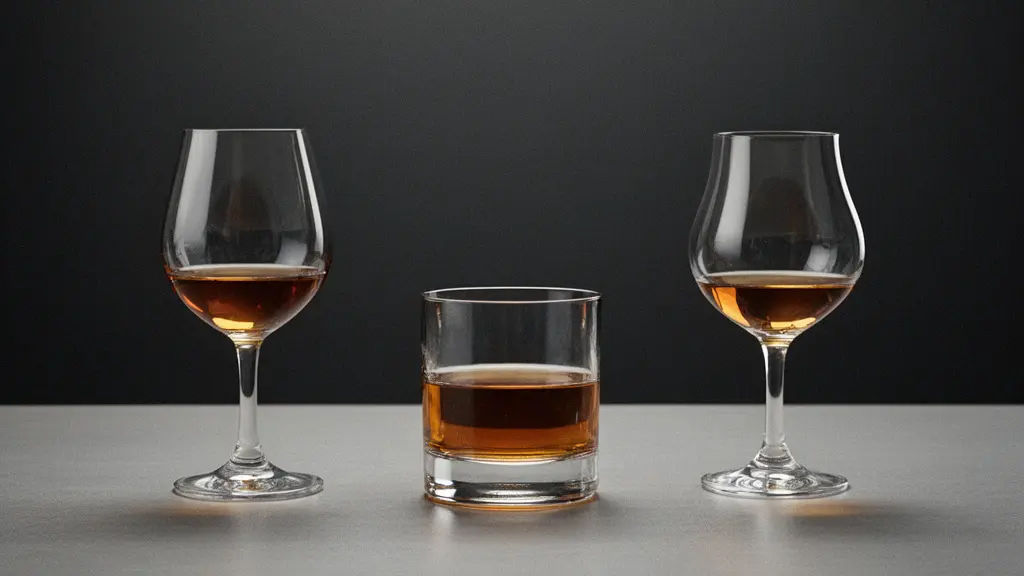
Furthermore, this shape helps manage ethanol. Because pure ethanol is a potent aromatic that can numb your senses, controlling its delivery is crucial. A 2024 sensory study on distilled spirits highlights this, noting that as ethanol’s odor detection threshold is as low as 80 ppm, it can easily dominate the headspace and suppress the detection of other desirable scents. The tapered shape of a wine glass helps to stratify the vapors, allowing the heavier, more complex aromatic molecules to gather below the lighter, more aggressive ethanol vapors that tend to rise and dissipate more quickly at the rim. This gives your nose a fighting chance to perceive the nuances of oak, fruit, and spice before being overwhelmed by alcohol.
How to Swirl Spirits in a Stemmed Glass Without Spilling?
Swirling isn’t just an affectation; it’s a functional technique to aerate a spirit, increasing its surface area and encouraging the release of aromatic compounds. However, the wide bowl of a wine glass can feel perilous compared to a narrow spirits glass. The secret to a confident, spill-free swirl is to use a lower center of gravity and controlled motion. Rather than holding the glass aloft and flicking your wrist, the most stable method is the tabletop swirl.
Place the base of the stemmed glass flat on a table or counter. Pinch the stem near the base with your thumb and forefinger. By keeping the base in contact with the surface, you create a stable pivot point. Now, gently draw small, consistent circles on the tabletop with the base of the glass. This motion creates a controlled vortex inside the bowl, coating the walls with a thin film of liquid without generating a large, unstable wave that could splash over the rim. This technique leverages the glass’s design, allowing for maximum aeration with minimal risk.
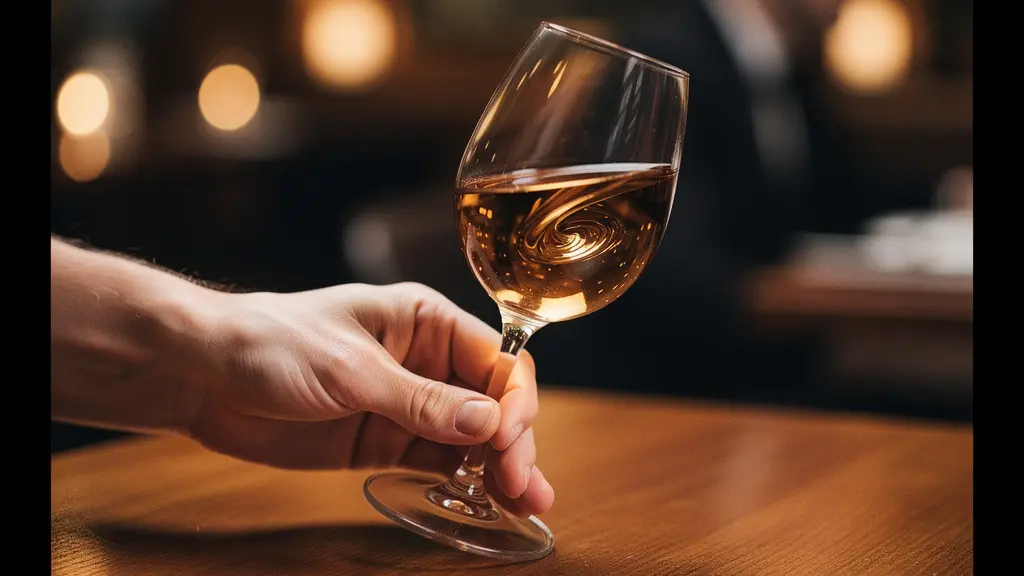
The science behind this relates to fluid dynamics. As a 2023 study on swirling waves explains, aggressive, fast motion can push the liquid into an “unstable regime,” creating a high wave that easily climbs the glass wall. A slow, gentle, and steady motion, however, keeps the liquid in a stable swirling state. A few seconds of this controlled aeration is all that’s needed to significantly open up the spirit’s bouquet. After swirling, let the liquid settle for a moment before nosing. This allows the aromas to collect in the headspace and the ethanol to stratify, providing a clearer and more expressive aromatic profile.
Standard ISO or Riesling Glass: Which Gives a Better Bouquet?
Once you accept the utility of a stemmed glass, the next question is which style works best. The standard ISO (International Organization for Standardization) tasting glass is a classic for a reason: it’s a versatile, no-frills workhorse designed for the technical evaluation of any alcoholic beverage. With its rounded bowl and tapered opening, it functions as a neutral canvas. However, many sommeliers find that a glass designed for an aromatic white wine like Riesling or Sauvignon Blanc often provides a more expressive and enjoyable experience for spirits.
The choice comes down to a trade-off between standardization and expression. The ISO glass is designed for consistency. Its uniform shape ensures that critics and judges are evaluating a beverage under identical conditions. This is supported by a restaurant strategy profiled by Wine Enthusiast, where ISO glasses are chosen for operational consistency across wine, sake, and cider. They are practical and reliable. However, their smaller size can sometimes feel restrictive, muting the full potential of a highly complex spirit.
A Riesling glass, with its taller bowl and slightly flared rim, or a Sauvignon Blanc glass with its more pronounced taper, offers more room for aromatic development. The taller bowl allows for greater stratification of aromas, while the shape can accentuate different facets of a spirit’s profile. As master mixologist Tony Abou-Ganim notes when discussing the creation of a universal spirits glass, every detail matters:
“When David, Julio and I designed this glass we considered each aspect that affects how a spirit presents itself from bowl opening to diameter and height.”
– Tony Abou-Ganim, TAG Global Spirits Awards (Ultimate Universal Spirits Glass)
For the minimalist, the takeaway is that your existing aromatic white wine glass is likely to be a fantastic “expressive” option, while an ISO glass would be the “technical” choice. There is no single “best” answer, only the one that best suits your goal for the tasting.
The Stemless Error: Why Holding the Bowl Warms the Spirit Too Fast?
Stemless wine glasses are popular for their stability and casual feel, but for tasting fine spirits, they introduce a significant variable: heat. The stem on a traditional wine glass is not an aesthetic flourish; it is a functional handle. Its primary purpose is to create separation between your hand and the bowl, preventing the heat from your body from altering the temperature of the liquid inside.
When you cup the bowl of a stemless glass, you are actively transferring heat (at approximately 98.6°F or 37°C) to the spirit. This might be desirable for a robust red wine that needs to open up, but for a spirit, it can be detrimental. Warming a spirit like rum or whiskey accelerates the evaporation of ethanol. This creates a more aggressive alcohol “burn” on the nose, masking the delicate aromas you want to appreciate. It can also alter the spirit’s carefully crafted flavor profile and mouthfeel, making it seem “hotter” and less balanced on the palate.
The impact of such temperature changes is not trivial. A 2024 thermodynamics study on beverage warming highlights that small heat transfer effects add up quickly; validated models show that ignoring factors like hand warmth and room convection means predictions are off by as much as 66.3% (3.3°C). Holding the bowl is a fast track to this temperature shift. By holding the glass by its stem, you preserve the spirit at its intended serving temperature, ensuring that your sensory evaluation is of the spirit itself, not of a spirit altered by unwanted warmth. This also keeps the bowl free of fingerprints, allowing for a clear assessment of the spirit’s color and viscosity.
How Much to Pour in a Wine Glass to Allow Proper Headspace for Aromas?
The volume of a wine glass can be deceiving. While a typical glass can hold 12 ounces or more, the correct pour for a tasting is significantly smaller—usually no more than 1 to 1.5 ounces (30-45 ml). The goal is not to fill the glass, but to optimize the ratio of liquid surface area to empty air, known as headspace. This empty space is where the magic of volatilization happens, as aromatic compounds evaporate from the liquid and collect for you to nose.
A simple and effective guideline is the “widest point” rule. Look at the bowl of your wine glass and identify its widest diameter. Your pour should never go above this point. For most wine glasses, this means filling it to about one-third of its capacity at most. This practice achieves two things: it maximizes the surface area of the liquid exposed to air, which promotes the release of aromas, and it leaves a generous volume of headspace for those aromas to gather and concentrate.
Overfilling the glass is a common mistake that severely compromises the tasting experience. A high pour level reduces surface area and leaves little to no room for aromas to collect. It also makes swirling nearly impossible without spilling. By keeping the pour low, you create the ideal conditions for aromatic expression and practical handling. As the experts at Glencairn Glass suggest, time and air are your allies:
“If you can resist temptation and leave a little liquid in the glass for 20 minutes or so, return to nose and taste to explore how the flavour has developed.”
– Glencairn Glass (site editorial team), Whisky Glass (How it Works, The Glencairn Glass)
This development is only possible with sufficient headspace.
Your 5-Step Headspace Audit: The ‘Widest Point’ Pouring Rule
- Identify the Apex: Locate the widest point of the glass bowl—this is your maximum fill line for any tasting.
- Control the Volume: Pour only up to that widest point. For a standard wine glass, this is typically a 1 to 1.5-ounce (30-45 ml) pour.
- Activate the Surface: Swirl gently for 5–10 seconds. This coats the inner walls of the glass, increasing the evaporative surface and releasing aromatics into the headspace.
- Let It Settle: Pause for a moment after swirling. This allows the liquid to settle and the aroma compounds to stratify in the air above, making them easier to assess.
- Maintain the Ratio: For a longer tasting session, use small pours and only refresh the glass when you are ready to re-nose and re-evaluate from the start.
Tulip Glass or Tumbler: Which Shape Dissipates Ethanol Vapors Best?
The battle between glass shapes ultimately comes down to ethanol management. A high-proof spirit is packed with flavor, but it’s also packed with alcohol, which can cause “nose-numbing” or olfactory fatigue. The shape of the glass directly influences whether you get a face full of harsh alcohol vapor or a curated bouquet of complex aromas. A tumbler and a tulip-shaped glass (like a Glencairn or a classic sherry copita) represent the two extremes of this principle.
A tumbler, with its wide, open mouth, does a poor job of managing ethanol. It allows vapors to rise in a dense, undifferentiated column straight to your nose. This results in the classic “alcohol bomb” effect, where the ethanol burn overwhelms everything else. In contrast, the tulip shape—which shares its core DNA with a good white wine glass—is explicitly designed to separate the aromas. The wide bowl allows for volatilization, while the tall, narrow chimney forces the vapors to travel. As they rise, the lighter, more volatile ethanol tends to dissipate out of the top, while the heavier, oilier, and more interesting aroma compounds linger lower in the glass.
Case Study: The Savu Glass and Intentional Ethanol Management
A compelling modern example is the patented Savu whisky glass, first announced in 2024. Its unique hourglass-like geometry includes internal ledges specifically designed to disrupt the flow of ethanol vapor. The goal, according to its creators, is to reduce the “numbing effect” on the nose, allowing the drinker to access the whisky’s more subtle aromas more easily. This demonstrates that ethanol management is no longer an afterthought but a primary driver of modern glassware design, validating the principles that make tulip and wine glasses functionally superior to open tumblers.
Scientific research backs this up. A 2024 paper in the journal *Beverages* confirmed that higher ethanol in the vapor matrix is linked to suppressed detection of other aroma compounds. By choosing a glass with a tapered bowl, you are essentially using a passive filtration system. You don’t need a high-tech patented glass; a standard Sauvignon Blanc glass performs the same fundamental task, separating the aromatic wheat from the alcoholic chaff and delivering a cleaner, more detailed nosing experience.
How Thin Should the Rim Be to Direct Liquid to the Right Part of the Tongue?
There is a persistent myth in the beverage world, often accompanied by a colorful “tongue map,” suggesting that different parts of the tongue are responsible for detecting specific tastes (sweet at the tip, bitter at the back, etc.). This has led to claims that a glass’s rim can “direct” liquid to the “correct” zone. Modern sensory science has thoroughly debunked the tongue map; all taste buds, distributed across the tongue, can detect all five basic tastes: sweet, sour, salty, bitter, and umami.
So, if the rim isn’t a precision-guided missile for flavor, does its thickness matter? Absolutely, but for different reasons: tactile sensation and liquid flow. The rim is the first point of contact between you and the glass. A thin, fine-cut rim provides a more delicate and precise tactile experience. It feels less obtrusive, allowing you to focus on the texture and temperature of the spirit itself rather than the clunkiness of the vessel. As noted by editors of the MICHELIN Guide when discussing high-end stemware:
“The lead-free crystal glasses are laser cut around the rim for an ultra-thin drinking experience.”
– MICHELIN Guide editors, MICHELIN Guide (“Michelin-worthy wine glasses to sip like a Star”)
A thin rim also facilitates a smoother, more controlled flow of liquid onto the palate. It creates a fine, even stream rather than a wide, gushing flow from a thick, rolled rim. This allows you to take smaller, more deliberate sips, giving you greater control over how the spirit coats your tongue. This controlled delivery enhances your ability to perceive the spirit’s texture, or mouthfeel—whether it’s light and crisp or rich and viscous. In short, forget the tongue map. Focus on the physical experience: a thin rim delivers the spirit cleanly and precisely, elevating the tasting from a simple drink to a refined sensory evaluation.
Key takeaways
- Function over form: A glass’s performance is determined by its ability to manage aromas and temperature, not by tradition.
- The Taper is Key: A bowl that is wider at the bottom than the top is essential for concentrating aromas and separating them from harsh ethanol vapors.
- The Stem is a Handle: Holding the stem prevents body heat from warming the spirit, which preserves its intended flavor profile and aromatic balance.
What Can “Legs” and Viscosity Tell You About a Spirit Before You Taste?
After you swirl a spirit in your glass, you’ll notice rivulets of liquid, known as “legs” or “tears,” forming on the inner walls and slowly dripping back down. For decades, a lot of mythology has surrounded these legs, with many claiming they are direct indicators of a spirit’s quality, age, or sweetness. The truth is more nuanced and rooted in a fascinating scientific phenomenon known as the Marangoni effect. While legs don’t definitively signal “quality,” they do provide legitimate clues about a spirit’s alcohol content and texture.
The Marangoni effect occurs because alcohol and water have different surface tensions and evaporation rates. When you swirl the spirit, a thin film coats the glass. The alcohol in this film evaporates faster than the water, which increases the surface tension in the remaining liquid higher up the glass. This difference in surface tension pulls more liquid up the walls, forming an arch from which the legs or tears eventually fall as gravity wins out. This entire process is driven by the evaporation of what an RSC Education explainer estimates to be on the order of 10^20 alcohol molecules in a typical demonstration.
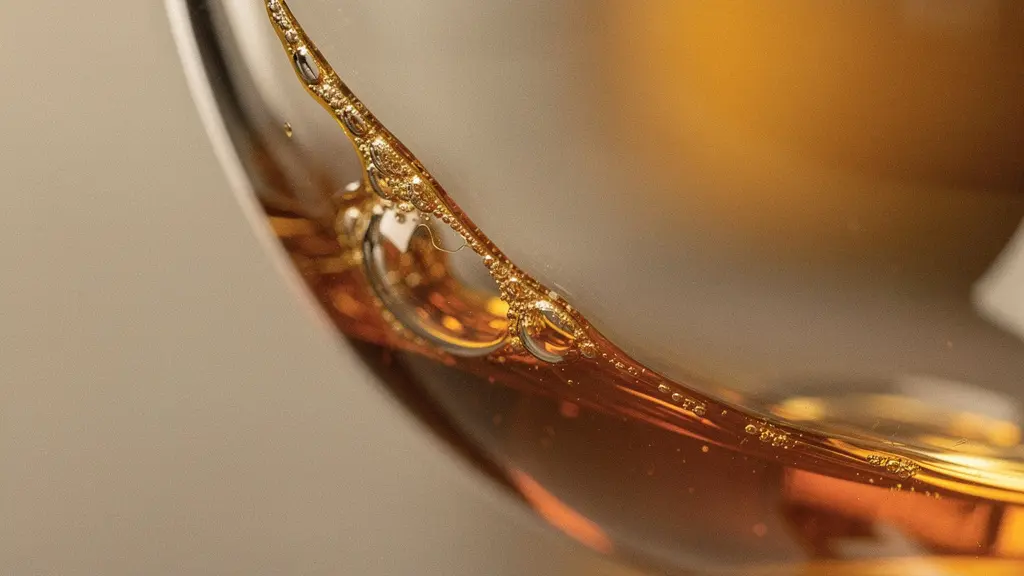
So, what can this tell you? A spirit with a higher alcohol content will generally exhibit more pronounced and slower-moving legs due to a more dramatic Marangoni effect. Additionally, the thickness of the legs can hint at the spirit’s viscosity, or mouthfeel. Thicker, slower-moving legs often suggest a richer, oilier texture on the palate, which might come from certain congeners, residual sugars, or the use of filtration (or lack thereof). Conversely, thinner, faster legs might suggest a lighter-bodied spirit. It’s important not to over-interpret; legs are not a foolproof measure of quality. Instead, treat them as a visual preview of the spirit’s potential body and texture before you even take a sip.
By understanding these functional principles, you can confidently select a simple white wine glass from your cabinet and know you are using a tool that is not just adequate, but in many ways, expertly suited for the job. The next step is to put this knowledge into practice and rediscover the spirits you thought you knew.
Frequently Asked Questions About Using Wine Glasses for Spirits
Is the classic ‘tongue map’ (sweet at the tip, bitter at the back) real?
No—modern explanations emphasize that taste buds across the tongue can detect the basic tastes; the simplified zone diagram is a persistent myth.
If the tongue map is wrong, can glass design still affect taste experience?
Yes—glassware can still shape experience by changing aroma delivery and by changing tactile cues (how the rim feels on the lips and how the liquid stream starts and flows).
What should readers focus on instead of ‘hitting the right tongue zone’?
Focus on liquid flow, aroma (orthonasal + retronasal), and haptics: rim feel, temperature, and how smoothly the sip begins and ends.