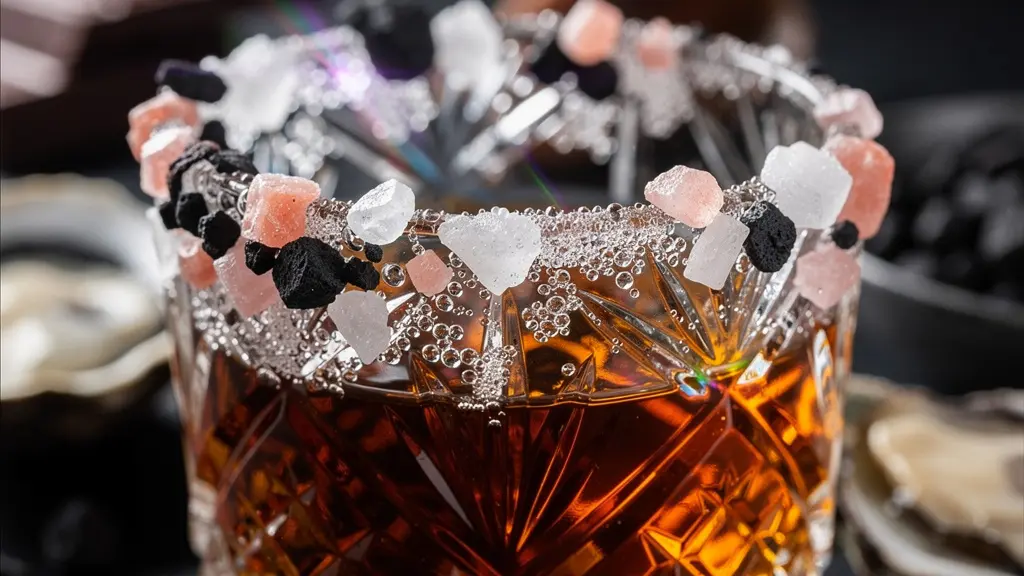
The secret to mastering saline spirits isn’t just pairing; it’s architecting flavor by actively manipulating sensory perception.
- Salinity doesn’t just add taste; it suppresses bitterness, enhances sweetness, and physiologically “primes” the palate for a meal by triggering salivation.
- Successful pairings depend on structural elements like fat content and precise techniques like “bridge ingredients” to resolve flavor clashes.
Recommendation: Stop thinking about matching flavors and start using saline and smoky spirits as active culinary tools to build a narrative across your dishes.
That tingling sensation on the sides of your tongue, the subtle, mouth-watering effect of a coastal gin or a briny Scotch—it’s more than just a flavor. It’s a physiological command. As a chef, I see saline notes in spirits not as a characteristic to be merely identified, but as a powerful tool in my arsenal. They are the ultimate palate primers, a way to awaken the senses and signal to the body that something delicious is imminent. This reaction, the triggering of hunger and salivation, is the first step in constructing a memorable dining experience.
Many guides focus on the obvious: pairing oysters with Islay whisky or rimming a Margarita glass with salt. These are valid starting points, but they only scratch the surface. They treat the spirit as a static partner to the food. The real artistry, however, lies in understanding the dynamic interplay of salt, smoke, fat, and acid. It’s about knowing how to use a peated whisky not just to accompany smoked salmon, but to cut through its richness, or how to use a pinch of salt to fundamentally change the relationship between a dark chocolate and a smoky spirit.
The true key is to move beyond pairing and into flavor architecting. We’re not just matching notes; we’re building structures. This involves a deeper understanding of how saline compounds interact with our taste receptors and how that interaction can be controlled. It’s about consciously manipulating the sensory experience, using spirits to suppress bitterness, amplify sweetness, and create bridges between seemingly disparate ingredients.
This guide will deconstruct that process. We will explore the science behind why salt makes things taste better, the strategy for sequencing salty and smoky elements in a meal, how to resolve flavor clashes with “bridge ingredients,” and why the very glass you use is part of your toolkit. Prepare to think like a chef and transform your approach to spirits.
This article provides a structured approach for the modern gastronome. Explore the sections below to master the art of using saline and smoky notes as active elements in your culinary creations.
Contents: The Art of Saline Spirits
- Why A Pinch of Salt Makes Dark Chocolate Pair Better with Smoky Whisky?
- How to Match Oysters with Salty Spirits Without Overpowering the Iodine?
- Salty or Smoky: Which Element Should Lead in a Dinner Pairing?
- The Flavor Clash: Why Salty Spirits Taste Bitter with Red Meat?
- How to Use a Fluted Glass to Concentrate Saline Aromas on the Nose?
- Why Do Casks Stored Closer to the Ocean Floor Have Higher Salinity?
- Oysters or Smoked Salmon: Which Seafood Benefits More from Islay Peat?
- How to Use “Bridge Ingredients” to Connect Spicy Rums with Savory Dishes?
Why a Pinch of Salt Makes Dark Chocolate Pair Better with Smoky Whisky?
The magic of pairing a smoky whisky with dark chocolate hinges on a simple, yet powerful, act of sensory manipulation. On its own, the combination can be challenging; the intense bitterness of a high-cacao chocolate can clash with the phenolic, sometimes medicinal, notes of a peated whisky, creating a harsh experience. Adding a pinch of sea salt, however, completely transforms the interaction. This isn’t just about adding another flavor; it’s about using salt as a chemical switch to rewire how we perceive the primary flavors.
The core mechanism is salt’s ability to suppress our perception of bitterness. Our taste receptors for bitterness can be partially blocked by sodium ions. A Harvard study found that salt selectively suppresses bitterness while increasing sweetness intensity by 20-30%. When salt is introduced to the chocolate, it dials down the astringent, bitter notes of the cacao. This allows the whisky’s inherent sweetness—notes of caramel, vanilla, or fruit—to come forward, no longer masked by the competing bitterness.
This principle is the foundation of flavor architecting. We are not just adding salt; we are using it to deconstruct the chocolate’s flavor profile and rebuild the pairing on a more harmonious foundation. The smoky elements of the whisky now have a smoother, sweeter canvas to play against, creating a resonant and complex experience rather than a combative one.
Case Study: The Glendronach and Salted Almond Chocolate
A classic example of this in action is the pairing of a sherry-cask aged whisky like The Glendronach 15 Year Revival with an intense dark chocolate containing sea salt and almonds. The nutty notes of the almonds resonate with the sherry influence in the whisky. The rich, biscuity malt character of the spirit finds a counterpart in the dark chocolate. But it’s the sea salt that acts as the catalyst, suppressing the chocolate’s bitterness and making all the other complementary flavors “pop,” creating a cohesive and elevated tasting experience.
How to Match Oysters with Salty Spirits Without Overpowering the Iodine?
The classic pairing of oysters and a peated, maritime Scotch is iconic, but it’s also a high-wire act. When it succeeds, the fusion of mineral-rich brine from the oyster and the smoky, saline character of the spirit is sublime. When it fails, the iodine notes in both can compound, creating a taste that is overwhelmingly medicinal and metallic. The chef’s approach to ensuring success lies in precision and understanding the specific characteristics of both the oyster and the spirit, rather than relying on a generic “salty-with-salty” rule.
The most critical variable is the salinity of the oyster itself. Oysters are filter feeders, and their flavor profile is a direct reflection of the water they inhabit. Oysters from a high-salinity bay will be intensely briny, while those from an estuary with more freshwater influence will be milder and sweeter. Forcing a high-iodine, heavily peated whisky onto a high-salinity oyster is a recipe for a flavor crash. The secret is to find a balance.
To achieve this, a gastronome must think about contrast as much as similarity. A milder, sweeter oyster can handle a more aggressive, peaty whisky because its natural sweetness provides a counterpoint to the smoke and iodine. Conversely, a very briny oyster often pairs better with a lighter, more citrus-forward coastal gin or a less-heavily peated Scotch. Tasting trials have even quantified this, showing that oysters with lower salinity (15-22 ppt) pair better with peated whiskies, as their inherent sweetness balances the spirit’s intensity.
The order of tasting is also crucial for managing the flavor impact. The goal is to experience the evolution of the pairing. A common professional protocol is as follows:
- First, cleanse the palate with water.
- Next, consume the oyster entirely to coat the palate with its liquor.
- Immediately follow with a sip of the whisky, allowing the spirit to interact with the lingering brine.
- Finally, after a moment, take another sip of the whisky alone to appreciate how its flavor profile has been altered by the oyster.
This sequential tasting method turns the pairing into a dynamic experience, revealing layers of flavor that a simple side-by-side tasting would miss.
Salty or Smoky: Which Element Should Lead in a Dinner Pairing?
When architecting a multi-course menu that incorporates spirits, the question of whether to lead with a “salty” or “smoky” profile is a crucial decision in narrative pacing. It’s not about which is better, but which is appropriate for the moment. Each profile serves a distinct culinary purpose. A salty-led spirit acts as an overture, while a smoky-led one often functions as a dramatic crescendo. Getting the order right ensures the guest’s palate is guided, not overwhelmed.
Salty spirits, like a coastal gin or a non-peated maritime whisky (e.g., Old Pulteney), are the perfect “palate primers.” Their saline character stimulates the salivary glands, physically preparing the palate for the meal to come. This makes them ideal for the apéritif stage or with light seafood appetizers. The clean, briny notes complement the delicate flavors of raw fish or shellfish without dominating them. A smoky spirit at this early stage would be a critical error, as its powerful phenolic compounds would numb the palate and bulldoze over any subtlety in the food.
As the meal progresses to more robust flavors, the roles can reverse. Smoky spirits, particularly peated Islay Scotches, have the weight and complexity to stand up to grilled meats, rich sauces, and intense char. Their smoky character can feel like an additional ingredient, weaving itself into the fabric of a hearty dish. Here, a lighter saline spirit would get lost. The final act, the cheese course, is more flexible. Both profiles can work: a saline spirit can cleanse the palate between bites of creamy, funky cheese, while a smoky one can complement the aged, nutty notes of a firm cheddar or Gouda.
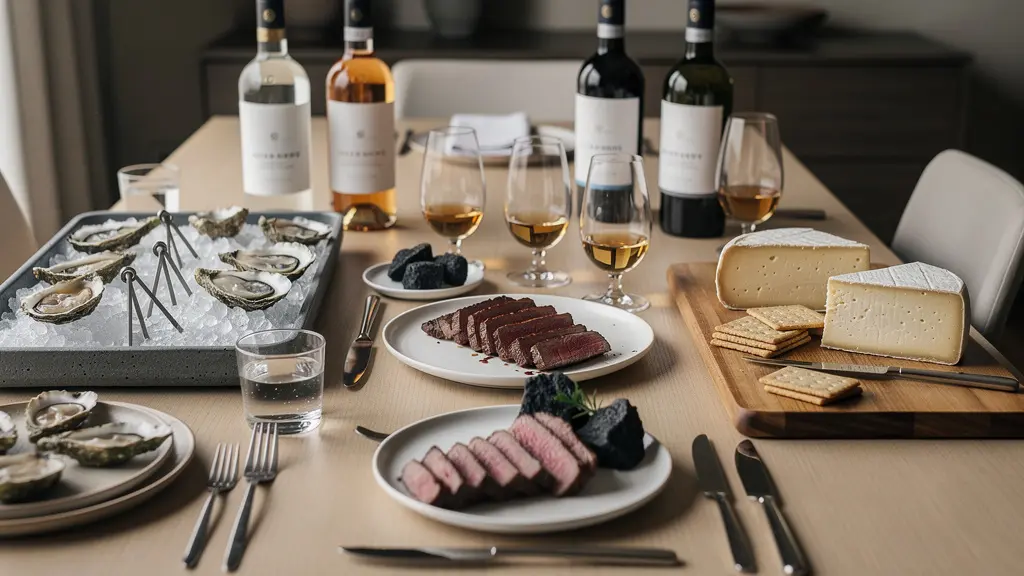
This progression from light and salty to rich and smoky is a classic narrative arc applied to flavor. The table below, based on extensive pairing analysis, provides a clear roadmap for a chef deciding which element should take the lead.
| Course | Salty Lead | Smoky Lead | Best Match |
|---|---|---|---|
| Apéritif | Triggers salivation & hunger | Too intense pre-meal | Salty spirits |
| Light Seafood | Complements brininess | Overpowers delicate flavors | Salty spirits |
| Grilled Meats | Gets lost in robust flavors | Stands up to char | Smoky spirits |
| Cheese Course | Cleanses palate | Complements aged varieties | Either works |
The Flavor Clash: Why Salty Spirits Taste Bitter with Red Meat?
A common pitfall for aspiring gastronomes is the attempt to pair a rich, fatty steak with a heavily peated or intensely saline Scotch. The intuitive logic seems sound—big flavors with big flavors—but the result is often a dissonant, metallic, and unpleasantly bitter taste. This isn’t a failure of palate, but a predictable chemical reaction. Understanding this clash is the first step; learning to build a “bridge” over it is the mark of a skilled chef.
The primary conflict arises from a specific molecular interaction. As a spirits brand educator noted in a recent article on advanced pairings, “The clash often comes from the interaction between the heme iron in red meat and the phenolic compounds, especially in peated spirits.” The high concentration of iron in beef reacts with the phenols (the source of smoky, medicinal flavors) in the whisky, creating organometallic compounds that our palate registers as harsh and bitter. The saltiness of a maritime spirit can further exacerbate this by heightening our sensitivity to these off-notes.
So, how do we solve this? The answer is not to abandon the pairing, but to introduce a “bridge ingredient.” A bridge ingredient is an element added to the dish that has an affinity for both the food and the spirit, harmonizing the connection. For the red meat and smoky spirit clash, the most effective bridges are rich in umami.
Case Study: The Umami Bridge Solution
Brother Justus Whiskey Company, known for its experimental food pairings, discovered a powerful solution. They found that adding umami-rich components to a steak dish creates a buffer between the meat’s iron and the whisky’s phenols. By incorporating elements like a mushroom-based sauce, a compound butter with miso, or even a dash of high-quality soy sauce in the glaze, the umami effectively “coats” the palate. This prevents the direct, aggressive reaction, allowing the savory notes of the meat and the complex character of the whisky to coexist and even complement each other, eliminating the metallic bitterness.
How to Use a Fluted Glass to Concentrate Saline Aromas on the Nose?
In the world of sensory evaluation, flavor is a synthesis of taste and aroma. For saline spirits, where the subtle, briny notes are as much about what you smell as what you taste, the choice of glassware is not a trivial detail—it’s a critical tool for controlling the experience. Using a standard tumbler or rocks glass for a complex maritime Scotch is like listening to an orchestra with earplugs. To truly appreciate the saline aromas, a chef or connoisseur must use a glass designed to capture and concentrate them: the fluted, tulip-shaped glass.
Glassware like the Glencairn or a copita features a wide bowl, a tapering mouth, and a stem. This design is a masterclass in fluid dynamics and aroma delivery. The wide bowl allows for gentle swirling, which increases the surface area of the spirit and encourages volatile compounds—including the delicate esters that we perceive as saline and maritime—to evaporate. The crucial element is the narrow rim. It captures these evaporated compounds, preventing them from dissipating into the air and instead funneling them directly towards the nose during nosing.
The effect is dramatic and measurable. Glassware studies demonstrate that tulip-shaped glasses concentrate heavy aromatic compounds up to 40% more effectively than open-rimmed tumblers. For a spirit like Talisker or a coastal gin, this means the difference between vaguely smelling “the sea” and discerning specific notes of seaweed, salt spray, and wet stone. A small amount of water can further “open up” the spirit, breaking the surface tension and releasing even more of these subtle aromatics for the glass to capture.
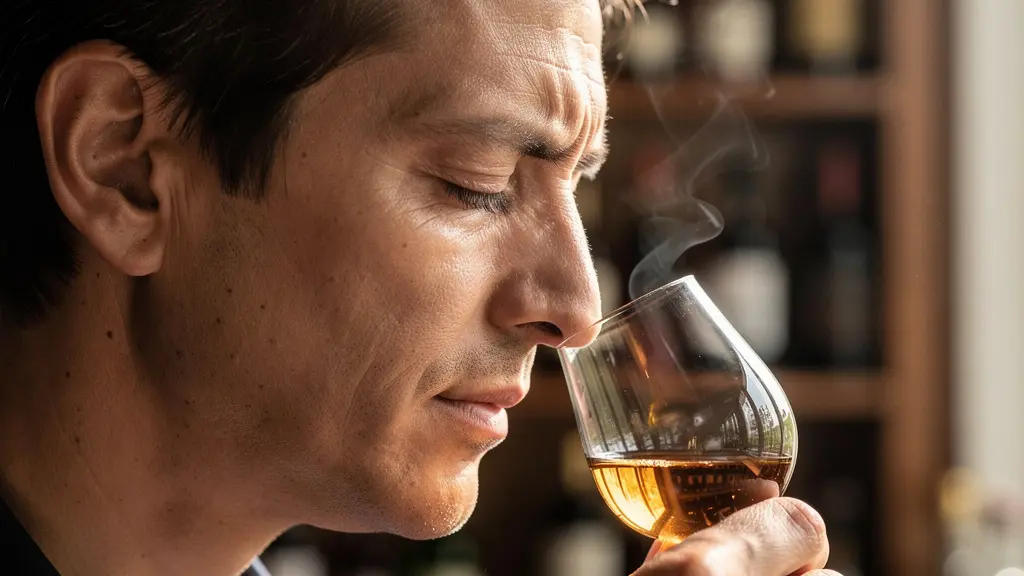
By choosing the right glass, you are taking active control over the aromatic presentation. You are ensuring that the spirit’s full, complex story—from its coastal maturation to its cask influence—is told before it even touches the lips. It’s the final piece of the puzzle in preparing the palate, ensuring every nuance is detected and appreciated.
Why Do Casks Stored Closer to the Ocean Floor Have Higher Salinity?
The romantic notion of a whisky tasting of the sea is not just marketing; it’s a direct result of terroir and the chemistry of maturation. Distilleries located on coastlines, especially those using traditional dunnage warehouses with earthen floors and stone walls, produce spirits with a distinct saline character. This flavor is imparted during the long years the spirit spends breathing inside its oak cask, and proximity to the ocean is the key ingredient.
Dunnage warehouses are not perfectly sealed environments. They are cool, damp, and porous, allowing the salty sea air to permeate the space. As the whisky ages in the cask, a process of slow, continuous interaction with the environment occurs. The oak barrels are not inert containers; they “breathe.” Due to temperature and pressure fluctuations, air from the warehouse is drawn into the cask, and alcohol vapors (the “angel’s share”) escape. This exchange is where the magic happens.
As Ewan Gunn, a global whisky master, explained in a feature for Fortune Magazine, “The humid, salt-laden air in dunnage warehouses influences the rate of micro-oxidation and interacts with compounds in the wood, creating flavors we perceive as saline or briny.” Casks stored on the lower levels of the warehouse, closer to the damp earthen floor, often experience a slightly different maturation environment than those stacked higher up, leading to subtle variations in the final product. The salt doesn’t directly pass through the wood into the liquid; rather, the salty, humid air creates a unique environment that influences the complex chemical reactions between the spirit, the wood, and the oxygen over time.
Case Study: The Talisker Distillery Terroir
The Talisker distillery on the Isle of Skye is a prime example of this maritime influence. Nestled on the shores of Loch Harport, its warehouses are constantly exposed to the rugged, seaweed-laden coastal air. The resulting single malts are world-renowned for their signature profile: a complex interplay of briny salt, black pepper, and an alluring sweet smokiness. This distinct character is not an additive; it is a direct imprint of its environment, absorbed and integrated throughout the years of maturation. It is the taste of a place, captured in a bottle.
Oysters or Smoked Salmon: Which Seafood Benefits More from Islay Peat?
Pairing seafood with the aggressive peat of an Islay Scotch is a nuanced challenge. While both oysters and smoked salmon are classic partners, the intense, often medicinal or tarry smoke of a Laphroaig or Ardbeg interacts very differently with each. The key to a successful pairing lies in understanding the structural composition of the seafood, particularly its fat content. Fat is not just a flavor; it’s a vehicle that can either tame or amplify the whisky’s powerful phenols.
A raw oyster is lean and defined by its mineral, briny liquor. When paired with a heavily peated Islay Scotch, there is little to buffer the interaction. The result is often a direct clash: the oyster’s clean iodine notes collide with the whisky’s medicinal peat, creating a confrontational, sometimes overwhelming, experience. While some connoisseurs enjoy this high-contrast dynamic, it can easily become unbalanced. It’s a pairing of two powerful, unmediated forces.
Smoked salmon, on the other hand, is rich in natural oils. This high fat content completely changes the dynamic of the pairing. When you take a sip of a smoky whisky after a bite of salmon, the fat coats the tongue and acts as a solvent for the whisky’s phenolic compounds. Instead of a sharp, immediate hit of peat, the smoke is spread more slowly and evenly across the palate. The fat tames the aggressive edges of the peat, allowing the more subtle, sweeter notes of the whisky to emerge. It creates an integrated, harmonious fusion where the smoke becomes a complementary layer rather than a dominant force.
This principle extends to other types of seafood as well. A seared scallop, with its medium fat content and caramelized surface, can bridge the gap beautifully with a more balanced Islay like Bowmore, where the sweetness from the searing echoes the whisky’s character. The following table, based on pairing experiments from professional tasting panels, breaks down this dynamic.
| Seafood Type | Fat Content | Islay Match | Flavor Dynamic |
|---|---|---|---|
| Raw Oyster | Lean | Laphroaig (medicinal) | Direct clash of brine & iodine |
| Smoked Salmon | High oil | Ardbeg (tarry smoke) | Fat spreads phenols across palate |
| Seared Scallop | Medium | Bowmore (balanced) | Caramelization bridges smoke |
Key Takeaways
- Salinity is a tool for sensory manipulation, primarily by suppressing bitterness to reveal underlying sweetness and complexity.
- The success of a pairing is determined by structural elements (like fat) and environmental factors (like oyster salinity), not just flavor matching.
- Flavor clashes (e.g., peat and iron) can be resolved by using umami-rich “bridge ingredients” to create a harmonious connection.
How to Use “Bridge Ingredients” to Connect Spicy Rums with Savory Dishes?
The concept of “bridge ingredients” is one of the most powerful in a chef’s pairing playbook, especially when working with complex spirits like spicy rums. These rums, with their bold notes of cinnamon, clove, vanilla, and chili, can easily overwhelm savory dishes. A bridge ingredient is an element added to the food that shares a connection with both the dish and the spirit, creating a seamless transition and preventing either side from dominating. It’s the ultimate tool for flavor architecting, turning a potential clash into a deliberate and delicious synergy.
There are several categories of bridge ingredients, each serving a different strategic purpose. You can use resonant bridges, which involve incorporating ingredients into the dish that echo the rum’s flavor profile—a dash of cinnamon in a pork rub, a hint of vanilla in a glaze, or orange zest in a sauce. Alternatively, contrasting bridges use acidity, like a squeeze of lime or a splash of vinegar, to cut through the richness of both the rum and a fatty dish, cleansing the palate and adding brightness.
Case Study: Spicy Rum and Miso-Glazed Pork Belly
An exemplary application of this principle is a Miso-Glazed Pork Belly paired with a spicy rum. Here, multiple bridges are at work. The umami from the miso provides a deep, savory foundation that can stand up to the rum’s intensity—a “completion bridge.” The fat from the pork belly coats the tongue, mitigating the alcohol’s burn and allowing the rum’s complex spice notes (clove, nutmeg) to fuse with the char from the pork. This combination of fat as a vehicle and umami as a bridge creates a perfect, integrated bite where food and spirit elevate each other.
Mastering this technique requires a systematic approach. The first step is to deconstruct the spirit’s profile, then strategically build your dish with elements designed to connect with it. This checklist provides a framework for experimenting with bridge ingredients in your own kitchen.
Your Action Plan: Architecting with Bridge Ingredients
- Resonant Bridges: Identify the core spice notes in your rum (e.g., cinnamon, vanilla, orange). Incorporate one of these directly into your dish’s rub, marinade, or sauce.
- Contrasting Bridges: If the dish and rum are both rich, add a sharp, acidic component to the plate (e.g., a lime wedge, a pickled element, a vinegar-based slaw) to cut through the weight.
- Completion Bridges: If the pairing feels like it’s missing savory depth, introduce an umami-rich ingredient like soy sauce, miso paste, or mushroom powder to the food.
- Fat as a Vehicle: For high-proof rums, ensure your dish has a sufficient fat component (e.g., avocado, duck fat, oily fish) to coat the palate and smooth out the alcohol burn.
- Garnish as a Final Bridge: Use the garnish as a final connector. A sprinkle of chili-lime salt, toasted coconut flakes, or a dollop of mango chutney can be the final touch that ties everything together.
To truly elevate your pairings, start experimenting with these principles. Deconstruct your favorite spirits, identify their core components, and begin building dishes around them not as accompaniments, but as integral parts of a unified flavor experience.