The use of virgin oak in Scotch is not a ploy to mimic Bourbon; it is a calculated move in high-precision flavor engineering.
- It delivers specific flavor compounds like coconut and vanilla exponentially faster than traditional ex-bourbon casks due to untapped wood chemistry.
- Success hinges on militant control over maturation time and fill strength to prevent the potent wood from erasing the distillery’s unique spirit DNA.
Recommendation: View virgin oak not as a fleeting trend, but as a distiller’s strategic choice to add specific, intense notes—much like a chef using a rare, powerful spice.
For generations, the identity of Scotch whisky has been inextricably linked to the patient, slow maturation in seasoned oak casks, primarily those that once held American bourbon or Spanish sherry. This reuse is the bedrock of tradition, a practice that imparts subtle complexity and respects the delicate character of the new make spirit. Yet, a disruptive force is gaining traction in the warehouses of Scotland: virgin oak. To the purist, this feels like a betrayal, a shortcut that risks making Scotch taste like its brasher American cousin, Bourbon. The fear is that the cask will shout, and the spirit will be silenced.
As an innovation manager, I see it differently. The conversation isn’t about tradition versus blasphemy. It’s about expanding the distiller’s toolkit. The common wisdom is that virgin oak offers a faster route to vanilla and caramel notes, but this barely scratches the surface. The real story is one of chemistry, risk management, and economic strategy. It’s about understanding the “extraction delta” between new and used wood and harnessing it with scientific precision. This is not a trend; it’s the deliberate application of “flavor engineering.”
The decision to use virgin oak is a high-stakes gamble. When successful, it can create a vibrant, dynamic whisky with layers of flavor impossible to achieve otherwise. When it fails, the result is a one-dimensional, over-oaked spirit where the cask has erased the distillery’s unique DNA. This guide will deconstruct the science, strategy, and risks behind this polarizing technique, moving beyond the simple “it tastes like Bourbon” critique to reveal the calculated methodology of the modern distiller.
To fully understand this complex interplay of wood, spirit, and time, we will explore the core scientific principles, the practical methods for managing risk, and the economic factors driving this evolution. This structured analysis will provide a complete picture of virgin oak’s role in today’s Scotch whisky landscape.
Summary: The Strategist’s Guide to Virgin Oak in Scotch
- Why Does Virgin Oak Impart Coconut Flavors Faster Than Ex-Bourbon Wood?
- Why Charring Oak Barrels Unlocks More Intense Vanilla Flavors?
- How to Stop Virgin Oak from Making the Spirit Too Bitter and Astringent?
- At What ABV Should You Fill Virgin Oak Casks for Optimal Extraction?
- The Over-Wooding Error: When Does the Cask Erase the Spirit’s DNA?
- New Wood or Re-Charred: Which Adds More Vanillin per Dollar?
- American Oak or European Oak: Which Wood Profile Suits Your Palate?
- The “Ash Tray” Flaw: How to Identify Spirits Aged in Burnt-Out Casks?
Why Does Virgin Oak Impart Coconut Flavors Faster Than Ex-Bourbon Wood?
The distinctive sweet, creamy, and coconut-like flavors found in many virgin oak-matured whiskies are not a matter of magic, but of chemistry. The primary drivers are compounds called whisky lactones, specifically cis- and trans-oak lactone. While present in most oak, they are particularly abundant in American oak (Quercus alba). The key difference lies in their availability. A virgin oak cask is a pristine, untapped reservoir of these compounds. In contrast, an ex-bourbon cask has already given up a significant portion of its lactones to its first occupant.
The science is clear on this “extraction delta.” As explained by Dr. Andy Forrester of The Scotch Malt Whisky Society, lactones are naturally occurring free compounds in oak. In a virgin cask, 100% of these are available for the spirit to extract. After a single use for maturing Bourbon, that number plummets. In fact, research reveals that only 15-30% of lactones remain in a typical ex-bourbon cask. This is why a short finishing period in virgin oak can impart a flavor intensity that would take many more years to develop, if at all, in a second or third-fill barrel.
Distilleries leverage this principle for targeted flavor engineering. Deanston, for example, finishes its Virgin Oak expression for just 9 to 12 months in new American Oak casks. This brief period is enough to achieve the desired powerful notes of coconut, candied fruit, and vanilla that define the whisky’s profile—a testament to the potent and rapid extraction capabilities of new wood.
Why Charring Oak Barrels Unlocks More Intense Vanilla Flavors?
While lactones contribute coconut and creamy notes, the quintessential vanilla flavor comes from a different source: the thermal degradation of lignin, a complex polymer that gives wood its rigidity. In its natural state, lignin is flavorless. To unlock its aromatic potential, the wood must be subjected to intense heat through toasting or, more aggressively, charring. This process acts as a chemical catalyst, breaking down the complex lignin structure into simpler, aromatic compounds, with vanillin being the most prominent.
The level of char is a critical variable. A light toast might gently coax out subtle spicy and sweet notes, but a heavy “alligator” char creates a deep, carbonized layer that serves multiple functions. Firstly, it filters out undesirable sulphur compounds from the new make spirit. Secondly, and more importantly for flavor, the intense heat caramelizes the wood sugars (hemicellulose) just beneath the char layer, creating notes of toffee and butterscotch. Most critically, this process maximizes the conversion of lignin into vanillin.
A virgin oak cask, having never been used, contains its full, original concentration of lignin. When it is charred for the first time, it offers the maximum possible yield of vanillin to the spirit. A re-charred cask, where an old barrel is scraped back and charred again, can expose a fresh layer of lignin, but the concentration will be lower than in a truly virgin cask. This direct link between heat, lignin, and vanillin is the cornerstone of flavor creation from the cask and explains why new, charred wood is such a powerful (and fast-acting) tool.
How to Stop Virgin Oak from Making the Spirit Too Bitter and Astringent?
The immense flavor-giving power of virgin oak comes with a significant risk: over-extraction. Alongside desirable lactones and vanillin, new wood is rich in tannins. While a small amount of tannin can add structure and a pleasant dryness, excessive extraction leads to an aggressive, bitter, and overly astringent spirit. This is the “over-wooding” that purists fear, where the wood’s harshness completely masks the delicate distillery character. Tannin management is therefore the most critical skill in using virgin oak.
The primary control lever is time. Unlike maturation in a tired, fourth-fill cask that might last for decades, maturation in virgin oak is a sprint. Distillers must monitor the casks with extreme vigilance, often sampling them monthly or even weekly. As seen with Deanston, their master blenders have determined through rigorous testing that a finishing period of 9-12 months is the sweet spot. This is long enough to extract the desired vanilla and coconut notes but short enough to prevent the tannins from becoming dominant.
Another key tool is the char level. The layer of char acts as a barrier, moderating the spirit’s interaction with the raw wood beneath. A heavier char can slow the extraction of the harsher, more aggressive tannins found deeper in the wood, while still allowing the caramelized sugars and vanillin from the toasted layer just beneath the char to infuse the spirit. It’s a delicate balancing act between accessing the good compounds and blocking the bad ones.
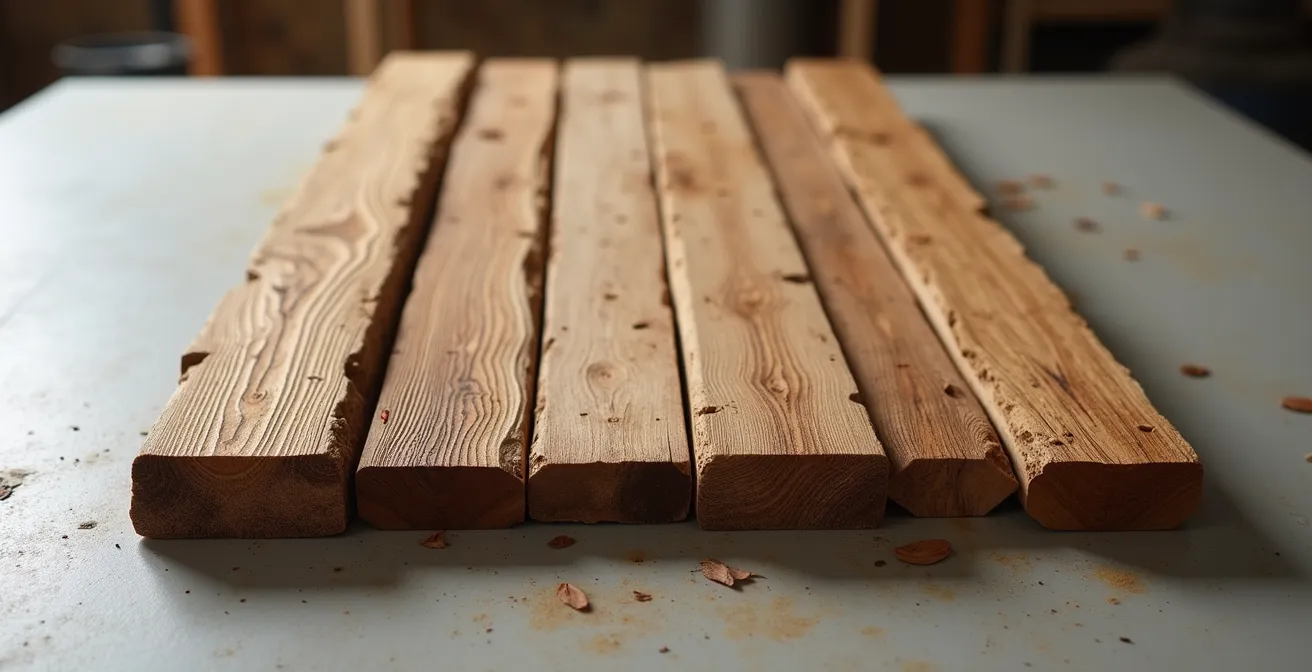
The visual difference between char levels, as shown here, translates directly into a different rate and profile of flavor and tannin extraction. Choosing the right char level for a virgin oak cask is a distiller’s first line of defense against bitterness, setting the stage for the carefully timed maturation to follow.
At What ABV Should You Fill Virgin Oak Casks for Optimal Extraction?
Beyond time and char level, distillers have another sophisticated lever for controlling virgin oak maturation: the cask filling strength. The alcohol by volume (ABV) of the new make spirit significantly influences which compounds are extracted from the wood. Alcohol and water are solvents, but they excel at dissolving different things. Higher-proof spirits are more effective at extracting wood oils, lactones, and vanillin, while lower-proof spirits tend to pull out more wood sugars and harsh tannins.
The standard industry practice is to fill casks at around 63.5% ABV. However, with the aggressive nature of virgin oak, some distilleries are experimenting with different strengths to fine-tune the extraction. Counter-intuitively, this can sometimes mean using a *lower* ABV. For instance, Deanston’s cask strength virgin oak releases show a filling strength of 58.5% ABV was used. This lower strength can strategically slow down the extraction of the most aggressive, alcohol-soluble tannins, allowing for a slightly longer maturation window to develop complexity without being overwhelmed by bitterness.
Conversely, for a very short, intense “flavor-bomb” finish, a distiller might choose a higher fill strength (e.g., 68% ABV) to maximize the uptake of vanillin and lactones in just a few months. The choice of ABV is a deliberate strategic decision, directly tied to the desired flavor profile and maturation timeline. It is a core component of modern flavor engineering, proving that working with virgin oak is a game of precision, not just brute force.
Action Plan: ABV Selection for Virgin Oak Finishing
- For a 6-month “flavor-bomb” finish: Consider filling at a higher strength, around 68% ABV, to maximize the rapid extraction of vanillin and esters.
- For a balanced 12-month finish: Use the industry standard of 63.5% ABV as a baseline for controlled, predictable extraction.
- For experimental long-term maturation: Explore a lower fill strength, between 58-60% ABV, to mitigate the risk of excessive tannin uptake over time.
- Monitor monthly regardless of ABV: Virgin oak is volatile; frequent sampling is non-negotiable to catch the whisky at its peak.
- Plan for post-maturation dilution: Filling at a higher strength provides greater flexibility to adjust the final bottling ABV with water later.
The Over-Wooding Error: When Does the Cask Erase the Spirit’s DNA?
The greatest fear of any Scotch enthusiast, and indeed any master distiller, is producing a whisky where the cask has completely dominated the spirit. This is the “over-wooding” error, where the delicate, complex flavors of the distillery’s new make—its unique fingerprint or “spirit DNA”—are buried under a monolithic wall of raw, woody notes. With its aggressive nature, virgin oak presents the highest risk of committing this error. The goal of maturation is a conversation between spirit and wood; over-wooding is when the wood delivers a monologue.
This danger is top-of-mind for even the most innovative distillers. As Adam Hannett, Head Distiller at Bruichladdich, bluntly states in Whisky Advocate, “The downside is that if we take our eyes off the casks for too long, we can end up with a whisky where the cask has dominated the spirit and it becomes overly oaked.” His point underscores that using virgin oak is an active, hands-on process, not a passive one.
The downside is that if we take our eyes off the casks for too long, we can end up with a whisky where the cask has dominated the spirit and it becomes overly oaked.
– Adam Hannett, Whisky Advocate
To mitigate this risk, distilleries employ careful blending strategies. It’s rare to see a Scotch whisky matured 100% in virgin oak. Instead, it is often used as a “finishing” cask for a short period, or as a component in a larger blend. The Bruichladdich Octomore 7.4 and 8.4 experiments are a perfect case study. In these releases, heavily peated spirit was matured in a mix of casks, with only 20% of the maturation occurring in virgin oak. The remaining 80% was aged in traditional ex-bourbon barrels. This approach allowed the distillers to borrow the rich vanilla and spice from the new wood without letting it extinguish the powerful, phenolic “spirit DNA” of Octomore.
New Wood or Re-Charred: Which Adds More Vanillin per Dollar?
From a purely technical standpoint, virgin oak is the undisputed champion of vanillin delivery. It offers a 100% complete, untapped source of lignin ready for conversion. However, from a strategic and economic perspective, the choice is more complex. Virgin oak is expensive. While a standard ex-bourbon cask might cost around £100, industry sources indicate virgin oak casks cost approximately £1000, a tenfold increase. This significant investment forces distilleries to weigh the cost against the benefit, leading them to consider alternatives like re-charring.
Re-charring, or “rejuvenation,” involves scraping the inside of a used, “tired” cask to expose a fresh layer of wood and then charring it again. This process is less expensive than buying a new cask and can breathe life back into the wood, unlocking a moderate amount of vanillin from the newly exposed lignin. The trade-off is a less intense and less predictable flavor profile compared to virgin oak.
The decision between virgin oak and re-charring comes down to a distillery’s economic and philosophical strategy. Is the goal a massive, immediate spike of vanilla for a bold, modern expression? Or is it a broader, more integrated profile of wood notes for a more traditional whisky? The following table breaks down the core differences in this strategic choice.
| Cask Type | Initial Cost | Vanillin Intensity | Maturation Time | Risk Level |
|---|---|---|---|---|
| Virgin Oak | High (£1000+) | Maximum (100% lignin available) | 6-12 months | High (over-oaking risk) |
| Re-charred | Medium | Moderate (exposed fresh lignin) | 12-24 months | Low-Medium |
| Ex-bourbon | Low (£100) | Low (depleted lignin) | 3-10+ years | Low |
As the data shows, virgin oak is a high-cost, high-impact, high-risk option. It delivers the most vanillin in the shortest time, but requires the most capital and the most careful management. Re-charring offers a balanced middle ground, providing a cost-effective way to enhance flavor without the extreme risks and costs of new wood. The choice reveals everything about a distillery’s priorities.
American Oak or European Oak: Which Wood Profile Suits Your Palate?
The conversation around virgin oak often defaults to American oak (Quercus alba), as it’s the standard for the Bourbon industry. However, “virgin oak” is a condition (new), not a species. Distillers can also use virgin European oak (Quercus robur), which offers a dramatically different flavor profile. The choice between these two species is another layer of strategic flavor engineering, catering to different palates and creative visions.
The primary chemical difference lies in their composition. As we’ve seen, American oak is high in lactones, which deliver the sweet, creamy notes of vanilla and coconut. It is less dense and has a more straightforward grain, allowing for easier extraction and creating a profile that is often described as accessible, sweet, and reminiscent of caramel. It’s the perfect choice for a distiller looking to create a rich, smooth, and crowd-pleasing whisky.
European oak, by contrast, is much higher in tannins. It has significantly lower levels of lactones, meaning it won’t produce those intense coconut notes. Instead, its chemical makeup lends itself to spicy, robust, and often drier flavors of clove, black pepper, and dried fruit. Because of its high tannin content, virgin European oak is even riskier to use than its American counterpart. It can quickly overwhelm a spirit with astringency and requires exceptionally careful monitoring. It is the choice for an adventurous distiller targeting a consumer who enjoys the spicy character of a rye whiskey or a well-structured, robust red wine.
| Oak Type | Primary Compounds | Flavor Profile | Risk Level | Best For |
|---|---|---|---|---|
| Virgin American (Quercus Alba) | High lactones, vanillin | Sweet vanilla, coconut, caramel | Medium | Bourbon lovers, accessible profiles |
| Virgin European (Quercus Robur) | High tannins, lower lactones | Spicy, clove, black pepper | High | Adventurous palates, rye fans |
Ultimately, neither wood is inherently “better”; they are simply different tools for different jobs. Your preference will depend on whether you gravitate towards sweet and creamy flavors or spicy and robust ones. This choice demonstrates the nuance available to distillers well beyond the simple “virgin vs. used” debate.
Key Takeaways
- Virgin oak’s power comes from untapped lactones and lignin, providing intense flavor far faster than used casks.
- The primary risk is over-extraction of tannins; this is managed through short maturation times, char level, and specific filling strengths (ABV).
- Using virgin oak is a strategic choice balancing high cost and high risk against the reward of a unique, engineered flavor profile, not an attempt to copy Bourbon.
The “Ash Tray” Flaw: How to Identify Spirits Aged in Burnt-Out Casks?
The rise of innovative techniques like virgin oak finishing doesn’t happen in a vacuum. It is, in part, a reaction to the other end of the spectrum: the use of exhausted, “burnt-out” casks. While tradition rightly values the subtlety of second, third, and fourth-fill casks, there is a point of diminishing returns where a cask stops contributing positive flavors and may even impart negative ones. This is the “dead wood” problem, and the resulting whisky often exhibits what’s known as the “ash tray” flaw.
A cask has a finite amount of flavor to give. After several decades and multiple fills, the wood’s reserves of vanillin, lactones, and beneficial sugars are depleted. According to cask management data, by the fourth fill, a cask can be over 40 years old with minimal positive flavor contribution left. The resulting spirit can taste flat, tired, and dusty. Notes of wet cardboard, stale wood, and a faint, ashy bitterness emerge—the “ash tray” flaw. The whisky’s color may be pale despite its age, and the finish is often short and dry, signaling a lack of cask activity.
This is the context in which virgin oak becomes so appealing. It represents the polar opposite of a tired cask. Where an old cask is subtractive or neutral, a virgin cask is powerfully additive. An exhausted cask offers no defense against flaws in the new make spirit, while a virgin cask can sometimes be used to mask them (a controversial practice). For a distiller, using a small component of vibrant, active virgin oak in a blend can be a way to lift and add dynamism to a batch that might otherwise feel flat due to the inclusion of older, less active wood. It’s a tool for reintroducing vibrancy and ensuring that maturation is always an active, flavor-enhancing process.
Ultimately, the move towards virgin oak is a calculated decision rooted in a deep understanding of wood science and market dynamics. It is not an abandonment of heritage but an expansion of the creative palate, allowing distillers to craft new experiences with precision and intent. For the discerning whisky drinker, the next step is to approach these expressions with an open mind, seeking to identify the specific characteristics the distiller engineered into the final product.