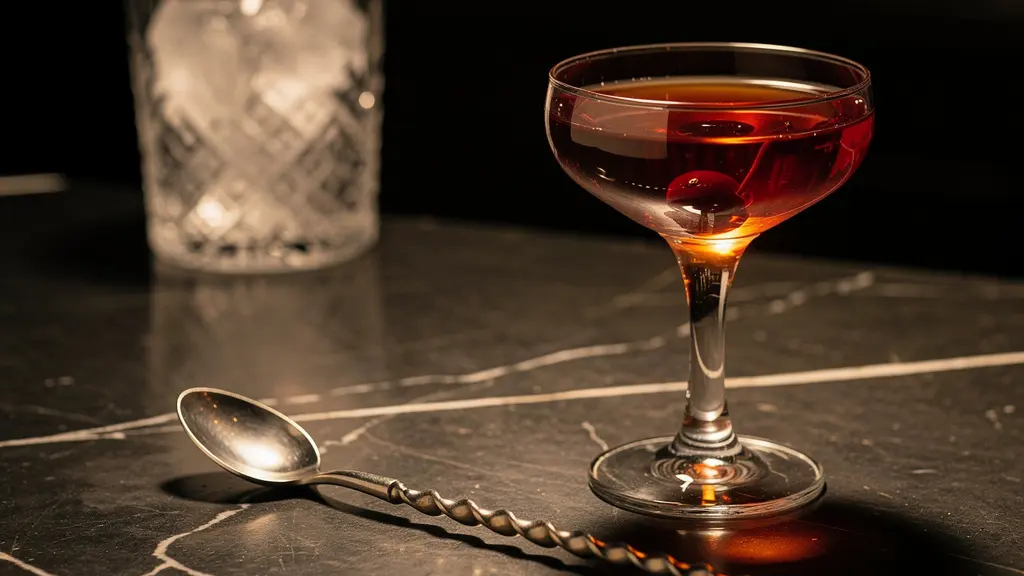
Shaking a Manhattan constitutes chemical and textural violence against the drink’s intended architecture.
- Aeration strips volatile top notes, flattening the aromatic profile permanently
- Micro-bubbles create opacity and a thin, aerated mouthfeel inappropriate for whiskey
- Controlled stirring achieves precise 15-20% dilution versus shaking’s chaotic 25-30%
Recommendation: Calculate your dilution mathematically and stir with large ice to preserve both clarity and complexity.
You prefer your Manhattan ice-cold, so you shake it vigorously until the shaker tin frosts over. The bartender winces. Friends mutter about “bruising” the spirit. You dismiss their concerns as snobbery—after all, colder is better, and shaking chills faster. This reaction is understandable, yet it rests upon a fundamental misunderstanding of what a Manhattan is meant to be.
The common platitudes—that shaking “bruises” gin or that the rule exists merely because “that’s how it’s done”—miss the actual physics at play. The issue is not tradition for tradition’s sake, nor is it about molecular damage to alcohol. The violence of shaking introduces a cascade of undesirable chemical and physical changes: rapid aromatic dissipation, uncontrolled dilution, textural disruption through aeration, and the destruction of visual clarity.
This article dismantles the myth of the “bruised” spirit and replaces it with measurable science. You will learn how shaking vents precious aromatic compounds into the air, why micro-bubbles ruin mouthfeel, the thermal mathematics of dilution, and how to calculate the exact ABV your Manhattan should achieve. By understanding the physics behind stirring, you will realize that the purists are not being pretentious—they are protecting the drink’s soul.
The following sections explore the chemical, textural, thermal, and mathematical reasons why stirring remains the only proper technique for this spirit-forward classic.
Table of Contents: The Physics and Chemistry of the Perfect Manhattan
- Does “Bruising” Gin or Vermouth Actually Change the Chemical Flavor?
- How to Identify a Shaken Spirit by the Mouthfeel and Air Bubbles?
- Shaker Tin or Glass: Which Cools the Drink Faster?
- The Cloudy Mistake: Why Shaking Ruins the Jewel-Like Clarity of a Manhattan?
- When is Shaking Acceptable: The Case for Citrus-Based Riffs?
- Why Stirring for 30 Seconds Dilutes Less Than Shaking for 10 Seconds?
- Why a Seamless Yarai Mixing Glass Pours Better Than a Pint Glass?
- How to Calculate Dilution to Hit the Perfect ABV for a Martini?
Does “Bruising” Gin or Vermouth Actually Change the Chemical Flavor?
Shaking a Manhattan does not “bruise” the spirits in the way folklore suggests—there is no molecular damage to ethanol or water. Instead, the violence of aeration strips away the drink’s most delicate aromatic compounds. When gin or vermouth meets ice in a shaker tin, the violent agitation forces volatile organic compounds into the air faster than the gentle centrifugal motion of a bar spoon allows.
Research conducted at MIT and presented at Tales of the Cocktail demonstrates that gin’s aromatic profile consists of distinct layers: top notes (delicate pine and botanicals), middle notes, and base notes. According to research on aromatic compound dissipation, shaking accelerates the loss of these volatile top notes through rapid aeration, leaving only the heavier middle and base notes. The result is a flatter, less complex nose that betrays the distiller’s intent.
Contrary to popular belief, oxidation plays a negligible role in this phenomenon. Studies from the University of Western Ontario confirm that the oxidation potential in shaken versus stirred gin is statistically insignificant. The perceived “bruising” is actually evaporation—precious aromatic molecules escaping into the air rather than reaching your palate. For a Manhattan, where the interplay between whiskey botanicals and vermouth herbs defines the sensory experience, this loss is catastrophic. You are not merely chilling the drink; you are venting its soul into the atmosphere before it ever touches your lips.
How to Identify a Shaken Spirit by the Mouthfeel and Air Bubbles?
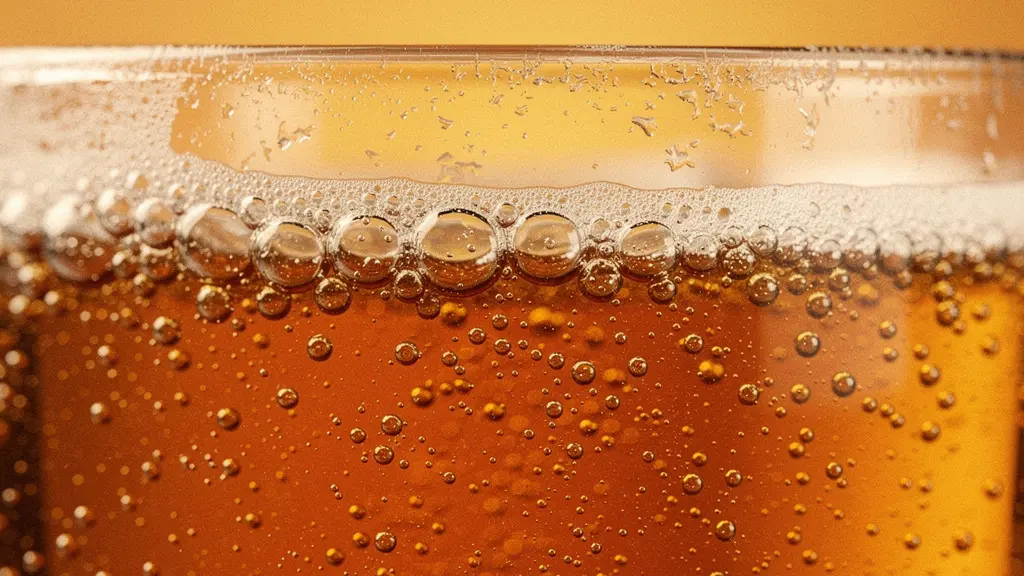
The difference between shaken and stirred spirits extends beyond aroma into tangible texture. When you shake a Manhattan, you introduce thousands of microscopic air bubbles into the liquid—an infusion of texture that fundamentally alters the mouthfeel.
Dave Arnold and a panel of professional bartenders conducted blind taste tests comparing Manhattans prepared four ways: stirred fast, stirred slow, shaken with single strainer, and shaken with double strainer. According to experiments documented by Cooking Issues, every panelist could distinguish shaken from stirred by texture alone. The aerated, thinner mouthfeel of shaken cocktails persisted for at least five minutes before dissipating at the eight-minute mark.
Under 200x microscope magnification, the difference becomes visible: stirred drinks present a blank, clear field, while shaken cocktails contain dense fields of suspended micro-bubbles even after straining. As Difford’s Guide notes, stirring merely chills and dilutes, whereas shaking additionally changes texture through aeration.
These micro-bubbles create a tactile sensation of lightness that contradicts the Manhattan’s intended viscosity. A proper Manhattan should coat the tongue with silky, weighty elegance. Shaking introduces a frothy, ephemeral quality more appropriate to citrus drinks than to whiskey’s gravitas.
Shaker Tin or Glass: Which Cools the Drink Faster?
Thermal conductivity determines how quickly your cocktail reaches equilibrium, but speed without control is dangerous to the final product. Stainless steel shaker tins possess approximately 16 W/m·K thermal conductivity compared to glass’s mere 1 W/m·K, allowing metal to transfer thermal energy rapidly.
However, this efficiency comes at a significant cost to dilution control. According to Dave Arnold’s experiments at Tales of the Cocktail, shaking reaches thermal equilibrium (-5°C) in approximately 15 seconds, while stirring with large ice requires 30–45 seconds. Yet this rapid chilling shatters ice exponentially, creating flash dilution that overshoots the target water content by nearly double.
As shown in thermal analysis by America’s Test Kitchen, the choice of vessel fundamentally changes the chilling curve:
| Property | Stainless Steel Tin | Glass Mixing Glass |
|---|---|---|
| Thermal Conductivity | ~16 W/m·K (high) | ~1 W/m·K (low) |
| Thermal Mass | Low (thin walls, heats/cools quickly) | High (thick walls, retains temperature) |
| Pre-chilling Requirement | Minimal — adapts fast | Essential — acts as heat sink if warm |
| Time to Chill Cocktail | ~10–15 seconds to equilibrium | ~30–45 seconds (standard stir) |
| Ice Integrity | High fragmentation (rapid dilution) | Low fragmentation (controlled dilution) |
Glass mixing glasses, particularly heavy crystal Yarai styles, act as thermal reservoirs once pre-chilled. While steel transfers cold quickly, it also transmits heat from your hands equally fast, creating thermal instability that forces the ice to work harder, thus diluting more.
The Cloudy Mistake: Why Shaking Ruins the Jewel-Like Clarity of a Manhattan?
A Manhattan should possess the clarity of a polished garnet, allowing light to pass through unimpeded to reveal its rich ruby depths. Shaking destroys this jewel-like transparency through the Tyndall effect—microscopic air bubbles scattering light to create opacity and a dull, unappetizing haze.
Dave Arnold’s microscopy research reveals that under 200x magnification, stirred cocktails appear completely blank and clear, while shaken drinks display dense fields of suspended bubbles regardless of whether single or double straining was employed. These bubbles scatter visible light across the spectrum, transforming translucence into a milky, greyish mixture that obscures the drink’s natural color.
Among professionals, bruising cocktails marks the practitioner as an amateur unaware of basic physics. The visual component of cocktail appreciation is not mere vanity—it signals proper technique and respect for ingredients.
Crucially, Arnold’s research notes that while textural differences persist for five minutes, the cocktail loses optimal serving temperature before clarity returns at the eight-minute mark. You cannot wait for the drink to clear without it warming beyond enjoyment. Thus, shaking forces an impossible choice between temperature and aesthetics, whereas stirring preserves both.

When is Shaking Acceptable: The Case for Citrus-Based Riffs?
Shaking is not inherently evil—it is simply misapplied to Manhattans. The technique becomes essential when emulsifying ingredients of disparate densities. According to the Discovery Place Science Museum, spirits and other liquids do not blend well on their own due to differing densities and chemical properties, requiring kinetic force for proper integration.
Citrus juices, dairy, egg whites, and heavy syrups benefit from violent agitation. The aeration creates emulsification and froth desirable in Whiskey Sours or Daiquiris. However, spirit-forward cocktails containing only liquors, liqueurs, and bitters possess similar densities that blend through gentle stirring.
Use this matrix to determine the proper technique:
| Criterion | Stir (Manhattan, Negroni, Martini) | Shake (Whiskey Sour, Daiquiri, Margarita) |
|---|---|---|
| Ingredient Type | Spirit-on-spirit only | Contains citrus, dairy, egg, or syrup |
| Density Disparity | Low — similar densities blend gently | High — requires kinetic force to emulsify |
| Desired Texture | Silky, smooth, viscous, velvety | Frothy, lively, aerated, light |
| Visual Goal | Crystal clarity — jewel-like translucence | Cloudy or frothy appearance expected |
| Dilution Target | ~15–20% added water | ~25–30% added water |
The Manhattan contains no citrus or emulsifiers. Shaking it introduces unnecessary aeration and dilution where none is required.
Why Stirring for 30 Seconds Dilutes Less Than Shaking for 10 Seconds?
Dilution is not merely the addition of water—it is the controlled integration of melted ice to achieve optimal proof and texture. Shaking achieves excessive dilution through brute force rather than finesse, sacrificing the cocktail’s body for speed.
Dave Arnold’s chilling curve experiments demonstrate that shaking with standard ice reaches -5°C equilibrium in roughly 15 seconds regardless of technique. However, when bartenders used finely crushed ice for stirring, the drink chilled equally fast but was unanimously judged as over-diluted and insipid. This reveals that the exponential increase in ice surface area from shattering—not chilling—is shaking’s primary mechanism of destruction.
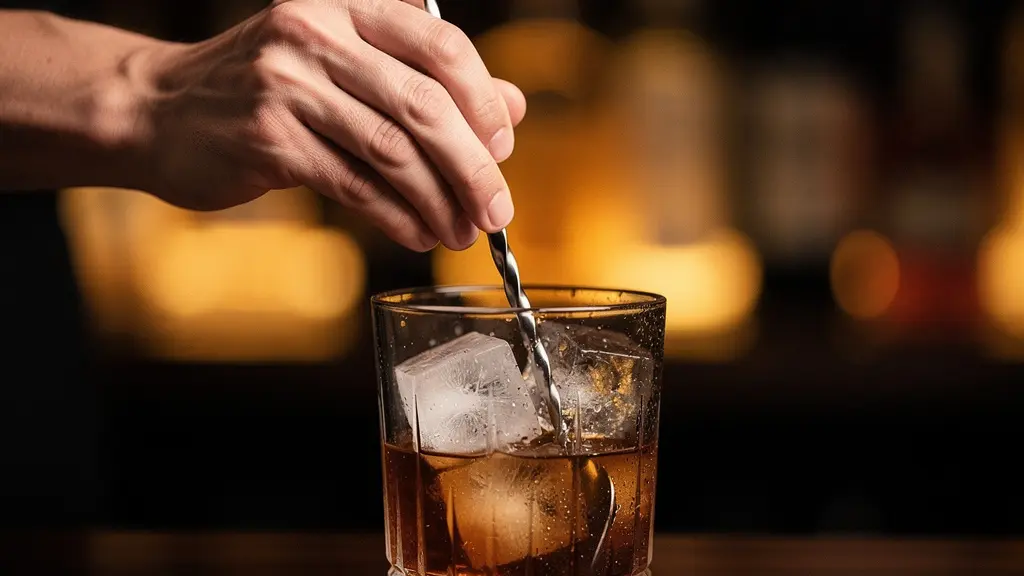
Stirring for 30 seconds with large, dense ice cubes creates minimal fragmentation. The liquid cools gradually while absorbing only 15–20% added water. Conversely, shaking for 10 seconds pulverizes ice crystals, exposing massive surface area that flash-dilutes the cocktail to 25–30% water content.
This difference is immediately measurable in ABV percentages and tactile weight. A shaken Manhattan becomes watery and thin, while a stirred counterpart maintains structural integrity, viscosity, and the proper concentration of botanical oils.
Why a Seamless Yarai Mixing Glass Pours Better Than a Pint Glass?
The vessel matters as much as the motion. The Yarai mixing glass represents evolutionary perfection in stirring technology, addressing every flaw inherent in standard pint glasses.
According to the Diageo Bar Academy, the Yarai design revolutionized craft cocktail preparation through specific functional advantages. Its wide, heavy base prevents tipping during vigorous stirring—crucial when executing the 30-second dilution curve. Straight vertical walls support smooth centrifugal bar spoon rotation without ice chipping against tapered surfaces.
Consider the functional differences:
| Feature | Yarai Mixing Glass | Standard Pint Glass |
|---|---|---|
| Base Width | Wide and heavy — stable during stirring | Narrow and tapered — prone to tipping |
| Wall Shape | Straight vertical walls — supports centrifugal spoon motion | Tapered inward — restricts spoon movement at bottom |
| Pour Spout | Integrated beak/lip — creates laminar pour stream | No spout — turbulent, dripping pour |
| Glass Thickness | Thick, heavy crystal — thermal retention once chilled | Thin tempered glass — minimal thermal mass |
| Ice Chipping Risk | Low — smooth interior, seamless construction | Higher — seamed interior can catch spoon and chip ice |
The integrated pour spout creates a laminar stream that prevents dribbling, while diamond-cut etching improves grip when hands are wet or cold.
Key Takeaways
- Shaking accelerates aromatic loss through aeration rather than “bruising” the spirits chemically
- Micro-bubbles from shaking create textural disruption and visual cloudiness via the Tyndall effect
- Stirring offers controlled dilution (15–20%) compared to shaking’s aggressive dilution (25–30%)
- Proper tools like the Yarai mixing glass enhance control through thermal mass and laminar pouring
How to Calculate Dilution to Hit the Perfect ABV for a Martini?
Precision separates amateurs from professionals. Calculating dilution allows you to achieve the target ABV of 16–22% ideal for stirred cocktails, ensuring your Manhattan possesses the exact strength and character intended by the original recipe.
According to America’s Test Kitchen’s cocktail science analysis, 25–35% of a typical cocktail’s final volume consists of water added by melting ice. For spirit-forward drinks like the Manhattan, you want the lower end of this spectrum to maintain the whiskey’s backbone.
Your Action Plan for Calculating Perfect Dilution
- Weigh all cocktail ingredients (spirits, vermouth, bitters) in your mixing vessel and record this pre-dilution weight precisely.
- Add ice and stir to your preferred taste and temperature, typically 30 seconds for large cubes.
- Strain out the cocktail, discard the ice, return the liquid to the vessel, and weigh again. The difference equals water added.
- Calculate dilution percentage: (Water Added ÷ Pre-Dilution Weight) × 100. Target 20–25% for stirred cocktails.
- Apply the ABV formula: Final ABV = (Sum of [Volume × ABV] for each ingredient) ÷ Total post-dilution volume. Verify you’ve hit 16–18% ABV.
Sugar content in vermouth affects freezing point depression, potentially slowing initial melt rates before equilibrium is reached. This mathematical approach transforms shaking’s chaotic, uncontrolled dilution into a reproducible artistry.
Frequently Asked Questions About Cocktail Dilution and ABV
text
What is the formula for calculating a cocktail’s ABV after dilution?
Final ABV = (Sum of [each ingredient’s Volume × its ABV decimal]) ÷ Total volume including meltwater. For example, a Martini with 60mL of 40% gin, 15mL of 18% vermouth, and approximately 20mL of meltwater would yield: (60×0.40 + 15×0.18) ÷ 95 = ~28.4% ABV.
How does sugar content in vermouth affect dilution rate compared to straight spirit?
Vermouth’s sugar content lowers its freezing point through freezing point depression. This means vermouth-heavy drinks require slightly different stir times because the sugar-water-alcohol solution interacts with ice differently than pure spirit, potentially slowing the initial melt rate before equilibrium.
What is the target ABV ‘sweet spot’ for a well-diluted stirred cocktail?
Most bartenders and cocktail scientists target a final serving ABV between 16–22% for stirred cocktails. Spirit-forward drinks like Manhattans typically land around 25–30% ABV, while Martinis settle around 28–32% depending on the gin-to-vermouth ratio and dilution achieved.
Apply these calculations to your next cocktail preparation. Weigh, measure, and taste the difference between calculated precision and arbitrary agitation. Your Manhattan deserves nothing less than exacting standards.